
The Future of Robotics: Trends and Innovations

By: Muhammad Tuhin (Science News Today)

 S E E D E D C O N T E N T

The Future of Robotics: Trends and Innovations

Robots were once the stuff of science fiction—metallic beings roaming distant planets, doing our bidding, or, in darker tales, rising up against their creators. Today, however, robotics is no longer confined to the pages of novels or the frames of Hollywood films. It is a thriving, accelerating field that is shaping industries, transforming economies, and reshaping the way humans interact with the world.
From the assembly lines of manufacturing giants to the surgical suites of hospitals, robots are now integral to modern life. But where is this evolution heading? What lies beyond the current landscape of drones, robotic arms, and AI-powered assistants?
This exploration of the future of robotics reveals a journey marked by innovation, interconnectivity, and an expanding boundary between the physical and digital. As we peel back the layers, we uncover a world on the cusp of profound transformation—a world where robots are not just tools, but partners, collaborators, and even extensions of ourselves.
The Convergence of Technologies: AI, IoT, and Machine Learning
The future of robotics is not being written by robotics alone. It is a story of convergence—a merging of multiple, rapidly advancing technologies. Artificial Intelligence (AI), the Internet of Things (IoT), machine learning, computer vision, and cloud computing are not just supporting actors; they are co-authors of the robotic revolution.
Artificial Intelligence is the most transformative force in robotics. No longer are robots limited to rigid, pre-programmed routines. With machine learning, robots can now learn from experience, adapt to new tasks, and even make decisions in uncertain environments. Deep learning allows robots to recognize objects, interpret human gestures, understand speech, and respond with increasing nuance.
The Internet of Things connects robots to other machines and systems, enabling real-time data exchange and coordination across vast networks. A robot on a factory floor can communicate with supply chain systems, environmental sensors, and maintenance databases—all without human intervention.
This convergence is enabling robots to move from closed, isolated systems to open, dynamic ecosystems. They are becoming smarter, more autonomous, and more deeply integrated into the fabric of society.
Robotics in Healthcare: Precision, Care, and Companionship
One of the most promising—and emotionally resonant—arenas for robotics is healthcare. Here, robots are not just machines of precision; they are agents of empathy, hope, and healing.
Surgical robots, such as the da Vinci system, have already revolutionized minimally invasive procedures, allowing for smaller incisions, less pain, and faster recovery. In the future, these systems will become even more precise, assisted by AI that can identify tissues, guide incisions, and alert surgeons to potential anomalies.
But surgical assistance is only the beginning. In elder care, robots are stepping in to support aging populations. Companion robots offer reminders for medication, monitor vital signs, and provide emotional interaction for those living alone. In Japan, where the aging population is particularly pronounced, such robots are not science fiction—they are part of daily life.
Exoskeletons and robotic prosthetics are also transforming rehabilitation. These devices assist patients in regaining mobility, restoring dignity, and redefining what it means to live with physical limitations.
The future holds a vision of healthcare where robots do not replace human caregivers but work alongside them—amplifying their skills, reducing their burdens, and enhancing patient outcomes.
Manufacturing and Logistics: The Rise of Industry 5.0
Industrial robots have long been a staple of manufacturing, tirelessly welding, assembling, and sorting on factory lines. But the next phase—often referred to as Industry 5.0—is not about replacing humans with machines, but about fostering a collaboration between man and machine.
Cobots, or collaborative robots, are designed to work safely alongside humans. They are equipped with sensors and AI to detect proximity, adjust their movements, and assist workers in complex tasks. Instead of cages and isolation, cobots bring a future where robots and humans share space, tasks, and goals.
In logistics and warehousing, robots are redefining efficiency. Autonomous mobile robots (AMRs) navigate warehouse floors with uncanny agility, picking, sorting, and transporting goods with minimal human intervention. Algorithms optimize their paths, ensuring that delivery times are slashed and accuracy is heightened.
Looking forward, the supply chain will be orchestrated by fleets of intelligent robots and drones, seamlessly coordinating the movement of goods from production to doorstep. With the global push for sustainability, robots will also help reduce waste, minimize energy usage, and contribute to a more circular economy.
Agriculture: Feeding the World with Intelligent Machines
Feeding a growing global population while minimizing environmental impact is one of the 21st century's great challenges. Robotics offers powerful tools to meet this need—tools that combine ancient human ingenuity with cutting-edge technology.
Agricultural robots, or agrobots, are being developed to plant seeds, monitor soil health, water crops, and harvest produce with delicate precision. Unlike traditional tractors, which treat fields as homogeneous spaces, future agrobots will analyze individual plants, applying water, fertilizer, and pesticides only where needed.
Drones hover over fields, capturing high-resolution images and collecting data on crop health. Ground-based robots equipped with vision systems can identify pests, diseases, or nutrient deficiencies early, enabling targeted interventions that preserve both yield and ecological balance.
Robots are also addressing labor shortages in agriculture. Harvesting fruit, a task that requires a gentle touch and visual discernment, is increasingly being done by robotic arms guided by AI and machine vision.
The farm of the future is a symphony of data, machines, and biology—where robots don't just work the land, they help restore and sustain it.
Space Exploration: Our Robotic Pioneers
Long before humans set foot on alien worlds, robots will be there. In fact, they already are. From the rovers on Mars to the orbiting telescopes peering into distant galaxies, robots are the vanguard of humanity's exploration of space.
NASA's Perseverance rover is not just a machine; it is an autonomous laboratory capable of navigating rugged terrain, drilling into rocks, analyzing samples, and even preparing for future human missions. Its companion, Ingenuity—a small helicopter—made history by performing the first powered flight on another planet.
In the future, robots will construct habitats on the Moon and Mars, mine asteroids for precious resources, and maintain spacecraft in orbit. Modular robotic systems will assemble space stations in zero gravity, responding to remote commands or operating independently.
Robots are ideally suited for space: they don't require air, food, or sleep. They can endure radiation, extreme temperatures, and isolation. As our cosmic ambitions grow, so too will our reliance on robotic partners—silent, tireless explorers charting the final frontier.
Domestic Robotics: From Smart Homes to Personal Companions
In the not-too-distant past, the idea of having a robot at home seemed whimsical. Yet today, many households already host a variety of robotic devices—from vacuum cleaners and lawnmowers to smart assistants that respond to voice commands.
The future of domestic robotics lies in integration and personalization. Imagine a home where robots not only clean but organize, cook, manage schedules, and provide companionship. These systems will learn the habits, preferences, and personalities of their users, adapting to their needs and routines.
Social robots like Jibo and Pepper hint at what's to come—machines that can engage in conversation, read emotional cues, and offer companionship. While early versions were limited, the next generation will be far more capable, combining emotional intelligence with practical utility.
As populations age and single-person households rise, domestic robots may become essential caregivers, entertainers, and even confidants.
Autonomous Vehicles: The Robots on Our Roads
One of the most visible—and controversial—frontiers of robotics is the development of autonomous vehicles. Self-driving cars represent a confluence of robotics, AI, sensors, and real-time data processing, all aimed at revolutionizing transportation.
Fully autonomous cars are still in the testing phase, but their potential is immense. They promise to reduce accidents, ease traffic congestion, and increase mobility for the elderly and disabled. Delivery robots and autonomous trucks could streamline logistics and reduce the carbon footprint of transportation.
Challenges remain—legal, ethical, and technical—but the direction is clear. Roads filled with communicating, self-driving vehicles could one day render traffic lights and stop signs obsolete. Parking lots might vanish as cars drop off passengers and then drive themselves to charging stations.
In this vision, roads become ecosystems of robotic cooperation—machines moving people and goods with speed, safety, and intelligence.
Ethics, Labor, and the Human Future
As robotics advances, so too do the ethical questions it raises. What happens to jobs when robots take over routine tasks? How do we ensure that autonomous systems make fair, unbiased decisions? Who is responsible when a robot causes harm?
The future of robotics must be guided by a robust ethical framework. This means designing systems that are transparent, accountable, and inclusive. It means ensuring that technological benefits are widely shared, not concentrated in the hands of a few.
Education will be critical. Workers displaced by automation must be retrained and reskilled. New careers will emerge in robot maintenance, programming, design, and oversight. The goal is not to eliminate work but to transform it—to elevate humans from repetitive labor to creative, meaningful endeavors.
The question is not whether robots will change society—they already are. The real question is how we will shape that change to serve humanity's highest ideals.
The Human-Robot Interface: Merging Minds and Machines
Perhaps the most profound innovation in robotics will not be found in the machines themselves, but in how we interact with them. The future points to ever more seamless interfaces between humans and robots.
Brain-computer interfaces (BCIs) are already enabling paralyzed individuals to control robotic limbs with their thoughts. In the years ahead, such interfaces may become common—allowing people to operate complex machines intuitively, augment their abilities, and even communicate directly with artificial intelligences.
Augmented reality (AR) and virtual reality (VR) technologies will enhance collaboration between humans and robots. Engineers could don headsets to control distant robots as though they were present. Surgeons could perform procedures remotely with robotic avatars.
As these interfaces evolve, the boundary between human and machine will blur. Robots may become extensions of our bodies and minds—not replacements, but amplifiers of human potential.
The Road Ahead: A Robotic Renaissance
The future of robotics is not a destination; it is a journey—a constantly unfolding story driven by discovery, creativity, and the timeless human desire to build. We are entering a robotic renaissance, where machines are not only tools of efficiency but expressions of intelligence, adaptability, and vision.
From healthcare to space, agriculture to education, manufacturing to the home, robots are poised to become integral to nearly every aspect of life. But their impact will be shaped not only by what they can do, but by what we choose to do with them.
The challenge is to ensure that robotics advances in harmony with human values. To create a future where machines serve people—not the other way around. To blend technology with empathy, precision with purpose, and automation with imagination.
In that future, robots won't just build our world—they will help us build a better one.
The administrator of this group reserves the right, along with the site moderators, to moderate all and any postings to this group, including the right to enforce the ToS, the CoC, and also including anything that the administrator deems within his sole discretion to be offensive, including but not limited to political and/or off topic comments, with the power to delete in exercising that right.
It would be best, therefore, to be civil in posting on this group and not contravene the CoC, the ToS, and to not post comments that are political, insulting, taunting, trolling or offensive.
By now it should be well known that I am unable to open certain sources, videos and pictures. If I cannot, I will ask that they be described and explained. If the poster refuses to comply, their comment will be deleted. Instagrams are banned.

Tags
Who is online
86 visitors
On the TV news this morning there was a story about using drones in schools that could be used to attack gun-wielding intruders in order to prevent mass shootings. That could certainly have prevented the extent of the tragedy of the Ulvada Texas school shooting 4 yeara ago. Since robotics are being developed in an advanced manner where I am living (even my wife's nephew is majoring in robotics at university) it caused me to think about, and learn more about the advancement of use of robotics, and this article, which was just updated on May 17, 2026 (so VERY current) caused me to foresee a growing and much increased use of them.
Previously so much limited to sci-fi stories and movies, robots already used in many ways as described in the article are no longer only in the future. Recently there was a coal mine disaster in China, so think of the possibilities wherein no human has to enter into the mine but robots trained to do what miners have done for years can be used instead. There is a tanker with an explosive content presently in California that is causing the whole area to evacuate because of the immediate possibility of explosion. Only robots should go near it.
What we see as the uses of robots today, as described in the article above, are bound to increase by leaps and bounds. We might no longer need Robbie the Robot from Forbidden Planet to produce fine Scotch whiskey for us, or for Bicentennial Man to actually become a reality.
But who is going to own all these new advanced capital assets? The already super rich, of course, and it'll only make them richer.
We're going to need a new economic system before long if AI and robots end up replacing too much human labor. As it is, fully half of the American population is scrambling to survive on 2.5% of the national wealth. Yup, you read that right. It was even worse after the Great Recession (under 1% for several years). It hasn't been over 4.0% since 1992, and it's been dwindling ever since, as computerized labor-saving tech really started showing up in the economy.
Source - Distribution of Household Wealth in the U.S. since 1989
The wealth gap is frankly astonishing. I don't see how it gets better with AI and super advanced robots. Marx may have been right after all, just not about the timing.
And lets not forget the military applications that AI and robotics can bring. Let's hope the movie The Terminator doesn't turn out to be prophetic.
C'mon, Dig. No need to introduce reality into a perfectly good con-job.
Absolutely, because if a government isn't going to be concerned enough about the welfare and well-being of its citizens that there can, even already, be around 750,000 living on the streets, what's going to happen when robots take over all the simple jobs. It's not like the American government has taken 10 years to successfully eradicate abject poverty, right? What's more important? Maybe give "Bread and Circuses" a try. It worked when Juvenal suggested it, and it has worked really well a lot more recently. It certainly brings more happiness than a warm gun.
And don't tell me I don't know what I'm talking about, because I KNOW I don't. LOL
Looks like the tyrant is doing just that (minus the bread, of course), with an upcoming cage fight on the White House lawn.
Who knows what evil lurks in the heart of (that) man?
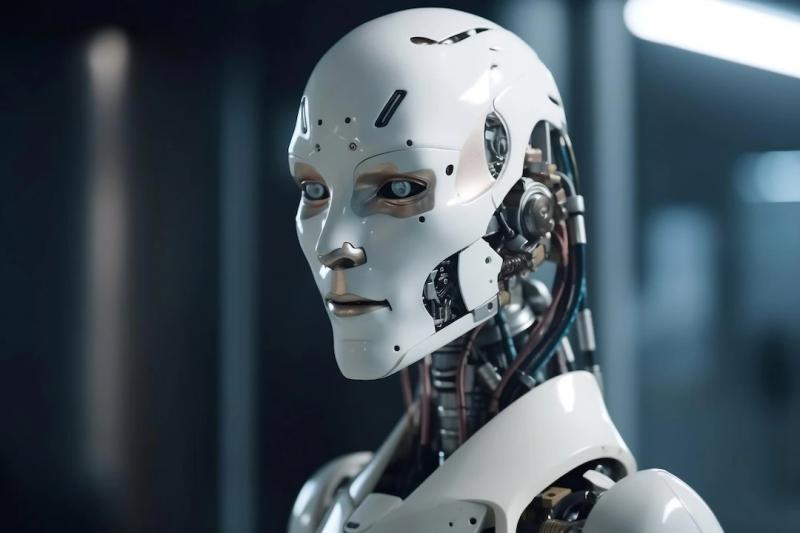
Just think about the engineering that went into that object. Also look at the artistry that went into it. (I think more artistry than engineering went into this particular picture, just because it does not hold together as a functional object but rather as an artistic creation, no matter the reality.... But I digress)
Maybe I should have posted the article on the Creative Arts group.