
I LOVE MARMALADE, BUT I CAN'T GET IT

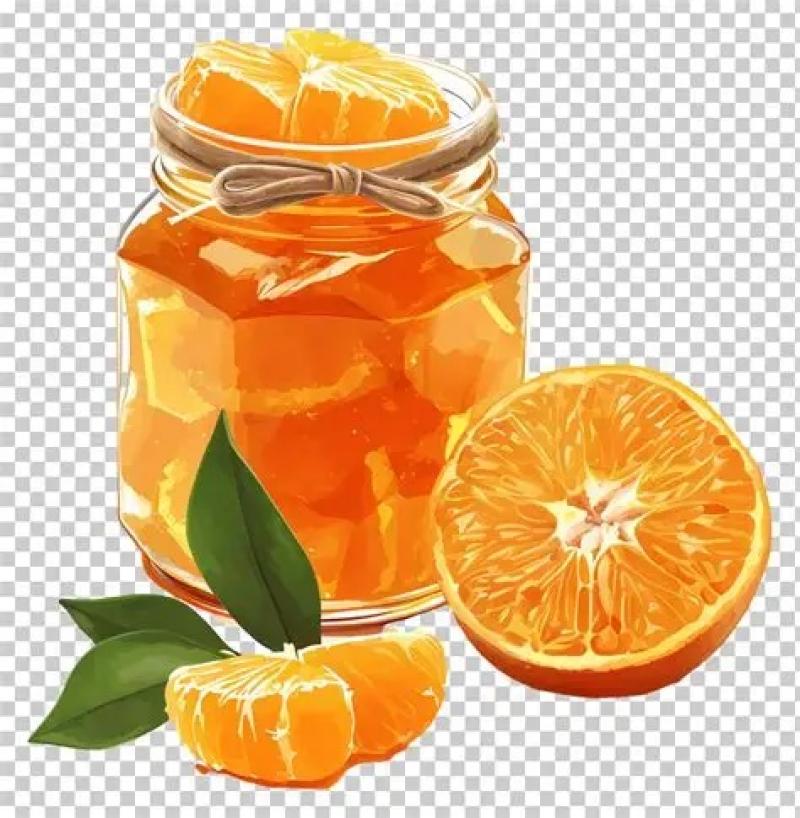

I LOVE MARMALADE, BUT I CAN'T GET IT
For the longest time when I made my own Western breakfasts of eggs, toast, orange juice and coffee (and fried cherry tomatoes), I would have 2 pieces of buttered toast, one with marmalade and the other with different jams each time - strawberry, raspberry, blueberry, apricot, mixed jam, etc. But then nobody carried marmalade any more. Yes, I can get what is known here a "Orange Jam", but it's almost tasteless, not at all tart.
And now that I'm super-prone to gout I can't eat it anyway, so I would need to get sugar-free marmalade, even more difficult to find. Maybe I'll just have to import it from Canada. I import my Tim Horton's coffee grounds for brewing so maybe that will work.
Why am I posting this. The reason is that in the latest Rob Woods etymology emailed newsletter I just received there was this:
'MARMALADE' IS NOT ORANGE
A word that spread
Marmalade is believed to have been smuggled into the English language in the holds of Portuguese trade ships. England’s elite developed a taste for the Iberian spread during the Tudor period.
However, the marmalade enjoyed in 15th century England and Portugal was not like the breakfast staple consumed today. For a start, it was much more solid, often sliced into gelatinous cubes. What’s more, it wasn’t made with oranges.
Marmalade is from the Portuguese marmelada , which means “quince stuff” (the -ada acts like the -ade in lemonade ). The Portuguese for “quince” is marmelo , and this distinctly non-citrus orchard fruit was the key ingredient.
However, the plot thickens like a cooling jam when you trace the word back further still. Marmelo comes from Latin malomellum , which in turn derives from two Greek elements: meli meaning “honey” and mēlon meaning " apple”. (Yes, etymologically speaking, melons are apples). So marmalade should arguably be sold as “honey apple spread”.
Once in England, however, marmalade did not remain an exclusively quince product for long. The new wider availability of citrus fruits and sugar led creative cooks to experiment.
Not all fruits were suited to the recipe. They needed to have sufficient pectin to produce a firm jelly, and the right mix of tartness and sweetness. Seville oranges proved to have the perfect combination.
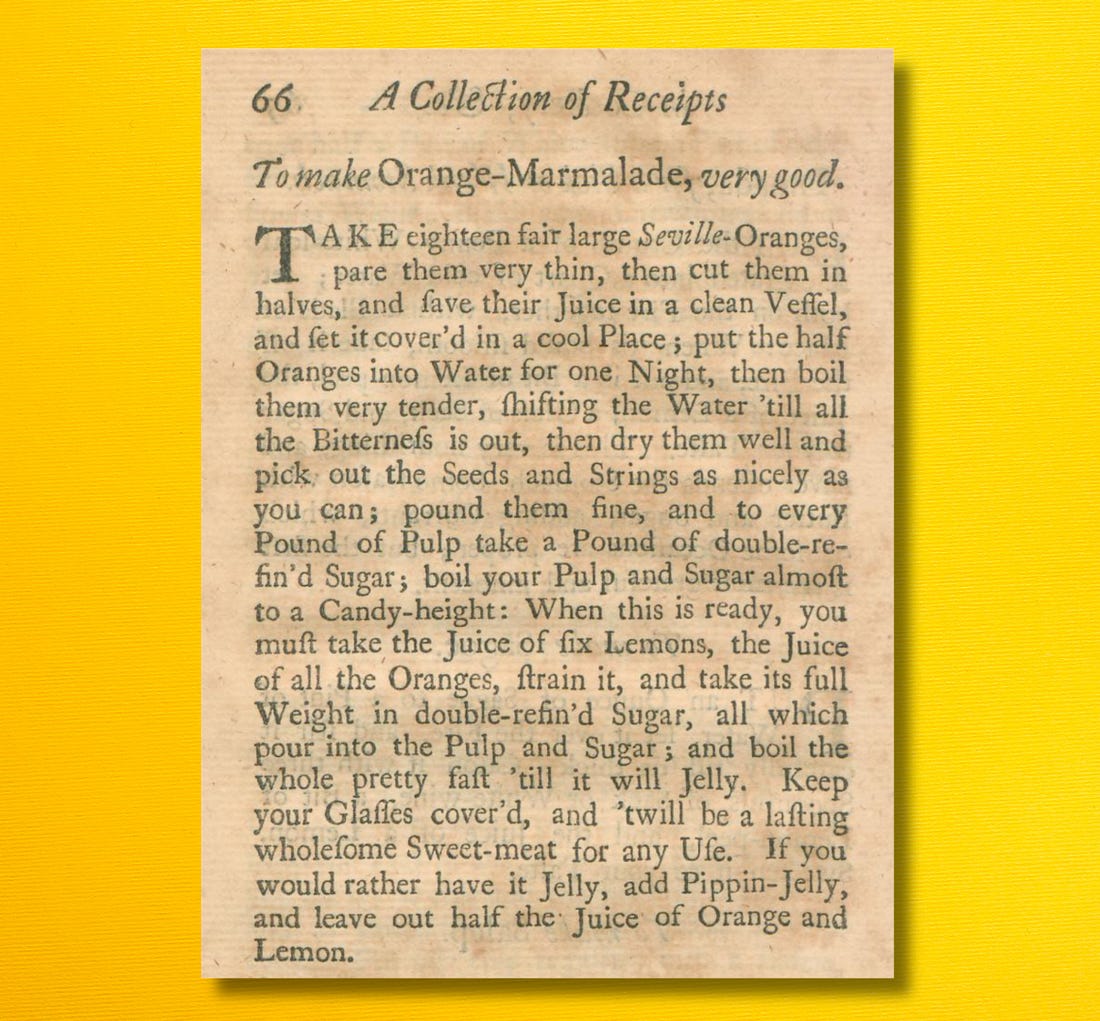
Here’s a “ very good ” recipe for orange marmalade from the early 18th century.
 |
We can still make marmalade with a variety of fruits, but unless we specify which one, the assumption is that it’s been made with oranges.
It has occasionally been claimed marmalade comes from the French “Marie est malade” (“Mary is sick”), a cry that rang out when an unwell Mary Queen of Scots demanded a fruity fix. Though marmalade was used as a remedy during Tudor times, this tale is clearly apocryphal.
The pithy truth is marmalade is made with one fruit (orange) and named after another (quince), which is named after a third (apple).
The administrator of this group reserves the right, along with the site moderators, to moderate all and any postings to this group, including the right to enforce the ToS, the CoC, and also including anything that the administrator deems within his sole discretion to be offensive, including but not limited to political and/or off topic comments, with the power to delete in exercising that right.
It would be best, therefore, to be civil in posting on this group and not contravene the CoC, the ToS, and to not post comments that are political, insulting, taunting, trolling or offensive.
By now it should be well known that I am unable to open certain sources, videos and pictures. If I cannot, I will ask that they be described and explained. If the poster refuses to comply, their comment will be deleted. Instagrams are banned.
Tags
Who is online
86 visitors
So now it reminded me of how much I loved marmalade on my breakfast toast.
Am I the only one around here who craves marmalade?
Of course not!
I've never been fond of it with peanut butter, but my daughters love Marmelade & Nutella sandwiches.
IMO the only jams that combine with peanut butter are strawberry or raspberry (or mixed flavours).
Unfortunately I can't open the image you posted, which I assume you just copied and posted from google. For me to be able to open it, you would have to copy it, then post it to your computer picture library, then copy it from your picture library and post it here.
Was just a picture of Paddington Bear eating marmalade
This one?
My favorites, readily available here, are orange (of various varieties) and also ginger (very popular here ). Also available are (1) apricot and (2) caramelised onion, which though labeled "marmalade" I'm not sure if it is strictly correct.
A favorite breakfast of mine - thick toast, thick butter, and lots of marmalade!
No eggs?