
Triangle-shaped traditional snack is evolving

By: By LI YINGXUE

 S E E D E D C O N T E N T

Triangle-shaped traditional snack is evolving
Dragon Boat Festival staple zongzi is, quite literally, flavor of the month in China — but how it tastes depends on where you try it

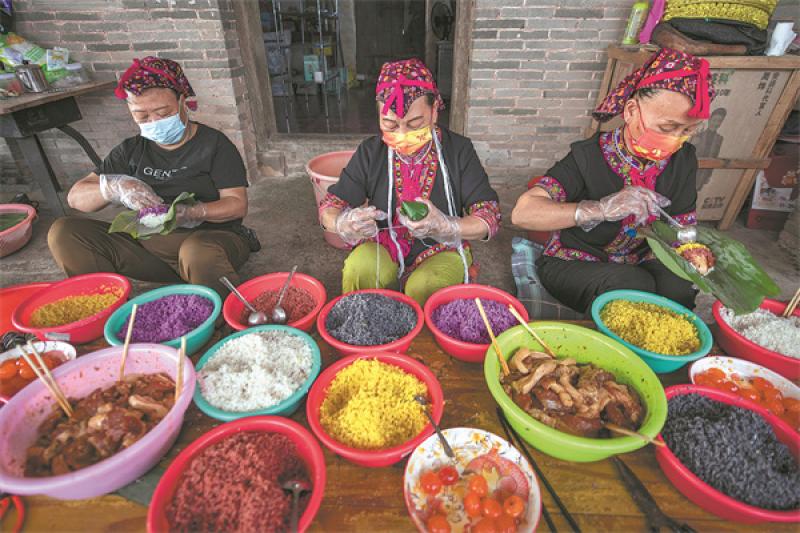
People of the Miao ethnic group prepare their signature five-colored zongzi on Monday in Huishan town of Qionghai, Hainan province. These zongzi are hand-made using natural plants to dye the glutinous rice various colors, in addition to its natural color, and are filled with pork and salted egg yolks. MENG ZHONGDE/FOR CHINA DAILY
With Dragon Boat Festival falling on Friday this year, bamboo leaves are once again returning to kitchens and food counters across China. Inside them, glutinous rice is wrapped, tied and steamed — forming zongzi , a seasonal staple that has long marked the arrival of summer.
At its core, zongzi is defined as much by texture as by flavor. The glutinous rice becomes dense yet soft after steaming, with a sticky elasticity that holds its shape while remaining deliciously soft.
Depending on regional styles, it can range from delicately loose and fragrant in lighter versions, to compact and richly layered in more indulgent savory varieties, where rice absorbs the oils and aromas of fillings such as pork or egg yolks.
More than a festival dish, zongzi is a culinary marker of time. It's a signature of the season and carries with it memories of family gatherings, regional traditions and seasonal rhythms.
For folklorist Xiao Fang, a professor at Beijing Normal University, its significance goes far beyond taste. "Festival foods are not only delicacies enjoyed during celebrations," he said.
"They are symbols through which people perceive the changing seasons and express their feelings through taste," Xiao added.
A Xiaohongshu user said her most vivid memory of zongzi comes from childhood, when her grandmother would prepare them by hand. After steaming, the fragrance of bamboo leaves would seep into every grain of glutinous rice, blending with its soft chewy texture and complemented by the crunch of peanuts and the natural sweetness of dates.
"Now life moves so fast — raising a child, going to work, everything feels rushed," she said. "It is only during traditional festivals, when I finally eat zongzi, that I slow down for a moment and taste that sense of family again."
Across the country, zongzi shows strong regional variation. In the Jiangnan region, sweet varieties remain most common, typically filled with red bean paste, dates or plain glutinous rice to highlight its natural aroma and texture. In southern China, particularly in Guangdong province and nearby areas, savory versions dominate, often featuring pork belly, salted egg yolks, mung beans and dried seafood.
The long-standing debate between "sweet or savory" remains a seasonal talking point, but it also reflects something deeper: China's highly regional food culture, where a festival's signature dish can have dozens of variations.
While the traditional recipes remain cherished, zongzi is also entering a new era of culinary reinvention.
Food producers and chefs are introducing fillings inspired by desserts, beverages and fusion cuisine, including rose and hawthorn, taro with mochi, coconut cream and increasingly experimental savory combinations. The changes are seen by industry observers as an expansion of flavor options rather than a replacement of traditional recipes.
Packaging design has also become a key area of development, with festival foods increasingly positioned as gifts.
At the Bvlgari Hotel Beijing, for example, Dragon Boat Festival gift boxes draw on the brand's Divas'Dream motif, blending Italian design elements with Chinese festive aesthetics. The boxes contain reinterpreted zongzi flavors, such as abalone with ham and dried scallop, and bird's nest with purple rice.
In the retail sector, international brands are also incorporating cultural themes into their seasonal offerings.
In collaboration with the dance drama The Journey of a Legendary Landscape Painting, Starbucks China has launched a Dragon Boat Festival collection, inspired by the Song Dynasty (960-1279) work A Panorama of Rivers and Mountains. The series features ice-style zongzi with flavors such as rose and hawthorn, mung bean with fermented rice and coconut. The packaging is designed to unfold like a traditional scroll painting.
Despite ongoing innovation in flavor, the cultural foundation of the festival food remains unchanged.
Whether prepared in a rural household or presented in a designer gift box in an urban store, zongzi continues to play a consistent role in China's seasonal calendar, marking time and shaping social rituals by translating seasonal change into food.

The administrator of this group reserves the right, along with the site moderators, to moderate all and any postings to this group, including the right to enforce the ToS, the CoC, and also including anything that the administrator deems within his sole discretion to be offensive, including and not limited to off topic or 'no value' comments, with the power to delete in exercising those rights.
It would be best, therefore, to be civil in posting on this group.
By now it should be well known that I am unable to open certain sources, videos and pictures. If I cannot, I will ask that they be described and explained. If the poster refuses to comply, their comment will be deleted. Instagrams are banned.
Tags
Who is online
86 visitors
This is a follow-up artticle with new information about the Dragon Boat Festival delicacy, zongzi, It is a delicious food that I have been much enjoying the past few days, and will so for about a week more. The special delicacies that are eaten during China's Festivals are what I like the most about them.
The initial article I posted about zongzi, with photos of my wife preparing them in the comment following, is posted at this link:
LINK -> Classical Festival Dumplings Embrace New Flavors And Forms - Buzz Of The Orient | The NewsTalkers