
Trump says he wants potash from Belarus for 'substantially less' than Canada

By: by Uday Rana - Canada's Global News
 S E E D E D C O N T E N T

Trump says he wants potash from Belarus for 'substantially less' than Canada
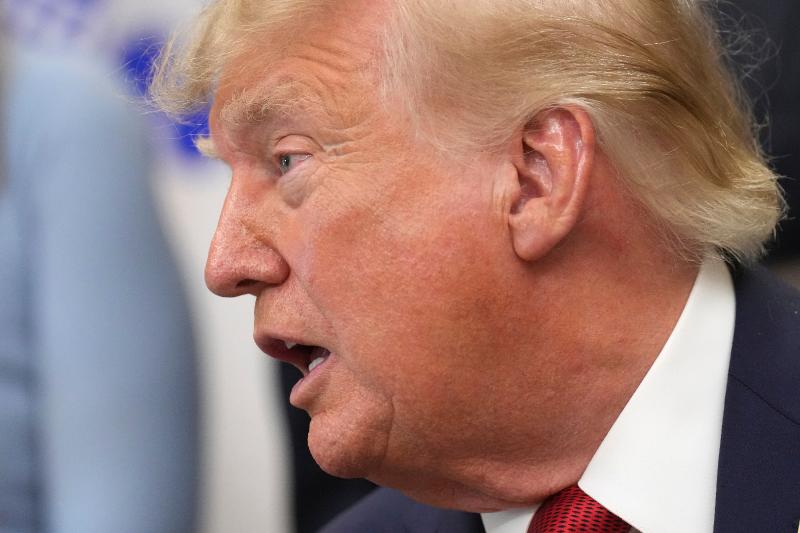
The U.S. is working on a deal with Belarus to replace the potash it receives from Canada for "substantially less," U.S. President Donald Trump said.
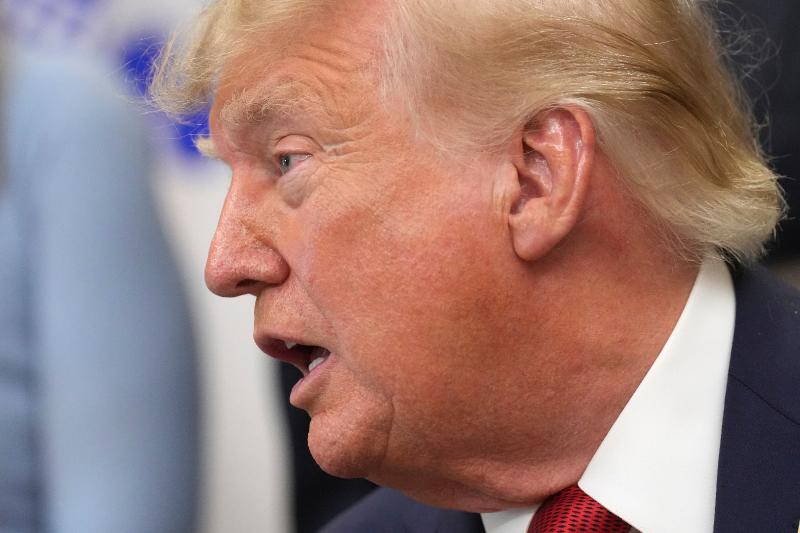
"The United States is working on a massive Deal with respect to the purchase of Potash from Belarus," Trump said on his social media platform Truth Social.
"The pricing would be for substantially less than we are currently paying to Canada, very good news for our Farmers and Ranchers. Thank you for your attention to this matter!" Trump added.
Saskatchewan Premier Scott Moe said the move amounts to 'blood potash' from Belarus, which Canada and dozens of countries have sanctioned for supporting the invasion of Ukraine.
European officials have called Belarus an "accomplice" to Russia's war in Ukraine and earlier this year, Belarus launched joint drills with Russia to practice the use of nuclear weapons that Moscow has stationed in the territory of its neighbor and ally.
Potash consists of minerals and chemicals that contain potassium and is a vital input used for manufacturing fertilizers. It is used to support plant growth, increase crop yield and disease resistance, and enhance water preservation.
Canada is the leading exporter of potash in the world.
The U.S. imports 79 per cent of its potash from Canada, according to the U.S Geological Survey. Russia, accounting for 11 per cent of U.S. potash imports, is a distant second while Belarus is in fourth place with three per cent.
"No substitutes exist" for potash in the agriculture industry, the USGS says, making it a critical implement for food security.
pic.twitter.com/9An1HqtfBT — Rapid Response 47 (@RapidResponse47) September 21, 2026
Saskatchewan Premier Scott Moe said more than 40 countries, including Canada and allies, currently sanction Belarus for supporting Russia's invasion of Ukraine.
"Buying blood potash from Belarus is supporting Russian aggression. It's wrong and it doesn't make sense. All of that potash has to be shipped first through Russia, then across the ocean, then across the US to mid-western farmers," said Moe.
"Does anyone believe Belarusian blood potash shipped through Russia is going to be more affordable, more sustainable or more ethical than potash shipped from Saskatchewan - right here in North America?"
More than 40 countries - Canada and its allies - have sanctions against Belarus for supporting war criminal Putin's invasion of Ukraine.
Buying blood potash from Belarus is supporting Russian aggression.
It's wrong and it doesn't make sense.
All of that potash has to be… pic.twitter.com/Omat5YxNOq
— Scott Moe (@PremierScottMoe) September 21, 2026
Fertilizer Canada on Monday said in a statement that Canada has been a reliable supplier to North American farmers for decades.
"Supported by geography and a highly integrated supply chain, Canadian potash helps ensure growers have access to the nutrients they need, when and where they need them," the industry group said.
"Reliability, proximity, transportation infrastructure, product availability and the ability to deliver during critical application windows all matter. A strong and integrated North American fertilizer supply chain helps support farm productivity, affordability and food security on both sides of the border."
Pam Schwann, president of the Saskatchewan Mining Association, said there will likely be challenges for Belarus to ramp up production to meet increased demand.
"Right now, most of the Belarusian supply goes to China. I'm not sure if they have any extra latent supply that they're able to ramp up production with. They have a very complicated supply chain," Schwann said in an interview with Global News.
"They are landlocked, much like Saskatchewan, but they would require to load onto ships and get their product landed into the United States and then they would require infrastructure built out to do what we already have in Canada in terms of an integrated supply chain. And so, I'm not sure what the capacity Belarus has for additional potash ."
Schwann said Canadian producers have deep and longstanding relationships with U.S. farmers.
"Obviously the U.S. market is very important to our Saskatchewan mining companies. Moving forward, it does speak to the importance of diversification of trade and the building out of trade-enabling infrastructure and diversifying markets. And so there's also some timely news, I think, on that front from the federal government that's coming later this week ."
Trade talks collapsed between Canada and the United States last month after Ottawa walked away from the negotiating table in response to last-minute terms that Prime Minister Mark Carney says the U.S. demanded, including restrictions on Canada entering into new trade deals with other countries.
Since then, Trump has escalated his economic attacks against Canada, imposing multiple rounds of tariffs as well as import restrictions.
Belarus is "authoritarian state," where "elections are openly rigged and civil liberties are severely restricted," according to Washington, D.C.-based nonprofit group Freedom House, which releases annual reports on the state of democracy around the world.
"Security forces have violently assaulted and arbitrarily detained journalists and ordinary citizens who challenge Alyaksandr Lukashenka's regime," the group says about Belarus.
Belarus scored seven out of 100 on the think tank's freedom index. Canada scored 97.
With files from Global News' Vanessa Tiberio.
The administrator of this group reserves the right, along with the site moderators, to moderate all and any postings to this group, including the right to enforce the ToS, the CoC, and also including anything that the administrator deems within his sole discretion to be offensive, including and not limited to off topic or 'no value' comments, with the power to delete in exercising those rights.
It would be best, therefore, to be civil in posting on this group.
By now it should be well known that the administrator is unable to open certain sources, videos and pictures. If he cannot, he will ask that they be described and explained. If the poster refuses to comply, their comment will be deleted. Instagrams are banned.

Tags
Who is online

124 visitors
Okay, let's see how that works out for the American farmers. In the meantime a lot of nations that import potash are unable to get it due to the Hormuz Strait blockage, so Canada can diversify its markets for potash pretty easily.
In the meantime a lot of nations that import potash are unable to get it due to the Hormuz Strait
Almost zero potash goes through the straight of Hormuz
Thank you for your comment, Sean, but I think that for accuracy I would prefer to rely upon what Split Personality just posted.
[deleted][✘]
Maybe YOU consider 16 million tonnes of fertilizer "almost zero" but I don't. Ask the nations that rely on the fertilizer that normally passed through the Strait.
Read what you originally wrote, read what I wrote and then see if what you quoted actually applies or not. [deleted][✘]
You are correct.
According to AI.
So it's a variable percentage of the 13% but only 2 to 3% of the global total.
Thank you SP for posting that.