
What is the American Indian Movement??


The American Indian Movement is a Native American organization established in the United States. Due to the diversity in North America, Native American's or Indians are too often forgotten.
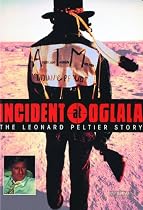
Incident at Oglala
documentary download
Click for Preview .
In an attempt to bring attention to the injustice, and to provide better protection and care for the Indians, the American Indian Movement was established. Also referred to as AIM, this movement was launched in the summer of 1968 in the basement of a store front church in ''Indian Town'' Minneapolis, MN. Years ago, Indians received a lot of abuse from law enforcement officers, and crimes against Native Americans were often unreported. Disciplinary actions were rare, and many Indians and non-Indians felt compelled to campaign for changes.
Since its start in the late 1960's, the American Indian Movement has successfully changed America's perception of Native Americans. Today, there are several reservations, and Indians are eligible to receive government funds to built homes, schools, and maintain their community. This way, the Native Americans can raise their families in good conditions. Additionally, abuse and prejudice against the Indians has decreased. There are also programs in place to help Native Americans immerse themselves in American culture. To boost the economy, small business grants are available to Native Americans, and many have take advantage of the opportunity.
Example of an Indian-owned business might include an online website that advertises authentic Indian artifacts such as pottery, clothing, moccasins, jewelry, and beadwork.
The American Indian Movement has actively objected to the use of Indians as mascots for sport's teams. Occasionally, protesters are present at Washington Redskin and Atlanta Brave games. Even though the American political system has an organization responsible for equal treatment of Indians, AIM has accomplished more, and continues to work for the equal treatment of all Native Americans.
Within the past forty years, Native Americans enjoy better living conditions, increased employment options and on-the-job training, and improved educational system.
In November, 1972 AIM brought a caravan of Native Nation representatives to Washington, DC, to the place where dealings with Indians have taken place since 1849: the US Department of Interior. AIM put the following claims directly before the President of the United States:
20. Reclaim and affirm health, housing, employment, economic development, and education for all Indian people. |
The Preamble and complete text of the Trail of Broken Treaties 20-Point Indian Manifesto .
These twenty points, twenty-six years later, state clearly what has to happen if there is to be protection of Native rights, and a future free from the dictates of the country that surrounds the Native Nations. These claims clearly reaffirm that Indian people are sovereign people. Despite the history and the accomplishments, AIM is difficult to identify for some people. It seems to stand for many things at once -- the protection of treaty rights and the preservation of spirituality and culture. But what else? Unlike the American civil rights movement, with which it has been compared, AIM has seen self-determination and racism differently. Desegregation was not a goal. Individual rights were not placed ahead of the preservation of Native Nation sovereignty. At the 1971 AIM national conference it was decided that translating policy to practice meant building organizations -- schools and housing and employment services. In Minnesota, AIM's birthplace, that is exactly what was done.
Over the years, as the organizations have grown, they have continued to serve the community from a base of Indian culture. Before AIM in 1968, culture had been weakened in most Indian communities due to U.S. policy, the American boarding schools and all the other efforts to extinguish Indian secular and spiritual life. Now, many groups cannot remember a time without culture. This great revival has also helped to restore spiritual leaders and elders to their former positions of esteem for the wisdom and the history they hold.
All of these actions are in concert with the principles of AIM and came into being at this time in history because Indian people have refused to relinquish their sovereign right to exist as free and uncolonized people.
Wanna learn more????? Go to http://www.aimovement.org/
Tags
Who is online
113 visitors
The most vocal group around/alive regarding Native Americans - and, yes, they are still alive.
Indeed we are still alive 1st, and still vocal as hell.
I'm glad.
Formally and informally, AIM was never listed as a terrorist organization by the FBI.
Wiki:
Guilty by association is not the way things work. Yes, most of these movements had contact with each other at that time, but that doesn't mean they had the same methods or ideology.
So, you're an advocate for terrorists?
Neither were the Black Panthers.
Although they were widely recognized as a racial/separatist movement.
Which doesn't make them terrorist. I mean if we go with that, then we have to go after all those militia groups out there, and they are not terrorist either.
Terrorism is a very specific act. When terror is brought to us, the public. Neither AIM nor the Black Panthers did that. You might not like what they stand for, but that is a whole different thing.
The goals of the Black Panthers and AIM were very different.
BPP was fighting for economic and political equality. AIM was fighting for treaty and legal rights.
Which is quite clear in the 20 point manifesto.
Trying to lock AIM and BPP as one in the same, or with the same goals is nonsense.
FREE LEONARD PELTIER!
W.A.S.P. Privilege calls the tune … often in the name of God.
How interesting, hypocritical and used to varying degrees to disadvantage everyone else.
Did AIM kind of fizzle when members took jobs as actors? For instance, I lost track of Russell Means until I saw him in the movie Last of the Mohicans. I went with to the movie with a Sioux shaman friend of mine (Red Buffalo) who was visiting me at the time. Russell Means was playing Chingachgook and, at the climax of the movie, Means is running up the side of a mountain (weapon in hand) to kill Wes Studi (another former AIM member), who plays Magua. You could have heard a pin drop . . . that is until Red Buffalo burst into laughter. What's so funny I asked? He said he knows Means and he couldn't run up that mountain 30 years ago so he sure couldn't do it now. He later went on to tell me that he (Red Buffalo) was a tribal policeman at one time and that Means was a total pain in the ass.