
KU investigation clears professor who used N-word in class


KU investigation clears professor who used N-word in class
Four-month leave, inquiry followed students’ complaints of racial harassment, discrimination
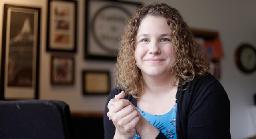
Photo by Mike Yoder . Enlarge photo.
Some Kansas University students filed a discrimination complaint with KU against assistant professor Andrea M. Quenette, who they accused of using racist language, in November 2015.
March 18, 2016
After a four-month investigation into whether she racially harassed and discriminated against students, a Kansas University professor who used the N-word in class has been cleared.
Assistant professor of communication studies Andrea Quenette said KU’s Office of Institutional Opportunity and Access notified her late Friday that it found she did not violate the university’s nondiscrimination or racial and ethnic harassment policies, as several graduate students had complained last fall.
Quenette — who has been on paid leave since the investigation opened in late November — said she thought KU’s process was thorough and fair, but she is relieved it’s over and looks forward to returning to campus.
“I believe they did due diligence in taking the students’ concerns seriously, and I do appreciate that,” she said. “I didn’t believe I had violated policies ... so I’m glad that the outcome reflected that.”
Key to the university’s decision was that while Quenette did say the N-word during a November class discussion about race, she did not use it as a slur.
“This word is offensive, but it was used in the context of retelling a factual event that occurred at another campus,” Quenette said, summarizing what the university wrote in a letter explaining its conclusion. “It was not used in racial animus.”
In addition to complaints from that class discussion, KU investigators looked at complaints about a lack of diversity training in orientation for communications graduate teaching assistants — for which Quenette coordinates the curriculum — and a simulation video she created for a media and terrorism class that students called stereotypical and offensive, Quenette said. KU addressed each but found no policy violations regarding them, she said.
KU’s conclusion made several recommendations for Quenette going forward, she said: Undergo cultural competency training, reevaluate orientation curriculum to include more diversity support and pair up with a faculty mentor.
“I think diversity training would be welcomed, and I think it is important for all faculty, so I embrace the opportunity to be able to do that,” she said. “A faculty mentor, I think, is a great thing.”
KU also recommended possibly reassigning duties within the communications department, Quenette said. She said specifics of that would likely be discussed with the department chair.
A total of eight communications graduate students filed formal complaints against Quenette with the Office of Institutional Opportunity and Access, Quenette said. Some of the students were in the class where she said the N-word but the majority were not, she said.
The university keeps names of complainants confidential.
KU spokesman Joe Monaco confirmed Friday that the investigation was complete and that all involved parties had been notified of the outcome. University administrators won’t comment on the findings, Monaco said, citing confidentiality.
Quenette, now in her third year as a tenure-track assistant professor, doesn’t have any classes this spring because she was previously scheduled for a research-intensive semester, but she said she expects to return to teaching this summer or fall.
She requested and was granted paid leave for the duration of KU’s investigation after a week of backlash from the Nov. 12, 2015, class discussion — including social media posts with the hashtag #FireAndreaQuenette and a critical open letter posted online by graduate students .

Photo by Mike Yoder
Kansas University Chancellor Bernadette Gray-Little listens to a question as she moderates a town hall forum on race at Woodruff Auditorium in the Kansas Union in November 2015.
Jyleesa Hampton, a first-year communications graduate student who is black, signed the open letter but was not in the class. Hampton did not say whether she was among students who filed Office of Institutional Opportunity and Access complaints, because that information is supposed to be confidential.
Hampton said Friday that the office's conclusion that Quenette didn't violate policy doesn't mean her comments weren't perceived as racist by those who received them.
"The students that wrote that letter stand behind that letter, that it is possible to do and say racist things and not violate the law," Hampton said. "That doesn’t make them any more acceptable.”
The class discussion in question came the day after KU’s heated, universitywide town hall forum on race .
It was sparked by a graduate student posing the question, “What is the best approach to talk about that event and these issues with our students?” according to the letter.
During the discussion, Quenette said that as a white woman it was difficult for her to relate to others’ challenges because she has not experienced racial discrimination herself, according to both Quenette and students. At KU, unlike other campuses reporting highly visible racist acts and assaults, “It’s not like I see (N-word) spray painted on walls…” the letter quoted Quenette as saying.
“Dr. Quenette’s deployment of racially violent rhetoric not only creates a non-inclusive environment in opposition to one of the University of Kansas’ core tenets, but actively destroys the very possibility of realizing those values and goals,” the students wrote.
Students said Quenette’s remarks caused them “shock, anger and pain,” according to the letter. They said they would refuse to attend Quenette’s class, and called on her to be fired.
Some in academia will consider KU's decision a win for academic freedom. Quenette's case made national news and attracted commentary from free speech advocates including the Foundation for Individual Rights in Education, or FIRE .
Quenette said she thinks everyone at KU can feel reassured, because both she and the students had an opportunity to be heard and that the process worked.
“People need to be respectful of other people’s feelings and situations and positions, and that will always be true,” she said.
“I feel hopeful there is opportunity for everyone to learn from this experience but also that faculty here can feel comfortable and not afraid.”
http://www2.ljworld.com/news/2016/mar/18/ku-exonerates-professor-who-used-n-word-class/
Tags
Who is online

89 visitors
After a four-month investigation into whether she racially harassed and discriminated against students, a Kansas University professor who used the N-word in class has been cleared.
“I feel hopeful there is opportunity for everyone to learn from this experience but also that faculty here can feel comfortable and not afraid.”
I'm glad the precious snowflakes were unable to destroy this woman like they wanted to. I hope they take this opportunity to grow up, but it seems unlikely.
You have to be able to teach the depths of what racism was and is. If you can't talk about it, nor teach about it, all that is going to be accomplished is prolonging it.
Yes, when I first read about this story a bit ago I was aggravated by the circumstances. The teacher thought she was having a honest conversation with adults but she wasn't. This is an example of why America can't have a real discussion. White people are not allowed to talk about it and when a black person does bring it up we better agree or risk being called a racist. This Professor will most likely NEVER put herself in a position that can be twisted and misconstrued again and I don't blame her. After something like this I would probably be looking for another job.
Universities are doing their best to bring back Mao's cultural Revolution.
America remains in vast denial about racism. Well over half of white Americans showed racist tendencies, both explicit and implicit, in a 2012 Associated Press survey.
So called "black racism" is largely a reactive racism that develops in response to white racism. There are very very few "black supremacists". There are a lot of people who believe the US is and should be a "white" or "European" country.
As for the professor, she should be able to use the 'n' word as long as SHE is not using it in a disparaging way. Relating an incident from the news for the purpose of exploring bigotry is not using it in a disparaging way.
There are far more whites in the US than blacks. If you look at racism from a percentage black racists probably outnumber whites.
I'm going out on a limb here to say that minorities have a reason to have a higher rate of racism. Just sayin...
Good morning John.
Black racism may have started out as a reactionary response to white racism but I disagree it is still the only reason. Everything morphs. Racism has become a shield for some black people. I don't say that to be dismissive of a history or of the horrible atrocious acts that while people and others have committed against black people and I'm not saying it doesn't continue to happen. What I am saying is that black people are racist also. The longer we pretend that it's either okay for them to call white people names and terms e.g.rednecks, without saying out loud that we find that terminology offensive and racist then we are allowing them to do what they demand we don't do.
It is a double standard. You can't give one side a free pass. They have to be held at the same level of responsibility for their actions otherwise we will continue to see people flocking to people like Donald Trump and race relations will take much longer to improve.
We have not solved the problem that is racism in America. It's ugly head is goes hand in hand with the ignorance that it's supporters want to wallow in.
We have not solved the problem that is racism in America.
I don't imagine we will solve racism for some time. I say this because racism is being re-defined in some ways.
For instance, culture. I mentioned this point one other time (I can't recall when). We tend to live around those who we a lot in common with including culture. So if we choose to live in communities that are reflective of who we are does that mean we're racist because we don't want to live in communities that don't represent our culture?
We see it in social settings all the time. Go to a bar or restaurant and when you look around you'll see people together in groups that best represent their cultural or race.
This monster of political correctness has created too much uncertainty for some and too much flexibility for others in how they want to define racism.
We have a long way to go still.
Guess my outlook is due to my upbringing. We were taught to embrace cultural differences. Small midwestern town of 25,000, but with a major university of 23,000 students, and professors from around the world with kids we went to school with. We also had one of the largest, if not the largest NA colleges in town as well. We were bathed in cultural differences back in the 1970s. We all learned from each other.
It is very rare to find a black "racist" who has an innate belief that blacks are superior. They almost do not exist. There are millions of Americans who believe this is a "white" country.
Accept it or don't accept it. It IS the truth and the reality of the situation.
You obviously don't live in DC
I hear what you're saying John. I'm not disputing that there is white racists. Can you agree to some extent that blacks are also racist?
There are some blacks who are negative about whites due to the past treatment blacks have received from whites, yes. There may be a small number of blacks who believe blacks are a superior race. A very small number.
I do not equate white racism and black racism. They are two different animals.
Okay, I can respect your position. Now, let's get back to talking about baseball!