
Is Trump undermining US democracy?


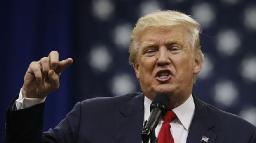
Donald Trump spent much of his campaign breaking political norms. Depending on whom you ask, it's either one of his most endearing qualities or the greatest threat his candidacy poses.
Now, however, he's calling into question one of the foundations of US democracy - the legitimacy of its electoral process.
In the fever swamps on the left and the right, plenty of Americans have doubted the integrity of US elections.
They've levelled accusations of voter fraud. Or hacked voting machines. Or polling-place intimidation.
Some of the allegations even contain kernels of truth.
Many US voting electronic machines are woefully unsecure and produce no hard-copy backup. There have been instances of voter impersonation - although they're extremely isolated and usually involve absentee balloting. New Black Panther activity around Pennsylvania polling sites in 2008 inflamed conservatives, although a US Justice Department investigation found no illegal activity.
You don't have to dig too deep into social media or the partisan commentariat to find a thorough rehashing of any of these particular concerns. What you don't hear - at least not until now - is such accusations coming from the top of a presidential ticket.
At a rally on Monday Mr Trump said he was afraid that the November election "is going to be rigged" - backing up his statement by saying it was something he was hearing "more and more".
In a television interview, he repeated the warning.
"November 8th, we'd better be careful, because that election is going to be rigged," he said. "And I hope the Republicans are watching closely, or it's going to be taken away from us."
The "rigging" accusation isn't particularly new for Mr Trump, although he'd previously only levelled it toward the sometimes Byzantine candidate nomination process. It's much easier to question party systems that rely on state-by-state primaries and often poorly managed caucuses, as well as frequently altered delegate allocation procedures.
Mr Trump has said Hillary Clinton benefitted from a rigged Democratic Party apparatus to defeat Vermont Senator Bernie Sanders. (Mrs Clinton received roughly 3.7 million more votes than Mr Sanders, but recently released hacked emails indicate that the Democratic National Committee was manoeuvring to support the former secretary of state behind the scenes during the final months of the primary season).
Mr Trump also accused Republican Party officials of attempting to deny him the nomination, after presidential rival Ted Cruz took advantage of delegate rules to position himself to upset Mr Trump - who had a significant advantage in the popular vote - in a contested convention.
Calling the US presidential nomination system "rigged" can be overheated rhetoric, but that playing field is often tilted toward the establishment. US politics isn't too far from removed a time when nominees were picked by party bosses, while rank-and-file voters had little or no say in the process.
General elections are different. Their rules are set forth in state and federal law, overseen by courts and governed by provisions enshrined in the US Constitution.
"National elections have a clear cut set of rules," writes Josh Marshall of Talking Points Memo. "The only way to rig them is to change the vote numbers."
For Mr Trump to call the fairness of US elections into question - months before Americans head to the polls, no less - is a significant break with the tradition of presidential candidates paying respect to the electoral process, win or lose.

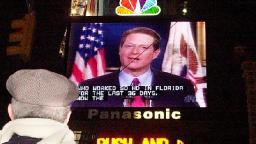
In 2000, after a contentious presidential contest that careened past election day and into an extended recount of the Florida vote and multiple rounds of lawsuits only settled by the US Supreme Court, Democrat Al Gore conceded defeat and called for unity.
"This is America," he said. "Just as we fight hard when the stakes are high, we close ranks and come together when the contest is done."
Eight years later, Republican nominee John McCain did his part to tamp down unrest within his own party following Barack Obama's election. When the audience booed his every mention of his opponent during his concession speech , he rebuked them.
"Please, please," he said to quiet the crowd.
"I urge all Americans who supported me to join me in not just congratulating him," he continued, "but offering our next president our good will and earnest effort to find ways to come together to find the necessary compromises to bridge our differences and help restore our prosperity, defend our security in a dangerous world, and leave our children and grandchildren a stronger, better country than we inherited."
Mr Trump's "rigged" language may simply be a rhetorical flourish from a candidate prone to extemporaneous musings - but it's already making the rounds among his supporters
In a podcast last week, long-time Trump advisor Roger Stone said that if the election results in November don't match opinion polls, the Republican nominee should challenge the validity of the election and warned that the unrest could end in a "bloodbath".
"If there's voter fraud, this election will be illegitimate," he said. "The election of the winner will be illegitimate, we will have a constitutional crisis, widespread civil disobedience, and the government will no longer be the government."
Such upheaval may be painfully familiar to those living in the world's less established democracies. It would be uncharted territory for the United States.
Tags
Who is online
164 visitors
I think Trump claiming that the General Election might somehow be "rigged" against him is just him setting up excuses as to why he loses the election or even possibly be used as an excuse to quit the race when it's obvious that he is going to lose.
That said, Roger Stone's threats that if the election results don't match the polls (by how much and what polls he doesn't say?) that there will be a "bloodbath" is right out of the mouths of dozens of third world dictator want to be mouth. It's dangerous hyperbole that might inspire some right wing lunatic type storm-trooper followers of Trump to actually turn to violence should he lose. That's flat out un-American to say.
Surely America is the only democracy in the world where the majority of individual votes does not elect the winner, as in the Gore/Bush debacle.
I have long supported the concept of a popular vote deciding the Presidency and doing away with the Electoral College. That said it make recounts in a close election nearly impossible to do (our technology simply isn't there yet) and every close election would be challenged in the court and the SCOTUS would be deciding who becomes President much of the time. Hell every Presidential election there are screams about outdated voting machines that don't even have a paper receipt record to recount and complaints from people who say they voted for one candidate, but that the machine registered their vote for the other. My wife and I mail our ballots in.
I really do prefer the Parliamentary system used in British Commonwealth countries, and Israel, among other western nations. Vote for your local candidate, then the party that gets the most members elected (if a majority, then that party rules and its leader becomes the Prime Minister) and if not a majority then a coalition must be made to form a majority position. Coalition governments are not the worst thing to happen - there is an element of control through negotiation and compromise. Although I have not voted in Canada for the last 10 years I doubt that they use voting machines - we just marked regular paper ballots.
In Australia, voting is mandatory, and if your vote is not registered you must pay a fine. Do you think that's a good idea? It sure beats "Use it or lose it."
And if we had parliamentary elections here in the states, Barack Obama would have been out of office after 2010.
The House would have voted no confidence and forced a new election.
Something very few consider when thinking that parliamentary style is better.
And YES, in 2010 the House would have given him the boot.
IMO a no-confidence vote might well have a very good reason.
The electoral college was a creation of the Founders and is embedded in the constitution to ensure that every states vote counts.
You have to win a majority of the states to win the presidency.
The electoral college ensures that outcome.
Otherwise, the hugely liberal, hugely populated cities, would render every presidential election a democrat victory.
The founders were wise enough to see and understand the ramifications of that and developed a way to prevent it.
Throw away the electoral college and you turn this country into a one party political nation.
Democrats and liberals know this and that is why they detest this very wise mechanism to prevent a political take over of the republic thereby turning it into a dictatorship.
They will always state they are for the popular vote to decide. Fuck the rest of the country, they live in the sticks, they shouldn't have a voice...
Well, fine, I'm not trying to change your electoral procedure. I just stated my preference and you stated yours. I always felt that majority should rule, but obviously your convoluted method meets your needs.
Actually it isn't anymore convoluted than yours.
You don't actually directly elect your Prime Minister any more than we do the President.
You elect your MP's who then elect your PM based upon their vote.
We have electors instead of MP's who are bound to the way their state voted overall.
In this manner the state chooses the president. He who wins more states (electors) wins the presidency.
Countries who have direct election of their national leader typically have much more political instability than those that don't.
In England, at least at the time of WWII, parliament sent two selections to the King, a first and a second choice. (purely ceremonial choice) In that case they sent Lord Byron as the first choice and Winston Churchill as the second choice. Lord Byron refused the post which left Churchill, who wasn't the Kings first choice either to lead the nation through WWII.
Most of the larger democracies do not have direct election of their leaders.
The members of a Canadian Party elect their leader. If that party gets a majority of local members elected in a national election, then that leader becomes Prime Minister and his party forms the government.
Same difference,
if you want your party guy in the office, then get busy in the local elections to get him there.
You don't directly vote him into office.
Are voting machines computer based? and do they relay their results over the internet? In other words, are they connected in some way to the internet? If they are, and if hackers are becoming more and more sophisticated and competent is there a possibility that they could change the numbers? - i.e. add or subtract from the actual inputted information? If so, you have no idea what might happen in November.
Not yet. Online voting is much to vulnerable to online hacking that it's just not ready for use. Some ballot "Boxes" are computerized, but you would have to screw with the software of each system. Not that that couldn't effect the out come. Voters of both parties have complained that they voted for their candidate on the computer, but that the computer registered a vote for the other candidate and if enough computerized ballot boxes are screwed with in some battleground state it could change the election. That's one of the reasons that ALL ballot boxes should be set up to generate a hard copy printed receipt that shows who the vote was cast for.
Lol. The DNC is exposed tampering with a primary election, but the liberal propaganda targets Trump... Hypocrisy.
Democracy is defined by liberals as voting the way they order.