
Witnessing death: AP reporters describe problem executions


April 28, 2017 8:36 PM EST
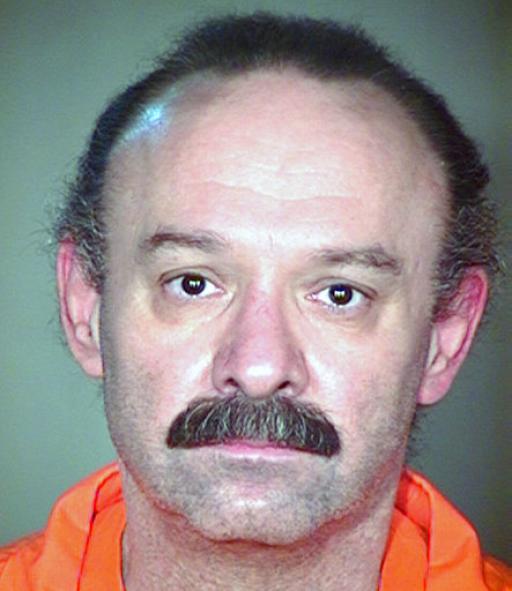
FILE - This undated file photo provided by the Arizona Department of Corrections shows Joseph Rudolph Wood, who was executed with the use of the sedative midazolam on July 23, 2014. Wood gasped for air, snorted and his belly inflated and deflated during the nearly two hours it took for him to die when the state of Arizona executed him. Questions about whether midazolam can prevent prisoners from suffering while they die have persisted since several states in 2014 began using the drug as part of their lethal injection protocols. (Arizona Department of Corrections via AP, File)
The sedative midazolam is supposed to prevent condemned prisoners from suffering while they die, but opponents say several problematic executions involving the drug are evidence that it does not work consistently. They raised new concerns after an execution Thursday in Arkansas left the prisoner convulsing and pressing against his restraints.
The drug, normally a surgical sedative, was first used by Florida in 2013 as part of that state's lethal injection protocol after drugmakers began clamping down on the use of other drugs such as sodium thiopental or pentobarbital. Midazolam has also been used in Alabama, Arizona, Florida, Ohio and Oklahoma.
Associated Press reporters who have witnessed problematic executions that involved midazolam describe what they saw:
___
DENNIS McGUIRE: Executed Jan. 16, 2014, in Ohio. Witnessed by AP writer Andrew Welsh-Huggins.
After Dennis McGuire appeared to lapse into unconsciousness, he began gasping and snorting. His stomach rose and fell, and his mouth opened and shut repeatedly for portions of the first 16 minutes.
He then lay motionless for about 10 minutes, after which he was declared dead. It was unclear to those present, including an AP reporter, if McGuire was experiencing pain. But it was clearly one of the most unorthodox-looking executions in state history.
His 26-minute execution remains the longest since Ohio resumed putting inmates to death in 1999.
The execution was unusual to begin with because of the state's ongoing difficulty finding drugs. Ohio had run out of pentobarbital, which it used successfully as a single, lethal dose for several executions in the past few years.
For McGuire, the state planned on a two-drug combination of midazolam, a sedative, and hydromorphone, a painkiller. This method had never been used anywhere in the U.S. for executions. McGuire had been sentenced to die for raping and fatally stabbing a pregnant newlywed in 1989.
Beforehand, expert witnesses for lawyers challenging the procedure warned that McGuire could experience what's known as "air hunger," which could cause him to suffer "agony and terror" while struggling to catch his breath.
Ohio has not carried out an execution since. The federal courts are currently weighing the state's new, three-drug protocol, which begins with midazolam.
___
CLAYTON LOCKETT: Executed April 29, 2014, in Oklahoma. Witnessed by AP writer Sean Murphy.
Clayton Lockett's execution left the inmate writhing and clenching his teeth inside the death chamber at the Oklahoma State Penitentiary in McAlester. His movements led prison officials to halt the proceedings before his eventual death about 43 minutes after the procedure began.
In what was originally scheduled to be a double execution, Lockett, 38, was declared unconscious 10 minutes after receiving the midazolam, the first of the state's new three-drug lethal injection. Three minutes later, though, he began breathing heavily, writhing, clenching his teeth and straining to lift his head off the pillow.
The blinds were lowered to prevent those in the viewing gallery from watching what was happening in the death chamber. It was the first time Oklahoma used midazolam as the first element in its execution drug combination. Other states had used it before. Florida administers 500 milligrams of midazolam as part of its three-drug combination. Oklahoma used 100 milligrams.
An investigation later revealed that a single intravenous line in Lockett's groin was improperly set and covered with a sheet, resulting in some of the lethal drugs leaking onto the floor and being injected into Lockett's tissue instead of directly into his bloodstream.
The state resumed executions in January 2015 with the lethal injection of Charles Warner and was just moments away from executing another inmate, Richard Glossip, in September 2015 when it was determined the wrong drug was delivered to the prison for Glossip's execution. An inquiry later revealed the same wrong drug was used to execute Charles Warner.
A moratorium on executions has been in place in Oklahoma since October 2015 while the state develops new execution protocols. Meanwhile, 15 death row inmates have exhausted their appeals and are awaiting execution dates.
___
JOSEPH WOOD: Executed on July 23, 2014, in Arizona. Witnessed by AP writer Astrid Galvan.
Joseph Rudolph Wood gasped for air, snorted and his belly inflated and deflated during the nearly two hours it took for him to die when the state of Arizona executed him.
Wood, a convicted double-murderer, was given a combination of midazolam and hydromorphone. Execution officials administered 14 additional doses of the two-drug combination before Wood was declared dead nearly two hours later.
Witnesses watched the entire execution, and Wood could often be heard snorting throughout, even when the microphone was off.
Wood's attorneys tried to stop the execution as it was taking place but were unable to. They said the execution was botched, a claim the state of Arizona denies. The state says it followed the proper protocols but that the two-drug combination did not go as intended.
Still, Arizona has since changed its execution protocols, agreeing in December to no longer use the drug in executions. The agreement settled part of an ongoing lawsuit challenging the way executions are carried out in Arizona.
The state has put all executions on hold until that lawsuit is fully resolved, meaning Arizona has not carried out the death penalty since Wood's execution nearly three years ago.
___
RONALD BERT SMITH: Executed Dec. 8, 2016, in Alabama. Witnessed by AP writer Kim Chandler.
The execution of Ronald Bert Smith required two consciousness tests as the inmate heaved and coughed 13 minutes into the lethal injection.
Smith clenched his fists and raised his head off the pillow at the beginning of the execution in which midazolam was administered. For the next 13 minutes, he had regular loud coughing, and his chest heaved.
A corrections office gave Smith a consciousness test by brushing his eyelashes and then pinching his left arm. During the test, Smith moved his arm. After Smith began to settle, a second consciousness test was given, and he appeared to move his right arm slightly after the second test.
The meaning of those movements has been disputed. Smith's lawyers argued it showed he was never fully anesthetized. The state Department of Corrections said protocol was followed and there was no outward sign of suffering.
Alabama's next execution is scheduled for May.
___
JACK JONES: Executed April 24 in Arkansas. Witnessed by AP writer Andrew DeMillo.
Condemned killer Jack Jones' 14-minute execution began after he delivered a two-minute statement and the microphone in the death chamber was turned off. Jones' lips moved for about a minute, but nothing was audible from where an AP reporter was seated. Prison officials said Jones was speaking to the Department of Correction director when his lips were moving.
Jones' chest rose and fell intermittently for the first several minutes, and a prison official several times touched Jones' face and put a tongue depressor in the inmate's mouth.
At least four witnesses testified that they saw Jones' mouth open and close about five minutes into his execution. Attorneys for Marcel Williams, the second inmate scheduled to die that night, said that movement proved Jones' execution was torturous and inhumane. A federal judge disagreed and allowed Williams' execution to proceed.
The deaths on April 24 were the nation's first double execution in nearly 17 years.
http://my.earthlink.net/article/top?guid=20170428/442cc809-f3db-4c35-a3ba-90d7414521b0
Tags
Who is online
77 visitors
First of all I am pro death penalty in extreme case such as the intentional killing of a cop or the rap murder of a child or in the case of Timothy McVeigh where the evidence is overwhelming, but I think it id handed out too easily and innocent people are dying.
That said it is obvious that these drugs are not working. In a civilized society I believe we have the right to take the life of a person who has proven that they have given up the right to live among us, however we do not have the right (cruel and unusual) to torture a person to death no matter what their crime was. We should not lower society to their level of barbarity. When we execute a condemned person their death must swift and certain and I think that most can agree that lethal injection is a complete failure at this standard. We must either return to an older method such as gas or shooting or come up with a new method of execution, because this one I think will be eventually declared as cruel and unusual.
The guillotine was pretty effective, and instantly debilitating. Of course I can't imagine what went through the heads of the victims of it when they heard that blade start to rumble down the slide.
The prisons could hire ISIS swordsmen. They're pretty experienced and effective in causing instant death as well.
randy , I read a few days ago there is some judge that is advocating both firing squad and the guillotine as methods , I would say given my choice if it were me as the red queen says , off with his head , it might be messy , but it is effective and very final , firing squad , hanging and some of the others can be survivable just long enough to be torture , that's not saying , the method I would choose is any less though.
Given a choice between the two in would pick the guillotine also. Swift and done. Simple and effective. Difficult to screw up.
I have heard that the guillotine is really effective. I have also heard stories of where the open eyes of the head moved about for a few seconds after the removal. Of course that could be just a nerve reaction.
I firing squad is still an option for the condemned to choose in Utah I believe because of some Mormon thing about Blood Atonement. The last time it was used was in 2010 with the execution of Ronnie Lee Gardner. By all accounts it went very well.
I'm not sure, but I think that in China a bullet into the back of the head is used - I would assume that's pretty well instantaneous and effective.
By the way, I am NOT a supporter of the death penalty, no matter how horrible the crime. When we know that mistakes are made, i simply cannot condone it. A life of hard labour with no release should suffice - it takes the accused out of circulation and doesn't make prison a holiday.
I do support it in extreme cases. such as a school shooting like Sandy Hook if he had killed himself or the rape and murder of a child or the execution of a cop. Granted I think it is handed down far, far too many times and in too many questionable cases and that must be stopped.
I think an execution by a gun shot to the head would be very effective and is favorite (gun into the mouth) among suicides in the U.S. and would be my choice for certain!
I'm not sure, but I think that in China a bullet into the back of the head is used - I would assume that's pretty well instantaneous and effective.
By the way, I am NOT a supporter of the death penalty, no matter how horrible the crime. When we know that mistakes are made, i simply cannot condone it. A life of hard labour with no release should suffice - it takes the accused out of circulation and doesn't make prison a holiday.
Guess we'll find out a bit more now.
Arkansas execution: Judge orders post-mortem