
How the Left Became its Own Worst Enemy

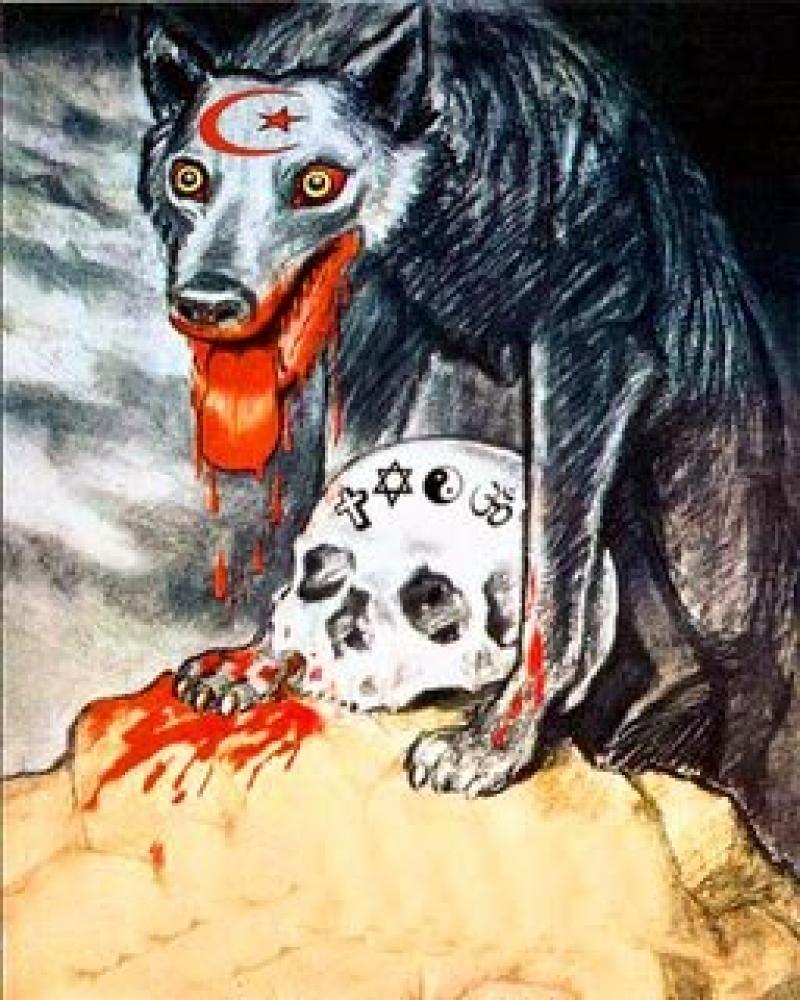
It is one of the ironies of modern politics that the same word can be susceptible to more than one meaning, creating confusion for everyone.
One of the reasons for the confusion is that liberal values are generally shared by moderates on both the left and right of politics. Not by the far left -- Marxists, Leninists, Trotskyites, and Stalinists or Britain's Labour Party under the leadership of Jeremy Corbyn – or by the far right – Germany's Alternativ für Deutschland, Hungary's Jobbik, Austria's Freiheitliche Partei Österreichs, or Greece's Golden Dawn.
Leftist values underpinned both the American and French revolutions, helping to create the liberal democracies that remain our chief defence against Communism at one end of the political spectrum and Fascism on the other. Most of those values are taken for granted by mainstream populations in the U.S., Canada, Australia, and much of Europe. Writing in American Conservatism: An Encyclopedia, Ralph Raico describes classical liberalism as
"the term used to designate the ideology advocating private property, an unhampered market economy, the rule of law, constitutional guarantees of freedom of religion and of the press, and international peace based on free trade. Up until around 1900, this ideology was generally known simply as liberalism."
One might also include civil rights; democratic institutions; equal justice under the law; separation of religion, state, judiciary and education, and international co-operation. Although there is, of course, more to liberal values than these, they are all enshrined in articles of the US Constitution and implied or stated in the constitutions and laws of other democracies.
The role of liberalism in the reformation of Europe following World War II is made clear by Oxford historian Professor Martin Conway:
Liberalism, liberal values and liberal institutions formed an integral part of that process of European consolidation. Fifteen years after the end of the Second World War, the liberal and democratic identity of Western Europe had been reinforced on almost all sides by the definition of the West as a place of freedom. Set against the oppression in the Communist East, by the slow development of a greater understanding of the moral horror of Nazism, and by the engagement of intellectuals and others with the new states (and social and political systems) emerging in the non-European world to the south.
So far, so good. As Conway goes on to explain, however, a new liberalism inspired by Marxist-inspired left-wing ideology, began to replace the more classical forms across Europe and, to a lesser extent, the United States. Marxist glamorization has inspired many liberals to abandon their original principles and betray what were its own best values, values that are still proclaimed but have become overridden by quite opposite ideas.
One subtle shift has been the emergence of political correctness, a form of Cultural Marxism (the theory that culture more than politics drives inequality between races and classes in Western societies). Political correctness started as a reasonable exercise to protect vulnerable members of society -- blacks, women, Jews, gays, the disabled -- from offensive speech and action but ended as a modern totalitarianism that blocks free speech and open debate on just about everything.
Today's youth, particularly on university campuses, have adopted ways of thinking and behaving that contradict all the ideas that were the fundamentals of classic liberalism. There are many examples, but the one that stands out above the rest is support for radical Islam and hard-line Muslims.
The most famous instance in the UK was Labour leader Jeremy Corbyn's embrace of members of the terror outfits Hamas and Hezbollah, which he described as his "friends". It took him until the summer of 2016 to say that he regretted his engagement with the terrorists.
In several European countries, including France, Belgium, the Netherlands, and parts of Italy, governments have banned fully or in part the wearing of the Islamic veil; above all, the niqab and burqa, the full-face forms. One might have thought that Western feminists would be in the vanguard of such movements, as it could not be clearer that Islamic law oppresses women far more than ever happened in the West. A British Muslim physician, Qanta Ahmed, and Yasmin Alibhai-Brown have openly and repeatedly called for the abolition of all forms of veiling. Muslim women reformers across entire the Islamic world have called for an end to veils of all kinds.[1] In Iran this year, young women have been demonstrating on the streets without their compulsory hijabs, and at least 29 have been arrested as the regime clamps down again.
If some Muslim women call for the removal of the veil, however, they are often criticized by Western Muslims. The Franco-British academic, Dr. Myriam François-Cerrah, a hijab-wearing Muslim convert, published a vitriolic attack on Alibhai-Brown. Cerrah's piece, which appeared in the left-of-centre New Statesman, was entitled "The Feminist Case for the Veil". Alibhai-Brown, who describes herself as "leftie liberal, anti-racist, feminist, Shia Muslim, part-Pakistani", had just published a book entitled Refusing the Veil, in which she argues that Muslim women must abandon veiling because it conceals abuse, propagates eating disorders, and restricts access to sunlight and exercise; that it is imposed on babies and young girls, allows women to be shamed for not covering up, and has become associated with extremist factions; that it demonizes men, oppresses feminism, and presents obstacles to performance and success; and that it even encourages racism, distorts Muslim values, and strips women of autonomy and individuality. François-Cerrah bizarrely describes the book as "a socially conservative book that is dressed up as a liberal feminist manifesto" -- that from someone with an Oxford PhD.
That a clearly successful and independent woman such as Cerrah, who happens to be a Muslim convert, should attack this book so viciously is a clear testimony to just how the veil debate has created a serious rift within Western societies and has become a cause for concern, not just for non-Muslims, but for many Muslims, as well.
Other politically correct feminists also support universal wearing of the veil. In July 2015, a leading French feminist, Christine Delphy, published an opinion piece in the London Guardian in which she proclaimed that the French ban on veils and the tradition of French laïcité (secularism) were racist and that true feminists respect even the patriarchal customs of other races and religions.
Writing in New York's Jewish Tablet magazine in 2015, Heather Rogers relates how she at first dismissed criticism of misogyny within Muslim communities because "Westerners have no right to tell Muslims how to live" and downplayed arguments about the rate of Islamic honour killings. It was only on later reflection, she said, that she began to pose questions such as, "Why aren't more non-Muslim feminists speaking up about violence against women in Muslim-majority countries?" She then gives an example of how liberal feminists distort matters:
"In searching the Internet, I begin to find the vestiges of a discussion of the subject among Leftists, which suggests some reasons why many non-Muslim feminists choose to stay silent. One controversy is to do with an essay Adele Wilde-Blavatsky wrote in 2012 for The Feminist Wire, an online women's studies journal. Her piece says the hijab is a symbol of male oppression. A storm ensued. One response, signed by 77 academics, writers, and activists, said the essay was an assertion of Wilde-Blavatsky's 'white feminist privilege and power.' Instead of facilitating a discussion, however, The Feminist Wire editorial collective took down the comments, pulling the essay off along with them."
Referring to Muslim women in Iran and Turkey who struggle to break free of the restrictions imposed on them, Khadija Khan exposes the hypocrisy of Western women – those who support outright extremist Muslims who advocate for Islamic law, Sharia, which discriminates against women, such as Linda Sarsour:
These women -- who are trapped in despotic Middle Eastern dictatorships, and who face possible prosecution and having their lives ruined -- were given no attention by the... women marchers in the U.S. Evidently, feminists in the West were too busy wearing hijabs in solidarity with Sarsour and other promoters of Islamic law (sharia), which advises husbands to beat their wives and that in court, a woman's testimony is worth half a man's testimony; that daughters can receive only half the inheritance of a son, and that if a woman is raped, she will need four male Muslim witnesses, supposedly at the scene, to prove that she was not committing adultery.
Sometimes defence of the veil by Muslims who regard themselves as feminists can be self-contradictory. In 2014, the Daily Telegraph reported on a series of comments on social media, in which a number of Muslim women explained why they choose to cover their heads or faces. One user writes:
"I like to use it to promote feminism, however it is very hard to express it because of how people view it. There ARE a lot of women who are forced to wear it, and I think that's really wrong, no matter how religious or what country. The hijab is forced in some places in the world, or by certain people – especially men in many cases. I will not deny this. This is not feminism. I want to take this hijab and make it my own. First choose if I even want to cover or not. Define WHY and HOW. I will choose what colors I will wear. What materials. Not just black and white. I control if I want to use hijab pins, rhinestones, lace, or brooches. When I will wear it, how I will tie it. When I choose to take it off. It is my right. Also I will choose WHY I wear it. NOT wear it because someone told me to. These points combined promote feminism within women."
What sort of feminism admits is it that women are forced by men to wear the veil, but believe that wearing it is an expression of women's liberty just because she controls the colour and materials of her hijab? It sounds like a prisoner who thinks he is free because he is allowed to choose the design of his chains.
Another woman, who says she is a lawyer, writes:
"The biggest benefit that I enjoy by wearing [the hijab] is that people deal with me as an individual and not just according to my looks."
Why, though, would wearing a hijab make anyone more of an individual? If she has an attractive face, men will still take her looks into account, hijab or not. Worse, photographs of groups of Muslim women wearing full burqas and niqabs show them looking virtually identical, with their individuality totally erased.
There are, thankfully, some genuinely liberal feminists who see through this imposture. Award-winning journalist Abigail Esman recently published an article entitled, "The West Embraces the Hijab as Muslim Women Risk Their Lives for the Right to Choose":
[T]he West's concern seems to be far more about perceived "Islamophobia" than misogyny...
In fact, the new celebration of the hijab seems to be about celebrating all those things that we in the West generally condemn: pushing a new "must" trend for women in fashion and behavior... and above all, increasing the very real risks to those Muslim women who choose not to wear a head-covering by making models and icons of those who do.
Last year, an Irish journalist and government media advisor, Carol Hunt, condemned the double standards in an article for the Irish Times, "Why is feminism so quiet about Muslim women who refuse to wear the hijab":
So why then, do liberal, feminist calls for equality stop at borders? I am at a loss to understand why equality is purely for one particular group of people and not for others. If I believe in the Universal Declaration of Human Rights, then surely that shouldn't change no matter who I am or where I live....
She continues, arguing that some feminists and gay rights activists choose to support fundamentalist Muslims (who are anti-woman and anti-gay) instead of Muslim reformers:
In December 2015, the feminist and LGBTQ societies in Goldsmith University in London allied with the college's fundamentalist Islamic society, against the ex-Muslim human rights campaigner, Maryam Namazie. Namazie is a trenchant opponent of the sort of discrimination that is now unacceptable in Christianity but somehow admirable in Islam. Similarly, Maajid Nawaz, who works tirelessly defending Muslim communities in Europe, Pakistan and elsewhere from the "diktats of Islamist theocrats", found himself on a liberal list as an "Anti-Muslim" extremist.
Again, referring to the ex-Muslim feminist Ayaan Hirsi Ali, Hunt continues:
She [Ali] asks why do we loudly defend a woman's right to wear the hijab but when it comes to supporting Muslim girls who refuse to wear it, feminism is strangely quiet? Women who wish to wear a veil should be able to, without criticism or social pressure to do so. But elevating the wearing of the hijab to a symbol of feminism struggle is twisted in the extreme.
Yet this is what happened earlier this year when women all over the US marched against the Trump ideology – at their head in New York was religious fundamentalist, "home-girl in a hijab", Linda Sarsour, a pro-Sharia advocate and an apologist for the atrocious Saudi regime.
What sort of benevolent bigotry is this? Meanwhile, liberal Muslims suffer, not just alienation and punishment from within their own culture, but a very loud silence from those of us who are terrified that by speaking out we may be dubbed Islamophobic or on the same side as the likes of Trump, Farage, et al.
Somali-born ex-Muslim author Ayaan Hirsi Ali "asks why do we loudly defend a woman's right to wear the hijab but when it comes to supporting Muslim girls who refuse to wear it, feminism is strangely quiet?" (Image source: Gage Skidmore)
In a recent piece for the Gatestone Institute, American author Bruce Bawer spotted the root of the problem. Giving examples of feminist support for Islamic practices that harm women, he focuses on Sweden:
Sweden's preferred type [of feminism] is not about universal sisterhood and the spreading of sexual equality around the globe. No, it is "intersectional" feminism. What is "intersectional" feminism? It is a species of feminism that, in accordance with the relatively new academic concept of "intersectionality," accepts a hierarchy whereby other "victim groups" -- such as "people of color" and Muslims -- are higher up on the grievance ladder than women, and whereby women who belong to those other groups enjoy an even more exalted status as victims than white female Christians or Jews.
What this means is that, although genuine feminists have made strides for women's rights in Western countries, they have helped set back the rights of young Muslim women to break free from the oppressive codes of an Islam defined and controlled by Muslim men. And that is only one level of leftist self-harm, as I shall explain in the second part of this article.
This willingness to indulge even the most anti-liberal beliefs and behaviour finds many of its roots in the general disdain many left-wingers and liberals seem to feel for Western democracy, human rights and individualism. But that does not explain why so many people, often decent people, are drawn to defend Islam, Islamic patriarchy, Islamic discrimination against women, violence and more, even when such defence is obviously anti-liberal in the extreme.
I have never known a liberal to say a bad word about a more prevalent and arguably more damaging imperialism: Islamic imperialism. There have been many more imperialist Muslim empires than European ones.
One might have thought that historical facts such as these would provoke human-rights activists to put the Muslim empires into the same category as the later European ones. Not a word of it. Nor do liberals mention another issue that should be close to their hearts: the Islamic slave trade.
Feminists are far from the only so-called left-wing or liberal group to betray their own basic principles out of a bizarre admiration for Islam, whether its history, its values, or its self-proclaimed victimization. Real liberals believe in human rights, women's rights, racial equality, free speech, and more, rejecting extremism on both the right and left. However, the left in the UK and elsewhere seems to have abandoned those principles and betrayed the very people they had previously supported.[1]
This willingness to indulge even the most anti-liberal beliefs and behaviour finds many of its roots in the general disdain that many so-called left-wingers and liberals seem to feel for Western democracy, human rights and individual freedom. This disdain, however, does not explain why so many people -- often decent people -- are drawn to defend Islam, Islamic patriarchy, Islamic discrimination against women, or violence in the name of Islam, especially when such defence is obviously anti-liberal in the extreme. Examples are not hard to find, for instance feminists who urge Muslim women to submit to the veil and abandon their rights as free women in favour of Muslim men and their power over them.
What possesses so many Westerners to regard Islam, Islamic religion, Islamic law, and Islamic intolerance through rose-tinted spectacles that obscure the obvious and blind observers from seeing what is in front of them?
Another of the most notable examples is the virtually universal attitude toward imperialism. We might all agree that imperialism is a thing of the past and that, for the most part, it has brought considerable suffering on indigenous peoples who found themselves under British, French, Belgian, Spanish or Portuguese rule. No country in the modern West would seek to bring back an imperial system that, mercifully, was dealt a death blow by the First and Second World Wars. This change, however, does not prevent Marxists and others of a similar ilk from claiming that imperialism continues to this day, through the power exerted by strong nations in the West such as Israel or the U.S. Even the United Nations has been condemned as "a tool of imperialism".
Mystifyingly, however, I have never known a liberal to say a bad word about a more prevalent and arguably more damaging imperialism: Islamic imperialism.[2] From the year 632 until 1918, there have been many more Muslim empires than European ones.
The first extensive Islamic empire was the Umayyad Caliphate (661-750), which extended from the Iberian peninsula (Spain and Portugal) to what is now Northern India and Pakistan's province of Sindh. At its height, it was the largest empire in the world and remains the fifth largest in history.
The Umayyads were replaced by the 'Abbasids (750-1258), who ruled a similar extent of territory, including Sardinia, Sicily, and southern Italy. A succession of such empires controlled territories from North Africa to India. The most extensive of all was the long-lasting Ottoman empire (1299-1918), the possessions of which rivalled those of the largest of all empires, that of Great Britain. Here is a rough list of the Ottoman dominions:
Algeria, Tunis, Tripoli (Libya), Egypt, Western Arabia, Syria (a vast area), Mesopotamia (Iraq), Anatolia (Turkey), Croatia, Bosnia, Albania, Greece, Serbia, Bulgaria, Rumelia, Wallachia, Hungary, Poland, Transylvania, Moldova, Bessarabia, Crete, Cyprus, Crimea, Georgia, Azerbaijan, Daghestan, al-Hasa (in eastern Arabia).
Broadly speaking, the Ottoman empire lasted longer and covered more territory than even the long-lived (1415-1999) Portuguese empire in South America, Africa, India and farther east. European empires may have been – and often were -- despotic, carrying out ethnic cleansing; genocides, such as Spain's and Portugal's in South America, as well as general brutality to the natives. Those are all causes for censure.
In addition, frighteningly high numbers of Hindus were massacred in India by Muslim rulers. A Sikh writer declares that the assault amounted to "the biggest holocaust in World history":
With the invasion of India by Mahmud Ghazni about 1000 A.D., began the Muslim invasions into the Indian subcontinent and they lasted for several centuries. Nadir Shah made a mountain of the skulls of the Hindus he killed in Delhi alone. Babur raised towers of Hindu skulls at Khanua when he defeated Rana Sanga in 1527 and later he repeated the same horrors after capturing the fort of Chanderi. Akbar ordered a general massacre of 30,000 Rajputs after he captured Chithorgarh in 1568. The Bahamani Sultans had an annual agenda of killing a minimum of 100,000 Hindus every year.
The Belgian Indologist Dr. Koenrad Elst wrote that:
There is no official estimate of the total death toll of Hindus at the hands of Islam. A first glance at important testimonies by Muslim chroniclers suggests that, over 13 centuries and a territory as vast as the Subcontinent, Muslim Holy Warriors easily killed more Hindus than the 6 million of the Holocaust. Ferishtha lists several occasions when the Bahmani sultans in central India (1347-1528) killed a hundred thousand Hindus, which they set as a minimum goal whenever they felt like "punishing" the Hindus; and they were only a third-rank provincial dynasty. The biggest slaughters took place during the raids of Mahmud Ghaznavi (ca. 1000 CE); during the actual conquest of North India by Mohammed Ghori and his lieutenants (1192 ff.); and under the Delhi Sultanate (1206-1526).... The Moghuls (1526-1857), even Babar and Aurangzeb, were fairly restrained tyrants by comparison. Prof. K.S. Lal once estimated that the Indian population declined by 50 million under the Sultanate, but that would be hard to substantiate; research into the magnitude of the damage Islam did to India is yet to start in right earnest.
He continues:
Apart from actual killing, millions of Hindus disappeared by way of enslavement. After every conquest by a Muslim invader, slave markets in Bagdad and Samarkand were flooded with Hindus. Slaves were likely to die of hardship, e.g. the mountain range Hindu Koh, "Indian mountain", was renamed Hindu Kush, "Hindu-killer", when one cold night in the reign of Timur Lenk (1398-99), a hundred thousand Hindu slaves died there while on transport to Central Asia. Though Timur conquered Delhi from another Muslim ruler, he recorded in his journal that he made sure his pillaging soldiers spared the Muslim quarter, while in the Hindu areas, they took "twenty slaves each".
One might have thought that historical facts such as these would provoke human-rights activists to put the Muslim empires into the same category as the later European ones. Not a word of it. Nor do liberals mention another issue that should be close to their hearts: the Islamic slave trade.
Slavery has been an integral part of Islamic practice from the start. It is scripturally endorsed, embedded in shari'a law, and has been practiced from the seventh century until today. The slave trade was notably carried on by Arab merchants across the Sahara and brought Africans to North Africa. Liberals rightly condemn the European slave trade and its impact on North America; they – again rightly – act to eliminate modern slavery through trafficking – which is estimated to involve some 40.3 million people worldwide by 2016. It is almost unheard of, nevertheless, for people on the left also to speak of the Islamic (mainly Arab) slave trade.
The educational website History World, for instance, has a substantial account entitled "History of Slavery", in which it describes the use of slaves in Babylon, Greece, Rome, the European Middle Ages, and the Portuguese and triangular (chiefly the Transatlantic) slave trades. Yet it only mentions Islamic slavery in passing, despite its having lasted far longer than the European and American versions. Here are the three short paragraphs the site devotes to the subject, all of which appear to argue that supposedly Muslim slavery was not altogether a bad thing:
Slavery is an accepted part of life in Arabia during the time of Muhammad, in the 7th century, and the Qur'an offers no arguments against the practice. It merely states, particularly in relation to female slaves, that they must be well treated. In general that has been the case[3] compared with the barbaric treatment of slaves in some Christian communities.
Meanwhile the Muslim habit of using slaves in the army has led to one unusual result - in itself an indication of the trust accorded to slaves in Middle Eastern communities.
In 1250 the slave leaders of the Egyptian army, known as Mamelukes, depose the sultan and seize power. A succession of rulers from their own ranks control much of the Middle East, as the Mameluke dynasty, for nearly three centuries.
This article also does not mention the three centuries of the Barbary Slavers,: North African Muslims who went out as pirates into the Mediterranean to capture ships from European countries and take crews and passengers as slaves to be sold in the markets of Tunis, Algiers and other towns. Barbary pirates ventured as far as England and Ireland, where they would raid coastal villages, and carry residents off. Professor Robert Davis writes:
"The fishermen and coastal dwellers of 17th-century Britain lived in terror of being kidnapped by pirates and sold into slavery in North Africa. Hundreds of thousands across Europe met wretched deaths on the Barbary Coast in this way".
As late as the early 19th century, the new US Navy fought two wars against the Barbary States, bringing the piracy to an end.[4]
Edward Moran's 1897 painting, depicting the burning USS Philadelphia at the Battle of Tripoli Harbor, during the First Barbary War in 1804. (Image source: U.S. Naval Academy Museum Collection/Wikimedia Commons)
Fantasies about the benign effects of slavery under Islam or, more widely, the tolerance enjoyed by non-Muslims living in the Muslim empires are still widespread. Muslims themselves insist that Islam is the most tolerant religion, and many progressives take this on board without much knowledge of the facts. Classroom, a website devoted to education, illustrates the naivety of excessively open-minded Westerners. In an article, "How Muslim Empires Treated Religion", Laura Leddy Turner writes:
From Muhammad's founding of Islam and his unification of the Arab tribes in the seventh century, Muslims were instructed to practice respect towards other religions. This tolerance was essential to ensure peace and stability in Medina and throughout Asia Minor, as these lands were populated by Jews, Christians and other faiths. Most of the Islamic empires established in this region upheld the tradition of religious tolerance, although conflict between Sunni and Shiite Muslims was frequent.
Ms Turner holds a B.A. in literature and English from Ramapo College of New Jersey, with postgraduate coursework in business law. She has obviously never read a word of the Qur'an or the Hadith, or studied the history of Islam in any depth or she would not write such nonsense. Many religions can display intolerance towards non-believers, often in defiance of scriptural values (as in Christianity), but Islam in particular seems to stand out for a hatred for non-Muslims, and for other Muslim sects not like theirs, that is still practiced. Under Islamic law, Jews and Christians are forced live by a separate set of laws designed to remind them they are merely lower-class, "tolerated" residents, called dhimmis, and that they have to pay a "protection" tax merely to preserve their lives and keep their homes, synagogues or churches.
If they refuse to do so, they may be killed and their property confiscated. All other "disbelievers" are considered pagans, who may be killed with impunity if they do not convert to Islam on the spot. Tolerance?
A favourite focus for praise of life under Islamic rule is, of course, the Jewish and Christian experience under Umayyad rule in the Iberian peninsula, covering most of Spain and what, in 1128, became Portugal – a territory best known as Andalusia (from the Arabic al-Andalus). A host of articles and lectures have described Islamic Spain as a haven of tolerance and civilization, representing a gold age in European history. Akbar Ahmed, for example, holds the Ibn Khaldun Chair of Islamic Studies at American University's School of International Service in Washington, DC and served as the former Pakistani High Commissioner to the UK and Ireland. Writing in the Huffington Post, he states that:
At its height, Andalusia produced a magnificent Muslim civilization — religious tolerance, poetry, music, learned scientists and scholars like Averroës, great libraries (the main library at Cordoba alone had 400,000 books), public baths, and splendid architecture (like the palace complex at the Alhambra and the Grand Mosque of Cordoba). These great achievements were the result of collaboration between Muslims, Christians and Jews — indeed the work of the great Jewish Rabbi Maimonides was written in the Arabic language. It was a time when a Muslim ruler had a Jewish chief minister and a Catholic archbishop as his foreign minister. The Spanish had a phrase for that period of history — La Convivencia, or co-existence.
While there may be some truth in this, it is in most respects a gross exaggeration that whitewashes the realities of life there for all non-Muslims. This exaggeration was in some measure contradicted by Edward Rothstein, writing (somewhat surprisingly) in the New York Times in 2003, in an article entitled, "Was the Islam Of Old Spain Truly Tolerant?":
As many scholars have argued, this [idealized] image is distorted. Even the Umayyad dynasty, begun by Abd al-Rahman in 756, was far from enlightened. Issues of succession were often settled by force. One ruler murdered two sons and two brothers. Uprisings in 805 and 818 in Córdoba were answered with mass executions and the destruction of one of the city's suburbs. Wars were accompanied by plunder, kidnappings and ransom. Córdoba itself was finally sacked by Muslim Berbers in 1013, its epochal library destroyed.
Andalusian governance was also based on a religious tribal model. Christians and Jews, who shared Islam's Abrahamic past, had the status of dhimmis -- alien minorities. They rose high but remained second-class citizens; one 11th-century legal text called them members of "the devil's party." They were subject to special taxes and, often, dress codes. Violence also erupted, including a massacre of thousands of Jews in Grenada in 1066 and the forced exile of many Christians in 1126.
More recently, and in much greater detail, Darío Fernádnez-Morera, an associate professor in Spanish and Portuguese at Northwestern University has published a ground-breaking study, The Myth of the Andalusian Paradise: Muslims, Christians, and Jews under Islamic Rule in Medieval Spain (2016). We have to hope that it, and future studies from a similar perspective, will help dispel the fog of ignorance that surrounds what life was really like under Islamic imperialism. https://www.gatestoneinstitute.org/11974/leftists-islam
Yep, we can see clearly what liberalism and socialism has done to Europe, from ruined economies and usurious taxation, to being controlled by faceless bureaucrats in some windowless rooms in Brussels, to being overrun by immigrants from all over.
We have some far left fringe groups who want that for the USA, but they are few in number and not well organized, so keeping them down is still possible and must be diligently continued at all costs.
What country do you want to model ours after? Evidently Trump and republicans really really like getting immigrants from Europe (as stated publicly), but they don't like the economic and societal stances. Prefer Russia? China? Myanmar?
Due to the fear of having my head sliced off I really don't want to make a comment that supports this essay, but it makes a lot of historical sense to me. However, let's see how many liberals disparage the truths stated therein - attack the author, attack the source, attack the seeder, but are incapable of denying the facts.