
Monkeypox surfaces in three cases the U.K. What you need to know about the rare virus

 S E E D E D C O N T E N T

Now there are three.
Officials in the U.K. announced Wednesday that a health worker in Blackpool, in northwestern England, had contracted monkeypox , the third patient in the country to be infected with the rare virus in the past month. The health care worker was infected by a patient who was recently cared for at the hospital.
Britain’s first-ever case of monkeypox was reported on Sept. 8, in a man from Nigeria who had been at a naval base in Cornwall. Only three days later a second imported case was spotted, in a man who had also recently returned from travel in Nigeria.
That second individual, who was not immediately recognized as a monkeypox patient, was initially cared for at Blackpool Victoria Hospital. During that time before diagnosis, a health worker became infected.
Monkeypox is rare, especially outside of Africa. Here’s what you need to know about the virus, how it is spread, and how that spread can be stopped.
What is monkeypox?
It is a disease caused by the monkeypox virus, a cousin of the now-eradicated virus that caused smallpox. Although smallpox is no more — it’s the only human disease ever eradicated to date — there are a number of related pox viruses: buffalopox, camelpox, cowpox.
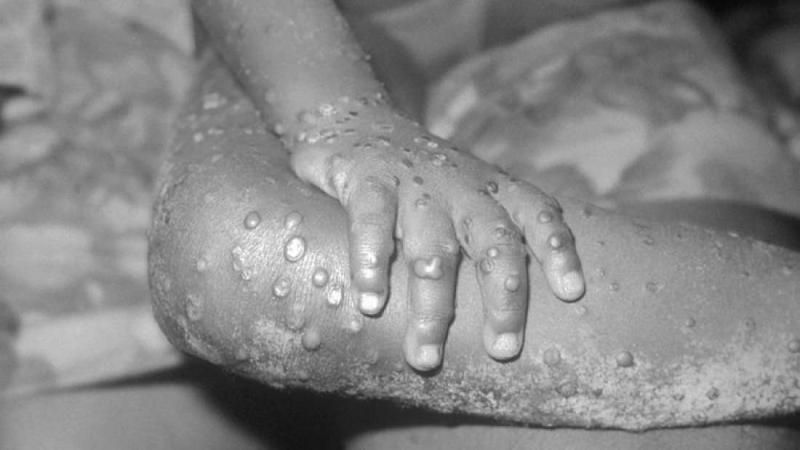
It is from a different virus family than chickenpox. However, like chickenpox and smallpox, monkeypox causes a rash that forms into rounded poxes that scab over and can scar.
Why is it called monkeypox? Does it infect monkeys?
Monkeypox was first seen in laboratory monkeys in 1958, hence the name. And monkeys are among a number of species — including humans, prairie dogs, rats, mice, and squirrels — that can be infected with this virus. But they aren’t thought to be the reservoir, the natural source of the virus.
Scientists are still trying to identify the reservoir of monkeypox and why a disease that was rarely seen for decades seems to be becoming more common. Last year, the Washington Post accompanied some scientists from the Centers for Disease Control and Prevention and the Democratic Republic of the Congo on an expedition to find the source. You can read about it here .
Tags
Who is online

57 visitors
Monkeypox was first seen in laboratory monkeys
IIRC, wasn't the AIDS virus also first seen in monkeys?
E.A WOW~!!!!!!!!
Some still think AIDS is a Virus, what stone age information is that from?
E.A See above try to get something right!
But if we get everything right...then there will be nothing left!
Oh I'm well beyond that-- in actual fact, I am a third degree black suspenders! (I've gone way beyond the belt stage, years ago!)
And what about these so-called Chimpanzee Minky's?
(Or is it Meenkys?)
Damn! And I thought the bumps growing on my hands were an exciting benefit
I guess I need to go get treated...I'm going to miss flinging though, I was getting really accurate too.
Interesting how the NIMBY Syndrome is so extensive::
Monkeypox in the United States
In 2003, the U.S. experienced an outbreak of monkeypox. This was the first time human monkeypox was reported outside of Africa.
How was monkeypox first diagnosed in the United States?
The clinical features of the illness in U.S. patients—fever, headache, muscle aches, and rash— were consistent with those of monkeypox. Initially, scientists at the Marshfield Clinic in Marshfield, Wisconsin, recovered a virus resembling a poxvirus from one of the first patients and the patient’s pet prairie dog. Laboratory tests at CDC—including several PCR-based assays looking for poxvirus DNA, electron microscopy, and gene sequencing—confirmed that the agent causing the illnesses was monkeypox virus.
Which states were affected by the outbreak?
Forty-seven confirmed and probable cases of monkeypox were reported from six states—Illinois, Indiana, Kansas, Missouri, Ohio, and Wisconsin – during the 2003 U.S. outbreak.
E.A I Recall having a Discussion of a MonkeyVirus outbreak in the US of A on NV and it was not that long ago, so what does that say about " Truth in Reporting "?