
Recovery law allows Fed to rope off public as it spends billions

Category: News & Politics
Via: ender • 6 years ago • 35 commentsBy: MAGGIE SEVERNS and VICTORIA GUIDA
 S E E D E D C O N T E N T

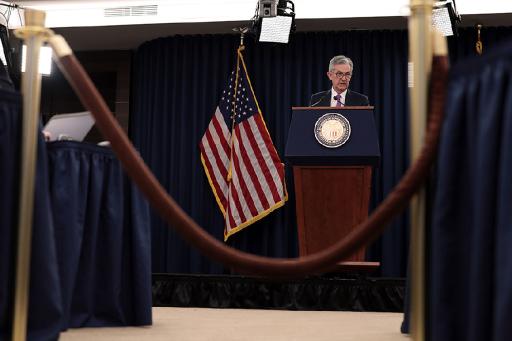
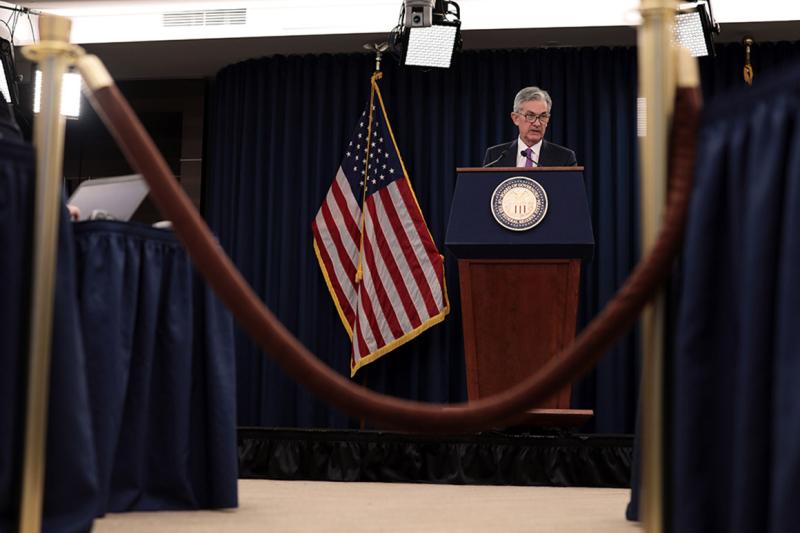
Amid more than a year of attacks from the president over interest rates, Fed Chairman Jerome Powell refused to enter the political fray. | Alex Wong / Getty Images
Tucked into the recent recovery bill was a provision granting the Federal Reserve the right to set up a $450 billion bailout plan without following key provisions of the federal open meetings law, including announcing its meetings or keeping most records about them, according to a POLITICO review of the legislation.
The provision further calls into question the transparency and oversight for the biggest bailout law ever passed by Congress. President Donald Trump has indicated he does not plan to comply with another part of the new law intended to boost Congress’ oversight powers of the bailout funds. And earlier this week, Trump dismissed the government official chosen as the chief watchdog for the stimulus package.
The changes at the central bank – which appear to have been inserted into the 880-page bill by sympathetic senators during the scramble to get it approved -- would address a complaint that the Fed faced during the 2008 financial crisis, when board members couldn’t easily hold group conversations to address the fast-moving economic turmoil.
The provision dispenses with a longstanding accountability rule that the board has to give at least one day’s notice before holding a meeting. Experts say the change could lead to key information about the $450 billion bailout fund, such as which firms might benefit from the program, remaining inaccessible long after the bailout is over.
The new law would absolve the board of the requirement to keep minutes to closed-door meetings as it deliberates on how to set up the $450 billion loan program. That would severely limit the amount of information potentially available to the public on what influenced the board’s decision-making. The board would only have to keep a record of its votes, though they wouldn’t have to be made public during the coronavirus crisis.
A Fed spokesperson did not comment on the changes in the law or whether the Fed would continue keeping records of its meetings.
The spokesperson said, however, that the central bank still intends to give notice for regularly scheduled meetings and doesn’t plan to vote on major decisions in less formal settings.
With such a vast amount of money at stake, the Fed’s decision-making is bound to prompt lawsuits and complaints. Following its response to the 2008 financial crisis – which involved less money – the central bank faced numerous legal challenges, including from watchdog groups and journalists seeking to establish whether special influence was exerted behind the scenes.
“We may never know what terms are being given to banks, what collateral is being offered, what repayment methods and duties banks and other financial institutions may have,” said Charles Glasser, a media attorney who represented Bloomberg News in a public records lawsuit of the Federal Reserve in the wake of the 2008 financial crisis. “And these are important questions.”
Even granting the board’s interest in moving quickly, Glasser said of the new provision, “This is written too broadly and allows the Federal Reserve to avoid its responsibilities of public disclosure as the courts have described them,” Glasser said.
Congress steered the $450 billion in bailout money to the Fed in part because lawmakers trust the central bank, a nonpartisan institution whose members outlast an individual administration. Amid more than a year of attacks from Trump over interest rates, Fed Chairman Jerome Powell refused to enter the political fray, emphasizing that the institution is set up to consider the long-term interests of the economy, not short-term political considerations.
But it is possibly the most critical body trying to steer the country through the economic downturn. Since the beginning of the crisis, the central bank has launched a stunning array of initiatives designed to boost lending to households and businesses, as well as to keep financial markets functioning until the coronavirus pandemic is under control.
While Treasury Secretary Steven Mnuchin will dole out roughly $50 million in bailout funds help certain sectors of the economy such as the airline industry, the biggest pool of funding in the recovery bill — $450 billion — to rescue businesses and municipalities will be managed by the Fed.
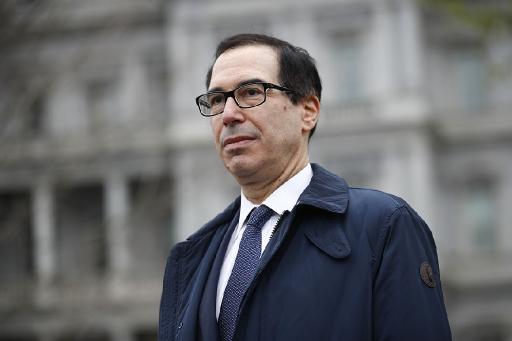
Treasury Secretary Steven Mnuchin. | Patrick Semansky/AP Photo
The central bank has announced it will directly purchase debt from large companies under its emergency powers, though for now, only companies whose debt is seemed safe by credit ratings firms will have access to those loans.
The Fed, in partnership with the Treasury Department, is also designing a "Main Street" lending facility, which will facilitate bank loans to businesses with more than 500 employees that are too small to qualify for the other corporate credit programs.
Because the Fed isn’t set up to take on the risk of companies defaulting, the $450 billion given by Congress to Treasury will be used to cover losses from the Fed's emergency lending programs — which should be enough money to facilitate trillions of dollars in lending.
Former Fed board members told POLITICO that the changes in the law will help avoid a pitfall that hindered them as they tried to rescue the economy during the last economic crisis. Any time there were more than three out of the then-five members of the Fed's governing board in a room, it was considered a meeting, and thus had to be publicly announced and subject to record keeping. The central bank, which currently has five board members, has a process for announcing meetings one day in advance, but no less.
Thus, any time members wanted to talk on short notice, they had to do so in small groups. At times, some members of the board had to leave a conversation in order for others to join so they could avoid the meeting requirement, recalled Donald Kohn, vice chairman of the Fed during the last financial crisis.
“We were handicapped going through the 2007-09 crisis because we couldn’t have more than three members of the board in the room at one time without announcing a meeting,” Kohn said in an email. “A crisis evolves rapidly and in unexpected ways, with the need for freewheeling discussion before a proposal is brought to the board for decision.”
“This will allow Chair Powell to utilize his board members more fully and effectively,” Kohn added.
And the mere announcement of a meeting of the Federal Reserve board could provoke anxiety among people in the finance world, said economist Frederic Mishkin, who served on the Federal Reserve board of governors between 2006 and 2008.
"If a meeting is announced people might think, 'Oh, something’s really bad is happening,'" Mishkin said. "It hurt the ability to have a free flow of information at the board. If things were happening really fast you couldn’t have the full board participating."
But critics say the the Fed’s need to move at a rapid pace didn’t have to come at the expense of record-keeping and providing information to the public about its work to protect the economy.
"As long as it’s not going to move markets, we should know why they’re meeting. They have so much money under their authority right now, they should be working to be more transparent, not less transparent," said Tim Stretton, a policy analyst at the watchdog group Project on Government Oversight.
In the past, there have been lawsuits to gain access to information about the Fed's actions, such as after the 2008 financial crisis when Bloomberg News, represented by Glasser, successfully sued for records that uncovered that the Fed had lent $1.2 trillion in loan to banks during the financial crisis, far more than was publicly known. With the option to keep fewer records, there may be less recorded information to seek out after this economic crisis has passed.
"Accountability and transparency cannot be sacrificed at the altar of economic rapidity," Glasser said.
In addition, critics note that Congress did not have to waive an entire section of the open meetings law to allow the Fed to have more impromptu meetings.
“Congress could have just waived the notice requirement without waiving requirements of meetings, or transcripts or other things,” said Adam Marshall, a staff attorney at the Reporters Committee for Freedom of the Press, which regularly files public records lawsuits against federal agencies. “There are a lot of decisions that are going to be made here, and the public’s understanding of those decisions that are made could be impacted in a negative way.”
Spokespeople for Sens. Mike Crapo (R-Idaho) and Sherrod Brown (D-Ohio), the chairman and ranking member on the Senate Banking committee, declined to comment on how the change was added to the recovery bill or who requested it.
A Brown aide said in a statement that the change “is intended to allow the Federal Reserve Board to continue to take decisive action during this pandemic.”
“The Federal Reserve remains accountable to Congress and the American people,” the statement continued, “and it is still required to responsibly communicate the need and justification for its actions to the public in a transparent way.”
Tags
Who is online
199 visitors
Why is it that every time something happens they seem to take away more transparency and accountability.
Funny that they won't even say who or how this part of the bill transpired.
Now they can have more behind the scenes decisions and we do not even get to know about it.
Open and transparent my ass.
duplicate
Because they CAN
What the information clearly shows is that the Federal Reserve will circumvent the oversight requirements just as they did for the 2008 economic crash. That indicates the oversight requirements are meaningless anyway.
Financial institutions are quite adept at skirting rules and avoiding oversight. While that provides political fodder, the reality is that politicians aren't going to interfere. Politicians are just as adept at skirting rules and avoiding oversight as are financial institutions.
What the pandemic has revealed is that money really doesn't matter. Finance doesn't provide a useful service or benefit for the country. Political oversight of a worthless activity doesn't accomplish anything of importance. This is all much ado over nothing.
If you read it, they were able to get information from what they did during and after the 2008 crash.
They have now changed the rules again to where we may never get information.
And money does seem to matter as does who will be the beneficiaries.
So your answer is to just turn your head and say it doesn't matter. Let them do whatever they want...
The information wasn't available last time, either. Nothing of significance has changed.
The financial institutions have been doing whatever they wanted to do, all along. Political oversight hasn't changed anything. Politicians only use reporting like this to engage in spittle-spewing outrage to influence public opinion for their benefit. Politicians don't have a vested interest in actually fixing anything.
If we must rely on Politico to provide oversight then why bother listening to politicians?
Yet they managed to get information from the last time. Found out a lot more was spent than was reported.
Now we may never find out about a lot of things.
Saying that it doesn't matter just gives them a longer green light.
I am blaming all politicians as both parties seem involved in this. And yes things can change when we vote their sorry asses out and stop letting them give excuses, point fingers and letting them get away with it.
Maybe you can give us an example. Who benefited during the financial/housing crisis? Who were the enablers?
So nothing to say about these new regulations or lack there of?
Deflections are sooo much easier.
There was nothing underhanded about that. They let Lehman Brothers go down and after they saw what went down with it they decided not to let any of the big banks go down. Is that what you wanted?
Still has nothing to do with them trying to be non transparent and have no accountability now.
Only just now a concern? Perhaps because these are new developments and new ways for them to not be held accountable for anything.
I swear, most people around here cannot even see with their partisan blinders on.
Also comical that the trump administration wants to do what the Obama administration did and now all the sudden it is a good thing...
And again, nothing to do with the article. Did you even read it? Somehow I doubt it.
By all means, better to stay in ones own partisan world that see what is actually going on.
Let us look at what is transparent: The Fed is setting up a $450 billion loan program for the federal government to use. There is no interest rate, which means little when you consider that the government has no intention of paying it back. It will be added to the $20 Trillion accumulated since the financial/housing crisis. All of this we will pay for one way or another. Maybe inflation or maybe the crippling taxes our grandchildren will be saddled with. My argument is that this economic catastrophe is taking place.
America can survive Coronavirus, it can't survive runaway inflation.
Well there is no stopping it at this point.
So the only thing I don't understand is the want to keep meetings off the record and transactions done in secret.
Why hide the truth unless trying to hide things from the history books.
I fear that future generations will condemn most of what government has done for the past half century.
Gonna have to agree with you there.
I will only say that I read a lot of comments even if I don't participate on an article.
I can plainly see who's head is lodged where.
So still noting about the actual topic?
Actually you never did. Just complained about Obama and debt.
The article was about the Feds having secret meetings and not having to be accountable on where the money is spent/lent.
Recovery Law. Recovery Rule. Recovery Act. Whatever you wish to call it, the bottom line is more wealth will be transferred into the upper income tiers.
Saw Laffer on the TV. He stated he hadn't been asked to be on the presidents Economic Recovery panel as yet. Laffer, who engineered Supply Side Economics indicated that more Supply Side is needed in order to bring the American economy back into normalcy.
Be prepared. The FED is ramping up the 'presses'.
I have read about how this will all show/magnify inequalities.
The top ten percent will be the major beneficiaries.
Why am I not surprised.
The old, as long as I have what ever I can get, fuck everyone else attitude.
I'm betting there are damn few here on NT that regurgitate the "trickle down" mantra that ever worked on a manufacturing floor.
For over thirty years I have never forgotten that while a manager and supervisor, that it is the people working on the floor that earn my salary for me. The are called direct labor, and are anything but in the top 10% of wage earners in America.
Keep ignoring the safety and wellbeing of labor at your own peril.