
The COVID-19 Crisis Exposes America’s Economic Divide

 S E E D E D C O N T E N T

The COVID-19 Crisis Exposes America’s Economic Divide
SEATTLE — A BILLIONAIRE business magnate rides out the pandemic on his yacht as janitors and service workers commute on packed buses and trains . Well-off urbanites flee for their country homes as rural doctors try to wave them away . The professional class taps away on computers at home while low-wage essential workers report to stores.
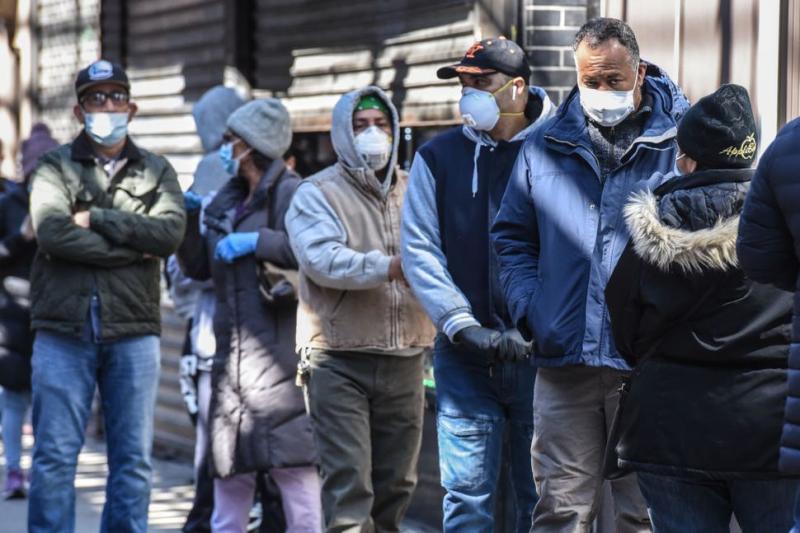
While coronavirus is a disaster nearly universal in its reach, the pain – particularly the economic pain – is landing unevenly. The hospitality sector, offering low pay and sparse benefits to a workforce that skews female, black and brown , was flattened overnight. Suddenly essential workers like delivery drivers and grocery clerks risk exposure daily for wages far lower than those paid to the professional class working from home.
But while the virus takes its disproportionate toll on low-income communities, those who watched the economy's dependence on poorly paid workers deepen since the Great Recession wonder if this crisis might break what one labor leader described as America's "addiction" to low wages.
Robin Pape was a social worker and U.S. Army soldier before she became an Instacart shopper, so, as she puts it, she's used to being "on the front lines."
Pape is glad to serve those who can afford to pay gig workers like herself to get their groceries; as she sees it, it's safer to risk one person than dozens. She's proud to do it. But endangering her health amid a fight for $5 an order in hazard pay stings, too.
"That's tough," says Pape, speaking from her home in Ithaca, New York. "Throughout my life I found myself taking risks that other people maybe don't want to take. But there is an awareness that it's OK with them that I go and I expose myself and my family in ways that they are unwilling to expose their own family."
Those who've died of COVID-19 have overwhelmingly been elderly. But other trends emerging show the virus flourishing in poorer neighborhoods and cities, in black , brown and Native America , and among those who must work.
As a geographer, Joel Kotkin turns to a map to find the reality laid bare by the pandemic. A native New Yorker, Kotkin's reference point is the five boroughs at the center of America's outbreak. There, he says, transit dependence and customer-facing work doomed lower-income neighborhoods in Brooklyn, Queens and the Bronx to become the most scorching hot spots.
"Your Manhattanite can actually walk to work in many cases, and obviously a lot of wealthy Manhattanites just went off to their country homes," says Kotkin, an urban studies fellow at Chapman University in Orange, California, and author whose books include, " The Coming of Neo-Feudalism: A Warning to the Global Middle Class ."
"But let's say somebody is a nurse's aid and lives in the Bronx. How the hell are they going to get to work except by the subway?" he says. "If you take a look at the New York City map of where the infections are, it is so clearly tied to high transit ridership and poverty, it's really sort of astounding."
Astounding, but not surprising to those who've watched past disasters unfold.
A New Orleanian who was in New York City on Sept. 11 and has been helping cities build resiliency since, Jeff Hebert sees the outbreak demonstrating failings as basic as a lack of access to nutritious food needed to keep people healthy and, in a pandemic, resilient. He watched the same faults emerge after Hurricane Harvey flooded Houston, after Hurricane Sandy rocked the East Coast, and, of course, when Hurricane Katrina smashed his hometown, which is now one of the hot spots for the virus.
Minority and low-income communities can't absorb the stresses carried with coronavirus like richer, whiter communities can, Hebert says.
It all goes back to disinvestment in communities and lack of opportunity," says Hebert, an urban strategist who served as chief resilience officer for New Orleans under Mayor Mitch Landrieu before joining the New York-based consultancy HR&A Advisors. "This crisis has just exposed it and exacerbated it."
Among the realities made obvious by the outbreak is that America runs on workers earning little more than minimum wage, and now that their work is considered "essential," some wonder whether that financial mismatch can be allowed to continue.
As the United States faces the prospect of 30% unemployment in coming months , job losses so far have "just zeroed in on retail and hospitality," hitting workers whose jobs barely paid before, says Martha Ross, a labor market researcher with the Brookings Institution who co-authored "Meet the Low-Wage Workforce," a report released in November.
"It's a moment of such disruption that things that didn't seem possible before may be possible," says Ross, speaking from Washington, D.C. "The fact that grocery workers who earn maybe $10 an hour are doing this work that supports the rest of us while they're risking their health – it makes an unmissable portrait of the unfairness of our labor market."
Tags
Who is online
92 visitors