
Renminbi may be risk that wags the tail


Tail risk of China currency falls would rattle investors
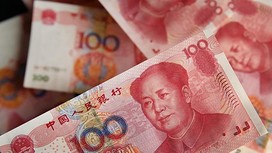
Photographer: Tomohiro Ohsumi/BloombergBloomberg
Lets put off the Federal Reserve, for a moment. Instead consider China, its currency and a piece of financial jargon known as tail risk.
A tail, like many terms misappropriated by finance, has a former life in statistical mathematics where it refers, very broadly, to anything which doesnt happen very often.
Modern usage is different, however, and it now often means something like: Dammit! We should have paid more attention.
So when three-quarters of investors told pollsters at Bank of America Merrill Lynch this month that a recession in China was the greatest tail risk they faced, what it really means is they have noticed the slowdown in the worlds second-largest economy and are trying to decide what it means.
A recession should not really be thought of as a remote possibility. Developing economies tend to expand very quickly for a period, and then experience growing pains. The when is the hard part, not the if .
When could be as soon as next year. Economists at Citigroup have declared a recession the most likely result for 2016, a view supported by the collapse in commodity prices . China has guzzled raw materials for a decade but, according to the International Monetary Fund, it now has more residential floor space per person than Spain infamous for its own construction boom. If China no longer builds houses at the same pace, its pace of economic growth will slow.
Still, assessing the precise economic path of a one-party state of 1.4bn people is perhaps left to better minds . A different question might be this: what would a real China tail risk look like?
One answer is the renminbi . A drop in its value against the dollar by a fifth or more falls into the category of unlikely but plausible scenarios worth consideration.
A fall of such size would probably count as a surprise. From 1994 to 2006 the renminbi was pegged to the dollar, and since then it has been allowed to trade in a narrow range against a basket of currencies. The state demands control of capital flows, and the central bank has at its disposal $3.6tn of foreign reserves, so the renminbi is not an easy target for speculators when compared with other currencies such as the Brazilian real, which has collapsed in value relative to the dollar in 2015.

The Chinese authorities have allowed the currency to fall a little this year, first widening the range in which the renminbi was able to trade, then in August allowing a small but unexpected depreciation . The act was followed by larger falls for several emerging market currencies, leading to pressure on the dollar/renminbi exchange rate in offshore markets, which the government can influence but does not control.
The central bank spent as much as $130bn in August to preserve the value of the renminbi against the dollar. Intervention has continued this month, albeit at a lower pace, with Nomura estimating $47bn spent onshore and offshore so far in September.
The size of reserves gives plenty of ammunition for intervention at such a rate, although not indefinitely, and not without adding to expectations the currency will at some point fall.
Indeed, assume rich Chinese have similar concerns as the investors mentioned above, and they react by moving money out of the country. State controls mean such capital flight is not straightforward, but the system is leaky.
Remember too, the series of haphazard measures taken by the government to prop up the Shanghai stock market in recent months. Confidence in its control of the economy has slipped, and it is possible to imagine allowing the currency to float, or at least fall significantly, as a policy choice by a rattled leadership.
Which brings us back to the finely balanced outlook for US employment, inflation and the path of monetary policy.
International trade is not a large part of the American economy, and services are the biggest contributor to the basket in which inflation is calculated. But still, a big drop in the price of durable goods shipped from China would be a push in the wrong direction.
So what would happen if this tall tail came true, and the currency dropped by a fifth or more? Then it is time to return to the Fed, and the outlook for US inflation.
---------------------------
Renminbi may be risk that wags the tail
by Dan McCrum
Tags
Who is online
102 visitors
The author may mave written this just to slip in his awful pun...
... but still... the Fed's massive vote yesterday to keep interest rates low probably had a great deal to do with China's slow slide toward recession.
Is he saying a drastic fall in the renminbi implies higher inflation in the US ?
Yes, in an indirect way... There is no cause-effect relationship, but both phenomena could be simultaneous results of a Chinese recession.
If I understand this correctly: Millions of ordinary Chinese -- that's LOTS of millions, when we talk about China! -- actually borrowed money to play the stock market. (Yeah, that's crazy... but... China!!)
So if the stock market drops, all those millions of Chinese will first lose everything they own... and then perhaps they will bring down the banks that lent them the money. (Do you remember Lehman Bros??)
So... the Chinese government has been doing all sorts of things to prop up the stock market. Unfortunately... there's no free lunch. Those same actions tend to weaken the renminbi. So the government has taken other actions to prop up the money.
That's getting to be a lot of balls being juggled at the same time. They're gonna come down sooner or later...
Let's not panic. While there's a lot of commerce with China, it is NOT a huge part of the US economy. Significant, but not huge. So a recession in China would not be catastrophic...
... for a healthy US economy.
But the US economy is a house of cards right now, so no one knows...
The shattering of the price of oil caused my Canadian pension to lose 20% of its value as against the RMB. I hope that the predicted devaluation will restore it.
Yup! We bought our winter place in Yuma at $ 1.40 / . Now it's $ 1.10. That's a 21% drop...
Our retirement is in euros, of course...
(Of course, the other way of looking at it would be: we bought at the bottom of the housing collapse, with a currency that was ridiculously over-valued. ... I guess I'm complaining because we're not making out like bandits any more!)
Actually... If we sold the house today, we'd get more than we paid... and then if we converted to euros, the current rate would be favorable.
But hey! It's more fun to complain...