
Supreme Court restores privacy in smackdown of California


 S E E D E D C O N T E N T
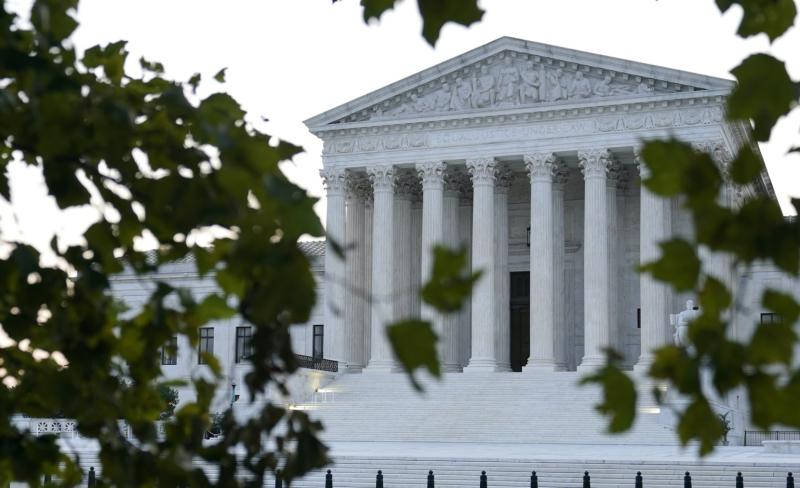
When you join with others in support of a cause, state officials don't have a right to track you. That's the upshot of last week's Supreme Court ruling affirming the right to support nonprofit groups without being monitored by the state.
© Provided by Washington Examiner
In an opinion likely to be recognized as a landmark case, the court struck down a California requirement that charities turn over a list of their major supporters before soliciting donations. The state failed to prove it needed the lists to enforce its tax laws or anything else.
California claimed it would keep the supporter names confidential. But a trial in the lower court revealed that the state carelessly exposed thousands of charity donor lists on a public website, a mistake that can't be undone. Once a person's identity and membership in a group is publicly exposed online, they are forever vulnerable to harassment and retaliation for their beliefs. Today's unforgiving cancel culture heightens those threats.
Fortunately, the Supreme Court on Thursday reaffirmed the "vital relationship" between freedom of association and privacy. If people reasonably fear that their membership in a group will be revealed, either publicly or to powerful state officials, they will be deterred from exercising their First Amendment rights to assemble and speak out on controversial issues. Just as we vote in private booths, we have a right to join and speak in private groups.
When the government wishes to pierce this privacy, it needs a good reason. California failed to provide one. Yet it found support from politicians who have fought to rebrand movements of private citizens as nefarious "dark money groups." This effort has led to numerous state laws over the last decade treating long-standing nonprofit organizations as campaign committees. These laws expose sensitive information about private citizens to state officials while revealing nothing to voters about government. They call it transparency.
Free speech advocates warned that the campaign against so-called dark money would be a race to the bottom that puts everyone's privacy at risk. California proved their case, demanding supporter lists from every charitable organization in the state. No wonder it was opposed in Thursday's case by hundreds of groups from across the political spectrum, including the United States Chamber of Commerce, the American Civil Liberties Union, the Council on American-Islamic Relations, and the Zionist Organization of America.
The court was careful to note in its ruling that this was no campaign finance case. The plaintiffs are charitable organizations barred by federal law from participating in campaigns. That hasn't stopped disgruntled politicians from claiming the decision is a strike against campaign finance laws.
The real takeaway should be how broadly First Amendment rights were violated before the Supreme Court stepped in. The right to join and support nonprofit organizations privately was unanimously recognized by the Supreme Court way back in 1958. Yet that precedent had been eroded so thoroughly that California eventually felt free to ignore it altogether. The 9th U.S. Circuit Court of Appeals agreed it could.
The Supreme Court corrected that grave error with a decision that begins to restore freedom of association to the vaunted status it rightfully held in the 20th century. Hopefully, one day we will look back and see that California's overreach awakened the court to the new generation of threats facing our most fundamental First Amendment freedoms.
Luke Wachob is the communications director at the Institute for Free Speech in Washington, D.C.
Tags:Opinion, Beltway Confidential, Blog Contributors, Supreme Court, California, Donors, First Amendment, Free Speech
Original Author:Luke Wachob
Original Location:Supreme Court restores privacy in smackdown of California

Tags
Who is online
280 visitors
"Begins to restore. . . " — not the "be all" that ends it all, eh?
Since the article uses the word, "privacy" three times in your selection, it strikes me that this privacy issue should come into focus again when Mississippi's abortion case is 'next' in SCOTUS. We will see if "dark money, privacy" trumps female privacy. Or, maybe Planned Parenthood should just come non-profit and call it a day?
Where is the justice in dark money (because it is 'muscular') holding sway over and against privacy of a womb?
Look, if the state of California was found wanting-then so be it. I want the best for this country's citizens. (I have read what you seeded.)
What's the takeaway here that needs additional expounding on? It happened. Courts disagreed on a 'remedy.' SCOTUS concluded the matter. Where is the thing needing 'vocalizing'? It's done. I do not see a need for a 'spiking of the ball.' Mind you, I am not "in" or "read" into a position on this, so it's news to me and I am not against a proper solution wherever it leads and lands.