
Dow Down 7.4%, but Rural Approval of Trump’s Economy Falls an Even Steeper 10 Points—The Heartland’s 401(k) Pain Is Personal

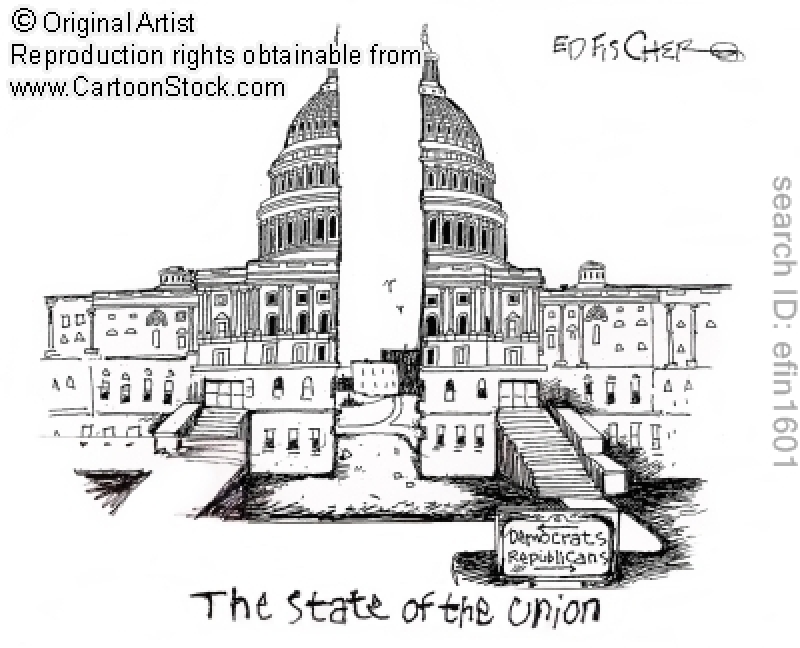

Favorability ratings for President Trump are cratering among multiple demographics and in multiple areas as we pass the 100 days in office mark.
He is either not doing anything on the things he promised on the campaign trail, or falling short of the rhetoric he spewed in what he would do and how fast he would do it.
The economy is by far the top item of things the electorate is upset about.
Without a huge turnaround and a quick one, this will play heavily in the mid terms
 S E E D E D C O N T E N T
On Election Day 2024, the U.S. economy was top of mind for millions of voters. According to a pre-election survey, 78% of Americans said the economy was a "very important" factor in deciding how to vote — the largest share of any policy area included in the poll. When Donald Trump took office in January 2025, Americans were generally optimistic about the new administration's economic agenda. Now, just over 100 days into Trump's second term, much of that optimism has faded.
Between January 21, 2025, Trump's first full day in office, and May 1, 2025, the Dow Jones Industrial Average and the S&P 500 indices each shed 7.4% of their value, erasing trillions of dollars of wealth from the stock market. Moreover, the Consumer Confidence Index has fallen to its lowest level since the beginning of the COVID-19 pandemic, and consumers' short-term economic expectations have plummeted to a low not seen in well over a decade.
Widespread fear and pessimism among American investors and consumers is well founded, as the U.S. may be in the early stages of a recession. A recent report from the Bureau of Economic Analysis shows that America's real gross domestic product declined by 0.3% in Q1 of 2025 — the first quarterly economic contraction in over three years.
Much of the economic damage reflected in these key indicators are directly linked to President Trump's economic policies — specifically, in the sweeping suite of tariffs he announced in early April, the largest and most punitive of which were selectively leveled at America's most important trading partners. The Trump administration maintains that these tariffs will ultimately benefit the U.S. economy. However, recent survey results show that a growing number of Americans are uncomfortable with so much economic uncertainty. (Here is a look at the biggest geopolitical conflicts Trump will have to confront .)
Using data from public opinion research company Morning Consult , 24/7 Wall St. identified the Americans who are souring on Trump's economic policies. We reviewed polling results among multiple demographic groups and subgroups — including gender, race, religion, educational attainment, employment status and sector, income, age, voting history, and political ideology and affiliation, among others — and ranked them on the change in their approval rating of Trump's handling the economy over the last two months. The base-line, pre-tariff announcement survey was conducted from Feb. 21-24, 2025, and the latest survey numbers were collected from April 25-27, 2025.
Over the last two months, support for Trump's economic policies has eroded in all but one of the 55 demographic groups considered for this story. Among the 34 demographic groups that rank on this list, Trump's economic approval rating has fallen by anywhere from 4.5 to 10.1 percentage points.
For several of the groups on this list — such as registered Democrats, religious agnostics, and Black Americans — Trump's economic policies have never been especially popular. Still, some of the largest declines in Trump's economic approval ratings have been reported among groups that constitute his base, including registered Republicans, Evangelical Christians, and Americans living in rural communities.
Notably, among all registered voters, approval of Trump's economic policies has fallen by 5.7 percentage points since late February. Partially as a result, Trump's economic net-approval rating among the voting public — or the share of voters who approve of his policies less those who disapprove — has cratered from a positive 6.8 percentage points, to being 6.2 points under water in the last two months.
The issue is falling or changing levels of Trump's favorability polling - please limit discussion to those topics
Be civil - disagreement is possible without spewing hate at each other
Your opinion is no more valuable or correct than the opinions of others - disagree without being disagreeable
And lease obey the NT rules
Tags
Who is online

123 visitors
From the article
In his first 100 days in office, President Donald Trump imposed across the board tariffs on all of America's trading partners — a move that may present the biggest disruption to global trade in at least a century. Trump's tariffs are fueling a surge in economic uncertainty in the United States — and uncertainty, rarely favorable for business leaders and investors, is an enemy of growth. As recession risk continues to rise, popular support for Trump's economic policies is eroding rapidly — even among some demographic groups who helped vote him into office.
Exactly who was polled?
Half the country voted for Trump. Where half of those polled Trump voters?
If not, the poll is BS.
Read the article and you can find out that is why the link is included so that you and others can see the raw data from which the story came
I don't see anything about Trump voters being polled.
They were wrong in 2016
They were wrong in 2020
They were wrong in 2024
Are they just that bad at polling or are they trying to manipulate people?
What exactly are "Trump Voters"?
I thought we had U.S. voters and that is who was polled, of course if the poll was taken at a MAGA rlly the results would have been different.
Where do you get that nonsense? 77,302,580 voted for Trump; 75,017,613 voted for Harris. Given the electorate is 245 million, 31.5% of eligible voters (stupidly) voted for Trump and 30.6% for Harris. More eligible voters (37.9%) did NOT vote for either candidate than those who voted for one of those two.
It would be reasonable even if ALL Trump supporters stubbornly continue to support Trump no matter what (as you do). Even with no defections from MAGA, a poll could show up to (37.9+30.6) 68.5% of eligible voters disapproving of Trump.
Exactly who was polled?
Vic
Let's say we want to have a poll on the popularity of a president
We assemble a group of 100 from the electorate - 50 who are ardent supporters of the president and 50 who think he is the embodiment of the apocalypse.
What do you suppose the result of the poll will be?
Polls are supposed to be of random people representing all aspects of society (gender, race, sexual orientation, age, color, rural, urban etc) and delineated by political affiliation.
Split, just the way the country is.
Barely 100 days in, and all these polls reflect is uncertainty instead of real facts. The tariffs haven't been in place in place long enough to have much effect, and many of them have been reduced or canceled
Polls never mean anything unless they support one's position is what I am hearing
They were never intended to be used, it was market manipulation to put more wealth into the wealthy's pockets.
How can it put more wealth into people's pockets if the market tanks?
IMO polls are generally unreliable, because these days, which polling organizations are particularly reliable. I think that perhaps Pew is, but I'm sure most are biased themselves. The polls can be too easily manipulatied, i.e. what is the demographic of those polled, is ik chosen from a specific area or from across the nation, are they chosen from a specific class, who were they? The questions themselves can be worded to suggest an answer, or to not pemit a differing thought direction. And because of the internet and social media platforms too much misinformation, disinformation and outright lies have already wrongly influenced many.