
The Shipping Industry Gets Serious About Emissions

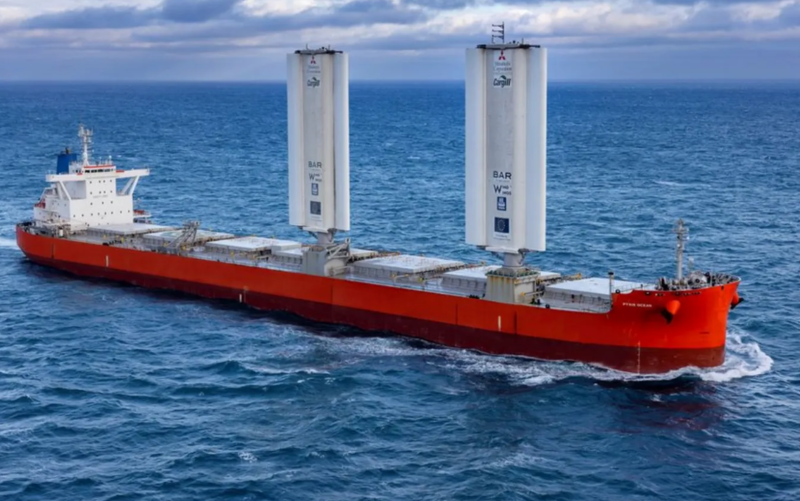

The shipping industry is pushing to decarbonize, and exploring cargo ships powered by wind, as it confronts President Trump’s tariffs.

Continuing to use bunker oil today is just plain stupid. If no one uses it, then everyone benefits. But of course, some seem to want the planet to die...
There are links in the seed.
 S E E D E D C O N T E N T
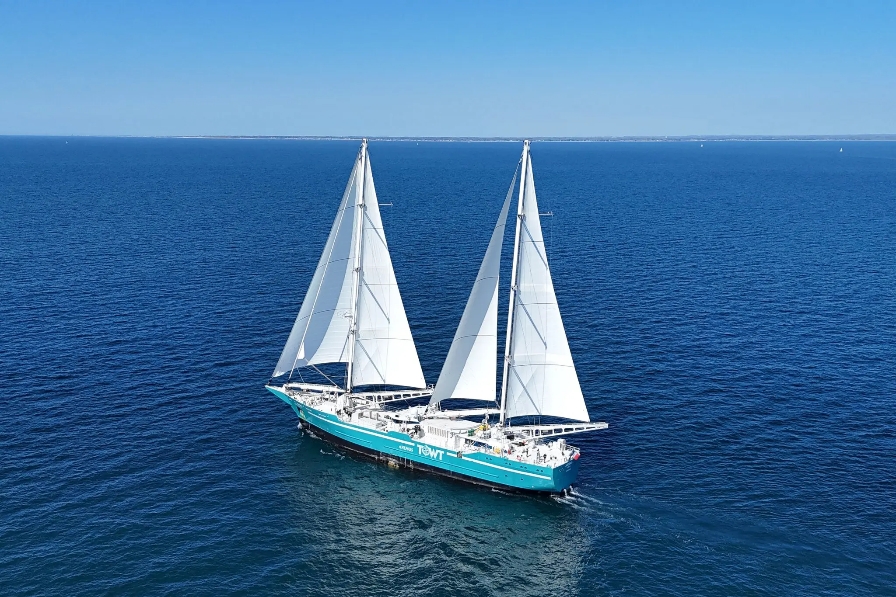
The Artemis, a cargo sailing ship belonging to TransOceanic Wind Transport,
in waters off the coast of Concarneau, western France, last month.
Damien Meyer/Agence France-Presse — Getty Images
At a time when President Trump’s tariff policies have caused parts of the global trade system to grind to a halt, the shipping industry has been on a less-noticed campaign to cut its carbon emissions.
Last month, countries reached a draft agreement under the International Maritime Organization, a United Nations agency, that would require ships to either reduce their emissions or pay a fee. As Somini Sengupta reported , it’s “a remarkable, though modest” move that amounts to a tax on the industry’s carbon emissions.
And a host of companies — from biofuel producers to firms that make sails to better harness ocean winds — are taking steps to overhaul an industry that’s responsible for roughly 3 percent of the world’s greenhouse gas emissions.
“Industry is at the precipice of some real progress,” said Ingrid Irigoyen, president and chief executive of the Zero Emission Maritime Buyers Alliance, a group of companies, many of which rely on shipping, that are working to decarbonize the shipping industry.
Based in Le Havre, France, TransOceanic Wind Transport, or TOWT, is building large sailboats to transport cargo. The company’s ships, which are more than 260 feet long and can accommodate 830 standard North American pallets, transport goods like wine, champagne and jam, often for companies that want to promote their carbon footprint. This year, TOWT also began carrying passengers on trips across the Atlantic Ocean.
More than 90 percent of TOWT’s route from France to the United States is navigated using wind power. The company currently has two ships in operation, and has ordered six more to be delivered over the next couple of years. Trips from France to New York typically take about two weeks.
“It’s only just the start,” Guillaume Le Grand, the company’s chief executive officer, said.

The company’s ships are more than 260 feet long and can fit 830 standard pallets. This year, they began carrying passengers across the Atlantic as well. Credit... TransOceanic Wind Transport
Trump’s tariffs
But TOWT’s business hasn’t been immune to impact of the Trump administration’s tariffs. Earlier this year, as Le Grand was talking to a winemaker in France’s Burgundy region about using TOWT to ship its wine across the Atlantic, the news of Trump’s tariffs popped up on the winemaker’s phone.
“It was just that sort of shock moment,” Le Grand said. That winemaker wasn’t the only business affected by the tariffs, Le Grand said. As a result, the company is trying to entice U.S. customers by offering 30 percent discounts .
Roughly two-thirds of his company’s business used to come from shipping goods from France to the United States, but that figure has fallen to less than half, Le Grand said. He is also shifting the company’s focus to destinations outside the United States and opening routes to Central America and possibly Cuba.
TOWT is among a growing number of companies trying to use wind power to ship cargo more sustainably . Based in the Netherlands, Econowind makes suction wings that pull in wind to help propel ships forward. In 2023, Cargill, the agriculture giant, along with a couple of other firms, deployed WindWings, a type of sail used to harness the wind and allow ships to use less fuel.
Irigoyen, however, cautions that it’s tough for cargo ships to rely heavily on wind power, given its unpredictability.
Maritime’s future
TOWT’s third ship is expected to be ready for delivery in 2026, according to Le Grand, and the company plans for its fleet to top 500 by 2040.
As for the industry at large, the draft Maritime Organization agreement could be officially adopted in October if countries approve it. Irigoyen cautioned that there are still outstanding questions with the agreement, and said that some of the regulations are going to be tough to implement.
Then there’s the matter of politics. The United States didn’t take part in negotiations over the agreement, and some U.S. companies are still trying to keep their efforts to fight climate change quiet, Irigoyen said.
Even so, she thinks the industry’s efforts will endure beyond the current political environment. “Politics come and go,” Irigoyen said.

Siyu Huang, chief executive of Factorial Energy. Credit... Tony Luong for The New York Times
Whatever
Tags
Who is online
157 visitors
Duh....
I wonder why:
Did you read either seed?
The thing about cargo is that it generally doesn’t need to be transported quickly - just consistently and reliably. I would imagine there could be some kind of hybrid system because you’d still need power in ports and storms.
Where do you put sails on a cargo ship, though? The way they stack containers, I wouldn’t think there’d be any room.
Good question. I suppose that if less is spent on fuel, some lost space would be acceptable.
Winds come and go, from different directions and at varying speeds. Ships need to keep a schedule of some sort. What will happen when they get to port with waiting to dock? Most of the ships systems and instruments need the engines running to operate.
Meanwhile, here is a good source of information about shipping.
US Port & Export Update | Port Survey | Port LA & Savannah | Container Lines Realignment | Exports?
Nor sure sails would work on the Great Lakes fleet.
James R. Barker - Fantastic Horn Blast!
We're doomed, so there's no reason to even look at solutions.
Let's party!
China ’s First Hydrogen Fuel Cell River Container Ship Launched
Dec 21, 2024 · The ship Dong Fang Qing Gang boasts the largest hydrogen fuel cell system deployed on a ship in China. It will operate on the route between Zhapu Port in Jiaxing and …
Mmmm, probably should wait and see on that....
Interesting.
Hydrogen seems to be losing speed in automobile usage, because of infrastructure requirements. It's probably much easier to establish refueling along a fixed route like a river.
What I was wondering is, isn't there a process that separates water into its 2 elements of hydrogen and oxygen? A boat certainly has access to as much water as it needs, but is the process so inefficient that it takes too much energy to do it?
Yes