
Xiaomi's first flagship phone chip is a genuine Snapdragon 8 Elite rival

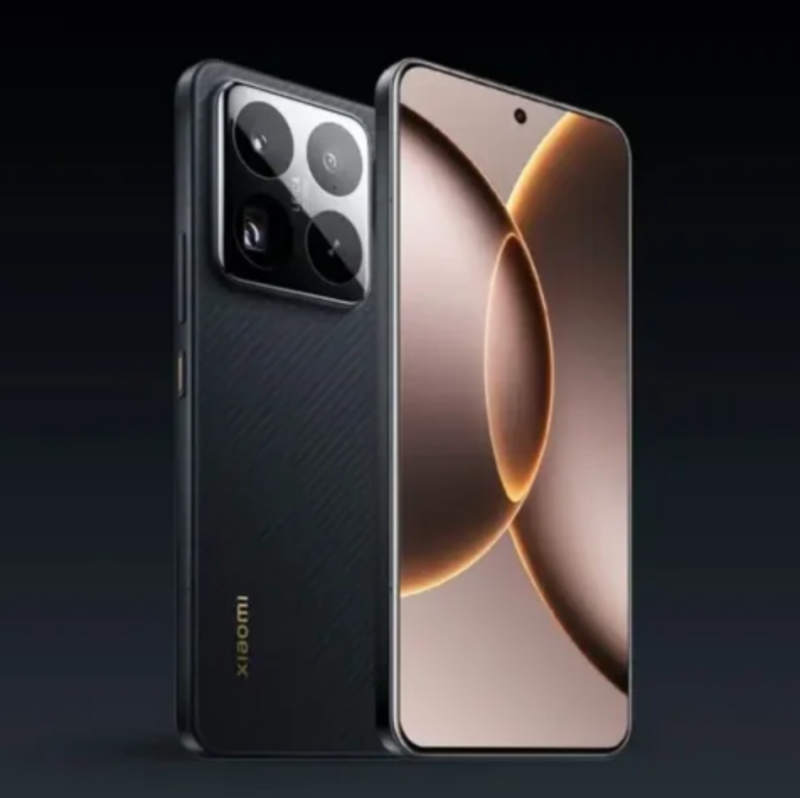

Xiaomi's first flagship chip, Xring O1 is a 3nm, 10-core powerhouse that will power the new 15S Pro and Pad 7 Ultra.

One of Donald Trump's last "accomplishments" at the end of his first term was to effectively banish Xiaomi from the American market. The Chinese understood that they could not depend on American tech, so they gave Xiaomi a green light for both chips and software.
Instead of Xiaomi being a customer for American tech, it's now a competitor. Thanks, Donald!
 S E E D E D C O N T E N T
Xiaomi has unveiled its first in-house flagship chipset , the Xring O1, and it's got enough power to go head-to-head with Qualcomm's Snapdragon 8 Elite. The company also unveiled a 15S Pro phone and Pad 7 Ultra tablet that the new chip will power, plus a new version of the Watch S4 powered by another Xiaomi chip.
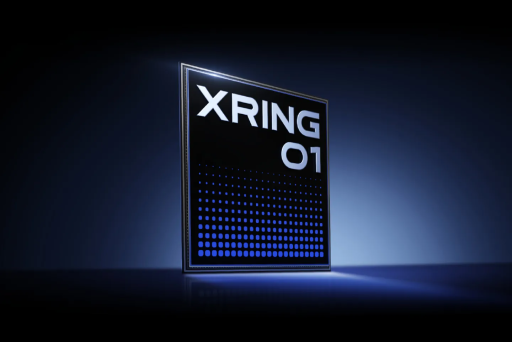
Image: Xiaomi
Xiaomi has opted for a 10-core CPU, more than any of the competition. Two Arm Cortex-X925 prime cores are clocked at 3.9GHz, with four more cores at 3.4GHz, two at 1.9GHz, and another two at 1.8GHz. The 16-core Immortalis-G925 is also top-spec, matching the graphics horsepower in MediaTek's Dimensity flagship.
Chip architecture has started to vary enough between the major players that clock speeds and core counts aren't a great guide to performance. Neither are lab benchmarks, though Xiaomi's claimed AnTuTu score of over three million puts this up there with the best, and it's bullish about the chip's power-efficiency too.
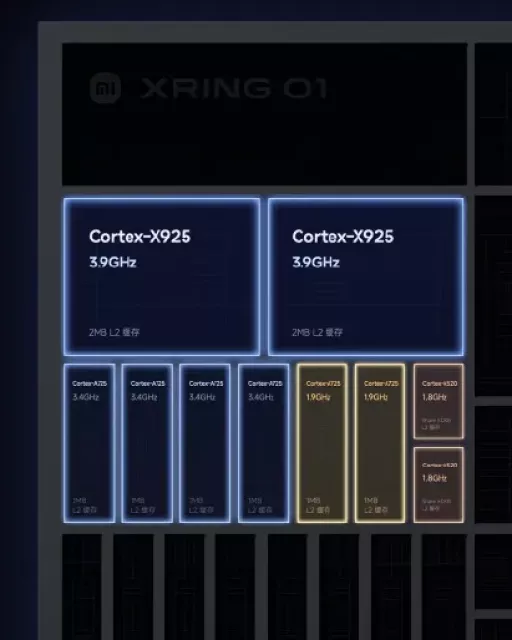
Image: Xiaomi
To hammer the point home, Xiaomi is launching the Xring O1 inside the 15S Pro, which is essentially a rerelease of last year's 15 Pro, but with the Snapdragon 8 Elite swapped out for Xiaomi's own chip. It also comes in a rather sleek carbon fiber design. It's joined by the Pad 7 Ultra, also using the O1, a premium tablet with a 14-inch OLED screen and large 12,000mAh battery, that at 5.1mm is one of the thinnest tablets on the market.
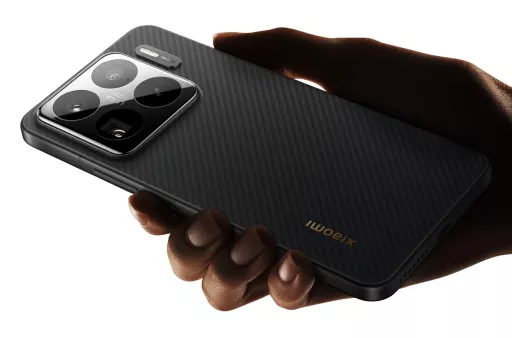
Image: Xiaomi
It's clear that Xiaomi's ambitions go beyond a single chip, and even beyond phones and tablets. To emphasize that, it's also launched the Xring T1, a flagship chipset designed for smartwatches. Details are light, but it includes a 4G modem, and Xiaomi has used it to power an eSIM version of the Watch S4.
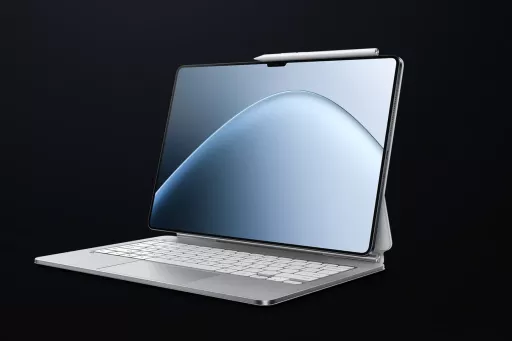
Image: Xiaomi
All of this sounds like bad news for Qualcomm, which has long counted Xiaomi as a major customer. It's often the first to announce a phone running the latest Qualcomm flagship each year, and as the third-biggest smartphone manufacturer in the world, Xiaomi is big business for Qualcomm. It will take some comfort in the fact that just this week the two companies signed a multi-year agreement for Xiaomi phones to keep using Qualcomm's flagship Snapdragon 8-series chips, but there can't be much doubt that Xiaomi's long-term plan is to go it alone. After all, if Apple can, why can't Xiaomi?
Whatever

Tags
Who is online
84 visitors
I've pretty much decided that flagships are just too expensive. You can get 90% of a flagship's performance for half te price.
Also... it seems that Android 16 will have an integrated desktop mode. If it's good, I'll use a phone as my daily-driver-computer. That's a decade -old dream.
Although the language of technology might as well be Martian as far as my comprehension goes, what I do know is that when it comes to advanced technology, China is absolutely flying.
Donald Trump launched them...
Biden lent him a hand as well.
Trump's banishment of Xiaomi demonstrated to the Chinese that they could not allow themselves to be dependent on American technology. They immediately started work on an operating system that apparently is now as good as Android.
And now, apparently, their chips are as good as anybody's.
I had the last Android-powered Xiaomi phone. Really good cameras.
Have you seen what China is doing with robotics?
Not really. There's a lots of hype in the field. I don't expect anthropomorphic robots any time soon.