
Family sues pharmacy, drug 'middleman' after price hike leads to son's fatal asthma attack

Category: News & Politics
Via: perrie-halpern • last year • 7 commentsBy: Jason Kane, Anne Thompson and Linda Carroll


 S E E D E D C O N T E N T
When 22-year-old Cole Schmidtknecht tried to get a refill on the inhaler prescribed by his doctor to prevent asthma attacks. The medication that had formerly cost him less than $70 at his Appleton, Wisconsin pharmacy was now priced at more than $500, according to Cole's father, Bil Schmidtknecht.
Stunned, Cole left the store with a medication designed to stop asthma attacks once they start, but without the Advair Diskus inhaler he needed to prevent attacks from happening in the first place.
Five days after his pharmacy visit last year, Cole had a severe asthma attack, stopped breathing and collapsed. He never regained consciousness and died. Doctors attributed his death to asthma.
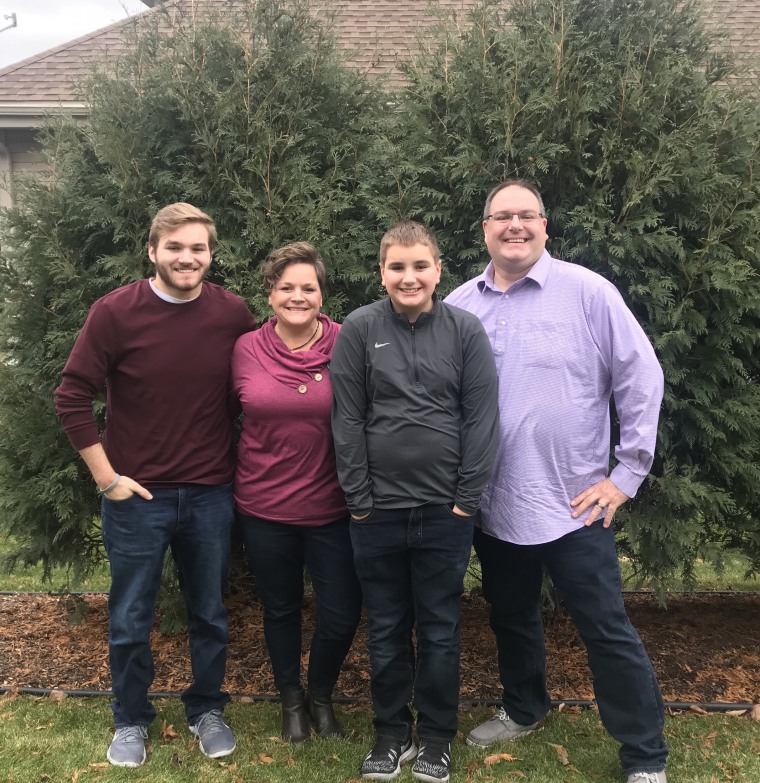 Cole Schmidtknecht, left, his mother, Shanon, his brother, Dane, and father, Bil.Courtesy Schmidtknecht Family
His parents, Bil and Shanon Schmidtknecht, blame what they say is a dysfunctional system where medications can change in price overnight and without notice.
A part of the insurance system that many Americans don't know about was responsible for the spike in Cole's inhaler price. Pharmacy benefit managers, or PBMs, are the middlemen that control behind the scenes which drugs will be on an insurance company's list of covered medications (called its formulary).
They add or subtract medications through a process that emphasizes profits for the pharmacy benefit manager by way of "rebates" from drug makers, said Gerard Anderson, a professor of health policy and management at the Johns Hopkins University Bloomberg School of Public Health.
PBMs "are looking for the drug that makes them the most money," Andersen said
"It's insane that it's happening in America," Bil Schmidknecht said. "It's not broken. It's designed to work this way. It's just hurting us."
The Schmidtknechts are pushing for legislation that would require a 90-day warning when an insurance company's formulary is changed. They are also suing Optum Rx, the PBM that took Cole's Advair Diskus off his insurance company's formulary, and Walgreens, his pharmacy, which, the Schmidtknechts say, didn't offer Cole a way to control his asthma while another solution could be found.
The lawsuit claims that Cole did not get the required 30 days' notice of the change, that his doctor wasn't contacted and that the pharmacy didn't provide Cole with any more affordable options.
The Schmidknechts said Cole left the pharmacy with only a rescue inhaler, which is used for quick relief. But that type of medication by itself isn't strong enough to keep someone out of the emergency room if the asthma attack is severe, Dr. David Bernstein, an immunologist who is a professor in the division of immunology, allergy and rheumatology at the University of Cincinnati, said.
"It was empty at his house, next to his bed," Bil said of the emergency inhaler.
In a motion to dismiss the Schmidkneckt's lawsuit, Optum Rx expressed "its deepest sympathies" for Cole's death and said federal law prohibits the case from being brought in state court. Optum also said three alternatives, each with a $5 copay, were available, and its system instructed Walgreens to contact Cole's doctor about those options.
Walgreens also offered "its deepest sympathies and cited privacy for why it can't discuss specifics in the case. In a statement, it added, "In general, in cases where a medication is not covered by insurance, pharmacy staff may work with the plan, patient, and/or prescriber in an effort to process and dispense the prescription if able."
Cole would be 24 now. When speaking about all the things he could have been doing, his parents nearly break down.
"He was just so young, and he had his whole life ahead of him," Shanon said. "And it was so preventable and so unnecessary."
For the Schmidkneckts, it's about policy change. "Justice for Cole, of course, but bigger than that, justice for us all," Shanon said.
Getting that change won't be easy.
In the U.S., just three PBMs process 80% of prescriptions. And a big part of the PBM formulary playbook is secrecy, Anderson said.
That way, patients don't learn how PBMs make their decisions about drugs and why a medication that had been on the formulary no longer is.
Often no one, from the patients to the drug companies to the insurers, is aware of the details of the decisions the PBMs are making.
"They do not share this information widely, as it is considered a trade secret," Anderson said.
The deals are "a negotiation between the drug companies and the PBM," Anderson said. "The drug company wants their drug on the formulary in a favorable position. The PBM wants to get the largest possible rebate."
The "rebate" is the difference between the list price for a drug and what the PBM can buy it for, which can be "a very much lower number than the list price," Anderson said.
When there are multiple drugs that do essentially the same thing, then there's a bidding war, usually a silent one.
The rewards for the PBMs can be huge. A Federal Trade Commission report released in January found that, over the past few years, the three biggest PBMs — CVS Health Caremark Rx, Cigna's Express Scripts and UnitedHealth Group's Optum Rx — inflated the costs of numerous life-saving medications by billions of dollars. The companies countered that the FTC report's conclusions were misleading.
In January, CVS Health said in a statement that it "is inappropriate and misleading to draw broad conclusions from cherry-picked 'specialty generic' outliers" and that the company's "top priority is to make health care more affordable." OptumRx said that it helped eligible patients save $1.3 billion last year and estimated that the median out-of-pocket payment for these patients was $5.
To remember Cole, both his parents had a tattoo just like his inked onto their wrists. When they feel overwhelmed they glance down at it to remember the change they want to make in his honor.
"It's just everyone's little reminder, you know, from Cole to just keep living and that we can still be happy," Shanon said. "I keep trying to remind myself that happiness and joy and grief can co-exist."

Tags
Who is online
79 visitors
remember when teabags were all in a dither over death panels? looks like their pals in big pharma have made that reality ...
Something drastically wrong with your medical and pharmaceutical over there...the $$$ you are slugged is astounding..
The medication here would have cost $31.60 and if you are on a pension or benefits $7.60...
Trump expressed one of the reasons for tariffs on us was our subsidies on pharmaceuticals etc...by our government..
As our PM said... basically up yours Trump, we will stick with what we have...
Geez get sick over there sounds like if the hospital costs don't kill ya the cost of the medicine will...
it's the legalized corporate equivalent of "give us all your money, if you want to live" ...
Morning...from what I have seen and heard you are dead right..they seem to have the power to say who lives and who dies...
Certainly glad our system works well and considering I have had around $500,000 worth of free treatment I am certainly not complaining...
.
As Paul Harvey used to say, here's the rest of the story.
I use the OptumRx mail order system for my maintenance meds. Anything I need sooner I pick up at the Kroger pharmacy.
I receive a 100 day supply at no copay. Recently, I was informed by OptumRx by letter that a certain medication was no longer covered or part of the formulary. We found an acceptable substitute.
"Optum also said three alternatives, each with a $5 copay, were available, and its system instructed Walgreens to contact Cole's doctor about those options"
Walgreens said....."In general, in cases where a medication is not covered by insurance, pharmacy staff may work with the plan, patient, and/or prescriber in an effort to process and dispense the prescription if able."
Not knowing Cole's health insurance company or health plan's coverage it's hard to say what really happened. Somewhere the system broke down and he allegedly wasn't informed of the change of coverage. Based on my experience with OptumRx, it's doubtful that they failed to inform him of the formulary change, and bringing up PBM's just clouds the issue.
he died, needlessly ...