╌>

U.S. Measles Cases Climb to 33-Year High


Category:  Health, Science & Technology

Via:  hallux  •  last year  •  18 comments

By:   Jennifer Calfas - WSJ

U.S. Measles Cases Climb to 33-Year High
Vaccination rates for kindergartners have fallen nationally

S E E D E D   C O N T E N T


Measles cases in the U.S. have hit a three-decade high, reaching the highest yearly total since 1992 in only seven months, according to data released Wednesday by the Centers for Disease Control and Prevention. 

At least 1,288 measles cases have been reported across the U.S. just over halfway through the year, surpassing the 1,274 cases reported in 2019, when outbreaks in New York pushed the national case count to   its highest level in decades   at the time.


More than 90% of those infected with measles so far this year were unvaccinated or had an unknown vaccine status, according to the CDC. Two doses of the measles, mumps and rubella, or MMR, vaccine are 97% effective at preventing measles.

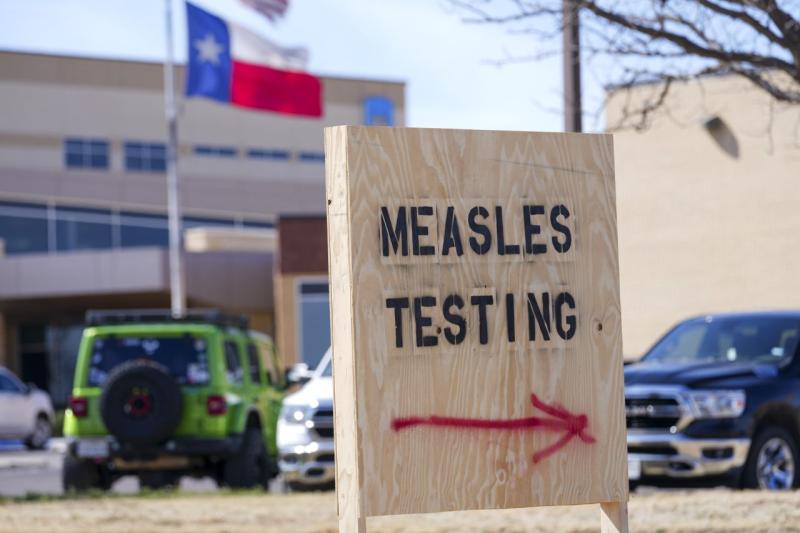
The climbing case count is fueled largely by an outbreak that began in West Texas and spread to other states. The vaccine-preventable disease in 2025 has hospitalized hundreds and resulted in the   first U.S. measles-related deaths   in a decade. 

Health and Human Services Secretary Robert F. Kennedy Jr. has faced scrutiny from doctors and epidemiologists for his approach to vaccines. In June, Kennedy   dismissed all previous members   of the Advisory Committee on Immunization Practices. His new panel of advisers   said last month   they would re-evaluate the recommended schedules for measles and hepatitis B vaccines for children and teenagers.

Amid the Texas measles outbreak, Kennedy has touted unproven treatments that infectious disease specialists say distract from the importance of vaccination. He said in a post on X in April that the MMR vaccine is the best way to prevent the spread of measles. 

Children are required to receive these shots to enter schools nationwide—but dozens of states allow nonmedical exemptions that allow families to opt their children out of vaccines. The rate of children with these exemptions for one or more vaccines has climbed over the last 15 years, according to CDC data.

At least 95% of people in a community need to be vaccinated against measles to prevent further outbreaks, according to the CDC. But 92.7% of kindergartners were vaccinated for the 2023-24 school year on average nationwide—with far lower percentages in some states and cities.

More than two dozen outbreaks, which are made up of three or more related cases, have sprung up across the country this year, and measles cases have been reported in 39 states, according to the CDC. 

There have been more than 750 measles cases reported in Texas in 2025 and dozens more in neighboring New Mexico and Kansas. This month, Kentucky leaders announced an outbreak and Wyoming officials reported the state’s first measles case in 15 years.

The country   declared measles eliminated 25 years ago   after widespread vaccination efforts inoculated most of children with the highly effective MMR vaccine. But declining vaccination rates in recent years have left pockets of the population vulnerable to catching this highly contagious disease.

Some public health leaders and epidemiologists said they believe the outbreak might endanger the U.S.’s   measles-elimination status —an indictment, they said, of a weakening front against the infectious disease.

“We’re in trouble,” said Dr. Andrew Pavia, chief of the division of pediatric infectious diseases at the University of Utah Health. “Functionally, we may have sustained transmission in the U.S. for quite a while.”


Tags

jrDiscussion - desc
[]
 
Hallux
Professor Principal
1  seeder  Hallux    last year

Not to worry folks, RFKjr, the CHD, and the anti-vax minions of MAHA are here to save the day.


Trout Giggles
Professor Principal
1.1  Trout Giggles  replied to  Hallux @1    last year

Yep! Just tank up on Vitamin K! or was it A?


Hallux
Professor Principal
1.1.1  seeder  Hallux  replied to  Trout Giggles @1.1    last year

Homeopaths and sociopaths are siblings of another father.


Trout Giggles
Professor Principal
1.1.2  Trout Giggles  replied to  Hallux @1.1.1    last year

I don't dismiss homeopathic treatments completely. Some are quite effective if you know what to look for and how to deliver it to your system. But I don't think I will ever go completely off the rails and rely on home remedies anytime soon


Hallux
Professor Principal
1.1.3  seeder  Hallux  replied to  Trout Giggles @1.1.2    last year
I don't dismiss homeopathic treatments completely.

I do, when the law of dilutions was pointed out to practitioners they claimed water has memory.


Trout Giggles
Professor Principal
1.1.4  Trout Giggles  replied to  Hallux @1.1.3    last year

water has memory? new one on me and I work in the water industry


devangelical
Professor Principal
1.1.5  devangelical  replied to  Trout Giggles @1.1.2    last year
homeopathic treatments

I did my best to cure a lot of hormone induced acne victims back in high school ...


Hallux
Professor Principal
1.1.6  seeder  Hallux  replied to  devangelical @1.1.5    last year

Sounds like you were injecting semen into the wrong orifices.


devangelical
Professor Principal
1.2  devangelical  replied to  Hallux @1    last year

maga!


Greg Jones
Professor Participates
1.3  Greg Jones  replied to  Hallux @1    last year

The climbing case count is fueled largely by an outbreak that began in West Texas and spread to other states. The vaccine-preventable disease in 2025 has hospitalized hundreds and resulted in the    first U.S. measles-related deaths    in a decade. 

Actually, ii was probably all the unvaxxed kids and adults jumping the border during the Biden administration that brought the measles and other bad things back into the US. The majority of antivaxxer's tend to be educated liberals fearing autism 


Hallux
Professor Principal
1.3.1  seeder  Hallux  replied to  Greg Jones @1.3    last year

That's the yarn ... @!@


Trout Giggles
Professor Principal
1.3.2  Trout Giggles  replied to  Hallux @1.3.1    last year

Did you mean to type "yawn"?


devangelical
Professor Principal
1.3.3  devangelical  replied to  Hallux @1.3.1    last year

[deleted][✘]


devangelical
Professor Principal
1.3.4  devangelical  replied to  Greg Jones @1.3    last year
The majority of antivaxxer's tend to be educated liberals fearing autism

let's see your proof ...


Trout Giggles
Professor Principal
1.3.5  Trout Giggles  replied to  devangelical @1.3.4    last year

That's a bunch of fucking nonsense what he just said. Remember Lisa from NC who was virulently ant-vaxx? She was no liberal

Most of the anti-vaxxers I know are also anti abortion. 

Hey I just won't get my baby vaccinated, it will die, and see I didn't need no damn abortion


devangelical
Professor Principal
1.3.6  devangelical  replied to  Trout Giggles @1.3.5    last year

of course it's nonsense and he can't back it up. I got thrown out of a potential clients house once for ridiculing an anti-vaxer, before covid. there's only one type of injection thumpers can't resist ...


Perrie Halpern R.A.
Professor Guide
2  Perrie Halpern R.A.    last year

According to Google AI, these are the demographics of anti vaxxers:

Demographics of individuals with anti-vaccine sentiments
Research indicates that individuals expressing vaccine hesitancy or adopting anti-vaccination positions tend to share certain demographic characteristics. It's important to remember that these are correlations and that individuals are influenced by a complex interplay of personal beliefs, social factors, and access to information.  
Here's a breakdown of common demographic trends observed among those with anti-vaccination sentiment:
Education and socioeconomic status
  • Lower levels of education:   Individuals with less education, particularly those without a four-year college degree, are more likely to be unvaccinated and express vaccine hesitancy.
  • Lower income:   Lower household income has been linked to increased vaccine hesitancy,   according to the CDC . Financial insecurity can impact access to reliable health information and foster distrust in healthcare systems.
  • Economic deprivation:   Experiencing greater economic hardship is associated with higher vaccine hesitancy.  
Geographic location
  • Rural areas:   People residing in rural areas are less likely to be vaccinated than those in suburban and urban areas.
  • Specific regions:   Studies have shown geographical variations in vaccine hesitancy, with certain states or regions exhibiting higher rates of refusal or hesitancy.  
Political affiliation
  • Political partisanship:   Political affiliation can be a stronger predictor of vaccination status than some demographic factors. In the context of COVID-19, Republicans and Republican-leaning individuals were found to constitute a larger portion of the unvaccinated population.  
Other demographics
  • Gender:   Studies have yielded mixed results regarding the association between gender and vaccine hesitancy, with some studies showing higher hesitancy among women.
  • Race/ethnicity:   Some studies have shown differences in vaccine hesitancy across racial and ethnic groups, although the findings can vary depending on the specific context and vaccine. For example, Non-Hispanic Black adults were slightly more represented among the unvaccinated than the vaccinated population in one study.
  • Age:   Research indicates that younger individuals may express more vaccine hesitancy than older individuals, potentially due to perceiving themselves at lower risk of severe outcomes from vaccine-preventable diseases and greater exposure to misinformation on social media.  
Contributing factors
Beyond demographics, several factors contribute to vaccine hesitancy, including:
  • Misinformation and disinformation:   The spread of inaccurate information, particularly on social media, plays a significant role in fueling vaccine skepticism and refusal.
  • Distrust in healthcare systems and authorities:   A lack of trust in healthcare providers, government, and public health institutions can lead to vaccine hesitancy.
  • Concerns about vaccine safety and efficacy:   Worries about potential side effects, long-term health risks, or the effectiveness of vaccines are also major contributors to hesitancy.
  • Religious or philosophical beliefs:   Some individuals cite religious objections, personal beliefs, or philosophical reasons for refusing vaccinations.  
It's crucial to acknowledge the complexity of vaccine hesitancy and the diverse reasons individuals hold reservations about vaccination. Addressing this challenge requires a multi-faceted approach, including targeted communication strategies, promoting health literacy, fostering trust, and countering misinformation with accurate, evidence-based information.  


Hallux
Professor Principal
2.2  seeder  Hallux  replied to  Perrie Halpern R.A. @2    last year

TY Perrie.


Who is online


Freefaller


158 visitors