
Scientists made a mind-blowing discovery more than 30,000 feet under the Pacific Ocean

Category: Health, Science & Technology
Via: bob-nelson • last year • 3 commentsBy: Benji Jones - Vox

The communities of sea creatures push the boundaries of what we know about life

It's easy to get fixated on our mad-king's destruction of our republic... but there are other things happening.
Not for long, perhaps, as our mad-king closes down science in America...
Let's rejoice in scientific discovery... while we can...
 S E E D E D C O N T E N T
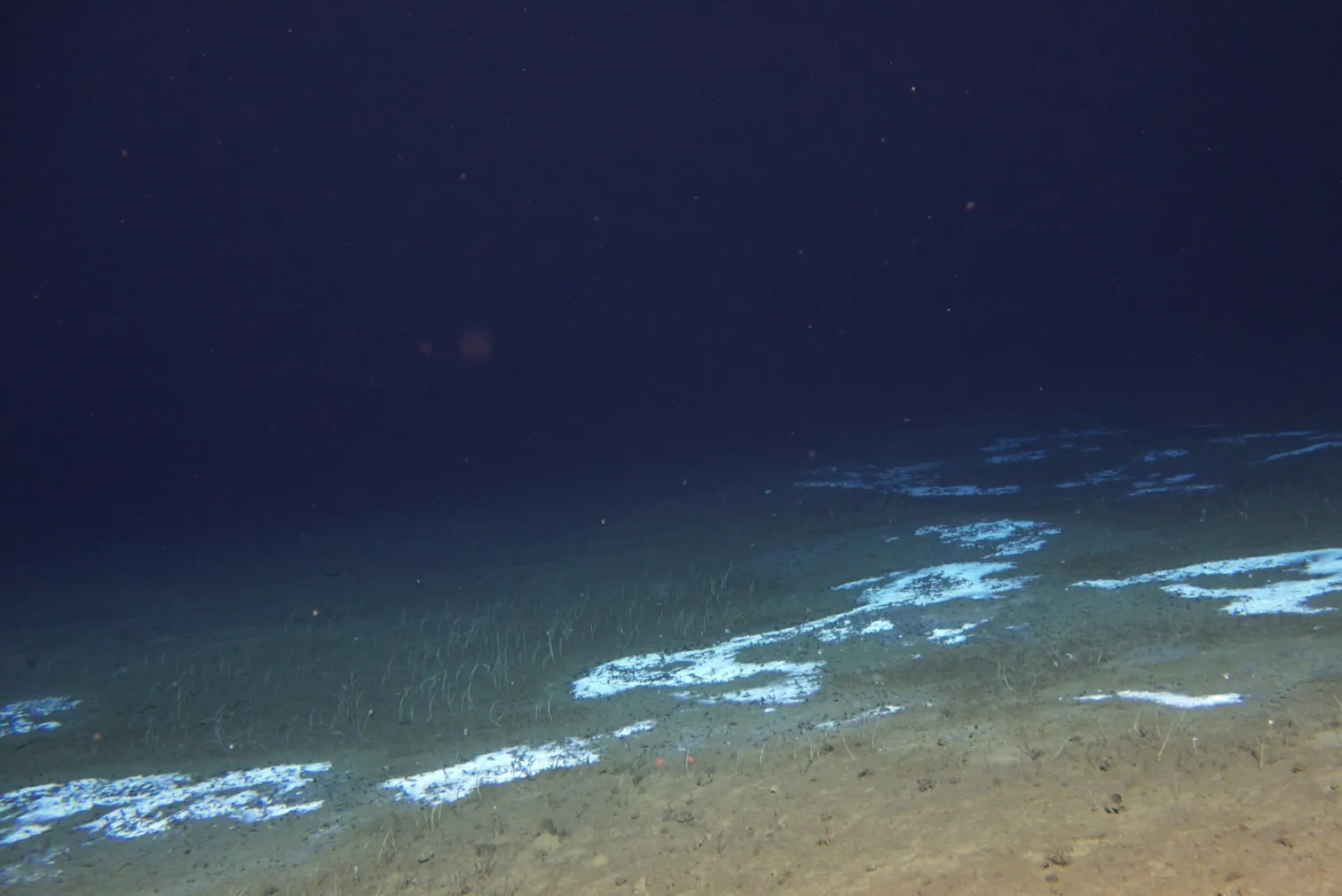
Institute of Deep-sea Science and Engineering, CAS
The Titanic lies about 12,500 feet under the ocean. The pressure down there is so immense that even submersibles supposedly built for those conditions can, as we know, tragically fail .
Now imagine taking a sub nearly three times deeper.
That’s what an international team of scientists did last summer. Led by the Chinese Academy of Sciences, the researchers took a manned submersible to the bottom of deep-sea trenches in an area in the northwest Pacific Ocean, roughly between Japan and Alaska. They reached a depth of more than 31,000 feet.
The researchers weren’t looking for a shipwreck. They were interested in what else might be lurking on the seafloor in trenches so deep that no light can reach them.
It was there that they found something remarkable: an entire ecosystem of animals, living in the darkness. Even more incredibly, those animals — and the animals they eat — derive energy not from sunlight but from chemical reactions. Through a process called chemosynthesis, deep-sea microbes turn chemicals like methane and hydrogen sulfide into organic compounds, including sugars, forming the base of the food chain. The discovery was published in the journal Nature .
Aboard a deep-sea vessel called Fendouzhe, which was equipped with cameras and lights, the researchers encountered abundant wildlife communities, including fields of marine tube worms peppered with white marine snails. The worms have a symbiotic relationship with chemosynthetic bacteria that live in their bodies. Those bacteria provide them with a source of nutrients in exchange for, among other things, a stable place to live.
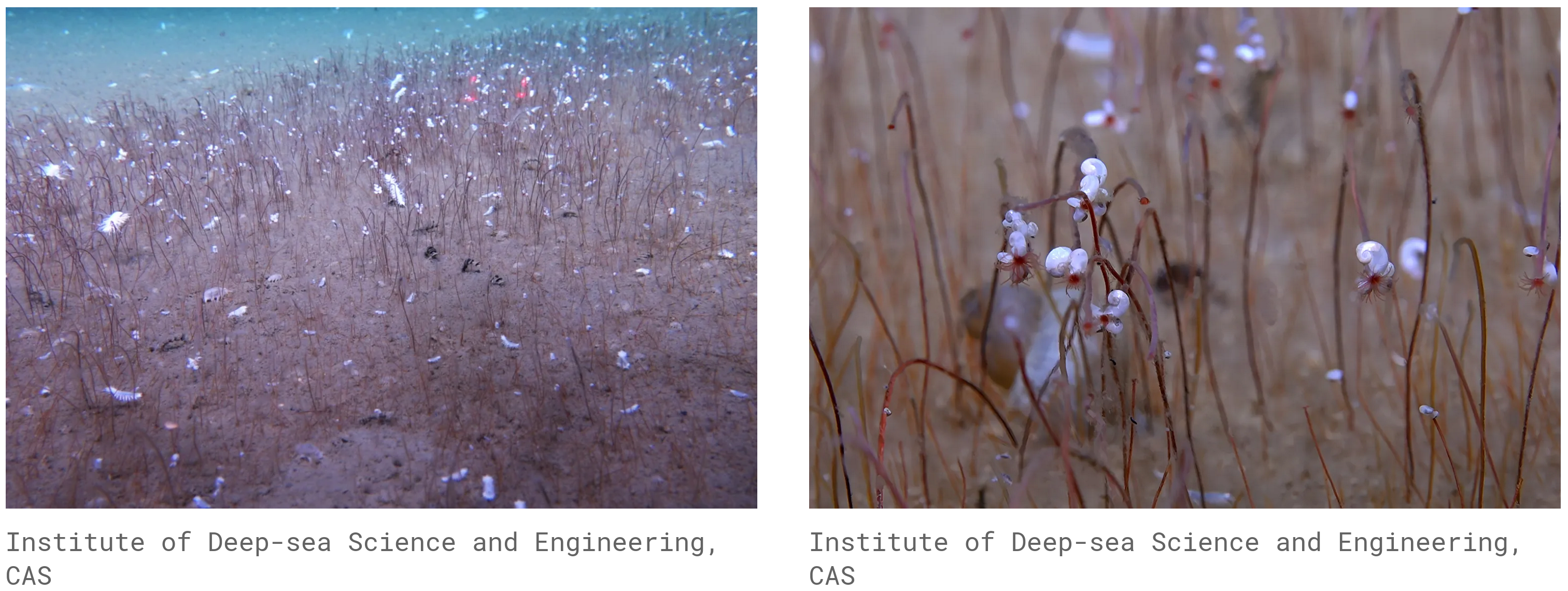
Among the tube worms the scientists encountered white, centipede-like critters — they’re also a kind of worm, in the genus macellicephaloides — as well as sea cucumbers.

The researchers also found a variety of different clams on the seafloor, often alongside anemones. Similar to the tube worms, the clams depend on bacteria within their shells to turn chemical compounds like methane and hydrogen sulfide that are present in the deep sea into food.
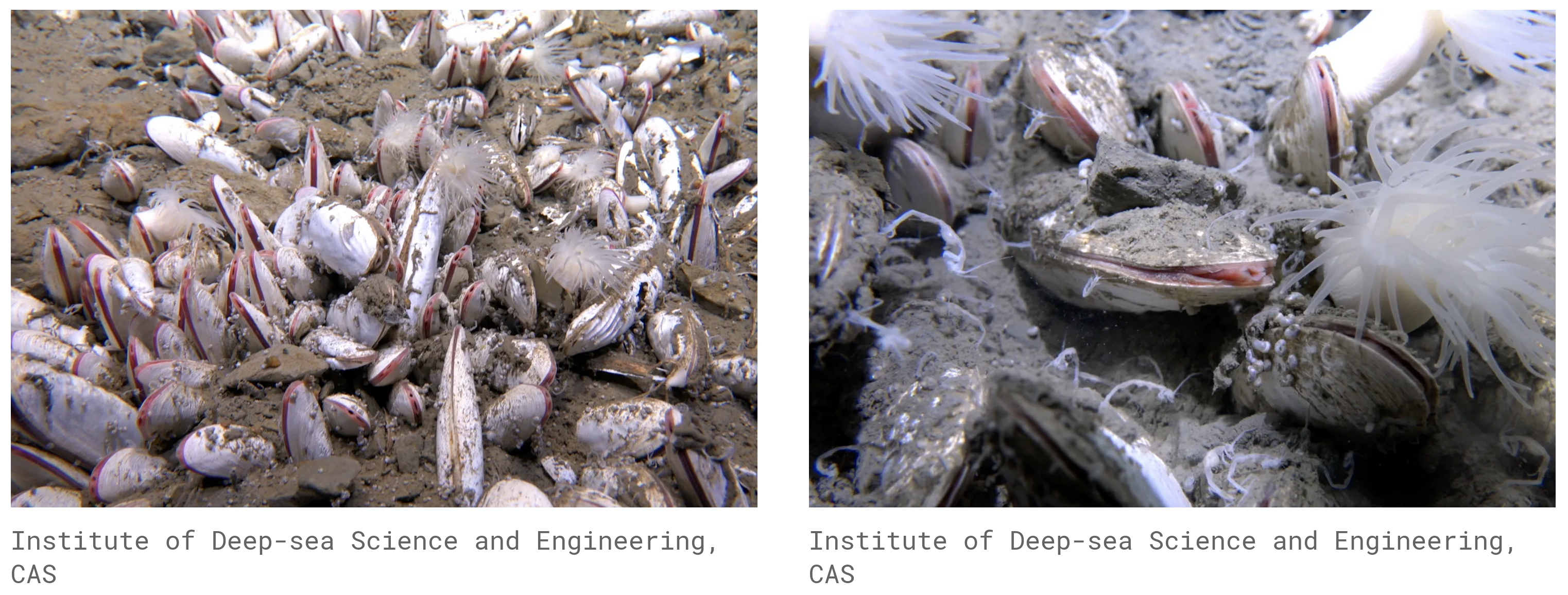
This was the deepest community of chemosynthetic life ever discovered, according to Mengran Du, a study author and researcher at the Institute of Deep-sea Science and Engineering at the Chinese Academy of Sciences, who was on the submersible. Du declined to comment on whether the expedition had anything to do with the potential for deep-sea mining in this region.
“Diving in the submersible was an extraordinary experience — like traveling through time,” Du told Vox by email. “Each descent transported me to a new deep-sea realm. As a diving scientist, nothing compares to the thrill of gazing through the observation window with my own eyes.”

Unlike other deep-sea ecosystems — which feed on dead animals and other organic bits that fall from shallower waters — these trench communities are likely sustained in part by methane produced by microbes buried under the seafloor, the authors said. That suggests that wildlife communities may be more common in these extremely deep trenches than scientists once thought.
“The presence of these chemosynthetic ecosystems challenge long-standing assumptions about life’s potential at extreme depths,” Du said.
Whatever
Tags
Who is online
86 visitors
Oh... wait... this research won't be stopped by America's mad-king.
It's Chinese...
What? Do you mean China didn't steal the process from America?
Ummm... lemme look again...
Nope.
Jeez... d'ya think that means the Chinese do fundamental research? Gosh!
Just when America is ending fundamental research.
It's almost like a formal passage of global leadership from America to China.