
3 people from U.S. base in Antarctica evacuated in high-risk rescue operation: "Nothing short of heroic" - CBS News


 S E E D E D C O N T E N T
By Stephen Smith Stephen Smith Managing Editor Stephen Smith is a managing editor for CBSNews.com based in New York. A Washington, D.C. native, Steve was previously an editorial producer for the Washington Post, and has also worked in Los Angeles, Boston and Tokyo. Read Full BioStephen Smith
Updated on: August 7, 2025 / 11:33 AM EDT / CBS News
High-risk rescue operation in Antarctica  High-risk rescue operation in Antarctica for 3 at U.S. base00:23
Three people needing medical care were evacuated from an American research base in Antarctica, New Zealand's air force says, during a perilous rescue operation carried out in freezing temperatures and 24-hour darkness. U.S. officials called the mission "nothing short of heroic."
One person requiring urgent medical care and two others needing medical assistance were flown out of McMurdo Station in a mission that took nearly 20 hours, the Royal New Zealand Air Force said in a statement on Wednesday. The U.S. National Science Foundation, which operates the station, sent out the call for help because there were insufficient medical resources at the base.
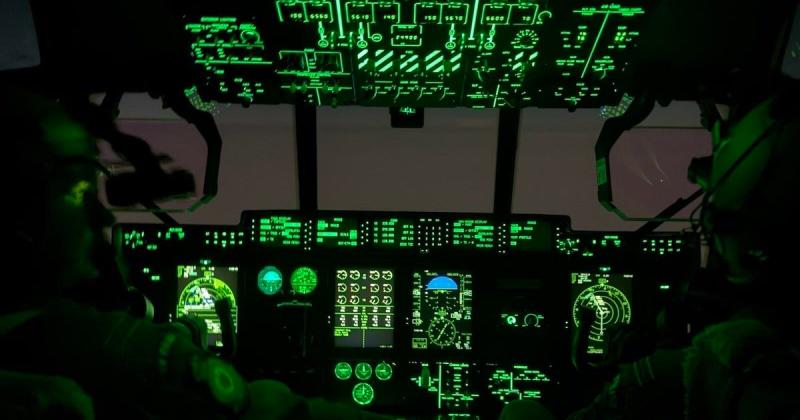
A crew on a Royal New Zealand Air Force C-130J Hercules braved the harsh conditions and successfully carried out the mid-winter medical evacuation, officials said. No information was given about the patients or their conditions.
Officials said a U.S. team at the base had to manually create a runway and ensure the ice was groomed and suitable for landing in Antarctica's perpetual winter darkness and sub-zero temperatures. After a detailed analysis of the weather and conditions of the airfield, the New Zealand air force crew -- with a doctor on board -- used night vision goggles to carry out the mission.
Overnight, the RNZAF carried out a high-risk winter medevac from the U.S. Antarctic Program's McMurdo Station. Landing a large aircraft on ice, in darkness, using night vision, takes precision and extraordinary skill. We are deeply grateful for the crew's professionalism,… pic.twitter.com/IKrS2bxxEQ
— US Embassy NZ (@usembassynz) August 6, 2025
Once on the ice, the engines of the C-130J Hercules were kept running to keep them warm for refueling, a process known as "hot refueling," before the aircraft took off with the three patients, officials said. The aircraft landed back in Christchurch, New Zealand on Wednesday, the air force said.
Air Commodore Andy Scott said the freezing cold, unpredictable weather conditions and the difficulty of landing on ice in total darkness make such flights "one of the most challenging" for crews to perform.
"(It is) an extremely challenging environment to fly in on night vision goggles due to the extreme weather conditions, which are highly changeable at this time of year and makes accurate forecasting a challenge," he said.
McMurdo Station -- which is located about 25 miles from the world's southernmost active volcano -- reported temperatures of -11 degrees Fahrenheit on Tuesday.
The U.S. Embassy in New Zealand lauded the success of the mission.
"Landing a large aircraft on ice, in darkness, using night vision, takes precision and extraordinary skill," the embassy said on social media. "We are deeply grateful for the crew's professionalism, courage, and partnership. This mission was nothing short of heroic."
The New Zealand air force carried out similar rescues in 2021 and 2024, the embassy said.
Melissa Sweeney, the U.S. charge d'affaires for New Zealand, said the latest operation was carried out "flawlessly."
"This required absolute precision. It was daring, dangerous, and deeply courageous," Sweeney said in a statement. "This is the kind of mission that tests every ounce of skill and bravery. RNZAF delivered, just as they always do."
According to its website, McMurdo Station is "the central logistical hub for the U.S. Antarctic Program (USAP), supporting research on the continent and at NSF Amundsen-Scott South Pole Station."
- Rescue
- Antarctica
Stephen Smith
Stephen Smith is a managing editor for CBSNews.com based in New York. A Washington, D.C. native, Steve was previously an editorial producer for the Washington Post, and has also worked in Los Angeles, Boston and Tokyo.

Tags
Who is online

122 visitors
I wonder what the temperature regulation on a C130 is like? It was crap on UH60 helicopters in winter and C130s have a lot more space to heat.
Regardless, pretty amazing rescue, especially when just a hundred years ago it could have taken months for rescue from Antarctica. Now we can do it in hours.
The times I flew in one, the heater could not keep up with the outside temp at altitude. But then there was a lot of complaints about how good the thermostat was also.
Agreed. While assigned to the US Navy's "Operation Deep Freeze" and having flown multiple times on LC-130's to and from Christchurch, New Zealand to McMurdo Station and back from 1987 - 1991, all passengers were required to wear their issue ECW (Extreme Cold Weather) gear during the 8 1/2 hour flight each way. As far as I know the cabin heating and the cabin pressurization work off the same system. The heaters were hard pressed to keep the back end warm in those conditions.
We had to do that when flying in or out of Alert but it wasn't because of poor heating in the back, it was because of a crash many years ago where some survivors died of exposure while awaiting rescue during a blizzard (including the pilot who gave up his flight jacket to one of the injured)
I knew a guy many years ago that signed up for a stretch to work somewhere on that ice patch. he didn't come back the same mentally as before he had left.
Did he spend the winter there? That happens with some that do. Just cannot deal with the isolation. Others thrive on it.
it's been so long I can't really recall too much. seems like he had to sign up for a year and his attitude towards women had changed to not very good, along with his new abuse of alcohol. he didn't return a happy camper.
We're all built different most can handle that sort of thing but some can't. I was up there twice for 6 months each time and had a blast
Not sure where your buddy was but it wasn't Alert as the max tour is only 6 months
he wasn't military, and it was about 40 years ago. his work contract probably had a lot to do with his transportation being able to get in to wherever he was and then get out back then.
Maybe up there for the oil/gas industry or mining or maybe teaching/nursing. Yes there are some really remote communities/areas up north
no, this was in antarctica. south pole ...
he went there to maintain telecommunications and ended up mostly doing snow removal.
Ooops my bad
If he signed up for a full year, then he was what was known as a Winter-Over with the whole time spent on the Ice except for about a week vacation in Christchurch between the summer and winter. Summer contracts are only for 6 months.
I can't remember much about it, it's been so long. we were friendly when he left, but when he came back an alcoholic wack job, I didn't have anything else to do with him and don't really care what happened to him.
Have flown in the back of C130's multiple times and never noticed the temperatures being problematic so I think the heating systems are designed well
In a little over 20 years of service in the army, I only ever flew in one once. When I left Iraq. It wasn't very cold out : ) Even at altitude.
I keep thinking about the rescue, though, and the c130. How much innovation over the centuries that led to its development. Everything today that keeps them in the air. In a very real sense, every part of our society is a part of it. And because of it, lives were saved. Yet so much of that capacity, all over the world, is spent trying to keep others from taking what we have or simply seeking the greatest profit. It's sad to think what might have been if we were just a bit more altruistic as a species. Maybe cities on Mars by now.
Or we could still be living in caves, we'll never know
Caves on Mars?
Mars?
In 1977 I was stationed at MCAS Yuma as FMF Corpsman and went on a det to NAS Fallon, Nevada with VMAT-102. On getting close, the C-130 I was on had to climb over Mountains to get to in to land at Fallon. The pilot decided to be nice and turn on the heating in back. I remember hearing a loud bang as the aircraft suffered a explosive decompression that blew one of my eardrums. Had to go straight to the medical clinic from the flight line. We were there for 30 days and I spent the first four days flat on my back. I thoroughly enjoyed the remainder of my time there though.
Only -11? In the middle of winter???
I experienced -82 in Fairbanks, Alaska. And that's with no windchill
Not sure about farhenheit but that seems really cold, the worst I've experienced up here in the cold white north is -60 celsius (without the windchill). They actually shut down work that day, although my boss didn't tell me so I showed up anyway
That was Farhenheit. Farking cold. We didn't go to work, either
I feel for ya... Living here in Arizona, there's a couple of weeks in December where I think I didn't move far enough south... hehe
LOL!
I get those days in January here in Arkansas
Damn that's -76 F
As do we in North Carolina. Like a lot of snow, though but it only lasts for a day (IF we get any at all), depending on the depth.
I hear ya. I live down in Douglas right on the border, and you cannot get any further South in Arizona without setting foot in Mexico!
Lol yeah, but it warmed up to -52 celsius the next day (and my boss again forgot to tell me work was shut down.)
We've been following Yuma temperatures... the thermometer hit 50° F a few days ago. Holy FFFFFFF!
You sure that wasn't Celsius? 50 degrees Celsius is 122 Fahrenheit, that makes much more sense for August. The average low for Yuma is 79 degrees F for July and 84 degrees F for August. Arizona is having a bit of a cool down right now as we have some weather changes that will bring rain to parts of the state later this week. It's almost 9am here in Phoenix and it's still a nice comfortable 95 degrees F.
I mean, 50 degrees F... that's like the temp they serve beer at up in Canada... LOL
Oooops!
Black flag weather. When I was stationed in Yuma in the mid 70's the base went to what is known Trop Hours from July - September where you went into work at 5 or 6 in the morning and got off at around 2 PM. the people that had it worst were the flight line crews. Ambient air temp was anywhere from 110 to 120. The flight line was even hotter due to heat being radiated off the concrete and asphalt making it somewhere between 130 to 140. All work was done on on a rotational basis with only one hour at a time allowed for individuals working out side on the aircraft or other areas. A lot of work was done in the hangars. For those of us at the clinic, that was always the busiest time of year for us due to increased cases of heat exhaustion/heat stroke.
Warm!
More than 400 people suspected to have died from extreme heat in Arizona county
August is on track to be hottest on record, with temperatures hitting at least 110F (43C) nearly every day
Matt York/AP
More than 400 people are suspected to have died from extreme heat in Maricopa county, Arizona , so far this summer, according to official figures, as the brutal current heatwave enters its 12th day.
August is on track to be the hottest on record, with temperatures hitting at least 110F (43C) every day apart from one so far. As of 11 August, at least three daily records had been broken including an all-time monthly high of 118F (48C), as well as several night-time record temperatures, according to Isaac Smith, meteorologist at the National Weather Service (NWS) in Phoenix.
The current extreme heat warning issued by the NWS is the fourth and longest of the summer thus far, and will extend at least through Wednesday night with temperatures forecast to hit 110F. Increased cloud cover and possible thunderstorms will then bring a brief respite towards the weekend but another very hot spell is forecast by the start of next week.
Maricopa county is home to Phoenix, the fifth largest and hottest major US city, as well as several smaller urban hubs dotted amid the Sonora desert including Scottsdale, Tempe and Mesa.
Midway through the hot season, the current official death count – including suspected and confirmed heat-related fatalities – is about 30% lower than this time last year, the second deadliest on record.
In 2025, the county medical examiner’s office has so far confirmed only 35 heat deaths – 17 directly caused by exposure to high temperatures, and 18 cases where heat contributed to the fatality, including by exacerbating chronic medical conditions or the effects of alcohol or methamphetamine. Another 369 suspected heat-related deaths remain under investigation, according to the county’s heat surveillance dashboard which is updated weekly.
June and July were a little cooler than recent years, despite topping 115F on multiple days, which at least partially explains the lower death toll. Improved access and extended hours at city cooling centres may also be playing a role, according to Dr Nick Staab, the county’s chief medical officer. First responders and hospitals have reportedly gotten better at treating heatstroke and other temperature-related emergencies.
Yet despite the encouraging numbers, Maricopa county is still on track to be the deadliest place for heat in the US after New York City, the country’s largest metropolis, where heat contributes to 525 deaths on average each year.
“With this many cases still under investigation and it only being mid-August, there’s a lot that could still happen,” Staab told KJZZ, the local public radio station .
Heat-related deaths have soared in Maricopa county over the past decade, with 645 in 2023 compared to 61 in 2014. The county has become increasingly unlivable for many amid record-breaking heatwaves driven by the global climate crisis, unchecked urban sprawl and an affordable housing crisis – which combined with patchy mental health and substance misuse services has contributed to a growing unsheltered population.
Last year, heat deaths fell for the first time in a decade to 608, according to official figures, but the city and county have since come under fire for alleged undercounting. A recent investigation by the local TV station ABC15 identified multiple cases in which heat was discounted as a factor despite the person dying in extreme temperatures.
“People are dying awful, preventable deaths that are not being accounted for in the official figures. We need more consistency and transparency if we’re going to wrap solutions around this public health crisis,” said Stacey Champion, a community advocate campaigning for more standardized counting of heat-related deaths in Arizona .
Neither the city nor the county responded immediately to questions surrounding the official death toll.
Heat is the deadliest weather phenomenon. But every heat death is preventable, and often indicates a lack of access to adequate shelter, cooling and/or health, addiction and social services.
So far this year, three-quarters of heat-related deaths have occurred outside, where temperatures in the most built-up, least shady parts of Phoenix can be 20 or 30F higher on the sidewalk than the NWS’s airport weather station. Unhoused people account for 40% of deaths, while substance misuse contributed to two-thirds.
June was the 11th warmest on record, and July the ninth hottest.
The city, county and state have sought to tackle the increasingly unlivable summer environment through tree canopy initiatives, cooling technologies and an expansion of cooling centres among other policies – in part with the help of Biden-era programs and funds.
But there is little or no hope of ongoing federal support under the Trump administration, which is dismantling environmental justice programs, climate change research and mitigation efforts, as well as access to healthcare, food stamps (Snap) and other social safety nets. Currently one in four heat deaths in the county occur indoors, and energy costs are predicted to rise significantly under Trump which risks making Maricopa county and beyond even more deadly as summers get hotter.
Meanwhile firefighters are struggling to control at least five major wildfires across the state, which have so far burnt about 180,000 acres . Hot, dry and windy conditions are fuelling the flames in Arizona – as well as fires in California, Utah, Colorado and large swathes of Canada.
Got ya beat. I had -98 when I was in McMurdo in August of 1988. Also without the wind chill factor.
ow.....
Morning...fruit cake.. it's 7.30am and only 4c...I have to turn the heater on, got to keep the cat warm...
There is frost on the ground, but at least there is no wind..roll on Spring...🥶
Fruit cake? I like fruit cake, just as long as it got no vegemite on it! 6:48 PM on Tuesday here with temp of 85 degrees F with rain plus a dust storm headed my way. Talk about crazy summer desert weather!
Yeo
Oops don't know what happened to my message..must be the Russians...
Yes I love fruit cake as well..
you are what you eat ...
slaps dev
Not sure where you stand with "peanut" butter..😁
it doesn't need refrigeration and is more easily available than bio-active vegetable matter ...
Ahh you don't put Vegemite in the fridge.. doing that is a death wish...
Huh you can go to the remotest shop in Oz and Vegemite will be found on the shelf....unlike that brown stuff you can use as plaster on the walls..
That is why vegemite is a lifelong acquired taste one generally has to raised with. That being said, I have met Aussies and Kiwis who hate the stuff.
Mmhhh...they've got no taste for the finer things in life..😁
I believe that picture of a vegemite jar you've posted before has refrigerate after opening on the label ...
Ahh nope..it says store in a cool dry place as in pantry...
Just bought a brand new jar..It has B1 essential for brain function, B2 supports your nervous system, B3 essential for energy and has folate..
As for the brain function how many jars can I put you down for?? 😁
none. my gag reflex works just fine. I probably saw some bloody oz dag pull a jar from the icebox on youtube.
It was probably a Kiwi..
They're strange mob at times..and do strange things..
They call butterscotch ice cream hokey pokey....and call thongs, jandals...
Yep glad there is a ditch between us... comes in handy especially when the Cricket is on...
PS..ice box??..Umm you mean an Esky...
no, I meant fridge. ice box was a shot in the dark ...
You have butterscotch ice cream??? I wish we did
you really want beer flavored ice cream ...
no thanks. I don't want my sustenance growing fur that glows under a black light ...
besides, I can get all the vegemite I want by stepping on grasshoppers ...
Morning... Kiwi's to the rescue..
They're a good mob across the ditch...
... uh, they've got the world's biggest moat full of sharks separating them from oz ...
Ahhh yep... sometimes it's good to have a bit of distance between distant rellies and countries... don't want to be over run by Kiwi's..they talk funny...😁
Don't forget the salties!
Yep Salties to the North, Sharks to the South..
We have it all covered...🐊🦈
Crocs to the North of me, sharks to the South here I am stuck in the middle of them.
Sung to the tune of "Stuck In The Middle With You". With respect to Stealers Wheels.😁
Nice to see some positive news for a change!
Kudos to the Kiwi's who always do things with style!
Yep same here love fruit cake..
Up to 15c now blue sky sun, dead calm...
Spring is in the air...😊
Good on 'em Kiwis!