
Should Ancient Scripture Be Updated to Modern Languages?


A couple of recent NT conversations indicated that there's a lot of ignorance floating around on the topic of Biblical translation.
This came across my RSS feed, so I thought I'd share it.

There's a kind of "Christian" called a "clobber-texter". This is someone who has learned some Biblical texts, word-for-word, and uses them to hammer into submission anyone whose ideas differ from their own. Aside from this practice being a blatant violation of Christ's Commandment to "Love one another", it ignores the FACT that the texts they're using are inevitably NOT identical to the originals... which were themselves not contemporary to the stories they tell.
But hey! It's the Bible!
 S E E D E D C O N T E N T

Photo by Aaron Burden on Unsplash
Ancient Scripture – But Not Always Modern Language!
I grew up in the Church of the Nazarene back in the 1960s. The only Bible that I knew as a child was the King James Version. I recognized that its language was different from the way “ordinary people” talked. I supposed that this was a special, “holy” language for talking to and about God.
In the early 1970s, two new versions of the Bible crossed my horizon. The first was the “Living Bible,” a paraphrase of Scripture in modern English. The second was the New International Version, which was an up-to-date translation of Scripture from the original languages. (I know those weren’t the only “new” versions to come on the scene. However, they were the ones that I encountered at that time.)
Some people were up in arms about these new versions of the Bible. They viewed the KJV as “the” Bible, as though Moses and Jesus and the others had spoken the English of Shakespeare. By the time I got to college, I understood that the Bible had originally been written in Hebrew (most of the Old Testament), Aramaic (parts of the Old Testament), and Greek (New Testament). Every other version of the Bible, from the Latin Vulgate of the Roman period to the King James Version to the many Bibles available today, are translations from the original languages. (Of course, the same is true for Scriptures in languages other than English.)
Should Ancient Scripture Be Updated to Modern Languages?
Because most of the world does not read ancient Hebrew, Aramaic, and Greek, translating Scripture is absolutely necessary. How would we share the good news of the Gospel with people if it’s not in their language? Remember, on the Day of Pentecost, the Holy Spirit enabled to disciples to “speak in our own tongues of the mighty deeds of God” (Acts 2:11). The same Holy Spirit who empowered the disciples at Pentecost can, and does, inspire translators and scholars to “declare the mighty deeds of God” in the various languages of the modern world.
How Is Scripture Updated to Modern Languages?
Original Texts
As I hinted at above, there are a couple of ways to bring Scripture “up to date.” The first, and from my perspective most preferable, is to do a new translation of Scripture. The translation process starts with the ancient texts of Scripture, and then translates that into modern language. The reason this is preferable is because it is starting as close as possible to the original text.
What do I mean by the phrase “as close as possible”? Well, the simple fact is that there is no “one” undisputed “original text” of Scripture. The Bible (which is what I mean by “Scripture”) is made up of a number of different writings, which were written over a period of anywhere from hundreds to a couple thousand years. The length of time depends on your view of who wrote those various parts.
For example, if you accept the traditional view that Moses wrote most of the first five books of the Old Testament, then you would have to date those books during Moses’ life. On the other hand, if you believe those books were complied by later priests and scribes, either just prior to or just after the Babylonian Exile, then you would date them about 1000 years later. (I’m not taking a position for the purposes of this article; I’m just pointing out the issues related to identifying the “original text.”)
Deciding What the “Original Text” Was
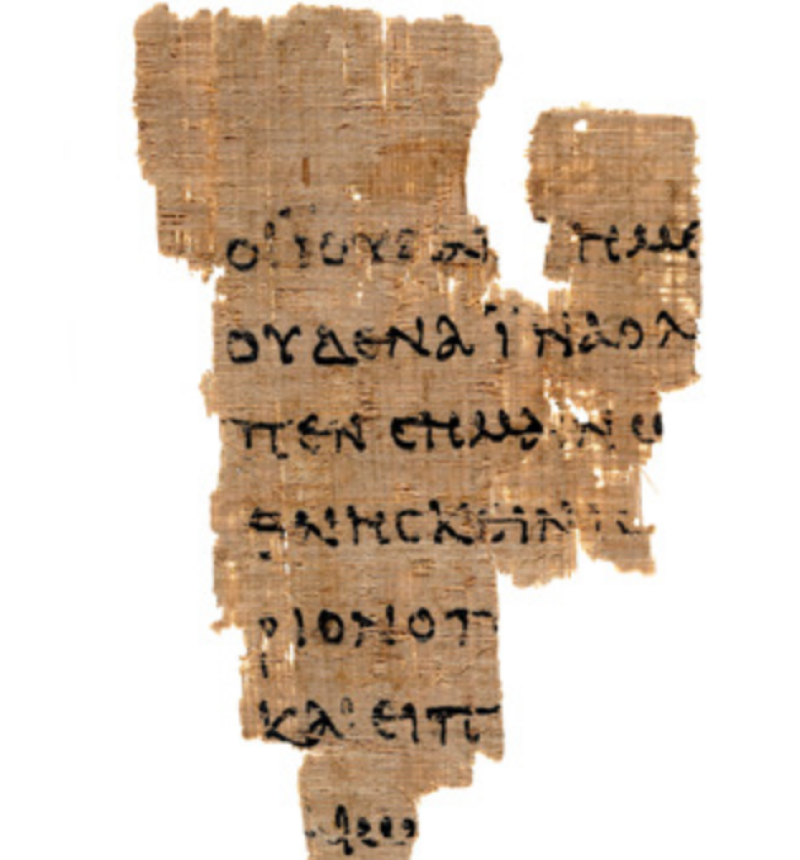
Because every part of the Bible was written nearly two thousand years or more ago, it should not be surprising that there are no original manuscripts available. The oldest documents that we have are fragments that date from the late-second century AD. The earliest complete copies of any of the books of the Bible are at least a few hundred years newer. Because every copy of any part of Scripture was done by hand, there is the possibility that some of the scribes who made those copies made mistakes. (We still make mistakes typing documents today, and we have auto-correct and spell-check and all kinds of other utilities at our disposal!)
So any text that we have of the Bible in the “original languages” is actually a compilation of all of those fragments and copies. And in order to compile such a text, the compilers must make a number of decisions as to which wording is most likely to have been the original. If there are three or four possible ways that it could have been written, someone has to decide which of those ways will be used. And just to complicate matters further, since ancient Hebrew was written without vowels, there are times when the word could change depending on what vowels are inserted between the consonants!
Translating into Modern Languages
Step one is to choose an “original text” from which to start. Then, the translators have to make some decisions about how they will translate. The number of possibilities is beyond the scope of this post; I just want to identify one such decision to help demonstrate how detailed this process can be. Will the translation be “word-for-word” – in other words, will the translators take each work of the “original text”, and translate it on its own? Or will they translation be more “phrase for phrase,” in which the goal is to communicate the idea of the original text in ways that are more accessible to the modern reader?
To explain this aspect of translation, I want to use three modern English translations. The New American Standard Bible (NASB) is at the “word-for-word” end of the spectrum. The New Living Translation is toward the “phrase for phrase” side. Finally, the New International Version is somewhere in the middle. If you are interested in a word-for-word rendering from the original languages, the NASB is the translation you want. If you’re more interested in a translation that focuses more on the broader meaning, the NIV and NLT are good choices. (The Message is at the far end of the spectrum; it often uses images and language that are starkly different from the original languages. The goal is to impact the reader in the same way as the original text would have impacted its original audience.)
Translations vs. Paraphrases
I’m not discussing paraphrases here (like the original Living Bible ). Paraphrasing from English into other English is something that preachers do all the time. When I preach a message, I start from the text of Scripture. I try to explain it in ways that my listeners can understand. Part of my study is to consider the original text, of course. However, I also rely on the scholarship of the various translators of Scripture. Any believer who is willing to read and study Scripture can paraphrase it. The critical step is to study the passage to understand it before you paraphrase it.
Should Ancient Scripture Be Updated to Modern Languages?
Absolutely! People often overlook a critical factor in the debate about modern translations verses older ones (like the KJV). When the King James Bible was first published in 1611, everybody in England talked like that. The KJV was not written in some high theological language; it was written in the language of everyday people. Go read anything that was written in the early 1600s! It will sound just like the King James Version, whether it is a religious text or not.
One of the key points of the Protestant Reformation was the provision of Scripture to people in their own language. The Roman Catholic Church insisted that the Scriptures should be read in Latin. The reformers wanted the Scriptures “in the vernacular.” Luther translated the Bible into German. Wycliffe produced an English version, which was later replaced by the King James Version. Was it was important for people 400 years ago to have the Bible in their own language? Yes! And it’s just as important today!
Whatever
Tags
Who is online
86 visitors
Jesus was a little brown man who didn't speak English.
Sounds like a recipe for lost in translation.
I think that general ideas can sometimes - not always - make it through the harrowing... but particular words almost never. I have no doubt about Christ's central message, "love one another", because He said the same thing over and over in various forms. At the same time, I wouldn't bet that any particular one of those forms is accurate.
This article is misleading. It makes it seem as if there are not translations in modern language already. There are plenty of them, so I don't know what he's talking about. He even mentions them in his article. The NASB, NIV and the NLT. The only way this makes sense to me is if someone is saying the manuscripts should not be translated and if someone wants to read the Bible they need to learn how to read Hebrew, Greek and Aramaic.
Plus, his section concerning "Translations vs Paraphrases" is misleading. They're all "Translations". What would be more accurate to say is that there are Formal Equivalence translations and Dynamic Equivalence translations. In Formal Equivalence, the translators are striving for word for word equivalence to the translated text and meaning is secondary That is, the focus is on word for word without losing the meaning. The NASB is a Formal Equivalence Bible.
In Dynamic Equivalence, they are less concerned with word for word and instead, idea for idea. They are not simply paraphrasing the wording. The focus is transmitting the idea contained in the text being translated. The Message Bible is a Dynamic Equivalence Bible on the extreme end of that scale.
The NIV is a Dynamic Equivalence Bible that, secondarily strives hard to be as Formal as possible, which is one reason it's so popular. I like to use it, along with the NASB.
Which is it, Drak?
Um. I simply don't know how to respond to this. It's as if you aren't able to understand the quote you used. Perhaps it might help you if I correct the highlighting?
I can't think of another way of helping you understand the point.
How is it possible to "makes it seem as if there are not translations in modern language already", while "mentioning" them?
It must be one or the other.
This implies that there are other modern English translations that the author has not retained. He needed three example for three positions on a spectrum, but he in no may implies that those three are the only ones available.
Okay, Bob. You go with that.