
Why wind farms attract so much misinformation and conspiracy theory

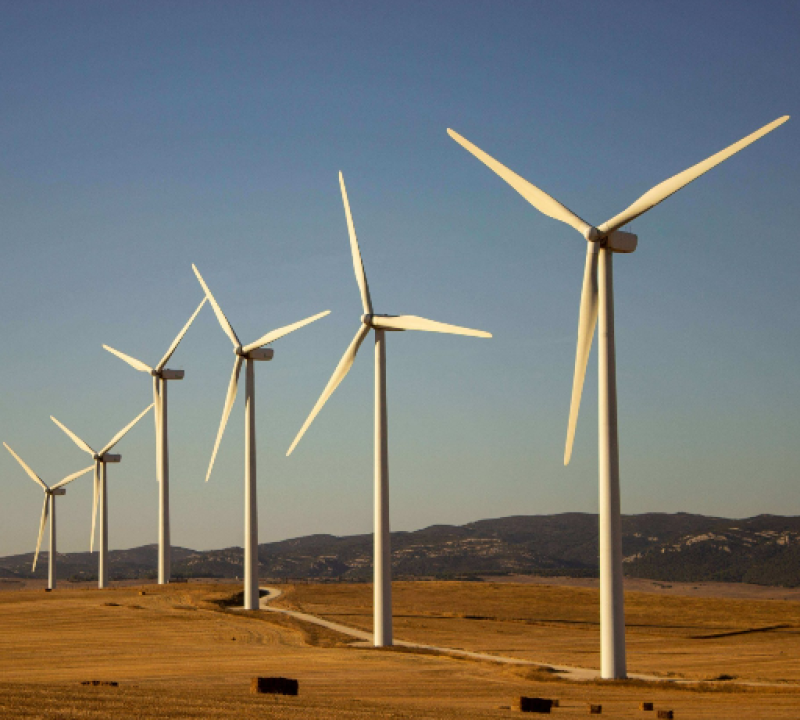

If you think climate change is a hoax, you might believe wind turbines poison groundwater

We can see this phenomenon right here on NT.
Data be damned.
Faith!!
 S E E D E D C O N T E N T
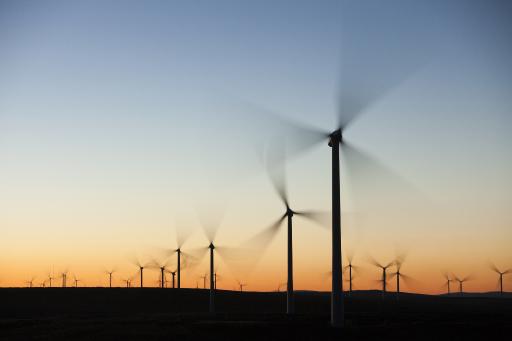
Like 19th century fears that telephones would spread diseases , wind farm conspiracy theories reflect deeper anxieties about change. They combine distrust of government, nostalgia for the fossil fuel era, and a resistance to confronting the complexities of the modern world.
And research shows that, once these fears are embedded in someone’s worldview, no amount of fact-checking is likely to shift them.
A short history of resistance to renewables
Although we’ve known about climate change from carbon dioxide as probable and relatively imminent since at least the 1950s , early arguments for renewables tended to be seen more as a way of breaking the stranglehold of large fossil-fuel companies.
The idea that fossil companies would delay access to renewable energy was nicely illustrated in a classic episode of The Simpsons when Mr. Burns builds a tower to blot out the sun over Springfield, forcing people to buy his nuclear power.
Back in the real world, similar dynamics were at play. In 2004, Australian Prime Minister John Howard gathered fossil fuel CEOs to help him slow the growth of renewables, under the auspices of a Low Emissions Technology Advisory Group .
Meanwhile, advocates of renewables—especially wind—often found it difficult to build public support for wind, in part because the existing power providers (mines, oil fields, nuclear) tend to be out of sight and out of mind .
Public opposition has also been fed by health scares, such as “wind turbine syndrome.” Labeled a “non-disease” and non-existent by medical experts, it continued to circulate for years.
The recent resistance
Academic work on the question of anti-wind farm activism is revealing a pattern: Conspiracy thinking is a stronger predictor of opposition than age, gender, education, or political leaning.
In Germany, the academic Kevin Winter and colleagues found that belief in conspiracies had many times more influence on wind opposition than any demographic factor. Worryingly, presenting opponents with facts was not particularly successful.
In a more recent article, based on surveys in the US, UK, and Australia that looked at people’s propensity to give credence to conspiracy theories, Winter and colleagues argued that opposition is “rooted in people’s worldviews.”
If you think climate change is a hoax or a beat-up by hysterical eco-doomers, you’re going to be easily persuaded that wind turbines are poisoning groundwater, causing blackouts, or, in Trump’s words, “ driving [the whales] loco .”
Wind farms are fertile ground for such theories. They are highly visible symbols of climate policy, and complex enough to be mysterious to non-specialists. A row of wind turbines can become a target for fears about modernity, energy security, or government control.
This, say Winter and colleagues, “poses a challenge for communicators and institutions committed to accelerating the energy transition.” It’s harder to take on an entire worldview than to correct a few made-up talking points.
What is it all about?
Beneath the misinformation, often driven by money or political power, there’s a deeper issue. Some people—perhaps Trump among them—don’t want to deal with the fact that fossil technologies, which brought prosperity and a sense of control, are also causing environmental crises. And these are problems that aren’t solved with the addition of more technology. It offends their sense of invulnerability, of dominance. This “ anti-reflexivity ,” as some academics call it, is a refusal to reflect on the costs of past successes.
It is also bound up with identity. In some corners of the online “manosphere,” concerns over climate change are being painted as effeminate .
Many boomers, especially white heterosexual men like Trump, have felt disoriented as their world has shifted and changed around them. The clean energy transition symbolizes part of this change. Perhaps this is a good way to understand why Trump is lashing out at “windmills.”
Whatever
Tags
Who is online
86 visitors
There's the one advantage that wind has over solar, note the straw bales from a harvested wheat crop, you can still access and farm the ground with wind, but with solar the farm is completely taken over and the farmer has no access to it for the 20 years of the lease, the acreage is environmentally destroyed, and what sometimes happens is the landowner is stuck with the cleanup costs as the company created for their particular project goes bankrupt by the end of the lease.
The VA here in Little Rock installed built car "shelters" that have solar panels that provide the shelter. This is where I would like to solar panels, in a parking lot where they can provide shelter for cars and people. I saw something similar at an AFB just can't remember which one.
I don;t like solar panel farms that take up actual farm land
In some other countries, solar is being built on stilts, high enough to raise stuff beneath them. America has s-o-o-o much land that there's usually no need.
Parking lots in downtown Yuma have overhead shade cover... with solar.
Good placement
When you read the solar leases in this area, once the perimeter fence goes up, the landowner loses control of the land for the extent of the lease, you can't even graze animals.
Building the panels so they are higher just means more underground structure needs to be installed to counter wind load.
America has s-o-o-o much land that there's usually no need.
That's the real sad part, you can't build on wetlands and you can't level a forest, so the only other option is to build on farmland which is already cleared and determined not to be wetlands.
What get's me about building over parking lots is the reason the landowner loses access to their property once the fence goes up, which is the liability involved of people so close to a high power installation. A parking lot covered by panels is inviting possible electrocution being so close to people.
Makes sense. That’s how leases work. That’s certainly not unique to solar plants.
If it were more profitable to graze animals on the land, I think the landowner would be doing that.
Also, the middle of the desert.
There are a LOT of parking structures - and other urban/suburban locations - with solar panels. Has anyone in the general public ever actually been electrocuted at one? (I assume installers and maintenance crew of any electrical facility risks electrocution. I’m not talking about that.) Also, we already have electric lines running all over civilization - including at parking lots. Why isn’t that a big concern?
That's the point, with the solar farm there isn't anyway to cash crop the land and the only thing that is allowed to grow is grasses or low level brush that a grazing animal would utilize, but you can't even do that. (Especially goats, they would destroy a solar array).
Also, the middle of the desert.
I don't remember a desert in Michigan or any immediate surrounding states. Also, isn't a desert it's own unique environment which would suffer with solar panels covering it?
LIABILITY, that is the reason for keeping people away from the land covering solar farms, but yet how is liability overlooked when placing panels in close proximity to many more people? What's to keep dumba** kids/people from climbing up on the solar array? After the first time someone falls from or is electrocuted every other parking lot array would be fenced off.
But again, no one is forcing the landowner to do this. You want to graze cattle? Do that. By all means! If you want a solar farm, instead, do that. That’s freedom. What’s the problem?
If it’s just land in the middle of nowhere, people would be trespassing. Why would people need to be there at all? Parking lots are there to be used. Your 10 acre solar farm is not. They’re just different things.
What’s to keep kids from climbing anything? Kids climb shit they’re not supposed to climb all the time. And they get hurt all the time. That’s the world.
But there’s still no evidence I see that anyone has been electrocuted in this setting.
Cover desert areas with solar farms.
Why not place solar panels flat on rooftops? From homes …. even factories and various other types of commercial buildings?
The roof doesn't have to be flat. I have a friend in Barbados that I keep in touch with. She told me that hurricanes knock out the power a lot there, so she installed solar panels on her roof and when everyone around her are without power, her power is permanent.
I know nothing about land-use law... but it's hard to believe that a lease agreement cannot be written to allow both solar panels and agriculture. Other countries do it. Is American law just... stupid?
Oh, and... there are pilot projects in California, putting solar panels over water canals. This limits evaporation and supplies electricity.
You want to graze cattle? Do that.
I guess you missed the point, the land is now cash cropped and not covered in grasses, therefore grazing would be a step backwards, where a solar array the only thing you can grow is grasses, but grazing that grass is not allowed.
It's not land in the middle of nowhere, one town will be surrounded by a solar farm and I would be living an 1/8 of a mile from another one. 10 acres LOL, in this area alone there is near 5000 acres leased to solar, that's 5000 acres of unusable land collecting just more than farming it would. The reason is that many of the landowners are reaching retirement age or already there and the kids have no interest in farming, so to keep an income from the land they leased, because renting it out to larger farms would still bring in less than the solar lease.
You needed to keep those last two sentences together, because when it does happen, the parking lots would be fenced off away from the public and the establishment that owns it.
Because rules, regulations, and liability in the US prevents it. Other countries do it maybe because it is government property in the first place, I'll try to look that up to see if that is the case.
Ok, well I'm not the one who was complaining about not being able to graze cattle. You're not making a lot of sense.
And...electricity. You're harvesting power. That's pretty useful.
Um, ok. What town?
I fail to see how that's a problem. I fail to see how anything you described is a problem. People are making more money producing power than they could by producing anything else. That sounds awesome.
The first leases that started in the area about ten years ago actually paid royalties on the electricity produced per acre, but the company doing that dropped all those leases without any development and a new company came around and there are no royalties paid.
Yeah, it does sound awesome, sitting back not lifting a finger and lose 5000 acres of food production, greedy bastards. 1200 acres of the farm around the town is now being rented by a large family farming operation and once the development starts they will lose that acreage and no one will rent for what is fair now because the leases pay more. I guess if your OK with losing food producing acres to solar, then so be it. But now the push will be to more GMO crops to supply the increasing demand with fewer acres.
Guess what else can no longer graze those acres, the perimeter fences aren't just for people, the fences also keep out the wildlife, the deer that have profited heavily from foraging the farm crops will suffer, not only from the loss of forage, but now they have to navigate around the fenced areas. The marijuana outdoor grows are required to have a perimeter fence and those fences are concentrating the deer and the car deer accidents are increasing at the edges.
Wind turbines and solar are symbols only, not solutions to an imagined problem of what might happen decades down the road. The climate cult has done a terrible job of selling this coming climate catastrophe to an informed public, who don't believe the lies and fear mongering.
China’s construction of new coal-power plants ‘reached 10-year high’ in 2024 - Carbon Brief
Climate Change and Dirty Truth About Wind, Solar Energy
This Climate Graph has a Nasty Secret
Who supplies your links? Are you supposed to read them, yourself? They're hilarious!
Symbols of what? They generate electricity. That’s a fact. Are you threatened by that?
Being afraid of wind generated power is pretty insane. You have to be looking real hard for a new thing to feel victimized about.
Not afraid of them, just concerned about the physics of installing so many of them. I queried Grok about this, the conservation of energy part, the action that's behind the push of the blades, and the combined effect of the HP constantly pushing mainly in one direction. Kinetic energy is what is being removed from the air mass, therefore slowing the entire mass, the series of low pressures, three per turbine, causing mainly water vapor to lose its heat and changing the dew point, these combined could possibly produce what is needed for localized heavier rains causing floods. The turbines are built to resist the wind and have a huge anchor below them to accomplish that. Just how many are needed to start adjusting earth's rotation and tilt, Grok didn't believe at where we are now, compared to the earth's mass, that there would be any problems, but the future could have a hundred fold increase in wind farms.
oh FFS. Now I know I’m being trolled. Either by you or by Grok. Or both.
Well.... I can tell you that West Texas is absolutely covered with turbines and has been for years.
That's not where the flooding happens.
The wind farms do interfere with the National Weather Service radars. So far the NWS has been able to filter out the interference but that will become more difficult as the number and size of wind farms continue to increase. Not an insurmountable problem but there does need to be an awareness that the problem exists and will need some future investments to mitigate.
Old link that apparently isn't maintained any long. But it does provide an explanation of the physics.
Wind farms can also affect telecommunication systems through electromagnetic emissions and reflections/scattering caused by the turbine blades. Steps can be taken to mitigate these problems but they can't be totally eliminated.
So do tall buildings and tunnels, but nobody thinks we should abandon those things, even a little, to get better radio or cell phone reception.
The point is anything we do has some impact on something else. The question is, is it a difference worth caring about, especially compared to alternatives?
Every energy option has pluses and minuses. But the negative, or potentially negative things I see about wind or solar are far outweighed by the pollution and climate impact of fossil fuels. I also hear a lot about the money we spend subsidizing those technologies, but we have spent trillions on oil, coal, and gas across the generations. There’s no comparison.
Tall buildings and tunnels don't move. Turbine blades do.
Where did I say anything about abandoning wind turbines? Does that red herring need tartar sauce? My point is that the cost of wind turbines involves more than just installing the turbines. Of course we could just ignore those secondary affects, slap each other ass, and declare victory. The would be the stupid thing to do which seems to be the guiding principle for a lot of environmental advocacy.
Both.
Therefore what, exactly? Wind yes or wind no? Or are we just here to complain?
[deleted][✘]
Therefore we end up with bigger more expensive problems in the future because the known problems were ignored in the beginning.
If the plan is to just score political points then the problem is ignored that deploying wind turbines will require increasing the number of weather radars to overcome the interference. The increasing number of wind turbines will need more cell towers to overcome the interference. The desire to score political points often ignores the downstream consequences and then we have to put up with a different type of denial.
Filling the countryside with 1970s horizontal-axis wind turbines might appease the NIMBY urbanites but its not the best application of current technology. The current plan was developed by profiteers and those attempting to score political points. We need to do better if alternative energy is to become sustainable.
More expensive than oil spills? More expensive than lung disease from air pollution? More expensive than having to relocate millions - perhaps billions - of people who live along coastlines? More expensive than rebuilding the cities and ports on those coastlines?
The plan is to generate power that is better for the overall environment and more sustainable. It's not surprising that a thing like that would have political support.
Yeah? How many more? You know they're building those things all the time with or without wind turbines, right?
Yeah, I assume the people making this stuff are always looking for ways to make it better. Every industry works that way. Are you seeking perfect, optimal, maximally efficient wind and solar now, or we can't do it at all? Why have such a standard? The fossil fuel industry has been a filthy shit show since it was invented. Why not wring your hands over that?
Possibly more expensive than oil spills. The other things on that list are 'drown the puppy' fearmongering. If the AMOC is disrupted by melting Greenland ice we could end up in another ice age, too.
A better plan would be to generate power where it is consumed to avoid grid disruptions. We're told storms are becoming more frequent and intense. Doesn't that pose a threat to sustainability of grid based power generation?
No, I don't know that. I haven't seen any information that suggests NWS is expanding its radar network faster than wind turbines are being deployed.
Power losses on the grid are well known. The grid requires constant maintenance that does not contribute to generation of electricity. The grid has now become a bigger risk for wildfires in California as the effects of climate change intensify.
If Los Angeles can hide 800 active oil wells then it should be possible to install alternative energy generation in the city and avoid the grid related inefficiencies and problems.
There's smart green and there's dumb green. The way wind turbines are being deployed now is dumb green.
Honestly, everything you are saying here qualifies as that.
Why? I'm advocating for deploying wind generation in a smarter manner. Wind farming is following the same pattern as other monoculture farming practices.
These things have been around since the 1960s. And they were commonly called windmills back then. Wind generators have been in commercial use for large scale electricity generation for at least 50 years. One of the local farms still has one of the small wind generators from that era in operation.
There's not much innovation about these modern wind turbines. Basically they're just a scaled up version of wind generators that had been deployed in the 1970s. The need for large open spaces means that longer transmission distances are needed. The efficiency of the horizontal axis generator is offset by losses in the transmission grid.
For urban settings, vertical-axis wind generators are more suitable. While the vertical turbines, themselves, are generally less efficient that loss of efficiency is offset by less loss in transmission and distribution. Siting generators closer to where the electricity will be consumed generally improves the overall efficiency of the system.
These grid scale alternative generation technologies that require long distance transmission aren't really the smartest way to utilize the technology. But who says anything has to be smart when taxpayer money is involved? Politicians generally dump money into the choice that is most stupid.
When discussing investing in various forms of “green energy” a lot of the talk on Wall Street now is about nuclear.
Remember the "Three Mile Island" disaster? Well, that was a while back.
Here's an update:
Constellation Energy CEG recently announced that it has signed a long-term power supply agreement with Microsoft Corporation MSFT . To meet the clean energy supply obligation, The company will launch the Crane Clean Energy Center (“CCEC”) and restart Three Mile Island Unit 1.
Full disclosure: I own shares of both #Microsoft MSFT as well as #Contellation Energy CEG
Disclaimer: Investing in the stock market can be risky, and may result in the loss of some or all of your invested capital.
Not hearing a lot about it recently but IMO there’s a lot of potential in harnessing tidal energy.
And its something where the energy is there. For example, IIRC, the highest tides are in The bay of Fundy:
The Bay of Fundy in Canada boasts the highest tides in the world, with a maximum tidal range of 16.8 meters (54.6 feet) according to Not Since Moses . This extreme tidal range is due to the unique shape and size of the bay, which allows for resonance to amplify the tides according to Cape Enrage . The natural rocking motion of the water, combined with the bay's funnel shape, forces the water higher and higher onto the shores according to NOAA .
All that water-- naturally moving up and down daily. That's a lot of energy! (And while that area has the greatest natural movement, there are many other places where there are significant tides....
And harnessing that, there are no toxic waste products like you get when burning coal or oil. No fear of ruining land that's used for crops.
P.S: "Hydro-power" is not exactly new-- IIRC we've been harnessing natural water flow through dams for some time now!
Look who I am agreeing with on this
OK,