
Trump Got a TikTok Deal. Xi Got a Grand Strategy.


 S E E D E D C O N T E N T
Friday’s phone call between President Trump and Chinese leader Xi Jinping achieved something few veteran China watchers thought possible: It thawed the diplomatic deep freeze. Its significance wasn’t measured in a landmark agreement–none was reached–but in a commitment that sets the stage for dealmaking in the coming year.
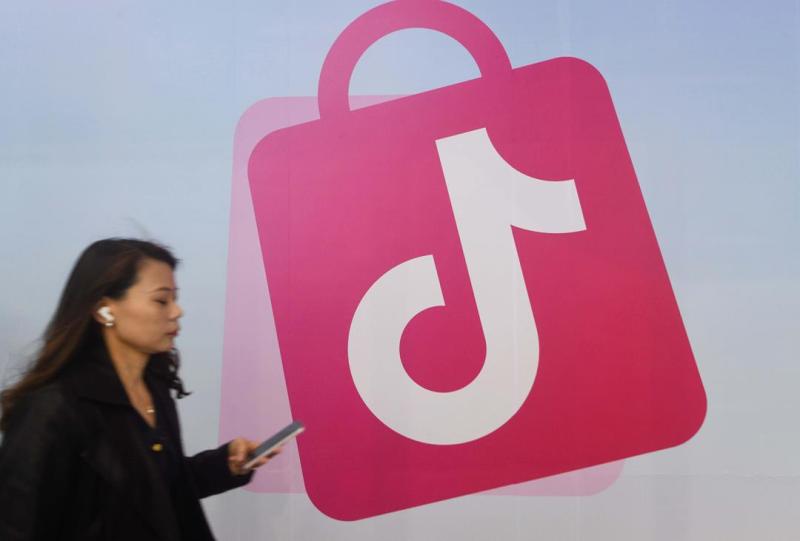
The big irony, however, is that it wasn’t trade, Taiwan or military posturing that broke the impasse. Amid a minefield of contentious issues, the key that unlocked the door to future negotiations was the fate of a social media app, TikTok .
TikTok was Trump’s stated reason for the call and he got what he wanted: Xi blessed the framework of a deal that would keep the app running in the U.S. Details–including exactly who controls the all-important algorithm that powers the app–still need to be finalized.
What Beijing got in return was a series of bilateral summits Trump outlined in his Truth Social post: first a meeting between the two at the coming gathering of Asia-Pacific leaders in South Korea, then a Trump visit to China in early 2026, and a Xi trip to the U.S. for the Group-of-20 leaders’ powwow scheduled for December that year.
In effect, by conceding on the social-media app that is a low-stakes priority for the Chinese leadership, Xi locked in not just one but three bilaterals with Trump, potentially ensuring engagement for more than a year. Most notable among them is Trump’s promised trip to China–the first U.S. presidential visit to the country since 2017, when Trump last went.
“The Chinese are behaving like lion-tamers–using their leverage like whips and chairs, doling out small treats to keep things calm,” said veteran American diplomat Danny Russel.
It means for now at least, Beijing is achieving what it has been aiming for : stringing Washington along in protracted negotiations by offering up as little as possible.
Strategic Mismatch
For Xi, the goal isn't a quick outcome but a managed process. The Chinese leader has already made up his mind about the nature of U.S.-China relations, which he calls a long-term “struggle.”
To that end, Beijing views time as its greatest asset. Each month spent in dialogue is a month where the status quo is largely maintained, allowing the longer-term Chinese leadership to continue its effort to ringfence the Chinese economy and build up its military without the disruption of a full-blown crisis. That’s why the process itself is the prize for the top leader.
Trump, by contrast, appears to be driven by a desire for quick, marketable victories even though some of the deals he has struck so far lack crucial details . An endless series of talks with no trophy to show for it risks looking like weakness on his part, not strategic patience.
The American political clock, with its constant pressure to deliver tangible results within a four-year time frame, also makes Washington inherently averse to the very ambiguity and delay that Beijing seeks. This creates an urgent appetite for a breakthrough that China can exploit.
That’s the backdrop for the TikTok deal both sides have professed to support. With this agreement, Trump, who has said he thinks TikTok may have helped get him elected, will please his young supporters who are devoted to the video-sharing app.
And, according to my colleagues Miriam Gottfried, Amrith Ramkumar and Alex Leary, the Trump administration is expected to collect a multibillion-dollar fee from investors for essentially brokering the transaction.
For Xi, the prize is time. The year of high-level engagement he secured is a year where Washington’s focus likely will be on process and protocol, while Beijing continues its relentless drive toward technological self-sufficiency and military readiness.
In short, Xi has been given the one thing a grand strategist values most: a full year with the whip and chair firmly in his hand.
Tags
Who is online
103 visitors
Sounds like Xi has read The Art of the Deal and found it to be bullpucky bravado.
IIRC, Trump didn't actually write "The Art of the Deal"-- he paid someone else to write it (?)
I just googled it, here are the results:
Tony Schwartz (born May 2, 1952) is an American journalist and business book author who ghostwrote the 1987 book The Art of the Deal, which was credited to Donald Trump.
I know.
sounds like he's way smarter than trmp
He is.