
Illiteracy is a policy choice

 S E E D E D C O N T E N T

This month, the Department of Education released its latest edition of the National Assessment of Educational Progress , the standardized tests better known as the Nation’s Report Card. The results have left me blazing with rage.
In my home state of California, for instance, only 30% of public school fourth graders can read proficiently. Fully 41% cannot even read at a basic level — which is to say, they cannot really understand and interpret written text at all. Eighth graders, as you might expect, look almost as bad .
These numbers have been tumbling downhill in California and more widely across the U.S. for years now, and not just because of school closures during the pandemic. Nationwide, reading scores for fourth graders peaked back in 2015 , and while the especially ugly 2022 outcomes were dismissed at first as COVID-19 outliers, scores have fallen further since. The decline is the worst for the kids who were already struggling; the test scores of the bottom 10% of students have dropped catastrophically.
But scores are not slipping everywhere. In Mississippi, they have been rising year over year. The state recovered from a brief decline during COVIDand has now surpassed its pre-COVID highs. Its fourth grade students outperform California’s on average, even though our state is richer, more educated, and spends about 50% more per pupil.
The difference is most pronounced if you look at the most disadvantaged students. In California, only 28% of Black fourth graders read at or above basic level, for instance, compared to 52% in Mississippi. But it’s not just that Mississippi has raised the floor. It has also raised the ceiling: The state is also one of the nation’s best performers when you look at students who are not “economically disadvantaged.”
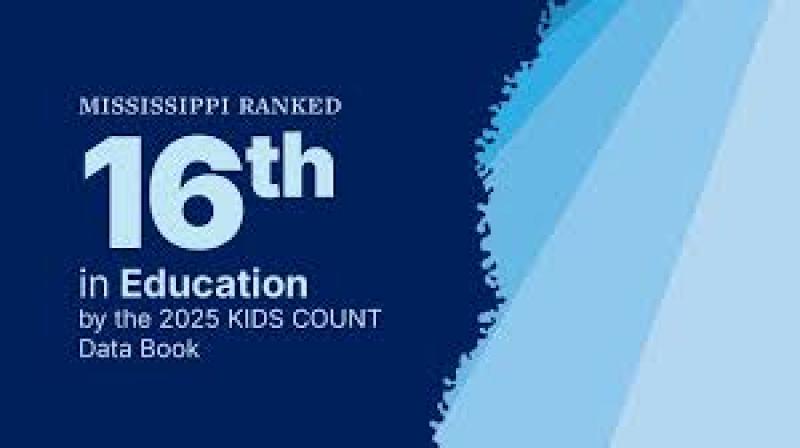
Consider this the latest chapter of the “Mississippi Miracle,” which has seen the state climb from 49th in the country on fourth grade reading to ninth nationally. This rise has received a great deal of coverage in publications ranging from The New York Times to The New York Post . And yet, it still feels as if what’s taking place in the Deep South still has been grossly undersold.
First, it’s not just Mississippi — Louisiana, Alabama, and Tennessee have adopted the same strategies, stemmed the bleeding affecting states elsewhere, and seen significant improvements.
Second, many people who aren’t too focused on education policy seem to imagine Mississippi has simply stopped underperforming , that they’re now doing about as well as everyone else.
This is not true. They haven’t just caught up to your state; they are now wildly outperforming it. If you live where I do, in Oakland, California, and you cannot afford private education, you should be seriously considering moving to Mississippi for the substantially better public schools. Black students are as likely to be basic-or-above readers in Mississippi (where the median Black household income was $37,900 in 2023) as in national top performer Massachusetts (where the median Black household income was $67,000 in 2022. )
There is very little more essential to a free society than universal literacy and adequate public education. It is a civil rights issue. It is the foundation for absolutely everything else.
To fail here is to lastingly abandon a significant fraction of our children to a lifelong struggle. And blue states have been failing. We have been spending lots of money on schools, but we have not been willing to muster the political will and effort necessary to hold those schools accountable for results and adopt teaching practices that actually work.
For a while, there was the excuse that it was hard to know what did work. But over the last 15 years, as Mississippi has scaled the state rankings and other southern states have mimicked its success, it has become clear that we do know — or we could, if we wanted to.
“People are at a loss and would rather refer to it as the “Mississippi Miracle” than look under the hood to see what is really happening,” Kareem Weaver, the executive director of FULCRUM, a literacy advocacy group here in Oakland, told me. “They aren’t doing anything that others can’t do. In fact, they are doing it with far less money than most state departments of education have at their disposal.”
We just have to ask ourselves: Are we going to do it, or is it unimportant to us whether our children learn to read?
“They have a common playbook”
Mississippi’s success is exciting. But perhaps even more exciting is that other states have achieved strong results with the same basic playbook. Louisiana clawed its way from 49th in the 2019 state rankings to 32nd (in fourth grade, where reforms are often visible the soonest, it went from 42nd in 2022 to 16th). Tennessee made it into the top 25 states for the first time.
John White spent nine years in the Louisiana Department of Education, working on a suite of reforms that made Louisiana the fastest-improving state in the country across a wide range of categories — reading, math, science, high school graduation rates. The first thing he did when we spoke, though, was to caution that we don’t actually know which of Louisiana’s reforms played a causal role.
Nonetheless, there are some obvious commonalities among the Southern Surge states. White names three, the first of which sounds obvious in retrospect but was in fact novel: The states adopted reading curricula backed by actual scientific research. 1 This led to them adopting phonics-based early literacy programs and rejecting ones that used the debunked “whole language” method that encourages students to vaguely guess at words based on context instead of figuring them out sound-by-sound.
This is the part of the story that has gotten the most attention — teach phonics! And you should, indeed, teach phonics. But making schools adopt the approach took more than a mere nudge. The Southern Surge states have tried earmarked funding, guidance to districts, and outright mandates to accomplish universal adoption.
“Those states all made a commitment to rigorous reviews of the highest quality published materials for students and some level of incentive — whether it was voluntary or involuntary — for districts to implement those curriculums,” White said.
So identifying the curricula that work, buying them for schools, and telling teachers to use them is part of the solution. But it’s only one part — you also have to ensure that teachers understand how to use the curriculum.
The second pillar, White told me, is “a scaled system of training those teachers on that curriculum — most teaching you get as a teacher is not training on the curriculum.”
Teachers, of course, already undergo a lot of training — and it’s mostly a waste of their time. That’s not because teacher training is unimportant but because we’re training them in the wrong things.
Billions of dollars are spent — and largely wasted — every year on professional development for teachers that is curriculum-agnostic, i.e., aimed at generic, disembodied teaching skills without reference to any specific curriculum.
“A huge industry is invested in these workshops and trainings,” argued a scathing 2020 article by David Steiner, executive director of the Johns Hopkins Institute for Education Policy. “Given, on average, barely more than a single day of professional support to learn about the new materials; knowing that their students will face assessments that lack any integration with their curriculum; and subject to principals’ evaluations that don’t assess curriculum use, teachers across America are barely using these new shiny objects — old habits win out.”
Mississippi improved its training through a 2013 law mandating that elementary school teachers receive instruction in the science of reading. It also sent coaches directly into low-performing classrooms to guide teachers on how to use material. “Mississippi started with teacher training. Tennessee and Louisiana added teacher training in different years,” Karen Vaites, founder of the Curriculum Insight Project , told me. Without the training, the effort to find and buy high-quality curricula can go to waste.
The third pillar is everyone’s least favorite, but it’s equally crucial. “Number three is clear accountability at the district level, at the school level, at the educator level, and at the student and parent level,” White said.
Accountability, of course, means standardized tests, requirements that students master reading before they are advanced to the fourth grade, and rankings of schools on performance. Accountability is no fun; when there aren’t active political currents pushing for it, it tends to erode. But it’s badly needed.
“Schools have gotten very distracted,” White told me. “And at the same time, many states have been loosening the incentive structures that exist to focus on reading and math knowledge and skills. I think you have to question that. I think you have to see that these states have all had stringent accountability as a core tenet and have done it over successive administrations even when it wasn’t a popular thing to do.”
In Mississippi, a child who isn’t capable of reading at the end of third grade has to repeat the grade — a policy called third grade retention. 2 Alabama and Tennessee have implemented it too. Research has found that third grade retention doesn’t harm students in non-academic ways and tends to help them academically — but, of course, it’s upsetting for kids, frustrating for families, and unpleasant for educators. Unfortunately, that’s probably part of why it works.
“What matters most is not the students who are retained, but what the policy does to adult behavior,” education reporter Chad Aldeman argued . “Mississippi required schools to notify parents when their child was off track and to craft individual reading plans for those with reading deficiencies. In other words, the threat of retention may have shifted behavior in important ways.”
Vaites agreed: “It means that educators pull out all the stops to make sure that they get every child reading by the end of third grade. And every possible stop includes having really strong assessment protocols to know which kids need support. Making sure that you’re targeting tutoring.”
What is most surprising about the third grade retention is that it happens a lot less than you would think, Vaites added: “It makes the adults just get every kid that they possibly can get across the line.”
So there’s your formula: Select really excellent, high-quality curricula and aggressively teach teachers how to use those curricula instead of putting them through generic “skills” training that won’t impact their classroom practices much. Measure how well students, schools, and districts are doing and hold back kids who aren’t reading at the end of third grade.
Tags
Who is online
156 visitors
Its fourth grade students outperform California’s on average, even though our state is richer, more educated, and spends about 50% more per pupil.
The difference is most pronounced if you look at the most disadvantaged students. In California, only 28% of Black fourth graders read at or above basic level, for instance, compared to 52% in Mississippi. But it’s not just that Mississippi has raised the floor. It has also raised the ceiling: The state is also one of the nation’s best performers when you look at students who are not “economically disadvantaged.”
Some states just lower standards and brag how much money they launder through teachers' unions. Others focus on the basics. Good to see Mississippi lead the charge and hopefully other states learn the lesson.
This might be the first time in history anyone has ever suggested we should all be like Mississippi.
Keep em dumb, keep em down. Easier to manipulate that way.
Why stress third grade? All grades should have a basic competency attached to them. First graders should have a set of qualifications to pass. Second graders also. That way you aren't cramming three years into one.