
Stock market sinks on AI, interest rate worries


 S E E D E D C O N T E N T
Nov. 20, 2025, 11:17 AM EST / Updated Nov. 20, 2025, 4:31 PM ESTBy Rob Wile
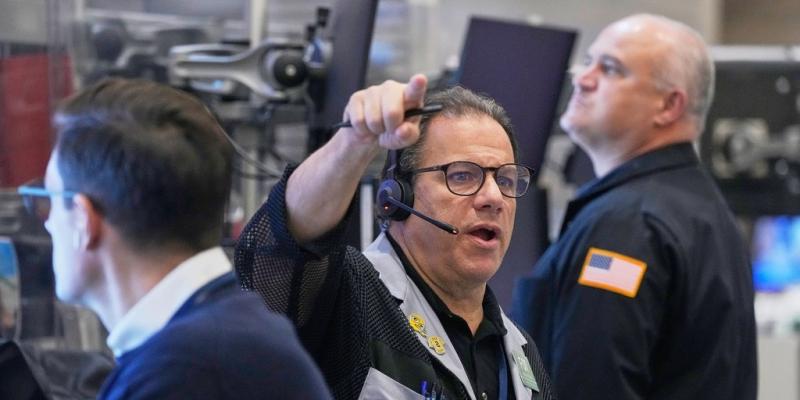
What began as a banner day for stocks turned into a major rout, as investors signaled ongoing skepticism about the longevity of the artificial intelligence boom and trimmed hopes of support from the Federal Reserve.
The tech-heavy Nasdaq fell 2%, and the broad S&P 500 index dropped by more than 1.5%. The Dow Jones Industrial Average, which tracks 30 top-tier stocks, declined by nearly 390 points. It had been up 700 points earlier in the day. Cryptocurrencies also shed billions in value: Bitcoin had fallen below $87,000 as of late Thursday afternoon, weeks after having set highs above $120,000.
The stunning turnaround added further unease to an already shaky economy that has forced households to trim budgets amid stubborn inflation and signs of a wavering job market. With an ever-increasing part of the economy's principal driver — consumer spending — now reliant on affluent households, an extended market pullback could inflict wider damage.
"You don't have to have the biggest bubble in history for an expensive stock market" and end up seeing declines, said Matt Maley, chief market strategist at Miller Tabak asset management group.
Traders' hopes were boosted early Thursday by a better-than-expected jobs report that appeared to show the economy remained resilient. Even before the day began, stocks looked poised to rise after Nvidia, the chipmaker at the heart of the AI boom, reported strong quarterly earnings and revenue.
Yet by midday, markets had turned red. The solid September jobs report diminished the odds that the Federal Reserve will cut interest rates next month to lower the cost of borrowing money to spur economic activity. When investors don't have to pay as much in interest, they often put those savings into stocks.
"The broad rebound in payrolls suggests diminished risks of a higher unemployment rate," analysts with Morgan Stanley said in a note published shortly before noon. "We no longer expect a Fed cut in December."
Losses were further compounded by ongoing concerns about AI — specifically, how much more profitable the companies buying chips like Nvidia's will be. The fears were articulated Wednesday evening on X by Michael Burry, made famous by the movie "The Big Short."
"Just because something is used does not mean it is profitable," he wrote.
Finally, the ongoing sell-off of bitcoin indicated to some traders that a key source of support for stocks — retail or day traders — were beginning to waver on their trademark "buy the dip" mentality.
"I wouldn't say we've flipped from bull to bear," said Steve Sosnick, chief strategist at Interactive Brokers financial group. "I would say we've flipped from bull to balanced market in the short term. A lot depends on whether sentiment continues to weaken."
Stocks had already been showing signs of flagging in recent weeks. With Thursday's losses, the S&P 500 fell to its lowest point since September.
The long-delayed September jobs report, which showed that the United States added a sturdy 119,000 jobs, appeared to show some glimmers of hope for the economy.
 September jobs report shows economy added 119,000 jobs, unemployment at 4.4%04:13
Although the unemployment rate ticked up from 4.3% in August to 4.4%, about 450,000 workers entered the labor force. Economists view that as evidence that job opportunities are still plentiful, despite a wave of corporate layoffs.
Just before the Bureau of Labor Statistics released the jobs report, Verizon told employees it planned to lay off 13,000 employees, or about 13% of its workforce.
The company joined a suite of other blue-chip employers that say they plan to eliminate tens of thousands of jobs, including Amazon, General Motors, IBM, Microsoft, Paramount, Target and UPS.
The details of the jobs report, which captured conditions before the government shutdown, as well more recent jobs data, suggested a more mixed picture for the U.S. economy.
Manufacturing shed 6,000 jobs, continuing a trend in a sector the Trump administration has touted as a key target of its economic policies. Transportation and warehousing also lost 25,300 jobs. Wage growth slowed, and job totals for July and August were revised downward.
The employment gains in September were concentrated in the health care, hospitality and social assistance sectors.
Another snapshot of the economy came courtesy of Walmart, which on Thursday reported strong sales and raised its outlook for the year. That strength points to cracks in the economy, though. Executives said the chain is luring more high-income shoppers who are looking for bargains, and noted that lower-income families are feeling more pressure.
"As pocketbooks have been stretched, you're seeing more consumer dollars go to necessities versus discretionary items," Chief Financial Officer John David Rainey said on an earnings call Thursday morning.
Walmart's stock closed 6.5% higher.

Tags
Who is online
105 visitors
The stunning turnaround added further unease to an already shaky economy that has forced households to trim budgets amid stubborn inflation and signs of a wavering job market. With an ever-increasing part of the economy's principal driver — consumer spending — now reliant on affluent households, an extended market pullback could inflict wider damage.
The economy looks shakier than it had been.
(Which means that investing requires even more caution than usual-- this is not a good time to make the more risky types of bets . . . caution is advised!)
One useful strategy that can be useful in this type of market can be the use of derivitives, specifically the selling of covered calls. (But you have to know how to use them wisely...)
I've got cash secured puts and a bull put spread going. Getting paid to wait.
One useful strategy that can be useful in this type of market can be the use of derivitives, specifically the selling of covered calls.
I've got cash secured puts and a bull put spread going. Getting paid to wait.
Sounds good.
There are several different strategies people can use. From simply buying (or selling) a put or a call to more complex ones.
If someone is good at that they can greatly increase their income, or create significant downside protection, etc
Although occasionally I get a good insight and discover relatively unknown companies. (Could've enhanced earnings if I used puts and calls, but I didn't.back then)
I've gone to almost exclusively trading either index options or options on index based ETFs.
I just don't like keeping track of who's reporting earnings when or having the risk of something like a single drug missing approval or something like that.
I'm also almost always an option seller, so theta decay is my friend.
But yeah, it's a great income source if you do it properly and carefully.
Finally, the ongoing sell-off of bitcoin indicated to some traders that a key source of support for stocks — retail or day traders — were beginning to waver on their trademark "buy the dip" mentality.
I owned a bitcoin ETF for a while (IBIT). Was great for selling covered calls. But decided it was too risky for me-- after a while liquidated it (close to break even plus I earned a little cash from call premiums.).