
$4,000 Nosebleeds: The Freakout Over World Cup Ticket Prices


 S E E D E D C O N T E N T
I’d like to begin this column with a good old-fashioned rant.
Tickets to major sporting events are too expensive, and have been for a long while. I know that might sound heretical in The Wall Street Journal—ticket pricing usually reflects demand, after all—but the accelerating cost for the average seat to the average major sporting event is annoying, alienating and perilous to the long-term health of these sports.
Professional leagues have made an unbothered short-term choice to chase peak revenue against the clear risk of pricing out their most loyal fans, families, noncorporate buyers, and any number of reasonable people who think it’s more than a little bonkers to spend hundreds for unremarkable seats and $14 on a lukewarm lager.
Worse, most of these sports have partnered and entangled themselves in the legal “secondary” market, where price gouging is the expected norm.
(Fun unintended side effect: Blowing out this fluid secondary marketplace has also aggressively raised the chance that a home crowd is embarrassingly invaded out by noisy, out-of-town interlopers.)
Yes: There are always buyers willing to pay a premium for a skybox or courtside seat, and stadiums are loading up on VIP accouterments to woo big wallets. But attending a sporting event should not be fully converted to a luxury experience. I know it sounds both naive and quaint, but going to see a game should be a common ritual with family and/or friends.
Think about your own initiation into seeing live sports. Almost surely, you remember who took you there. You might remember the atmosphere, or some fragrant language. You don’t think: I’ll never forget eating a salmon avocado roll in those buttery soft, cushioned seats.
Alas, the market has been warped. We actually celebrate a four-figure “get-in price” as a signal of the event’s vitality. What was once routine tradition has been upgraded to rare treat, or pushed entirely out of reach. I haven’t even gotten to the $60 parking, $175 polyester jerseys and those $14 beers.
If leagues don’t think they’ll eventually pay for this, they aren’t listening to their audience, because when I talk to the most loyal fans and season ticket holders, pricing is all they talk about.
OK: rant over.
That was a long way of getting to the World Cup ticket fiasco, which has been both predictable and hilarious.
If you’re behind: Tickets for the upcoming North American World Cup recently went on sale with an escalating pyramid of price categories, which can be summed up thusly: CRAZY, SUPER CRAZY, HOW MUCH MONEY DO YOU THINK I HAVE and DO YOU ASSUME I OWN A PLANE.
FIFA has embraced the common American tactic of “dynamic” pricing , in which prices fluctuate in response to real-time, live demand. Nosebleed seats to less-starry games have soared into the hundreds as good seats at desirable matches crossed into the thousands ($2,735 for the USMNT opener versus Paraguay, if you’re feeling plush).
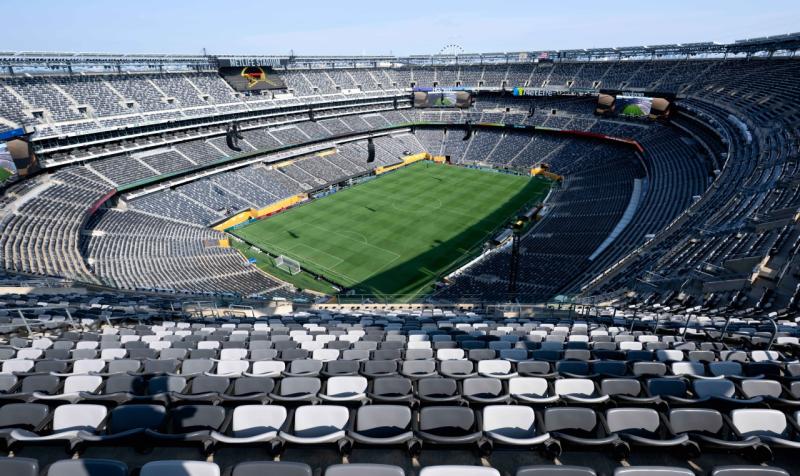
The rest of the world erupted . Even jaded fans in the U.S. were astonished to see the cheapest seats for the July 19 final in New Jersey hit $4,185—that’s a lot of money to sit with the pigeons in a sterile stadium in the boiling Meadowlands and pretend you can see what’s going on.
Mostly, however, this has been the rest of the planet wandering into the mad landscape of the American ticket economy and saying What fresh hell is this and FIFA saying This is how it works now and the rest of the world yelling You’re going to ruin the sport and FIFA finally being like: OK, maybe we went a little overboard.
This week, soccer’s pooh-bahs extended a PR-seeking olive branch: a scattering of $60 tickets for all matches, even the final, to be distributed to federations to deliver to valued supporters. AP reported that 400 to 750 tickets will “likely” be given to each team—a fraction of the audience in an NFL stadium. I’m going to venture that a $60 seat for the World Cup will be harder to get than a freebie to the Eras tour, or perhaps even an audience with the pope.
And I haven’t gotten to the secondary market, where sellers are salivating. On one major outlet I checked, the “get in” price for the final is hovering just under $9,000. Again, that’s not for a fab seat. That’s to get in.
Yes, I know a World Cup has insatiable demand, and tens of millions are already chasing tickets, and if you think that’s evidence of well-set pricing, that’s certainly your (and FIFA’s) prerogative. But it’s obvious the World Cup is now another sporting event promoting the idea that attendance is some sort of luxe, bucket list feat, instead of a reward or catalyst for lifelong fandom. (I haven’t even gotten to the extensive costs for travel, hotels and, of course, a delicious daily American breakfast of bacon and doughnuts.)
The hazard of a fancy crowd, of course, is that a fancy crowd is a blah crowd, which is standard at a Super Bowl, but lame for a World Cup. The greatest asset of this North America extravaganza is that the three host nations are so vast that every participating nation can draw a passionate, knowledgeable crowd. Anything that stands in the way of that energy is a mistake. It’s the best part of the event.
Frankly, it’s been inspiring to watch the reaction of fans who aren’t accustomed to our absurd marketplace, who aren’t already beaten down by the costs and fees and are calling the organizers out. I applaud them for being noisy enough to effect some (modest) change. I hope they score a few of those $60 seats.
Of course, just wait until they go buy a beer. Then they’re really going to lose their minds.
Tags
Who is online
88 visitors
Someone has to pay for Donald's 'Plated Peace Prize'.
I assume that the third world countries in this tournament wont have a single fan in the stands at any of these games.
From the title, i thought article was about Don Jr's coke habit