
╌>

FBI can't examine devices it took from Washington Post reporter for now, judge rules

  

Category:  News & Politics

Via:  perrie-halpern  •  10 months ago  •  14 comments

By:   Ryan J. Reilly

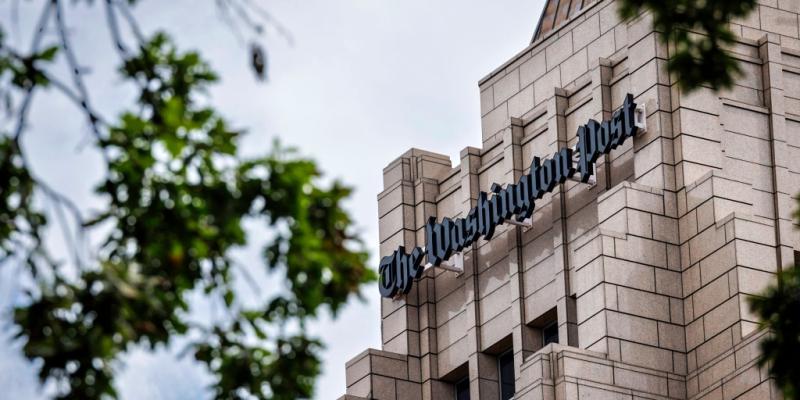
FBI can't examine devices it took from Washington Post reporter for now, judge rules

A federal judge has barred the FBI from examining the electronic devices its agents seized last week from the Virginia home of a Washington Post reporter until he can review the controversial case."The government must preserve but must not review any of the materials that law enforcement seized pursuant to search warrants the Court issued," U.S.

S E E D E D   C O N T E N T


Jan. 21, 2026, 7:17 PM EST / Updated Jan. 22, 2026, 1:14 AM ESTBy Ryan J. Reilly and Corky Siemaszko

A federal judge has barred the FBI from examining the electronic devices its agents seized last week from the Virginia home of a Washington Post reporter until he can review the controversial case.

"The government must preserve but must not review any of the materials that law enforcement seized pursuant to search warrants the Court issued," U.S. Magistrate Judge William B. Porter wrote in a two-page ruling filed Wednesday in federal district court for the Eastern District of Virginia.

Porter was responding to a motion filed hours earlier by the Post and its reporter, Hannah Natanson, requesting that the FBI return her cellphone, as well as her work and personal laptops, a recorder, a portable hard drive and a Garmin smartwatch.

Both the newspaper and Natanson "have demonstrated good cause in their filings to maintain the status quo until such time as the government can respond to the motions and the Court can more fully address them," Porter wrote.

Porter has ordered the government to respond to newspaper's filing by Jan. 28, and he scheduled a hearing for early next month.

"The outrageous seizure of our reporter's confidential newsgathering materials chills speech, cripples reporting, and inflicts irreparable harm every day the government keeps its hands on these materials," the Post said in a statement.

It is the first time in U.S. history that the government has searched a reporter's home in a national security media leak investigation, seizing potentially a vast amount of confidential data and information, Bruce D. Brown, president of the Reporters Committee for Freedom of the Press, said in a statement.

"The move imperils public interest reporting and will have ramifications far beyond this specific case. It is critical that the court blocks the government from searching through this material until it can address the profound threat to the First Amendment posed by the raid," Brown said.

The Justice Department did not immediately respond to a request for comment Wednesday.

Natanson was home Jan. 14 when the FBI searched her house as part of an investigation into a government contractor accused of illegally retaining classified materials.

"Investigators told Natanson that she is not the focus of the probe," the Post reported that day.

But Attorney General Pam Bondi said on X that the Defense Department requested the search "at the home of a Washington Post journalist who was obtaining and reporting classified and illegally leaked information from a Pentagon contractor."

President Donald Trump told reporters that "the leaker on Venezuela" has been found and is in jail. He did not name the person, nor did he provide any context for the remark.

In an email to the newsroom, Post Executive Editor Matt Murray told staffers the newspaper was not the target of an FBI investigation. He said the "extraordinary, aggressive" action "raises profound questions and concern around the constitutional protections for our work."

The contractor who is being investigated is Navy veteran Aurelio Perez-Lugones, a system administrator in Maryland. He has been charged with "unlawful retention of national defense information," according to a criminal complaint filed Jan. 9 in U.S. District Court for Maryland.

The FBI, according to the complaint, has accused Perez-Lugones, a Miami-born U.S. citizen, of searching databases containing classified information without authorization and either printing or taking screenshots of that material.

He has not been charged with sharing classified information or accused in court papers of leaking.

It does not appear that Perez-Lugones has entered a plea. His attorneys did not immediately respond to a request for comment Wednesday.

Natanson has been writing stories about the Trump administration, in particular Elon Musk and the Department of Government Efficiency's dramatic culling of the government workforce.


Tags

jrDiscussion - desc
[]
 
Vic Eldred
Professor Principal
1  Vic Eldred    10 months ago

Where was judge Porter (the savior of freedom of the press / S) when president Obama was monitoring journalist James Rosen?


evilone
Professor Guide
1.2  evilone  replied to  Vic Eldred @1    10 months ago
Where was judge Porter when president Obama was monitoring journalist James Rosen?

You're absolutely correct on the Obama Admin and Fox News reporter case. It should never have happened in the way it did. It was a chilling blow on the 1st Amendment. No one should support that. Rosen was never charged and shouldn't have been. State Dept security contractor, Stephen Jin-Woo Kim did plead guilty to giving Rosen classified information though.  

the savior of freedom of the press

I'm going to need citation that anyone ever said that. The Obama admin targeted more than just this one journalist using warrantless wiretapping and dragnet record seizures to catch people suspected of divulging classified information. I certainly commented my displeasure on this at the time. 

Now that we have that covered. Is it okay with you that since past admins have abused their authority that this one can do it too? 


Vic Eldred
Professor Principal
1.2.1  Vic Eldred  replied to  evilone @1.2    10 months ago

You are kind of missing the point. Obama didn't go after Rosen to stymie freedom of the press. He wanted the leaker and in the end he got him.

Trump wants the same thing. A judge protecting information doesn't help the Post reporter. We know who he is. It protects the leaker and that's who we want.


evilone
Professor Guide
1.2.2  evilone  replied to  Vic Eldred @1.2.1    10 months ago
You are kind of missing the point. Obama didn't go after Rosen to stymie freedom of the press.

Nowhere did I even attempt to imply it.

Trump wants the same thing.

Yes, and he's likely to get it... eventually. Doesn't make how they are going about it right. The courts have largely said this is unconstitutional and I agree.


Thomas
Professor Guide
1.2.3  Thomas  replied to  Vic Eldred @1.2.1    10 months ago
You are kind of missing the point.

Not missing the point at all. You, on the other hand, are studiously misrepresenting the point. 

Press protections exist to restrain government power, not to make investigations easier. If the government can trample First Amendment safeguards whenever it says the “real point” was something else, then the protections are meaningless.


Jeremy Retired in NC
Professor Guide
1.3  Jeremy Retired in NC  replied to  Vic Eldred @1    10 months ago

Don't call out hypocirsy.  It makes some people cry.


Thomas
Professor Guide
1.3.1  Thomas  replied to  Jeremy Retired in NC @1.3    10 months ago

Yeah, because hypocrisy really sucks, doesn't it? 

Because you love hearing from ChatGPT, I asked it to compile the differences between DOJs of the past several administrations.


Below is the same integrated summary, now explicitly incorporating the Biden DOJ as its own phase, followed by updated tables that show the full arc clearly.

Integrated summary (four-phase comparison)

After the James Rosen controversy, the Barack Obama administration rewrote U.S. Department of Justice guidelines to hard-code restraint in leak investigations involving journalists. These rules required personal Attorney General approval, narrowed the use of “co-conspirator” theories, mandated exhaustion of alternatives, favored advance notice, and explicitly stated that ordinary newsgathering is not criminal conduct. The philosophy was institutional self-discipline: leak investigations could proceed, but journalism was constitutionally distinct and should almost never be burdened directly.

During the Donald Trump administration, those rules largely remained intact on paper but weakened in practice. Prosecutors were encouraged—implicitly and sometimes explicitly—to pursue leaks aggressively, notice was delayed more often, exceptions were read broadly, and internal resistance diminished. The shift was cultural rather than statutory: the DOJ moved from “last resort” to “available tool,” even while formally citing the same guidelines.

The Biden DOJ, under Merrick Garland, marked a sharp reversal. In response to revelations that Trump-era prosecutors had secretly seized journalists’ phone and email records, Garland imposed the strongest press protections to date. The DOJ adopted a near-categorical ban on using subpoenas, warrants, or court orders to obtain journalists’ records in leak investigations, with only extremely narrow national-security exceptions. This went further than Obama-era restraint by turning internal policy into something close to a bright-line rule.

The current DOJ framework has rolled back those Biden-era prohibitions. While Attorney General approval and judicial oversight remain formally required, compulsory legal process against journalists is again permitted in leak investigations. The presumption now favors enforcement over press protection, returning the DOJ closer to— and in some respects beyond—its Trump-era posture. Courts remain the primary check, rather than DOJ self-restraint.


Table 1. DOJ posture toward journalists by administration

Dimension Obama DOJ Trump DOJ Biden DOJ DOJ Today
Governing philosophy Institutional restraint Leak deterrence Press protection Leak enforcement
Status of guidelines Revised, protective Retained but loosened Strengthened sharply Revised again
Role of self-restraint High Low Very high Low
Journalism treated as constitutionally special Explicitly Formally, weakly Explicitly and strongly Weakly

Table 2. Leak-investigation rules affecting journalists

Issue Obama Trump Biden Today
AG approval required Yes, meaningful Yes, routine Yes, rarely invoked Yes, readily granted
Subpoenas/searches of journalist records Technically allowed, rare Allowed Generally prohibited Affirmatively allowed
“Co-conspirator” theory Discouraged Revived Disfavored Available
Advance notice to journalists Presumptive Often delayed Strongly favored Often delayed
Bulk metadata collection Disfavored Increased Barred Permitted
Journalist protections relative to others Higher Lower Highest Low

Bottom line

  • Obama DOJ: built brakes into the system.

  • Trump DOJ: kept the brakes but drove harder.

  • Biden DOJ: installed a governor that nearly stopped the engine.

  • DOJ today: removed the governor and relies on courts instead.

Across all four eras, the critical constant is that none of these protections are statutory. Because Congress has never enacted a federal press shield law, every administration has been able to recalibrate the balance between national-security enforcement and press freedom through internal DOJ policy alone.

I know, you don't care. Bully on you.


Jeremy Retired in NC
Professor Guide
1.3.2  Jeremy Retired in NC  replied to  Thomas @1.3.1    10 months ago

Is that supposed to make me change my statement?


Thomas
Professor Guide
1.3.3  Thomas  replied to  Jeremy Retired in NC @1.3.2    10 months ago

Sorry, I did not connect the dots for you.

  1. The Obama administration recognized the overreach and took steps to curtail it. Actually, factually, and in written policy because they realized that a strong, factual press is essential for democracy. 
  2. The first Trump administration left the rules in place, but with a nudge and a wink. They also went after factual reports and reporters of facts because little Donnie Dangle got his pee-pee hurt when someone told the truth about his shithole life choices both in and out of office. "Fake news" was his tantrum chant, and a lot of gullible people ate it up. From before his time in office he was using the fake news mantra and his "alternate facts" (ie:lies) to undermine the reporters who had the gall to say anything not totally obsequious about the Donald.
  3. The Biden administration reversed this trend to the point of almost no investigations of journalists.
  4. The second Trump administration ignores most all of the rules protecting journalists and instead waits until the cases are adjudicated. This is attempting to chill reportage on every front that deals with the government. It is just one more way the administration is attempting to cow the public at large and reporters specifically to say only nice things and do not worry about the man behind the curtain.

 And yet here you and some of your friends are trying to make Obama look bad when you should be worrying about the state of the freedom of Speech, the Press, and of Expression of the general public. 


Trout Giggles
Professor Principal
1.3.4  Trout Giggles  replied to  Thomas @1.3.3    10 months ago
worrying about the state of the freedom of Speech, the Press, and of Expression of the general public. 

That would mean they greatly revere the Constitution.  But as I've seen they want to tear it up for toilet paper much like their Dear Leader does


Jeremy Retired in NC
Professor Guide
1.3.5  Jeremy Retired in NC  replied to  Thomas @1.3.3    10 months ago
And yet here you and some of your friends are trying to make Obama look bad when you should be worrying about the state of the freedom of Speech, the Press, and of Expression of the general public. 

No matter how you spin it, Demcrats already showed they don't care about any of that.  The last 2 Democrat administrations stepped all over that.  


cjcold
Professor Quiet
1.4  cjcold  replied to  Vic Eldred @1    10 months ago

Far right-wing fascists can't stand the light of day. Intelligent folk see Trump's cabinet for what it is. Liars and criminal fascists.


devangelical
Professor Principal
2  devangelical    10 months ago
A federal judge has barred the FBI from examining the electronic devices its agents seized last week from the Virginia home of a Washington Post reporter until he can review the controversial case."The government must preserve but must not review any of the materials that law enforcement seized pursuant to search warrants the Court issued," U.S.

lucky for us we have patel and bondi heading up the agencies charged with enforcing US law, like they have all along ... /s


cjcold
Professor Quiet
2.1  cjcold  replied to  devangelical @2    10 months ago

So glad that I saw the /s. Thought you'd lost your mind for a second.


Who is online


86 visitors