
How the left ruined US health care

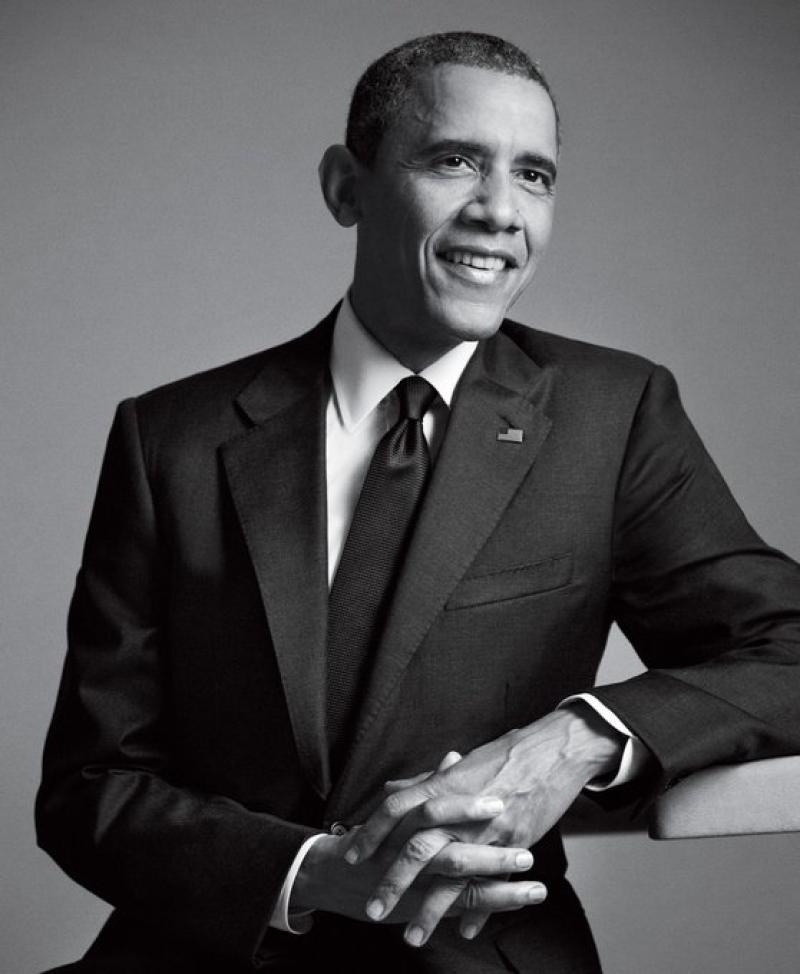

Link to quote: ObamaCare architect: ‘Stupidity’ of voters helped bill pass
One of the architects of Obamacare actually told the truth in a rare moment:
"An architect of the federal healthcare law said last year that a “lack of transparency” and the “stupidity of the American voter” helped Congress approve ObamaCare.
In a clip unearthed Sunday, Massachusetts Institute of Technology Professor Jonathan Gruber appears on a panel and discusses how the reform earned enough votes to pass.
{mosads}He suggested that many lawmakers and voters didn’t know what was in the law or how its financing worked, and that this helped it win approval.
“Lack of transparency is a huge political advantage,” Gruber said. “And basically, call it the stupidity of the American voter or whatever, but basically that was really, really critical for the thing to pass.”
Gruber made the comment while discussing how the law was “written in a tortured way” to avoid a bad score from the Congressional Budget Office. He suggested that voters would have rejected ObamaCare if the penalties for going without health insurance were interpreted as taxes, either by budget analysts or the public.
“If CBO scored the [individual] mandate as taxes, the bill dies,” Gruber said.
“If you had a law that made it explicit that healthy people are going to pay in and sick people are going to get subsidies, it would not have passed,” he added. "
ObamaCare architect: ‘Stupidity’ of voters helped bill pass
The misnamed "Affordable Care Act" was passed by a heavy majority democrat congress and signed into law by then president Obama on March 23, 2010. It needed help from the SCOTUS after it was passed (The Court ruled that congress could not use the Commerce Clause to force people to buy insurance and to save the ACA the Court called the Obamacare penalty what it was: A TAX) and would later need a spiteful Senator to keep it alive years later. It never delivered on its promises. It drastically expanded coverage to those who could afford their own health insurance, overwhelmed health care providers and filled the pockets of insurance companies. As we have recently seen Obamacare needed subsidies from taxpayers just to survive.
We have now gone from the days of my youth when a doctor made house calls to the point where just having an MD as a primary care physician is some kind of achievement. When one does have a doctor's appointment it is with the doctor looking at his laptop trying to prescribe medication vs treatment through the maze of insurance company deductibles.
You never want to find yourself in the emergency room these days. That has all changed as well. I have heard of people who go in and have to not only wait hours but days. The ER is totally overwhelmed.
How did that happen?
In 1986 congress passed something called "The emergency medical treatment and active labor act. It said that any hospital that accepted Medicare payments must treat everyone who shows up at the emergency room. Just about every hospital accepts Medicare payments. And a big part of the problem is that not only are the uninsured showing up, but the millions of illegal migrants that the Biden administration let in use the Emergency room for basic health needs.
Fraud
How big is Medicare & Medicaid fraud?
"Taxpayers are losing more than $100 billion a year to Medicare and Medicaid fraud, according to estimates from the National Health Care Anti-Fraud Association.
That’s probably a conservative number,” Pérez Aybar said. “When we think about all lines of business in Medicare and Medicaid, that’s probably a drop in the bucket.
The fraud runs the gamut: billing for unapproved Covid tests, phony billing for wheelchairs, braces and other medical equipment, genetic testing fraud, home health-care billing and a host of other schemes. Investigators say fraudsters have gotten more brazen in recent years — as Washington swiftly doled out trillions of dollars in Covid-19 relief funds and other aid in response to the pandemic.
The proliferation of crime has taxed the inspector general, which has just 450 agents around the country. The amount at stake is staggering: Medicare spends about $901 billion a year on its 65 million beneficiaries, while Medicaid spends $734 billion providing medical coverage to more than 85 million poor and disabled Americans every year, according to the Centers for Medicare and Medicaid Services, which falls under HHS. The inspector general describes the fraud as prevalent and inventive, routinely ensnaring full-time criminals as well as legitimate doctors and health-care professionals gone bad, according to its annual reports.
“It’s just so easy. It’s unbelievable,” said one Miami man, who admitted that he used to make a living by stealing from Medicare."
How Medicare and Medicaid fraud became a $100B problem for the U.S.
The question now is how do we get out from under this terrible system?
Tags
Who is online


126 visitors
Health Care Spending and the Federal Budget
Health care is the largest category of spending in the federal budget with costs growing rapidly.
The federal government spent $1.6 trillion on major federal health care programs in 2024, one
quarter of all federal spending, or 5.6 percent of GDP. Health spending is projected to rise to $2.8
trillion (6.4 percent of GDP) by 2035 and $7.2 trillion (8.1 percent of GDP) by 2055.
The Medicare program – which, net of offsetting receipts like premiums, totaled $865 billion in
2024 – provides health insurance to seniors and individuals with disabilities. The Medicare
Hospital Insurance (HI) trust fund, which funds Part A hospital benefits, is funded with a payroll
tax and is projected to be insolvent by 2036, leading to an 11 percent cut in payments. Other
parts of Medicare are financed from general revenue and premiums, with costs rising rapidly.
Over half of beneficiaries are in private Medicare Advantage (MA) plans, funded by the federal
government but administered through private insurers. Total Medicare costs were less than 2
percent of GDP in 2000, 3.0 percent in 2024, and are projected to reach 3.7 percent of GDP by
2035.
The Medicaid program – for which the federal government spent $618 billion in 2024 – is a joint
federal-state program that provides health insurance to those with lower incomes. The federal
government generally funds 50 to 83 percent of costs for the blind, disabled, and very poor, and
it pays 90 percent or more for those made eligible under the Affordable Care Act (ACA). Federal
Medicaid costs were 2.1 percent in 2024, up from 1.2 percent of GDP in 2000.
The federal government also spent $122 billion in 2024 on ACA subsidies, which help cover
premiums – on a sliding scale basis – for those who purchase insurance on the individual market.
These subsidies were temporarily made more generous from 2021 through 2025 and are
scheduled to revert to 2020 levels thereafter. The federal government spent an additional $19
billion on the Children’s Health Insurance Program (CHIP). These programs cost a combined
0.5 percent of GDP in 2024, up from 0.1 percent in 2014.
The federal government also subsidizes health care through the tax code, with the tax exclusion
for employer-provided health care losing an estimated $384 billion of revenue in 2024.
Numerous options exist to lower federal health spending and restore Medicare solvency,
including reforms that would lower costs for beneficiaries and taxpayers. Learn more at
.
Health Care Spending and the Federal Budget_1.pdf
AOC, Sanders and Warren would be proud of you.
Money the government fails to seize is not an "expense". It's not "lost revenue". It was never theirs to begin with.
I doubt it.
Out of curiosity, where do you think all that money goes? Who is getting rich at taxpayer's expense?
It may be possible to drop our pants and slide on the ice of fraud. But that would account for only a small fraction of what is being spent. Fraud is a distraction, not a cause.
I know a lot is going to insurance companies.
Did you watch "60 Minutes" Sunday night? They had a retired doctor who had other people using his doctor number charging Medicaid millions of dollars. He says he knows nothing about it, nor could it ever be possible to even see the number of patients that he supposedly had.
We also have states getting more federal money when they sign people up for Medicaid assistance.
Then of course are Somali immigrants in Minnesota who seem to have found it easy to game the system.
Fraud is a distraction, not a cause.
I think fraud is an inevitable part of the government covering health care costs.
So, the only way you would support healthcare for all is if there was absolutely zero fraud? The fact is with any organization, private or government, there will be individuals who try and take advantage or try to game the system. You'll never get rid of all fraud, it's just not possible.
The issue is an ideological one and everyone knows it; it's not about the roughly 6% of Medicare fraud. Fraud is just a distraction and not the cause as Nerm pointed out because even without it, rightwing conservatives wouldn't support Universal healthcare because they're ideologically opposed to it because they have been bamboozled into believing it's the dreaded "Socialism!" they were told scary stories of as children by their poorly educated parents who still can't actually define socialism.
You are right on one thing. I am absolutely opposed to universal health care.
Actually, not in the Medicare and Medicaid numbers. Insurance companies are limited by law to a 1.5% profit on those two groups. The bulk of the fraud is from outside groups that know how to game the system, submitting bills for fake services and such.
I go along with that.
For the record:
"Health insurance company profits began to soar not long after the coronavirus hit the U.S. in 2020 because people weren’t seeking care amid lockdowns, office closures and doctor appointment windows that were limited. When people don’t go to the doctor, a claim isn’t filed with the health plan so the insurance company makes more money.
UnitedHealth’s net income for 2024 was the lowest annual income in five years. The company reported net income of $22.3 billion last year, had net income of $20.6 billion in 2022 after making $17.3 billion in 2021 and $15.4 billion in 2020. Before the pandemic UnitedHealth made $13.8 billion in 2019.
At UnitedHealthcare, full-year revenue grew 6% to $298.2 billion as the company grew its customers served in its “domestic commercial benefits” grew by 2.4 million in 2024. UnitedHealthcare provides health benefits to more than 50 million people.
Meanwhile, Optum full year revenues grew 26% to $253 billion year over year thanks to its Optum Health medical care provider business and OptumRx, the company’s pharmacy benefit management unit."
UnitedHealth Group 2024 Profits Hit $14 Billion Despite Cyberattack
No matter how it is implemented? Just the concept of ensuring healthcare is available to all is something you oppose?
I asked Gemini to explain how the USA could realistically create a universal healthcare system modeled after the German system:
Much of this is what I have proposed for over a decade now. Basic idea is government regulation with private sector implementation. Although I typically view this best as a federalized system with national standards and the federal level and customization of same per state with mandatory QoS criteria established federally.
Things like national standard medical records, IDs, universal data availability, mass pooling / sharing of equipment and facilities, mass pooling of doctors. Virtual medical practices and even AI-based support (in the future).
We could do this if people in power actually wanted to do something good ... but they are so far from altruism that we will likely continue to stew in our own juices.
Well as Ayn Rand once said:
" We cannot fight against collectivism, unless we fight against its moral base: altruism. We cannot fight against altruism, unless we fight against its epistemological base: irrationalism. We cannot fight against anything, unless we fight for something--and what we must fight for is the supremacy of reason and a view of man as a rational being."
Ayn Rand Quotes About Altruism | A-Z Quotes
The other problem you have with modeling a health care system on Socialist, pacifist Germany's system is that you end up with a federal budget which is almost totally devoted to entitlements. I don't blame Germany for not setting aside money for its own national defense. After all they are on the front line for eastern Europe, and we took much of their land at Stalin's request and gave it to Poland. We denied them nuclear weapons. Germany managed fairly well economically until Angela Merkel came along. Using their system as a model? No way!
The US cannot afford to extinguish the very thing that made it the world's #1 economy: Free Enterprise. The German Health Care system is sustained by not having to do the other things a world leader must be able to do.
Why not teach children at a young age in elementary school to save for their own health care and retirement? It would cost nothing.
Fraud may be inevitable but at its worst accounts for less than 10% of healthcare spending. Profit obtained from the grossly inefficient middlemen structure of the supply chain actually consumes more healthcare dollars than does fraud (at ~14%). Tort and defensive medicine is actually a tiny sliver of the health care pie (at ~1.5%).
The biggest waste of healthcare spending is administrative costs at ~20-25% of healthcare spending. That is the "Paperwork Tax": billing, coding, and claim-fighting. All the effort to control and cut costs is actually the biggest cost in healthcare.
At present, somewhere around half of all healthcare spending actually delivers some form of medical care. And some of the delivered medical care is of questionable value.
The political posturing may stir up controversy and throw red meat but doesn't actually improve the delivery of medical care. Our system of financialized healthcare is grossly inefficient, rewards waste, and delivers mediocre medical care at best. The healthcare system needs a top-to-bottom overhaul. Our national healthcare system proves that the private sector can be an order of magnitude less efficient than government when middlemen take over.
Yes, altruism is a bad thing.
It is sad that you hold that position, Vic.
You cannot possibly determine that without having a defined plan. There are all sorts of ways of implementing systems. The paradigm used by Germany, and the reason I noted it, is one of government regulation implemented by the private sector.
You categorically dismiss at the paradigm level with no details to work with and presume that we would simply take the German system and expand it rather than do what I suggested which is to use the public/private sector paradigm.
As I noted: " Just the concept of ensuring healthcare is available to all is something you oppose? ". Apparently, I was on track, you categorically oppose the concept itself.
I've seen the consequences of good intentions in government.
Apparently, I was on track, you categorically oppose the concept itself.
You are correct.
That is so vague and general that it merely reflects bias.
Categorical rejection at the paradigm level (the notion of a public-private run health care system) is irrational.
Let's face it, you just can't fix stupid. If someone is so brain dead as to refuse to accept something that could help millions of Americans because of some ideological constipation in their brain, then there just is no helping them.
I wouldn't worry Vic, trump's healthcare for all comes out in just two weeks. LOL
MAGA US Senator Rick Smith was a major proponent of Medicare fraud.
The most obvious way to end Medicare fraud is to take the profit motive out of medical care.
lol.
Do explain exactly how that would work.
copilot
🇺🇸 How the U.S. Could Shift to a Not‑for‑Profit Health Care System
🧩 1. Build on What Already Exists
The U.S. already has a large nonprofit hospital sector—58% of community hospitals are nonprofit . These hospitals operate under IRS rules that require:
Community Health Needs Assessments (CHNAs) every 3 years
Financial assistance policies
Limits on charges
Fair billing and collections practices
This existing framework could be expanded to the entire system.
🏛️ 2. Policy Pathways to a Nonprofit System
A. Convert Private Insurance to Nonprofit or Public Options
To shift away from for‑profit insurance:
Require insurers to operate as nonprofit mutuals (like some Blue Cross plans historically did)
Expand Medicare/Medicaid eligibility to create a publicly administered universal plan
Ban or restrict for‑profit ownership of essential health insurance markets
This is similar to systems in:
Germany (nonprofit “sickness funds”)
The Netherlands (private insurers but tightly regulated, nonprofit-like behavior)
B. Restrict For‑Profit Ownership of Hospitals and Clinics
Congress or states could:
Prohibit new for‑profit hospitals
Offer tax incentives for hospitals to convert to nonprofit status
Create a federal buyout program for for‑profit chains
Nonprofit hospitals already justify tax exemption by providing community benefits such as unreimbursed care, research, and education .
C. Tie Tax Exemption to Stronger Community Obligations
Nonprofit hospitals receive $28 billion per year in tax benefits . Policymakers could require:
Minimum levels of community benefit spending
Mandatory investment in primary care and prevention
Caps on executive compensation
Transparency in pricing and outcomes
This would push nonprofit systems to behave more like public service institutions.
D. National or State-Level Global Budgets
Instead of fee‑for‑service:
Hospitals receive a fixed annual budget
Encourages prevention and efficiency
Used in Canada and some U.S. pilots (e.g., Maryland’s all‑payer model)
🧱 3. Structural Changes Needed
1. Financing Reform
A nonprofit system requires:
Universal coverage (public or nonprofit insurance)
Standardized reimbursement
Reduced administrative overhead
2. Governance Reform
Boards of hospitals and insurers would need:
Community representation
Public accountability
Limits on private equity involvement
3. Workforce and Payment Reform
Salaries instead of volume‑based incentives
Investment in primary care and mental health
National negotiations for drug and device prices
🔧 4. Realistic Transition Models
Model 1: “Medicare for All” (Public Single-Payer)
Entire system becomes publicly financed
Providers remain mostly nonprofit or private
For‑profit insurers shrink to supplemental roles
Model 2: “All Nonprofit Insurance”
Keep multiple insurers, but all must be nonprofit
Strong regulation of premiums and benefits
Model 3: “Public Option + Nonprofit Conversion”
Gradual shift
Public option competes with private plans
Incentives for hospitals and insurers to convert to nonprofit status
🧭 5. What’s the Biggest Barrier?
Politics. The U.S. health care industry is one of the largest lobbying forces in the country. For‑profit insurers, private equity, and pharmaceutical companies have strong incentives to maintain the current system.
It's the same problem with any big money field. The amount of politicians that are lobbied and bought are often only in their offices due to all of the money these corrupt corporations dumped into their political races. Constituents and voters be damned, as their allegiance seems to always lie with those that provided the money that did buy them, and they put that debt to work playing with those who actually voted for them, as most have not the vision to see just how deep this manipulation has run.
Bought and brought forth pols that create the loop a la holes to bypass what is best for US, leave me in disgust.
I don't see this slowing anytime soon. The bought and brought forth biased courts and judges tend to side with those who appointed they, and the people who appointed them are the same who had b(r)ought forth the pols that we are even given to choose from.
Until we get significant election finance reform, this fleecing of America will continue to prevail , essentially leaving US indefinitely in a spiraling system that is tearing this country down and apart fast, our country soon could be a thing of the past. In just the entering of Trump in 2016, it appears some realized just how feeble our education system has become, cause man oh man, people are dumb.
Not interested.
Explain it yourself.
They took the words out of my mouth.
[✘]
So, the insurance companies finally won!
That may be a good point. If the payment of health care has been nationalized/Socialized, then why are we allowing medical providers and big pharma to live in the world of free enterprise where they charge whatever they want?
The logical step is to go all the way like Europe did.
There would be a huge cost to do that. You have to go back to when health insurance first started, all the way back to the end of World War II. All those GI's were returning home and returning to their jobs and due to the costs of the war the economy required higher wages than before the war started, but companies could not afford to give the corresponding increases so they instead started to provide health insurance coverage as a benefit. It was cheaper for them to do so than to raise wages.
Correct me if I'm wrong, but Europeans pay taxes for their healthcare needs. So taxes here in the US would need to be increased due to the additional costs to the federal budget because after all we can't continue to borrow the money. As people's taxes go up, their economic happiness goes down because they have less in their pockets. Having less in their pockets also means they are spending less to there's another hit to the economy.
Now let's look at the medical side of the equation. While a lot of hospitals are "non-profit", that doesn't mean they don't want to make money it just means they don't have shareholders to pay. They have to be able to meet their bills as well. Let's not forget what was seen during Covid when hospitals stopped covering all elective procedures due to the level of care required for the Covid patients. But those same patients were covered only by Medicare/Medicaid levels so hospitals closed floors and laid off staff (nurses were hit very hard by this) as the reimbursement rates are not sufficient to meet bills.
But they still have to employ doctors and nurses who expect their wages to cover not only their lives but the cost of education that got them their positions in the first place. So they can't just take a pay cut. Not to mention all the doctors and nurses who are not in a hospital setting but private doctors offices and clinics. How many medical professionals in Europe got their educations thru government run schools rather than having to take out loans. And how many of those professionals are actually government employees rather than self-employed like most doctors in the US? (just look up how many doctors are actually in an LLC).
You just cannot flip a switch and change to a European model I'm afraid. It would take a lot of time and money to switch over and I doubt if anybody in Congress is really willing to stick their neck out to support such a change as the general population really doesn't have the patience or understanding to allow the time for such a change. It's more likely they would be voted out of office for supporting such a hike in personal taxes.
I wasn't really proposing that. I think Europe committed suicide.
I was only pointing to the logic in what JR was kind of saying. National health coverage and wide-open free enterprise by providers and Pharma don't mix.
It started before then.
Blue Cross Blue Shield of Texas started back in 1929, to offer teachers protection against skyrocketing healthcare costs.
More than double. To fund the greatest piece of corporate welfare in world history.
This is like trying to explain to a 5 year old girl in Manhattan why she can't have a pony when all her cousins who live in West Texas have ponies. The fact that it's utterly obvious will not make a difference.
In small bits yes, but it was after WWII when it became mainstream because companies were offering health insurance benefits to their workers rather than increase wages. Before that, it was individuals who would purchase the insurance themselves and was not as widespread, similar to any other type of insurance when it starts.
As for your last line, my youngest granddaughter is four and she firmly believes she should have a pony. She would take care of it and it could sleep in her bed, she told me so. LOL I've even threatened to get one just so her mother has to deal. It's so much fun being a grandparent AND a bad influence to one's grandkids.
I guess the point there was that health care costs were "skyrocketing" all the way back in 1929.
To that point, the whole "socialized healthcare" idea in America amounts to complaining about the price of a Bentley and then acting like changing banks is going to solve that problem.
It's sort of like borrowing money on a student loan, becoming indignant that somebody wants you to actually pay it back, and holding everybody accountable except the university that took the money.
ChatGPT fact-check summary:
The solution to extant problems with our healthcare system will not come from the Trump administration. We will have to wait until 2028 and hope that a responsible and competent PotUS is elected who seriously intends to address our problems.
"The rate of incorrect information produced by ChatGPT is significantly high when compared to the results of human-conducted fact-checking activities."
Can ChatGPT be a reliable fact-checker? - Teyit
That is one problem with using ChatGPT.
Here is the test for our readers. Ask it anything regarding Trump, even settled issues.
I asked it if Donald Trump colluded with Russia? It had trouble simply saying NO HE DIDN'T:
"The short answer: no investigation found that Donald Trump or his campaign criminally conspired with Russia—but the situation is more nuanced.
What the main investigation found
The most important inquiry was led by Robert Mueller , resulting in the Mueller Report (2019):
It confirmed that Russia interfered in the 2016 election in a sweeping and systematic way.
It found many contacts between Trump campaign officials and Russians.
However, it concluded there was insufficient evidence to charge a criminal conspiracy (“collusion”) between the campaign and the Russian government.
Important nuance
“Collusion” is not a specific legal term in U.S. criminal law. The key legal question was conspiracy .
The report said the evidence did not establish a criminal conspiracy , but it also did not say there was no questionable behavior .
Other investigations
A Republican-led Senate Intelligence Committee report (2020) agreed that Russia interfered and described extensive links between Trump associates and Russian individuals , but also did not conclude a coordinated conspiracy .
The Mueller report also examined whether Trump obstructed justice but did not reach a definitive conclusion on that either .
Bottom line
No proven criminal conspiracy between Trump and Russia.
Yes, significant Russian interference and multiple campaign contacts with Russians.
The issue remains politically debated, but legally, no collusion charge was established .
Trump Russia Collusion Inquiry
That is why it never should be used.
It is sad that people here can't debate an issue and need some source to analyze an opinion piece.
Yeah, when fact-checked and wrong, blame the fact-checker.
Yeah, instead of a statement of truth, it described what can be supported by evidence. Such a terrible answer.
Let me guess, you think that because it did not express this with 100% certainty but rather based on facts, that it is not reliable.
Let's ask Claude:
Prompt: Did Donald Trump collude with Russia?
Response:
Another fact-based answer.
Let's ask Gemini:
Prompt: Did Donald Trump collude with Russia?
Response:
Yet again, the AI attempts to answer based on facts rather than attempt to make a statement of 100% certainty.
Not going to work. AI is a convenient source. Especially when dealing with people who are going to ignore anything you write anyway.
If you think an AI response is wrong, then make an actual rebuttal. Merely whining about the AI (even when it gives answers that you really should be pleased with) is a little pathetic.
Obamacare did not financialize healthcare. Granted Obamacare was based on a naïve notion that it was possible to reign in the Wild Wild West attitude of the unregulated insurance industry. But keep in mind Republicans are responsible for that lack of regulation. Republicans since Reagan have rewarded cheaters, shysters, flimflam artists, pick pockets, and anyone who scrape unearned money from the public Treasury and savings of ordinary people.
Obamacare was the stupid approach to fix an already broken health care system. Obamacare failed to address the underlying problem of a financialized, for-profit health care system. Our health care system is now so broken that foreign countries control it. Republicans allowed an open border in health care to garner short term gains. And medical debt is such a easy way to guarantee printing more money that floats to the top of the economy.
Republicans are responsible for financializing our economy. That Republican devotion to ill gotten gain has devalued our currency, destroyed our ability to compete in global markets, and turned the hope of the American Dream into nothing more than dream. Congress is now controlled by rich Republicans who cannot buy a damned thing because they've destroyed the country. Our currency is so worthless and our economy is so unproductive that Republicans now have to steal money from working people to make a profit.
And that, boys and girls, is what the Republican complaints about Obamacare are really about. Stealing money that is worth less tomorrow than today.
Hey Vic, can you tell us how trump's healthcare plan for all is better than the ACA?
We'll wait.