
╌>

The costs of Trump’s contempt are starting to show

  

Category:  News & Politics

Via:  hallux  •  7 months ago  •  8 comments

By:   Fareed Zakaria - WaPo

The costs of Trump’s contempt are starting to show

From Europe to Asia, governments are hedging against unreliable and erratic U.S. power.

S E E D E D   C O N T E N T


I was recently in Shenzhen, the heart of China’s industrial machine, talking to one of that country’s legendary businessmen. I asked him about the Iran war and his response surprised me. “For us, Trump’s attack on Iran is less consequential than his threat to attack Greenland,” he told me. “When he did that, to America’s oldest allies, I knew that Europe would not follow America’s approach to China.”

In the United States, President Donald Trump’s periodic insults hurled toward Europe tend to get treated as routine tantrums, part of the reality TV show that is now the White House. But in Europe, the accumulation of abuse has reached a tipping point. “The war in Iran ... has forced Europe to grow a spine,” Daniel DePetris  recently wrote  in the U.K. edition of The Spectator, a conservative and (usually) ardently pro-American magazine. “European leaders are no longer interested in dropping to their knees and groveling to stay on Trump’s good side.”


Europe is moving from words to actions. The European Union’s   ReArm Europe/Readiness 2030   plan is to invest some 800 billion euros (about $935 billion) in defense in the coming years. The old model was that the U.S. took care of European security and   Europeans spent generously   on U.S. arms. Now Europeans want more of their money to stay at home, to build European firms and supply chains, and thus gain strategic autonomy from Washington.


The same logic is spreading beyond defense. The European Payments Initiative is building  a continentwide alternative to Visa and Mastercard. European institutions are seeking alternatives to SWIFT,  PayPal  and other U.S.-dominated financial platforms. France has  moved gold reserves  from New York to Paris; politicians in  Germany and Italy have debated  whether their countries should do the same. European governments are  looking for alternatives  to American software, fearing that U.S. firms might one day be ordered to cut off critical services. This can all be dismissed as posturing, but Europe is collectively the world’s  second-largest economy  with the  second most widely used reserve currency . Its actions matter.


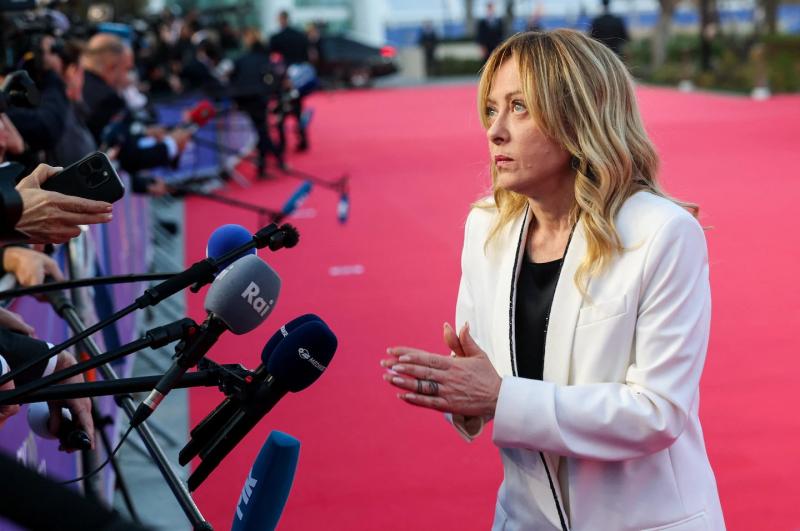
Perhaps the most revealing change is on the European right. Anti-Americanism used to be a doctrine of the left — Parisian intellectuals, student radicals, anti-war parties. The right was instinctively Atlanticist. And Europe’s populist right once saw Trump as its patron saint. But Greenland, Iran and Trump’s general contempt for Europe have made Trump politically toxic across the political spectrum in Europe.  The Post reported  that populists such as the U.K.’s Nigel Farage, France’s Marine Le Pen, Italy’s Giorgia Meloni and many within Germany’s AfD party have been distancing themselves from Trump and U.S. policy. Even in Hungary, Vice President JD Vance’s speeches for then-incumbent Prime Minister Viktor Orban may have hurt the latter’s electoral prospects.


It goes beyond Europe. In Canada, Prime Minister Mark Carney has   explicitly set out   to reduce his country’s dependence on the U.S. market. He has   already signed   more than 20 economic and security deals, including with China, to grow exports beyond the U.S. Canadians for their part are   buying   less   American and   vacationing less   in the U.S.


Europe and Canada are not about to embrace China. They have serious conflicts with Beijing over Ukraine, subsidies, electric vehicles,   critical minerals  and  market access . But both will play nicer with China where they can. They will hedge. They will deal with Washington when they must, Beijing when it suits them and others whenever possible. A  recent Foreign Affairs essay  by Chinese scholar Da Wei argues that for Beijing, the great new geopolitical fact is that there is now a deep Europe-America divide — ready to be exploited.


In Asia, U.S. allies have been hit harder than anyone. More than  80 percent of the oil and gas  that passed through the Strait of Hormuz went to Asia. Now many countries on that continent are reeling from their  worst energy crisis  in half a century, perhaps in history. As a result,  allies like Japan and South Korea  have had to go hat in hand to adversaries like Russia and Iran to negotiate for enough fuel to keep the lights on at home. Adding insult to injury, they have had to  endure   abuse  from Trump, who has denounced them because —  despite never having been consulted  — they have not eagerly jumped to join the war in Iran. Many of them are now  in talks with Beijing  about energy security and green technology.


One of the recurring questions about Trump’s foreign policy has been, how permanent are its effects? Could the U.S. recover from the loss of trust with its allies? As we can see, countries have started making long-term policy shifts, and these will soon take on a life of their own. They realized that they had entrusted their security and well-being to Washington, and it has used this dependence to squeeze them hard. So, they have decided to buy insurance, to protect themselves from an unreliable America. And who can blame them.


Tags

jrDiscussion - desc
[]
 
Hallux
Professor Principal
1  seeder  Hallux    7 months ago

Me too Kafka, me too ...


Trout Giggles
Professor Principal
2  Trout Giggles    7 months ago
Europe is moving from words to actions. The European Union’s   ReArm Europe/Readiness 2030   plan is to invest some 800 billion euros (about $935 billion) in defense in the coming years. The old model was that the U.S. took care of European security and   Europeans spent generously   on U.S. arms. Now Europeans want more of their money to stay at home, to build European firms and supply chains, and thus gain strategic autonomy from Washington.

Good for them! Now maybe a certain NT member can shut his pie hole that Europe does nothing for itself regarding defense.


Split Personality
Professor Participates
2.1  Split Personality  replied to  Trout Giggles @2    7 months ago

That will never happen.


Trout Giggles
Professor Principal
2.1.1  Trout Giggles  replied to  Split Personality @2.1    7 months ago

That's because some can't see the truth even if it's slapping them in the face


Nerm_L
Professor Expert
3  Nerm_L    7 months ago

There is no doubt that today's geopolitics is driven much less by ideology and more by transactional competition.  This transition away from the Great Powers ideological struggles of the 20th century may be the result of large global issues, such as climate change, and that the developing economies of the 20th century have matured to middle tier 21st century economies. 

Geopolitics has shifted away from cooperative alliances that depended upon shared, common ideological priorities.  In some ways the 20th century model of cooperative alliances was built upon a foundation of mutual distrust of the ideological other.  Today's geopolitics is being shaped more by middle tier economies that diplomatically pursue fair competition and transactional agreements that prioritize utility rather than ideology.  While this emerging geopolitical dynamic may not be fully considered mutual trust, it certainly bears the hallmark of mutual respect.


Split Personality
Professor Participates
4  Split Personality    7 months ago
The same logic is spreading beyond defense. The European Payments Initiative is  building   a continentwide alternative to Visa and Mastercard. European institutions are seeking alternatives to SWIFT,    PayPal   and other U.S.-dominated financial platforms. France has    moved gold reserves   from New York to Paris; politicians in    Germany and Italy have debated   whether their countries should do the same. European governments are    looking for alternatives   to American software, fearing that U.S. firms might one day be ordered to cut off critical services. This can all be dismissed as posturing, but Europe is collectively the world’s    second-largest economy   with the    second most widely used reserve currency  . Its actions matter.

196


Split Personality
Professor Participates
5  Split Personality    7 months ago
In Asia, U.S. allies have been hit harder than anyone. More than    80 percent of the oil and gas    that passed through the Strait of Hormuz went to Asia. Now many countries on that continent are reeling from their    worst energy crisis    in half a century, perhaps in history. As a result,    allies like Japan and South Korea    have had to go hat in hand to adversaries like Russia and Iran to negotiate for enough fuel to keep the lights on at home. Adding insult to injury, they have had to    endure       abuse    from Trump, who has denounced them because —    despite never having been consulted    — they have not eagerly jumped to join the war in Iran. Many of them are now    in talks with Beijing    about energy security and green technology.

196


JBB
Professor Principal
5.1  JBB  replied to  Split Personality @5    7 months ago

original


Who is online


68 visitors