
Europe races to plug security holes after US NATO pullback

Category: Op/Ed
Via: vic-eldred • 4 months ago • 13 commentsBy: Story by Daniel Michaels, Michael R. Gordon, Robbie Gramer

 S E E D E D C O N T E N T
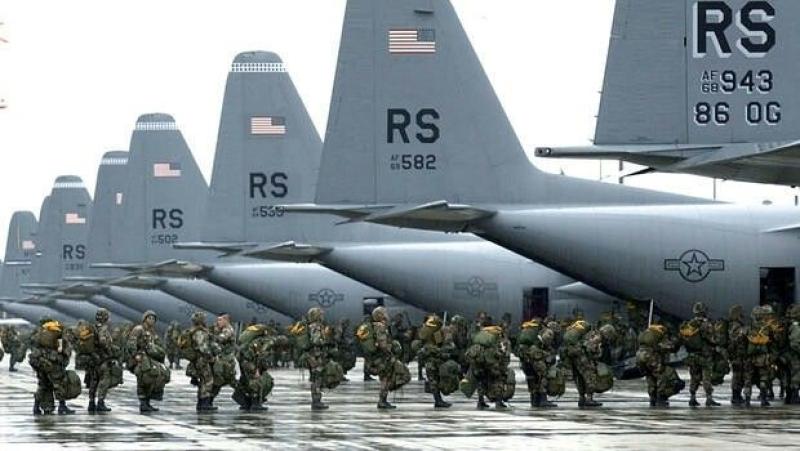
NKARA, Turkey—America’s allies are rushing to find workarounds and replacements for the bombers, warships and other forces the U.S. recently told other NATO members they could no longer rely on in a crisis.
But filling all the holes left by the American pullback—including midair refuelers that are in short supply and long-range strategic bombers that only the U.S. has—is proving challenging for the military alliance and risks leaving its European members, in particular, exposed to rising threats from Russia.
European leaders are set to take up the problem at the North Atlantic Treaty Organization’s planned annual summit in Ankara, Turkey, this week, where allied leaders will strive to maintain a veneer of unity despite divisions over the U.S. war with Iran and the Pentagon’s determination to shift assets to the Pacific.
“Do more, faster, together—we don’t have the luxury of time,” NATO Secretary-General Mark Rutte told the summit in his opening speech Tuesday. “We need capabilities now to make sure we are ready.”
Moscow is pouring almost half of its national budget into its war machine, he added, and NATO must turbocharge its trans-Atlantic defense-industrial base in response.
“Europeans are already backfilling what the U.S. cannot any longer promise,” the secretary-general said in an interview with The Wall Street Journal ahead of the summit.
“In some cases we’ve got more work to be done,” he acknowledged. However, NATO is better off having realistic expectations of what the U.S. can be certain of contributing, he added.
One workaround that seeks to make up for the lack of long-range strategic bombers: Deploy more long-range missiles on the ground and fighter aircraft in the sky.
NATO veterans and military experts say that Europeans can’t easily replicate or quickly replace some key military capabilities the U.S. has allocated for the defense of the alliance for decades, including long-range bombers, an aircraft carrier and submarines. The Trump administration cuts are immediate, they add, providing no time for a transition.
Retired Army Gen. Curtis Scaparrotti, who served as the alliance’s top commander during the latter months of the Obama administration and President Trump’s first term, said that any transfer of military responsibility from the U.S. to European nations must be carefully timed and required more preparatory work.
“I don’t agree with the uncertainty we have injected into the force posture,” he said. “If we determine there should be changes, it cannot be immediate and without preparation, in order to ensure deterrence against what is a real threat from Russia.”
Some former U.S. officials say that reduced dependence on America could make the alliance more reliant on nuclear forces to deter Russian aggression. A six-nation program dubbed “nuclear sharing” allows some European nations, including Germany, the U.K. and Turkey, to equip their aircraft with U.S. nuclear weapons in a war, an arrangement that Polish officials say they want to join.
“If NATO is less able to count on its conventional forces for deterrence, it makes the alliance more dependent on the credibility of American nuclear weapons,” said Celeste Wallander, who served as the assistant secretary of defense responsible for NATO and Russia policy during the Biden administration.
The U.S. cuts, which caught the Europeans and American lawmakers off guard recently, fall into two groupings: reductions to American Army brigades already deployed on the continent, and a scaling back of air, naval and other reinforcements the Pentagon had pledged to send in a crisis.
For the Trump administration, the twin moves signaled that it was time for Europeans to take the lead in the conventional defense of Europe—putting the U.S. in a better position to beef up its military in the Pacific to deter China, and deploy force in the Western Hemisphere. Washington has committed to maintain its nuclear umbrella over Europe, NATO’s ultimate defense against Russia.
But the abrupt moves unnerved many Europeans, particularly since Russia has stepped up its bombardment of Kyiv and is continuing to modernize its military. While Russia’s ground forces have been bogged down in Ukraine, its air, missile and naval assets remain largely intact.
The war in Ukraine—and Russia’s long-term goals of weakening NATO—are slated to be a top agenda item for alliance leaders’ summit, U.S. and European officials said.
In his opening remarks, Rutte added that members must work together to “show Russia, and all those watching today, that a trans-Atlantic defense-industrial base is mobilizing with purpose, not in anger, but for our collective security.”
Trump is expected to meet with Ukrainian President Volodymyr Zelensky on the sidelines, according to a senior Trump administration official.
Europeans accuse Russia of conducting a campaign of sabotage and nontraditional warfare across the continent that falls short of combat, yet signals Moscow’s malign intentions. Some European leaders say the hybrid attacks could herald a more conventional military attack in coming years.
“It is difficult and dangerous for the security of NATO’s European front when capabilities are withdrawn very quickly and before it is clear when these can be replaced,” German Defense Minister Boris Pistorius said last month.
European allies have largely filled the gaps left by the U.S. reductions, U.S. Air Force Gen. Alexus Grynkewich told the Journal. “In those few areas where they haven’t, where they do not currently have a like capability to replace, we are looking at alternate capabilities with matching effect,” he said.
In an effort to fill the gap, Allied officials said, European nations have now committed all of their new fighter aircraft to NATO’s defense instead of holding some back for their national missions.
Discussions about deploying more ground-based long-range missiles and fighter aircraft in place of long-range strategic bombers are currently taking place, Western officials say. However, replacing U.S. capabilities in midair refueling won’t be easy and would require establishing more airfields with fuel capacity, the officials add.
But there are skeptics.
“Ground-based long-range fires can supplement, but they cannot come anywhere close to the reach of a bomber or replicate the bombers’ capability to quickly revisit targets,” said David Deptula, the dean of the Mitchell Institute for Aerospace Studies and a retired Air Force three-star general. “Fighters cannot carry as great a payload as bombers and have less reach, and when you look at a nation the size of Russia, range matters.”
While Europe has drastically scaled up military spending in recent years, its defense industry, freshly infused with new cash after decades of laggard investment, is now grappling with major production bottlenecks to delivering sorely needed arms and munitions in a timely manner.
“The big issue I think that Europeans should be focusing on is the industrial cadence and capacity to actually deliver in a much quicker way to meet the moment,” said Alexandra de Hoop Scheffer, president of the German Marshall Fund, a think tank.
The scaling back in reinforcements comes as the Trump administration reduced the number of American troops it has arrayed on the continent, a footprint that has long provided a tangible demonstration of U.S. commitment to NATO.
In May, the Pentagon canceled the deployment of an armored brigade to Poland from Fort Hood, Texas. Trump said later that he would send 5,000 troops to Poland, though the Pentagon hasn’t so far sent more forces to the country. That followed the Trump administration’s move last year to remove an infantry brigade from Romania.
The Pentagon has also halted the deployment of an Army battalion equipped with long-range missiles in Germany.
In Washington , leading Republican and Democratic lawmakers have sought to stop the Pentagon from removing additional troops by inserting provisions in pending military-spending legislation that would bar U.S. troop levels from falling below 76,000 without further review.
Another battle is brewing over U.S. stocks of Army weapons and equipment kept in Europe.
U.S. European Command aims to field four armored brigades during a crisis. To hedge against troop cutbacks, the command wants to ensure adequate supplies of weapons and equipment are kept in Europe. That would speed the deployment of American troops in the event they are rapidly flown in from the U.S. But the Pentagon so far hasn’t locked in the necessary funding.
Congress is also moving to block the removal of any of the Army stocks in Europe, which Pentagon officials say would infringe on Trump’s prerogatives as commander in chief.
“I think the department is fundamentally miscalculating the advantage from prepositioning stocks and equipment in Europe,” said Sen. Jeanne Shaheen, a New Hampshire Democrat who serves on the Senate Armed Services Committee.

Tags
Who is online
86 visitors
Socialist Europe can no longer defend itself. They made a big mistake in refusing to help the US during the "Epic Fury" campaign.
The question is what will they do now that a US President has the guts to treat them with reciprocity?
I highlighted the important quote. They will look for the cheapest solution and that would be nukes.
Why is NATO trying to fight World War II? Strategic bombers are of little value without nuclear weapons. And conventional bombers only allow preparation for ground invasion and occupation. Is NATO planning to occupy Russia and destroy its only excuse to exist?
President Trump has demonstrated that the old 20th century notions of bombing an enemy into submission is obsolete. Russia's air war has fared no better in Ukraine. And Russia is simply too large to consider Gazafication.
Defending Europe from a Russian ground invasion would require light, cheap strike aircraft that can move in and out of the battle environment rapidly. That's what Ukraine lacked. Ukraine is proving that unmanned aircraft are useful in that battle environment. To guard against Russian ground invasion Europe would need to harden its supply routes, disperse stockpiles, and build an arsenal of light, fast, flexible weapon systems. The absence of nuclear weapons would, of necessity, require deployment of chemical weapons.
A defense of Europe does not require stuffing enormous amounts of money into the pockets of Boeing, Lockheed, or Airbus for big aircraft that would hinder defensive operations. Unless, of course, NATO really is planning to invade and occupy Russia.
Europe is, now quickly, realizing what the US brought to NATO and are going to be struggling to take up the slack.
This pull back from NATO could save the US billions in the long run as we would no longer be footing the bill they refused to pay.
Remember the base realignment and closures of the late 80s and 90s ? What happened to local economies after a base closure?
I think thats a very good template to look at as to what could happen if some repositioning of troops and equipment is done on the part of the US , that is not even talking about removing those things .
I was there for all that in the 90s. There were problems all over the place (economic and logistic). But now we are talking about complete removal. These countries now have to fill the security piece that the US provided. They're not ready for that.
Con gress put in a speed bump in after the first trump admin ,
Troops can not be totally removed unless congress concurs, meaning US cant leave NATO . but it dont say anything about reducing troops and equipment or moving them from one place they have been for decades to a newer area closer to the supposed front like say the Baltics or Nordic states or Poland .
Or we could waste money bringing them home - that has never been the case - we usually sell or donate the equipment to our exs.
Congress should have the final say but this POTUS doesn't ask anyone...
First causality of trump's "lets make a deal" NATO Diplomacy ...........Boeing lost a huge contract to SAAB today for new NATO AWACS
which are also very old and in short supply.
NATAO said keep it in house and in Europe.
Awful lot to unpack there .
i will start with equipment , The US keeps a crapton of extra equipment in depots , many do not think about this , but that equipment not only replaces what our own troops break /wear out , but goes a long way in filling this countries Art 5 commitment of the NATO Charter , and Art 5 does not say that the US or any member has to commit troops contrary to somes beliefs .
It has always been my opinion that congress should have a say , specifically the Senate , if the senate has to approve a treaty , then they should also have to approve if we decide to remove ourselves as a country .
Boeing likely lost the bid for its recent records of cost over runs and safety issues , something they brought on themselves , so no sympathy there.
awarding it to Saab , makes sense to me since it is sourced in the area and they have a better safety and design aspect record . will it be cheaper ? who knows .
Yes, I had to count a lot of it, lol.
You mean like Biden did during his retreat from Afghanistan?
Well we were on the first Trump Administration's timeline and the Pentagon had to make the decisions what to save, they left practically nothing at Bagram.
Following the terms negotiated by the previous Administration proved difficult logistically and the Taliban only offered a short extension.
We were lucky to withdraw with only the 13 KIA from the suicide bomber.
Future classes at the War College will pore over how to avoid getting involved in such cultural quagmires
and will study the remarkable success of the withdrawal when they study and compare it to Dunkirk and Vietnam.
And Biden made the decision to expedite the withdrawal and turn it into a retreat. It resulted in hundreds of Afghanis civilians dead, 13 US Service members dead, US Citizens abandoned and millions in military equipment left for the taliban.
I also notice you didn't seem to give a shit about allies then like you do now.
Your inventiveness or misunderstanding is not impressive.
that is the exact opposite of expediting a withdrawal.
True but the extra 90 days saved thousands of Americans, their families and allied members with their families.
US citizens exercised their American rights by refusing to leave and chose to stay, some with family.
It was already donated to the Afghan military by the Trump treaty. Biden chose to fly everything out of Bagram with the extra time. Ultimately both Administrations thought the Koonis would not cut and run the way they did.
Anything else to add?