
What they needed was a theory of government that provided a place for rebellion

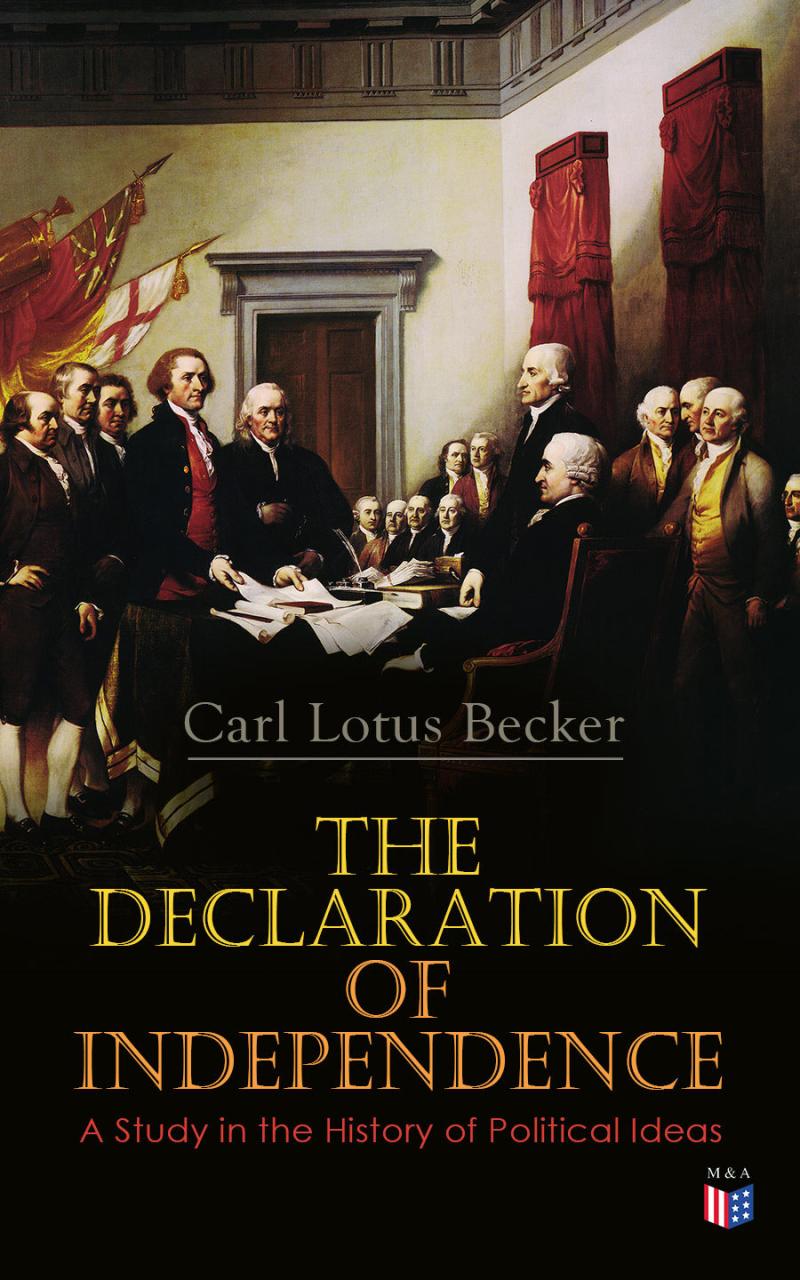

This philosophy, which affirms the right of a people to establish and to overturn its own government, is formulated in the first part of the second paragraph of the Declaration. We hold these truths to be self-evident, That all men are created equal, that they are endowed by their cre- ator with certain unalienable rights; that among these are life, liberty & the pursuit of happiness; that to secure these rights governments are instituted among men, deriving their just powers from the consent...

excerpt from
The Declaration Of Independence
by Carl Lotus Becker
It is often forgotten that the document which we know as the Declaration of Independence is not the official act by which the Continental Congress voted in favor of separation from Great Britain. June 7, 1776, Richard Henry Lee, on behalf of the Virginia delegation, submitted to the Continental Congress three resolutions, of which the first declared that “these United Colonies are, and of right ought to be, free and independent States, that they are absolved from all allegiance to the British Crown, and that all political connection between them and the State of Great Britain is, and ought to be, totally dissolved.”¹
This resolution, which may conveniently be called the Resolution of Independence, was finally voted by the Continental Congress on the 2 of July, 1776.² Strictly speaking, this was the official declaration of independence; and if we were a nation of antiquaries we should no doubt find an incongruity in celebrating the anniversary of our independence on the 4 of July. Meanwhile, on the 10 of June, three days after Richard Henry Lee introduced the Resolution of Independence, it was voted to appoint a committee to “prepare a declaration to the effect of the said first resolution.” The committee, appointed on the following day, consisted of Thomas Jefferson, John Adams, Benjamin Franklin, Roger Sherman, and Robert R. Livingston.¹ On the 28 of June, the committee reported to Congress the draft of a declaration which, with modifications, was finally agreed to by Congress on the 4 of July.² This is the document which is popularly known as the Declaration of Independence. This title is not, strictly speaking, the official title of the document in question. The document never knew it- self, in any of its various forms, by that name. Jefferson, in making the first draft, gave it the following title: A Declaration by the Representatives of the United States of America, in General Congress assembled. This title was retained in all the copies of the Declaration, except the engrossed parchment copy.
On the 19 of July, 1776, Congress voted that the Declaration be engrossed on parchment, “with the title and stile of The unanimous Declaration of the thirteen united States of America.” It is true, the Declaration, in the form adopted by Congress, incorporates in its final paragraph the resolution of July 2; and so the Declaration may be said to be a declaration of independence, inasmuch as in it Congress once more declared what it had already declared two days before. Nevertheless, the primary purpose of the Declaration was not to declare independence, but to proclaim to the world the reasons for declaring independence. It was intended as a formal justification of an act already accomplished. The purpose of the Declaration is set forth in the first paragraph — a striking sentence, in which simplicity of statement is somehow combined with an urbane solemnity of manner in such a way as to give that felicitous, haunting cadence which is the peculiar quality of Jefferson’s best writing. When in the course of human events, it becomes necessary for one people to dissolve the political bands, which have connected them with another, and to assume, among the powers of the earth, the separate and equal station, to which the laws of nature and of nature’s God entitle them a decent respect to the Opinions of mankind requires that they should declare the causes which impel them to the separation.¹ The ostensible purpose of the Declaration was, therefore, to lay before the world the causes which impelled the colonies to separate from Great Britain.
We do in fact find, in the Declaration, a list or catalogue of acts, attributed to the king of Great Britain, and alleged to have been done by him with the deliberate purpose of establishing over the colonies “an absolute tyranny.” These “causes” which the Declaration sets forth are not quite the same as those which a careful student of history, seeking the antecedents of the Revolution, would set forth. The reason is that the framers of the Declaration were not writing history, but making it. They were seeking to convince the world that they were justified in doing what they had done; and so their statement of “causes” is not the bare record of what the king had done, but rather a presentation of his acts in general terms, and in the form of an indictment intended to clear the colonists of all responsibility and to throw all the blame on the king. From whatever causes, the colonists were in rebellion against established and long recognized political authority.
The Declaration was not primarily concerned with the causes of this rebellion; its primary purpose was to present those causes in such a way as to furnish a moral and legal justification for that rebel- lion. The Declaration was essentially an attempt to prove that rebellion was not the proper word for what they were doing. Rebellion against established authority is always a serious matter. In that day kings were commonly claiming to rule by divine right, and according to this notion there could be no ‘right’ of rebellion. The framers of the Declaration knew very well that however long their list of grievances against the king of Great Britain might be, and however oppressive they might make out his acts to have been, something more would be required to prove to the world that in separating from Great Britain they were not really engaged in rebellion against a right- ful authority. What they needed, in addition to many specific grievances against their particular king, was a fundamental presupposition against kings in general.
What they needed was a theory of government that pro- vided a place for rebellion, that made it respectable, and even meritorious under certain circumstances. Before enumerating the specific grievances against the king of Great Britain, Jefferson therefore proceeded to formulate a general political philosophy — a philosophy upon which the case of the colonies could solidly rest. This philosophy, which affirms the right of a people to establish and to overturn its own government, is formulated in the first part of the second paragraph of the Declaration. We hold these truths to be self-evident, That all men are created equal, that they are endowed by their creator with certain unalienable rights; that among these are life, liberty & the pursuit of happiness; that to secure these rights governments are instituted among men, deriving their just powers from the consent of the governed; that whenever any form of government becomes destructive of these ends, it is the right of the people to alter or to abolish it, and to institute new government, laying its foundation on such principles and organizing its powers in such form, as to them shall seem most likely to effect their safety and happiness.
Tags
Who is online

127 visitors
GOD BLESS AMERICA - CELINE DION
Deleted for off topic as was the rest of this thread.
Please stay on topic. Only warning.
I actually read this book and I thought it was excellent. I would highly recommend it.