
Opinion | Hiring more female officers can help fix police - The Washington Post

By: Washington Post


 S E E D E D C O N T E N T
Not quite a decade ago, the Newark Police Department was desperately looking for ways to address its need to hire 400 officers, a shortage stemming from layoffs that had taken place in 2010 and subsequent attrition from retirements.
It was around then that Newark Police Chief Ivonne Roman saw a disturbing pattern. Although female applicants did better than their male counterparts on the entrance tests and background checks, 60 to 85 percent of them were flunking out of the academy. She also noticed something else: The physical fitness test , which men and women had previously passed at similar rates, had been moved from near the end of the five-month academy to the first three weeks.
This needs to change, and maybe will, if only out of necessity. Law enforcement agencies across the country are facing a personnel shortage that is “the number one issue in policing right now,” said Chuck Wexler, executive director of the Police Executive Research Forum, a leading research and policy organization for law enforcement agencies.
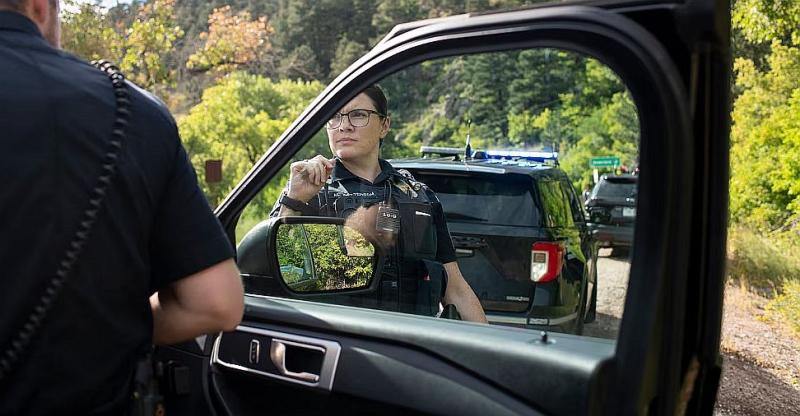
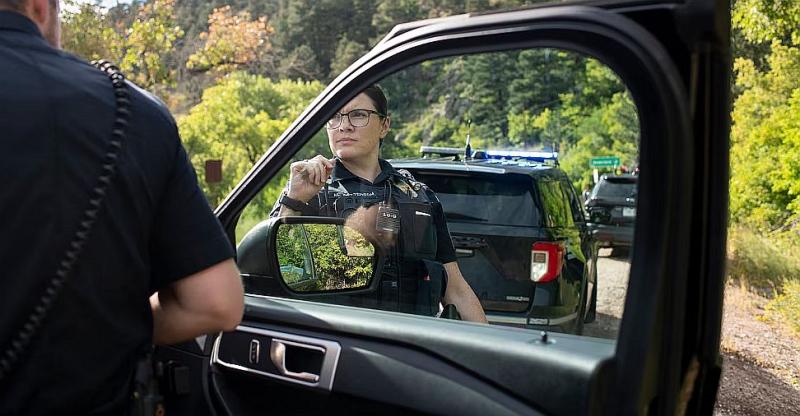
Police officers now get much higher salaries than they once did, at times six figures. But agencies are realizing they must also offer benefits and a culture that could attract more women.
A 2021 study of 4 million traffic stops made by the Florida State Highway Patrol and Charlotte Police Department found that female officers are less likely than male ones to search drivers but more likely to find contraband. “These results indicate that women officers are able to minimize the number of negative interactions with citizens without losses in effectiveness,” the researchers wrote in the American Journal of Political Science.
In suburban Maryland, the Montgomery County Police Department last year dropped the physical fitness test that was essentially a prerequisite for its academy and began offering pre-hire “fitness days” to help aspiring officers get into shape. Not only did the number of qualified recruits double, but the department discovered another, surprising benefit: Half of its 28-member August 2022 academy class was women, marking a first for the department.
“We were ecstatic,” Montgomery County Police Chief Marcus G. Jones told me. “What we’ve seen is that they bring a wide variety of experience and are interested in a wide variety of positions. I think they have branched out and shown that they are quite capable of doing the majority of the positions that are within the police department.” But he notes that Montgomery County, whose police force is still only 20 percent female, is “not where we want to be. We still think we could do better, which is why we signed on to the 30x30 initiative.”
“There’s a reasonableness to having a level of physical conditioning. What does that look like? That’s up to debate and discussion,” said Kym Craven, executive director of the National Association of Women Law Enforcement Executives.
After organizing a Justice Department-sponsored national conference in December 2018 on the need for more women in policing, the two of them came up with 30x30 — to much skepticism, noted McGough, who is now director of strategic initiatives for the Policing Project at New York University’s School of Law. For two years, “we tried and failed to get other organizations and funders to engage on this issue,” she said. They nonetheless launched it in March 2021, building a website with a small amount of seed money from Microsoft’s Justice Reform Initiative.
That there were doubts was not surprising. Police recruiting has long been designed with the sensibilities and interests of men in mind. The ads often depict cops as action heroes, dangling out of helicopters, breaking down doors or storming, guns drawn, into dangerous situations as part of a SWAT team. Less often depicted are the far more common day-to-day satisfactions that come with supporting safer communities, mediating interpersonal conflicts and building relationships with citizens.
“We have the tools. We have the research. We have the science. We have the law,” Roman said in a 2019 TED Talk . “This, my friends, should be a very easy fix.”
One that should not have taken a crisis to recognize. A few good women are already making a difference in policing. But a lot more of them are needed.

Tags
Who is online
144 visitors
There is a school of thought that the world would be a much better place if it were run by women, so why not go in the same direction with police forces.
More women cops would likely result in better policing.
Another thing that would help recruitment is if big city DA's would actively prosecute the criminals the street cops catch.
I'm curious what makes you think they don't. Depending on where you look for data, the United States generally has the highest rate of incarcerated people in the world - 716 per 100,000 - and that's saying something considering the population is so large, and they all got fair trials with lawyers.
Yeah, I get that. Now, I don't follow every DA's policies, but it seems to me they're usually more interested in not bothering with the low level stuff - usually drugs or petty thefts. It's not like people aren't being prosecuted for violent crime.
I'm sure motivations for this vary, but I know plenty of cases get dismissed simply because the courts are clogged with little bullshit cases, or the jails are overflowing already. In those cases, it's about resources, not ideology.
We will never know if more women LEO's would result in better policing if we don't try it. I say give it a go.
Military recruitment is down. Fire departments are struggling with recruitment. Recruiting paramedics is suffering, too.
But civil rights in drag is undergoing a boom in recruitment. People just gotta understand the priorities.
One of the biggest problems policing has is too many bullies wearing badges. Too many people get arrested and beat up for the crime of not kissing some cop's ass.