
If We Don’t Stand With Ukraine, What Do We Stand For?



 S E E D E D C O N T E N T
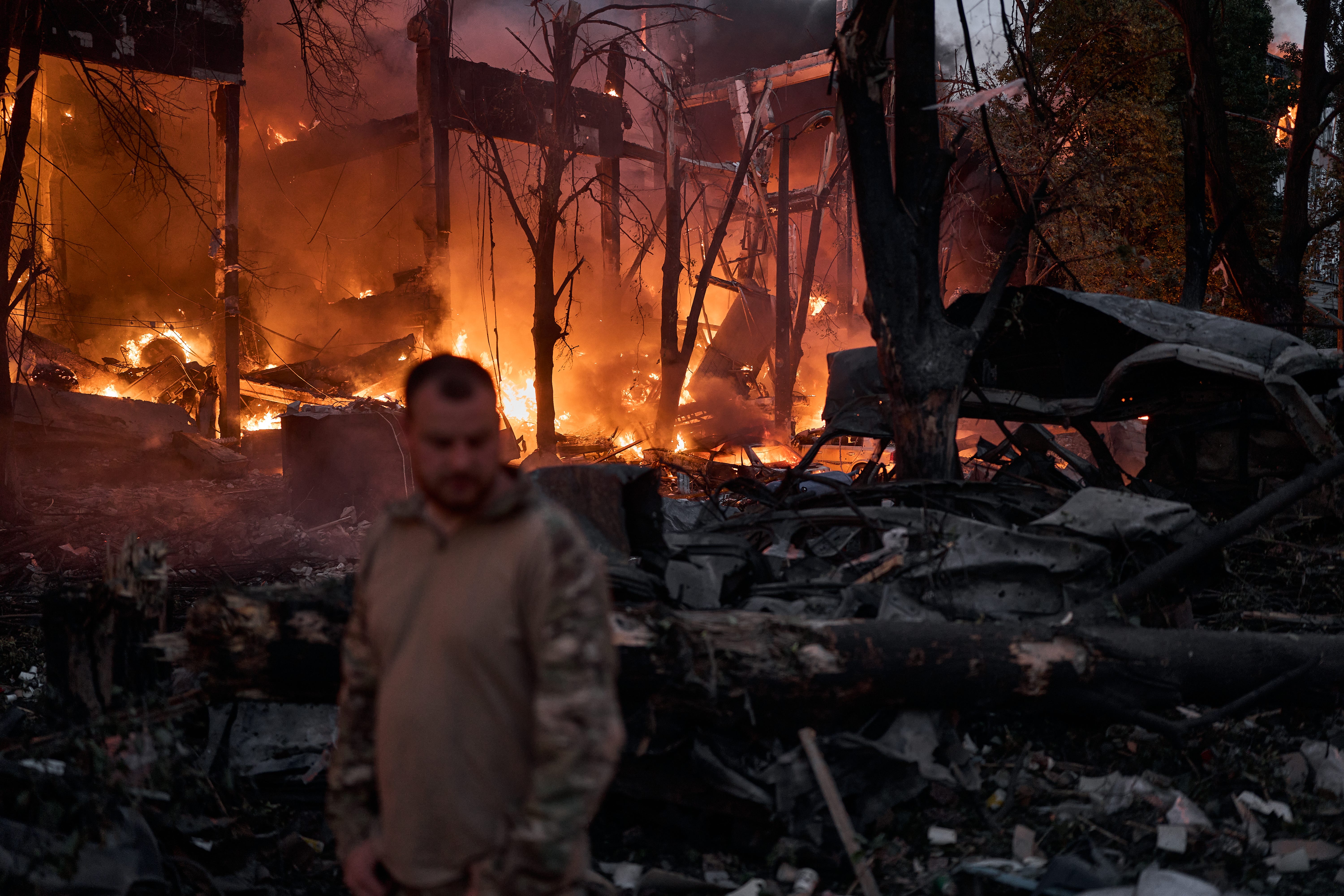
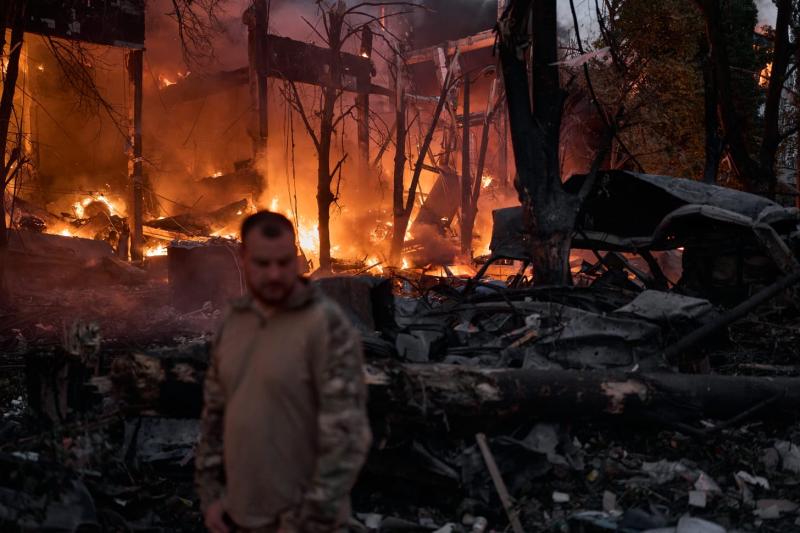
Fire burns among a damaged building after a mass drone and missile attack by the Russian Federation on the capital on Kyiv July 4, 2025 in Kyiv, Ukraine. Ukrainian authorities reported at least 23 people have been injured in the overnight drone attack on Kyiv. The attack also damaged railway infrastructure and set buildings and cars on fire in various districts throughout the city. (Photo by Kostiantyn Liberov/Libkos/Getty Images)
ON JULY 1, THE PENTAGON REPORTEDLY canceled a shipment of weapons for Ukraine, including artillery ammunition, rockets for the HIMARS system, weapons to shoot down Russian airplanes and helicopters, and, most crucial of all, PATRIOT interceptors that can protect Ukrainian civilians against missile attacks.
As is becoming a pattern, the process behind the decision was possibly even worse that the outcome. Secretary of Defense Pete Hegseth reportedly made this decision unilaterally . A White House spokesperson defended the decision by saying that “This decision was made to put America’s interests first following a DOD review of our nation’s military support and assistance to other countries across the globe,” and added, as a misdirection, “The strength of the United States Armed Forces remains unquestioned—just ask Iran.” According to NBC, Secretary Hegseth reportedly decided to withhold the weapons after “senior military officers found that the aid package would not jeopardize the American military’s own ammunition supplies.”
The decision not to send the weapons was apparently made without consulting the Ukrainians, our NATO allies, Congress, or even the State Department.
Hegseth, of course, has the power to overrule any officer at any time, as long as his orders are legal. But what this order reveals about Hegseth’s policy—or, considering the lack of process, it might be more accurate to call it his “political instincts”—is infuriating.
Here’s the Bulwark promise: We tell you what we really think. No spin. No tribal allegiances. We’re not just a publication; we’re a community. Join us.
IN HIS FIRST INAUGURAL ADDRESS, President Dwight D. Eisenhower—who forgot more about defense policy and politics than most of us will ever know— warned that “history does not long entrust the care of freedom to the weak or the timid.” Seventy-three years later, his warning still rings true, as the United States confronts a series of tests not just on our own shores, but also on the battlefields of Ukraine. Under question are our national will, our clarity of purpose, the credibility of U.S. leadership, and the understanding that other freedom-loving nations depend on us for support and example, and that we depend on other freedom-loving nations for our own security and prosperity.
In the most precarious phase of Russia’s war against Ukraine since 2022, we are on the precipice of failure.
Russia, despite a rickety economy and unsustainable manpower losses, is escalating this fight in an attempt to win through diplomacy—pouring everything into a renewed effort to break the West’s resolve because they can’t break Ukraine’s lines. And Ukraine continues to hold at great cost. If we falter now, the United States risks more than just a battlefield setback. We risk sending a signal to adversaries and allies alike that America no longer has the stomach to stand with those who fight for freedom. To give up now sends the message that we have no will to commit to our own national interests.
The history of diplomacy has many euphemisms for disengaging from a fight before the enemy: “ending wars,” “retrenchment,” “refocusing,” “a decent interval,” and so on. The military has a simple word for it: surrender.
The past three U.S. administrations understood both the stakes and the complexity of supporting Ukraine. They helped Ukraine take the difficult steps toward interoperability with NATO while provided critical military equipment and training. Our policy and our delivery timelines weren’t always perfect, but Republicans and Democrats agreed that a free, strong Ukraine in a position to defend itself was an asset to our security. And Americans supported that approach.
None of this was charity—it was strategic investment with deliberate attention to what we could provide without compromising our own readiness. That took rigor, discipline, analysis, and more risk mitigation than almost anyone who doesn’t work in the Pentagon will ever realize. But it paid off. Ukraine, once reliant on Soviet doctrine and gear, transformed its military structure and operational capability under fire while defending its sovereignty with courage, combat savvy, and increasing skill.
But that transformation is incomplete. Wartime adaptation takes time, and measured support is what allowed Ukraine to build resilience without collapse.
THIS WAR HAS ENTERED A NEW and particularly dangerous phase. Russia is pressing every advantage it can muster—not through strategic brilliance, but through terror strikes, brute force, massed missile launches, disinformation campaigns, and war crimes.
Putin knows he can’t defeat Ukraine outright with the tools of conventional warfare. But he doesn’t need to—not if the West grows hesitant. Russia’s playbook now is attrition: destroy Ukraine’s infrastructure, immiserate its people, and undermine its alliances while waiting for the West to get bored or distracted. In that last point, especially, they have learned their lessons by watching us over the years.
We have seen all this before—in Georgia, in Syria, in Moldova, and in other so-called “ frozen conflicts ” that exist across Eastern Europe. This time, Russia realizes it’s not just about taking territory. It’s about breaking a nation’s will—not the Ukrainians’, but ours.
Will, once broken, is a very difficult thing to repair. The leaders of China, Iran, and North Korea—not to mention terrorist groups around the world—are watching closely.
Having worked directly with the Ukrainian military as the commander of U.S. Army Europe, I saw how hungry their leaders and soldiers were for real reform , how eager they were to shed Soviet legacy, embrace NATO values, and become a force rooted in trust, values, initiative, and mission command. They did all that to help fight shoulder-to-shoulder with the American-led International Security Assistance Force in Afghanistan, but truthfully they also did it to prepare for what they believed was inevitable: a Russian attack on their borders.
Ukraine’s fight has become a laboratory for twenty-first-century warfare: integrating drones, countering electronic warfare, adapting logistics, and refining precision fires. Their transformation is no longer theoretical—it is real, visible, and growing. But in the short term, it still needs sustained material support.
In return for our munitions and old weapons, we’re not just helping them; we are also learning from them. The U.S. Army has recognized the elements of evolving warfare and is applying Ukraine’s lessons in real time into our force through initiatives like “Transformation In Contact”—a structured effort to integrate Ukrainian battlefield innovations into how we train, equip, and fight. From dispersed command-and-control structures to drone-enabled targeting and decentralized maneuver, Ukraine’s experience is reshaping how we all understand future warfighting.
That is not just value-added—it’s vital. But only if Ukraine continues to survive and adapt. Without our help, this battle lab of learning for us—and for other Western nations—goes dark.
SOME POLICYMAKERS BELIEVE that Ukraine is a distraction, and that somehow the war in Ukraine and a potential conflict with China exist in separate universes. This belief is a form of Flat Earthism in its obstinate refusal to acknowledge that every part of the world is connected to every other.
Others believe that by delaying shipments or equivocating in our support, we are buying time, acting with appropriate caution, or gaining leverage for future peace talks that those who see the situation clearly know Putin will never join. In reality, we are buying risk—for Ukraine, for NATO, and for ourselves. Every day of delay or mixed messaging allows Russia to make gains it could not otherwise achieve. Every shipment withheld erodes the deterrent effect of Western unity. Every pause in ammunition transfers gives Putin space to maneuver—militarily, politically, and psychologically.
Our allies see this. In the last few weeks, I’ve visited Estonia, Latvia, Lithuania, and Poland. They are under no illusion about what happens if Ukraine loses. These are nations that lived for decades under Soviet occupation. They still carry the memory of repression and forced Russification. This is not historical abstraction; it’s lived experience. And it’s why they are taking bold steps now: increasing defense spending, hardening infrastructure, raising readiness levels, and reinforcing NATO battle groups on their territory.
They know they will be next if Russia succeeds in Ukraine. And we should believe them. But they can’t, and they shouldn’t, do it alone.
This isn’t about politics, it’s about principle. The American people, in poll after poll, continue to support Ukrainian resistance. And our NATO allies have shown remarkable solidarity and even increased dedication to the cause of Ukrainian victory and European defense.
NOW IS NOT A TIME, if ever there was one, for weakness and timidity. Congress has appropriated aid, but Congress’s voice isn’t limited to a vote. Members from both parties—especially those who don’t have to worry about re-election—should demand that their already-authorized aid be delivered without delay, and Congress must ensure accountability for any executive interference that weakens our commitments.
Members of the Trump administration should recognize that allied leaders are difficult in the best of circumstances, and that the closest and most important leaders are often the most difficult. This was true during both World Wars and has been true ever since. But the alliances themselves are priceless. Support for Ukraine isn’t about loyalty to any leader—it’s about strategic foresight. Supporting Zelensky isn’t identical to supporting Ukraine—indeed, some Ukrainians may even prefer a new president in the next election. But regardless of what one thinks of one man, abandoning Ukraine at this juncture would be seen worldwide for what it is: not our restraint, but our surrender.
Eisenhower understood that dictators are never overcome by diffidence. And he understood that America needs free allies for our own freedom to be secure. The Trump administration would do well to reflect on these lessons that Eisenhower’s generation learned at the cost of hundreds of thousands of American lives.
Ukraine is holding on. Barely, but bravely. Let’s not make them hold on alone or for much longer.
Tags
Who is online

204 visitors
Why don't we put troops on the ground in Ukraine? That's the only real effective way to help Ukraine win.
After all, Russia has been weakened to the point that they wouldn't use nukes or start WWIII
Then it becomes a war of Russia vs America, and that has a greater chance of leading to a nuclear war. Is that what you would like to see?
We should help the Ukraine ... as long as our stockpiles of weapons don't fall below a certain level. I think that is what Hegseth is making sure of.
Trump is the ultimate embarrassment for US All
Walking away from another European quagmire means we stand for sanity.
We're constantly being told that China does things better than the United States. China is the manufacturing powerhouse for the planet so leverage that Chinese dominance to supply Ukraine. The United States can't manufacture anything because it costs too much and people don't want to work. We've done our bit. Let those who are better than the United States take over.
China said from the beginning that it does not take sides in that conflict. It had good and beneficial relations with both nations. It has focussed on encouraging a diplomatic solution to the confllct. I echo that position. I said from the very beginning that I will take no side in that conflict. I have the blood of both nations running through my veins. My mother is from Ukraine and my father is from Russia - both immigrated to Canada and met there.
China has said it will not let Ukraine win. China is supporting the aggressor and keeping its army in the field
Since some NT members don't think CNN is a reliable source, so neither do I.
Who's right? We may never know.
LINK -> China not taking sides on Ukraine - World - Chinadaily.com.cn
Besides, I really don't give a shit about that war.