
VIDEO: CNN Live Reaction to Arrest of Ex-CNN Host Don Lemon

By: Joe DePaolo (Mediaite)

 S E E D E D C O N T E N T
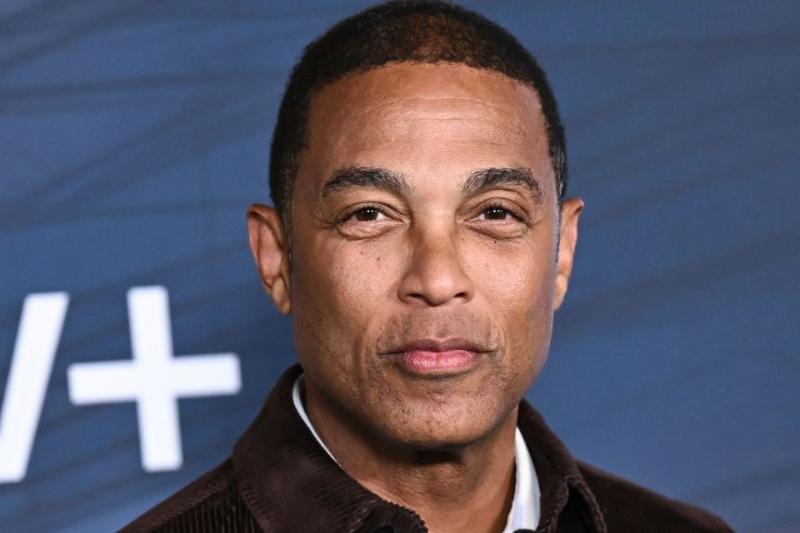
CNN's Brian Stelter and Sara Sidner reacted in real-time, Friday, to the stunning breaking news that their former colleague — Don Lemon — has been arrested on charges that he violated federal law during a protest in a Minnesota Church on Jan. 18.
In an instant analysis of the breaking story on CNN News Central, Sidner — reporting on the ground from Minneapolis, where she moderated a town hall on Wednesday — asked Stelter about what she called a "stunning move" by President Donald Trump's Department of Justice.
"This is a stunning move by the Department of Justice, going after a journalist, arresting Don Lemon," Sidner said. "What do you see has happened here? Because a magistrate judge — just last week — told them, no, you are not going to lump him in with those who were protesting. He was there as a journalist. What could have changed, A? And B, how do you see this by the administration, what they have just done?"
Stelter — CNN's chief media analyst — called the Lemon case "a First Amendment test with multiple dimensions."
"The First Amendment protects the work of journalists," Stelter said. "It also protects the right of worshippers to go to church and be able to peacefully assemble and worship and practice their faith. And the argument that we have heard from Trump officials is that that right to worship was infringed not just by the protesters who walked into that church and started chanting, but also by Don Lemon — because he and his crew members were there. Lemon has said all along that he was there not as an activist, but as a journalist. In fact, he was saying those words and repeating that out loud when he was inside the church. But he clearly knew something was taking place that day with the protesters. He told his viewers on YouTube to stay tuned because there was something about to happen. He was careful not to have his camera crew walk into the church until there was a disruption."
Stelter went on to say that he considers this to be another example of the Trump administration pursuing retribution against someone it perceives to be an enemy.
"Think about Letitia James, think about James Comey, think about the many cases we've covered in the past year of Trump retribution. Don Lemon is another figure on that list. President Trump has repeatedly attacked Lemon — both when Lemon was an anchor here at CNN, but again, more recently, Trump has made no secret of his disdain for Lemon. And Lemon, of course, has been harshly critical of President Trump for many years as well. So he is a Trump foe, and this is another example of the administration targeting a Trump foe."
He added, "Many First Amendment groups, many press freedom advocates are gonna say this has a real chill…we should be clear, committing journalism is not a crime."
"Yes," Sidner said, jumping in. "It is not a crime in this country. It is a crime in other countries, but not here."
Sidner added that Lemon's arrest will be viewed as "terrifying to a lot of journalists." She proceeded to ask Stelter, "Do you see this as another step by the administration to scare reporters like yourself, like myself, like others, into being super careful or maybe not even being as critical of the administration?"
"Journalists will not be deterred," Stelter said bluntly. "We have seen that time and time again in this country, more than a year now since President Trump returned to office, and the reporting continues no matter what."
But, he added, "this idea of a chilling effect, yes, it is real. There's been a chill in the air for the past 12 months or so when it comes to reporting in the U.S. And yet the work is still being done."
Watch above, via CNN.

Tags
Who is online

122 visitors
They have no case
"The First Amendment protects the work of journalists," Stelter said. "It also protects the right of worshippers to go to church and be able to peacefully assemble and worship and practice their faith. And the argument that we have heard from Trump officials is that that right to worship was infringed not just by the protesters who walked into that church and started chanting, but also by Don Lemon — because he and his crew members were there. Lemon has said all along that he was there not as an activist, but as a journalist. In fact, he was saying those words and repeating that out loud when he was inside the church.
"Local Black Lives Matter leader Chauntyll Louisa Allen, Nekima Levy Armstrong and William Kelly were each charged with conspiracy against rights by interfering with others’ freedom to worship.
Initially, Lemon tried to get out of facing criminal conspiracy charges by claiming he was “committing journalism” while taking part in the church disruption, Dhillon told conservative podcaster Benny Johnson on Tuesday.
“Whenever anyone conspires to violate the protected civil rights of American citizens, the Klan Act can be used to bring a conspiracy charge,” she said."
Ex-CNN host Don Lemon arrested for Minnesota church invasion
Why should the press have immunity? The church disruption was done for the press cameras. Lemon was actually an instigator for disrupting a church service simply by being there with cameras.
Don Lemon was part of a group of people who violated the protected civil rights of a church. I thought the Jan. 6th prosecutions and convictions set the precedent that someone on the premises in violation of the law is just as guilty as the instigators. And Lemon broke the law the same way many of the Jan. 6th protesters broke the law by walking through the open doors.
And Lemon broke the law the same way many of the Jan. 6th protesters broke the law by walking through the open doors.
So put him in jail with them. Oh, wait …
Don Lemon is an activist that tries to hide behind journalism. There's absolutely nothing in the First Amendment that gives the press the right to follow people in the commission of a crime and then try to conduct an interview as it's happening. Especially in that environment. No more so than a Christian news outlet would be justified in following criminals storming an abortion clinic and then trying to conduct an interview while they're doing it.
The 1st amendment does not enumerate all the situations where it applies. The fact that there is no language in the 1st granting a specific right is not a legal nor logical reason to believe the 1st amendment does not cover this.
Backing this up:
ChatGPT response, given your quote above:
Is a church public?
AI overview
Churches are typically private property but are also typically open to the public. I do not believe 'asking questions in public' means that one must be in a publicly owned area to ask questions. Interviews are done all the time in privately owned facilities.
The first question here is whether the church had an explicit ban on reporters entering their property. That is not established. The second question is if Lemon and gang actively disrupted by participating or if they were simply recording. A very key point.
The seed does not answer those questions. Lemon, however, does make the proper claim:
But that is only his side of the story.
Regardless, this does not strike me as a big deal. Shooting a disarmed man 10 times, in contrast, is a big deal.
I doubt this will ever go trial. Lemon would win.
I am confident that this is simply another instance of Trump's drive to intimidate the press. Winning is not the main objective.
Well if he said it, it must be true.
I wonder if that works if you follow bank robbers into the bank. "I'm not here as a bank robber, I'm just doing research on my documentary about bank robbers"...
That is clearly not what I meant.
The blatant dishonesty of your comment is demonstrated by the fact that you ignore what I wrote immediately after the quote:
So, yet again, you post a comment that is simply low-grade trolling.
And yet you called it a "proper claim".
Yes, it is proper because those are the correct conditions for a reporter to 'report'.
If events occurred as he described, then his actions were appropriate.
The First Amendment protects people from being punished by speaking out in public forums. It protects speech, including protest in public forums, within reason. A church is not a public forum any more than an abortion clinic is a public forum. It was not a lawful place to protest. Therefore, according to the logic ChatGPT presented, neither did Lemon have the right to try to do interviews during the commission of this crime. Just because it may have been newsworthy does not justify or grant some right to add to the disruption.
Again, this wasn't a public forum. It was a church and, therefore, private property. Being a journalist doesn't eliminate that, make it irrelevant or grant some special privilege. Further, the pastor of that church asked Lemon, as well as the protesters to leave, which at that point, he was definitely trespassing.
I would argue that him knowing prior that this illegal activity was going to happen does constitute participation. But let's forget that. Let's just leave the protesters out of this altogether. It would not be lawful for a journalist and film crew to just show up at a church during service, set up and start interviewing people and the pastor. That would require the consent of the church.
Adding the protesters back in doesn't change anything about that. There's no statute which says that now that something newsworthy is happening, journalists now have some special right to go into a non-public forum and start interviewing people.
Correct. Apparently, ChatGPT did not identify that this was opinion, not an argument against Lemon's actions.
A general statement without regard to context. Once context is added, I think you will find the applicability of what it said here changes.
Again, true... as a general statement. Once context is considered, it all changes. Church is not a public forum, so he did not have the right to go in there for the "journalistic" purpose for which he claims gives him the right. That might be enough for trespass right there and definitely was when he was asked to leave but didn't.
As far as aiding, I think any reasonable jury would conclude that he did, once the totality of facts are considered, but that's my opinion.
This case is not about journalistic freedom, although his defense will certainly try to make it about that. It will be about whether journalists can practice under any circumstances. Does being a journalist justify any behavior?
No that is not what ChatGPT stated. You are mining 'facts' between the lines. And those facts defy reality.
The press routinely reports on private property. There is no requirement that they be on public property unless the owner of the property has told them otherwise. Thus far, there is no evidence of that.
That would be a silly argument. If a reporter sees a protest that might be getting out of hand, reporting on that protest does not make them a participant.
Really, Drakk, it is just ridiculous that I have to point out something so obvious.
In summary. Journalists routinely conduct business on private property. They must leave if the owner tells them to do so or if there are signs or some other clear mechanism that precludes them from entering the property. They cannot trespass, but churches are generally assumed (appropriately) to be open to the public, so the presumption of trespassing would not exist.
Short of that, they can legally report until told otherwise.
Knowing that something is about to happen is kind of how real-time events are captured. So do better than claiming that seeing something unfold makes the reporter an active participant. Good grief man.
Really? I had a conversation with ChatGPT about it. I think it would disagree with you. The problem with your argument is that ChatGPT is obviously speaking in broad, general terms without any context and you are compounding it by thinking it therefore has no limitations. Once you add context, what ChatGPT returns becomes something quite different. You should give it a try.
You are retreating into abstract claims.
A reporter can enter a church and report on what it taking place unless the church has told him otherwise. Either verbally, with signs, or with some legal ordinance. Short of that, a reporter is not trespassing. And there is nothing wrong with a reporter doing their job if they are not breaking any laws.
Further, knowing that something is about to happen is how real-time events are captured. Seeing something likely to unfold does NOT make the reporter an active participant once it unfolds.
Quite the opposite, TiG. When you have a chat with ChatGPT and include the specifics, it becomes the opposite of abstract. Abstraction actually describes your argument since your argument comes from generalizations. You could discover this for yourself. Just ask the thing you claim supports your argument.
Let me help you out. Ask ChatGPT the following.
You might find this educational.
The 1st amendment does not provide immunity to the press for violating civil rights or contributing to a crime. Lemon conducting interviews with members of the church was a further disruption of church worship. Lemon's crime stands alone because he was not only documenting the protesters. Lemon was a participant in the disruption. It could also be argued that the presence of Lemon served as encouragement for the protesters; Lemon acted as instigator.
Could Lemon have gotten away with the same behavior in a synagogue or mosque? Could Lemon have gotten away with the same behavior if he had followed the KKK into a Black church?
If one violation of civil rights is acceptable then protection of civil rights have been weakened. The only things needed to get away with violating the civil rights of others is a good excuse and a lenient judge. Lemon's supremacy argument is very similar to justifications for violating the civil rights of immigrants. Lemon is utilizing institutional authority to justify his actions much the same way ICE uses institutional authority to justify their actions.
Turning civil rights into an excuse for illiberal prejudice transforms the morality of civil rights into a mockery of populist pandering.
That is not what I said. I stated that you are making abstract claims.
See, look at what you did. You included a fact that they were not allowed to enter without permission. You created a hypothetical scenario where a private venue required permission and then asked ChatGPT if they would need permission.
The reality, again, is that reporters could go into an auditorium and start filming if they are not precluded from doing so. If there is no law, no private declaration of trespassing, etc. that precludes reporters from doing their job, they can do their job. This happens every single day.
In simple terms, reporters do not have special privileges, but they also do not have special restrictions. They can do their jobs if their jobs are not explicitly prohibited by law, signs, or authoritative demands to cease (e.g. owner asking them to cease reporting).
Happens every day.
You should quote the part that you think makes your case.
Trespassing is not allowed. But I have already covered that.
Being a disruption is not allowed. But I covered that in my first post.
So you need to make a specific point.
Correct. Do you somehow think I argued that it did?
That would have to be established in a court of law. Disruption would be the strongest argument.
You are off into some other land.
Typically, yeah. Quasi-public. Like a store, a gym, a museum - really any business - it is private property held open to the public for a certain, time, use, etc. It’s not like they walked into someone’s home.
Well, one of us doesn't understand the concept of "abstract" in this context.
Yes. How you can call something specific an abstraction is beyond me. Your post of 4.1 is an abstraction. It is a general overview of the subject without including any specific context. I created the hypothetical because it is specific and shows that just because one is a journalist the law doesn't give them the right to just do whatever he thinks necessary to obtain news. The same conditions apply to a church. It is not an abstraction but something specific.
Or, in other words, journalists have no more or less rights than any other citizen. You, yourself, for instance, do not have the right to go into a church and interrupt the service to ask questions, film or do whatever on one day and then suddenly have the right the next day because you now call yourself a journalist.
Correct. And the law says they can't just go in there and start filming without prior permission. It is not a public space.
So is loud music. But nobody prosecutes the boy who lives next door to the church because he plays his guitar too loud. You’re trying to take vague descriptions of an event and turn them into elements of an imagined crime. That’s not the way to do this.
That would be because different laws apply. Your example is apples when we're talking about oranges.
No, but it's the next thing to it and nearly as protected.
Lemon? Yeah. Probably. Identity politics being what they are and him being a Deacon of the Church of Liberal Politics.
The real question is whether or not his white conservative countertpart (whoever that might be) could have.
Exactly. That’s why you can’t just say “service was disrupted” therefore a crime happened.
I am not going to entertain this petty nonsense anymore.
Correct. You should have seen that in my prior posts.
Wrong. They have the right to enter just like anyone else. And they have the right to engage in journalistic activities unless the law prohibits it or the owner of the facility prohibits it.
I have the right to enter a church, and so do journalists. I do not have the right to disrupt services, and neither do journalists. So, as I noted (yet again you just blindly argue and ignore points I have already stated), if the journalists are legally deemed to have disrupted the service then that is their liability. And, repeating myself yet again, if that church has made it clear that journalists cannot enter their premises, then that would be a liability too.
But other than that, a journalist most definitely can enter a church and record as long as they do not create a disruption.
And just to be super clear, I have not once suggested that a private facility is automatically a public facility; I have never stated or implied that a church is a "public accommodation". I have never suggested that a church is anything but a private facility. My argument has been based on these being private, not public facilities. Another obvious example would be a (privately owned) mall.
What I have suggested (because it is obvious) is that a church is typically open to the public. It is a private facility that typically welcomes people to simply enter the premises. This is as opposed to a private residence where no such invitation is implied.
No. Right. You said it right here. They have the right to enter, just like everyone else. Everyone else is entering to attend the church service for worship. He wasn't and didn't intend to. He entered for his own purposes. Purposes that didn't align with the intended invitation for public access. In other words, it wasn't a public forum. It is an invitation to the public to participate for a specific purpose.
They do not have to announce some sort of magic incantation barring journalistic activity. It's already assumed. Like the convention example I gave earlier, court precedence has already established this. I know you've done the research and I know you already know this. so, as you say, I'm not going to entertain this nonsense anymore.
This is what's so frustrating about trying to have a rational conversation with you. I point out that the situation in your example is not comparable because different laws apply, you agree, and then say "you can't say 'service was disrupted' therefore a crime happened." If different laws apply, how can you then say "therefore" as if they are the same? You are literally saying that because different laws apply they are therefore the same. Explain the logic, please?
There are videos showing Lemon inside the church and interacting with member of the congregation. Lemon is not observing and documenting the protesters. By interviewing people, Lemon became a participant in the disruption.
Um. right. Totally understandable. You make an accusation. I explain why you're wrong. Your solution is to call it petty without defending your accusation. Got it.
Except I don't see it, especially when your insistence that Lemon didn't do anything wrong negates whatever it is you're referring to anyway. If you go into a church service, you know damned well that because you were invited in doesn't give you license to do anything other than listen to the sermon or leave whenever you wish to. Same thing goes for Lemon. That doesn't get negated because protesters are there. There is nothing in the legal code that says that because someone else is doing something illegal, the invitation to the public by the church becomes something else or grants some sort of rights the church didn't intend.
I can't consider this as anything other than gaslighting in order to avoid admitting you're wrong. I will remind you of what you said in 4.1.2
The gaslighting is in attempting to claim you recognize churches as private property yet treat it as a public forum by stating what Lemon did is protected by the First Amendment. And what you call the first question has already been thoroughly answered by case law. The church doesn't have to publish an explicit ban on reporters entering their property for the purposes of reporting. It already exists without them explicitly stating it. For crying out loud. Just ask ChatGPT. I'll even give you an unbiased question to ask it. "Does a journalist have the right to go into a church in order to document, record or interview without the church's permission?" Heck! Don't bother. I'll do it for you.
I'm not stupid. Nor is anyone else reading this conversation. Your position is that Lemon didn't do anything wrong because he's protected by the First Amendment. Evidence? We're still arguing about it.
I am not going to spend time debating you on why I hold your prior words to be speaking in the abstract. It is petty and pointless.
Certainly not. But you are repeatedly penning dishonest posts. No matter how many times I correct you, you continue to misrepresent my argument. It gets old, Drakk.
Wrong! Go to my first post and keep reading. I do not know if Lemon did anything wrong. What I stated is that unless the church (or the law) has precluded journalists, then the journalist has the right to enter the building just like anyone else, private or not. And I have stated that disrupting the service is a liability. So if the journalist entered the building without trespassing and did not disrupt the service, then they did nothing wrong.
Further, I have noted that if a journalist is asked to leave, they must do so.
You keep trying to argue that a journalist cannot enter a Church because it is private. You put up links from ChatGPT that state that a journalist cannot enter a private building unless they have the right to do so. Attempt to recognize that if no trespassing laws or directives are precluding a journalist from entering, then a journalist has the same rights as anyone else to enter the church.
Now, is it possible for you to honestly deal with what I actually wrote, or will you continue to engage in strawman arguments and misrepresentations of what I have stated?
Let's see.
Well, gosh! That's brilliant. I think I'll use that reasoning too. Your words are simply speaking in the abstract. It's petty and pointless. Get back to me when they are no longer abstract.
Always the same crap with you Drakk. You get yourself tied in knots and then try to debate any little irrelevant point you can to deflect.
You have yet to show me wrong.
I have stated that a reporter has the same right to enter a church as any other human being unless there is a law or the church has prohibited reporters from entering. Without a prohibition, a reporter entering a church is perfectly legal. They have the same rights in this case as anyone else (but no more).
I have also stated that a reporter can report and video unless the church has prohibited this. (Again, the same rights as anyone else but no more.)
Finally I have noted that as long as a reporter does not violate the rules of the church and does not disrupt the church, then they are allowed to stay and report until the church tells them to leave.
You created a hypothetical situation for ChatGPT wherein the reporter did not have permission to enter the church and then asked if it was legal for the reporter to enter the church. And you get huffy when I point this out.
An honest query would include the situation as we understand it today. Here is a succinct reply from ChatGPT when I asked if a reporter may legally enter a church and report on an incident if the church is open to the public, the reporter does not violate any rules of the church, the reporter has not had permission to be there be revoked and the reporter complies with any instruction to leave.
It gave a detailed answer and then summarized succinctly with:
Now show me where the Lemon's team entered when the church was not open to the public, or moved to areas in the church that they were not allowed to be in, or were told that they were not permitted to be present or that they were not permitted to record and then refused to comply.
And note, we do not know the details so they may have caused a disruption or may have been told to leave. This is not known. What I am stating, yet again, is that based on the conditions we know, there is nothing that says they could not enter the church and engage in reporting and no indication that the permission to do so was revoked.
Yes, I have. Repeatedly. You're just refusing to recognize it.
Churches are private property, TiG. They do not become public property simply because they extend a narrow invitation to the public. It would be no different than if you hold a yard sale at your house. Because you extended a narrow invitation to the public to come onto your property to buy some stuff they may want doesn't automatically give license to reporters to come onto your property and start reporting or some family to hold a picnic there. It is not the case that they are allowed to do so up and/or until you tell them to leave. They are already trespassing because they are on your property outside your narrow invitation. This is not hypothetical. This is how the law actually applies. Check it for yourself.
And I have shown you repeatedly that Don Lemon has the right to enter the church for the purpose for which the church is open to the public, but not Don Lemon the reporter intending journalistic activities. That is illegal without prior church consent. You even point it out yourself but apparently refuse to see it.
He did not have permission. There is nothing in law that presumes he already had it. There is everything in law that presumes he did not have it. He was trespassing from the moment he stepped on church property with the intent to report.
It was the Sunday worship service. The only legal thing Lemon could do there was attend the service in the same manner everyone else not one of the protesters was there for. That is the narrow invitation to the public that the church offered. The Constitution does not give him the right to do journalistic activities simply because no one verbally told him he could not. There is no assumption of permission to do journalistic activities simply because of a narrow invitation to the public to attend services.
The prohibition is that the church is private property. Reporters can show up to any governmentally owned public space any other citizen has access to without prior permission. A reporter intending to enter private property for the purpose of reporting cannot do so legally without the consent of the property owner. A narrow invitation to the public does not change the private property status into a public space for purposes of the First Amendment. There is no right to free speech on private property.
For crying out loud. You yourself posted it right here. Every bit of what you stated here must be true. All of it. He did not have permission to be there for the purpose he intended. It's that simple. He was trespassing from the moment he set foot on that property and made the trespass even worse when he didn't leave after the pastor asked him to.
I am not the one playing games here, or the one being dishonest.
If we use leftist logic, Planned Parenthood clinics are public property because they accept federal funds....churches do not.
A conversation with ChatGPT
Does the First Amendment presume that reporters have the right to go onto private property?
A conversation with ChatGPT
What if I hold a yard sale, inviting the public to come onto my property to buy my wares? Does that then imply permission for reporters to come onto my property for reporting purposes?
Bullshit Drakk. You have yet to show that a reporter has fewer rights to enter a church that is currently open to the public (that does not mean they are owned by the public) than anyone else. You have yet to show that a reporter, who has not been prohibited from reporting or recording, does not have the right to do so in said church.
If a reporter is prohibited by law or is prohibited by the church itself from entering / reporting / recording and said reporter does not cease and desist then they have done something wrong. Or if the reporter has disrupted the proceedings, then they, like any other human being, have done something wrong.
You are trying to claim that reporters have fewer rights than an ordinary citizen and that is simply NOT the case unless there is a law restricting their rights.
If you have such a law, deliver it.
If you have evidence that the reporters were told to leave, deliver it.
If you have evidence that there was a sign or any indication that reporters could not enter the church, deliver it.
Other than that, the reporters have the same rights as any other person off the street.
Not once have I suggested otherwise. Your persistence in using strawman arguments illustrates that you are not trying to honestly discuss this matter.
Where was his permission denied?? Again, the legal precedent is NOT that a reporter must get special permission. The precedent is that a reporter has the same permission to enter as anyone else. That permission can be denied by the church. If so, the reporter must cease and leave.
Show me the law that states a reporter must get explicit permission to enter a church when an ordinary citizen does not need this explicit permission. Let's see it.
If an ordinary citizen can enter a church, then so can a reporter unless that reporter's permission has been denied. There is no implicit denial for reporters that causes them to have fewer rights than an ordinary citizen.
According to Gemini
If a pastor asked him to leave and he did not leave, then Lemon will be at fault.
If this is not true, and Lemon and crew did not cause a disruption, then they likely did nothing wrong.
Another worthless comment that creates a fantasized position for the 'leftist' boogeyman.
No value, not constructive, just ideological trolling.
I stated that churches are private property upfront and have continued to hold that truth throughout.
Correct. Now, ask a follow up for clarity.
Prompt: If someone conducts a yard sale, is press allowed to cover it on the private property if they have not been told to leave?
Response (ChatGPT):
Press has the same rights as any other member of the public. The owner can remove that right. If so, the press must leave.
That would be because they don't have fewer rights. They have the exact same right. That right is to accept the church's invitation to worship at Sunday services. That is the sum total of anyone's right, reporter or not, to attend that church and at that time. Period. The members of that church, simply by being members, do not have the legal right to just suddenly start recording the service, conduct interviews or anything else like it without prior permission from the church, since that falls outside the reasonable intent of the invitation to the public.
It is beyond contestation that Lemon did not attend for the invited purpose. It is beyond contestation that he had not gotten prior consent. It is beyond contestation that he did not leave when asked.
I already have. You keep ignoring it, pretending you don't see it or simply don't understand it, apparently.
False condition. No such sign is necessary.
Exactly. And that right is to participate in the worship of God or otherwise seek Him out or to perhaps see what attending a church is like. That is all.
It's not a strawman, TiG. You say you recognize that it's private property but treat it as public simply because that there's an invitation for the public to attend, reporters have the right to be there and report unless asked to leave. That is simply not true, as I have shown seven ways to Sunday, including the law that says so.
When did he ask for it???
Yes, it friggin well is. It's private property! In no case can reporters go onto private property and start recording just because no one said they could not. They have to have permission.
You're saying it but you're not understanding it. Yes, he has the exact same permission. Permission to do what? Attend the worship service, not reporting. That's the condition of the invitation. Beyond that, permission is necessary.
You're just playing games now. You're rewording the argument. As if the simple act of entering is the issue rather than the intent to engage in reporting activities. Lemon couldn't enter that church for the reasons he did any more than any other citizen could. Nobody could enter that church legally for any reason other than the purpose intended by the invitation. Any other ordinary citizen would need the exact same permission outside the scope of the invitation. It is not an exception for journalists only.
At this point, it's pretty clear you're not going to be swayed by any evidence. Either you're simply going to deny what you don't want to be true or you're playing some sort of game with me. Not going to waste my time further.
Exactly.
If the church does not prohibit recording then anyone in the church can do so.
A reporter had the same rights as any other member of the public. That right can be denied, but the denial needs to be communicated.
Then show this law. Don't just claim ... deliver it!
That is not required because a reporter has the same rights as any other individual. Those rights differ if there is an established law or if told by the church.
Reporters have the same rights as anyone else. If anyone can record, so can a reporter. If recording is not allowed, that must be a law or be communicated by the church.
You have invented a need for explicit permission that does not exist. If your logic were true, then in a yard sale, everyone who walks onto the private property would need to get explicit permission to do so.
I have stated the same facts throughout. You are projecting.
Cite the law!
Deliver some evidence Drakk. Your insistence does not mean anything.
Deliver the law that states a reporter is not allowed to enter a church in a situation where any other human being could enter the church.
Recording may also be a problem, especially of children without parental concsent
Show me the Minnesota or federal law where someone must secure explicit permission from a church to record if that church has not communicated any restriction on recording.
The only possibility I see is finding a legal way to cast the audio recording as a form of wiretapping. Possible, not likely. Video, however, has no such restriction (from what I can tell).
I do not know what you are quoting. You have accidentally plagiarized.
Regardless, are you going to cite the law ... ever?
It is Gemini ai.
Believe it or dont believe it as you wish.
AI is great for establishing the basic facts but you need to know how to use the AI properly. You should challenge it with follow up questions or even feed the results to another AI.
For example, I copied and pasted your Gemini results to ChatGPT. This response should be a clue that you need to research the actual law. As I have requested and you have refused.
Now you can try this yourself. The prompt I used is "Is this correct?: " followed by a copy & paste of Gemini's response.
ChatGPT offers this:
Logically, when you see something like this, you should step back, reason out what you see, and then do some legal research. You could even use AI to help you find supporting legal facts that you can review.
One needs to understand how to use these tools. As with any tool, failure to understand what is going on and how to properly use the tool yields poor results.
Let's get this out of the way first. You first claimed, or at least implied, the First Amendment protected Lemon's actions.
I provided case law that showed that this was wrong in my post of 4.1.20 , which I will not repost here for brevity. Then, later, concerning access by reporters, I give more case law in 4.1.36 , reiterating what the First Amendment does and doesn't do concerning this and in 4.1.37 . where a limited invitation onto private property for a specific purpose is dealt with. Both contain case law that provides the proof behind what I'm saying. All you have to do is actually read it.
So, what the hell are you talking about? And where are your citations or case law references?
False. That reasoning that if someone wants to set up a hotdog stand at the bottom of the steps to the front door of the church just because there isn't a sign saying they can't set up hotdog stands on church property. The fact is, churches have an expectation of privacy. Check out Minnesota's privacy laws.
Again, no. There is already an expectation of conduct for attending a church service. A podcaster who sat quietly throughout the service, recording it and then later publishing it online would almost certainly be violating the church's privacy rights according to Minnesota's consent laws. If that podcaster doesn't have the right, neither would a church member if that member did not have permission.
Nope. Just because I invited people onto my property does not legally or even reasonably also imply a right to record, document, interview or anything of the nature without prior approval, whether they be journalists or not. If they had that right, they could not be told not to do those things. Holding a yard sale implies consent to come onto the property in the area where the sale is happening in order to examine offerings, ask questions, buy or not buy and to leave. That is all the right anyone has while on the property. There is no implied right to record. There is no implied right to go anywhere on the property. There is no implied right to do something not related to the purpose of the invitation. Period.
And just because the invitation is there does not mean the property owner has to create what would be a rather long list of things people were not allowed to do. Logically, your position suggests that people can do anything once on the property because no one said they couldn't do it. That's untenable, TiG.
But here's the real kicker, TiG. The court is almost certainly going to consider Lemon's invitation to be at that church revoked before he got there. First, he conspired, on some level, with the protesters before travelling to the church. Second, he attended for reasons other than the intent the church has for inviting people in. In other words, he was not there for the service. He was there to capture the reaction once the protesters started disrupting the service. He was there in bad faith and he himself added to the disruption, making himself just as guilty as the protesters, since I can't believe anyone would reasonably believe the church would have ever considered giving Lemon permission had the church knew the circumstances behind his presence there. I'm damned sure Lemon was aware of this, too.
And here's a link where the pastor asks
Thing is, he doesn't. Unfortunately, Lemon appears to have taken down the video of the livestream of all of this. From when he was colluding with the protesters in some storefront parking lot through the time he spent at the church. I watched it before he did so, though, so I know he did not leave but continued to video the reactions and interview other people.
Lets look at it this way.
There were 36 protesters who stormed a church ala ICE not to round up immigrants and intimidate American citizens but to teach them a lesson
whether they were aware of the "pastor's" second job or not.
Ice has been raiding churches in blue states routinely; maybe this congregation will get it now, maybe not..
Mission seems to have been accomplished.
Journalists interview people and publish it. Check.
Journalist protected under the First Amendment? Maybe a jury can weigh in when all 36 are arrested and tried on the same charges.
Until then, this is political targeting, illegal, just like this Administration targeting blue states over and over again.
May the third MN judge agree with the first and kick the two journalists free.
No, thanks. I'd rather stay rooted in facts.
You yet again read only what you want and clearly never challenge the AI to ensure clarity. I did not claim the 1st amendment gives a reporter special rights. I suggested that the lack of enumeration does not mean the reporter has no rights.
The lack of enumeration does not mean that the reporter has NO rights under the 1 st . The lack of specific language for a specific circumstance does not mean that the circumstance is not covered. Attempt to honestly represent what I write.
I fed ChatGPT the output you produced and asked if it was correct. You can do the same, so I will not paste its lengthy response, but here is a succinct summary showing what you missed by being sloppy:
Which is what I have been telling you. As long as they comply with lawful orders!!
The honest analogy is walking into a church, not setting up a business on its steps. Don't be ridiculous.
Indeed. Now, with that in mind, show me the law that says a reporter cannot enter a church that is open to the public (meaning the public can enter) and report as long as there is no law against it, and as long as there is no prohibition communicated to the reporter. The law states that a reporter must leave if asked, but it does not state that a reporter must explicitly get permission any more than any other human being would have to explicitly get permission.
You are the one claiming the reporter does not have this right, so deliver the law and read it honestly without removing the key circumstances of this event.
If you invited people onto your property for something like a yard sale, unless you tell them to leave they most definitely can stay there and engage in reporting. Journalists do not have special rights, but they also do not have fewer rights than anyone else.
No it does not. Again, more ridiculous assertions. When you open your property, you have suspended trespassing. But that does not mean they can ' do anything '. That is an emotional appeal. The reality is that reporters can report, but must cease if you tell them to.
You claim that a reporter like Lemon cannot legally enter a church that is open for the public to enter. Show me the law that states that.
You claim that a reporter cannot report inside a church. Show me the law that states that. Don't leave out the part about the reporter staying in the designated areas (e.g. not walking onto the sanctuary), and not disrupting services, and not refusing to leave if asked to do so.
Show where the law precludes a reporter from entering this church when the church has NOT communicated that it prohibits reporters. (As soon as it does that, the reporter must leave.) But short of that communication, as long as the reporter stays within the designated areas for the public, and does not disrupt the proceedings, I found no law that says the reporter cannot stay and report. The closest I have come to finding a legal preclusion would be an aggressive casting of Minnesota law on audio recording. This is a law written to exclude eaves-dropping and wire-tapping so it does not apply but clever lawyers no doubt could spin it.
So show me the law. Not your spin, not your sloppy interpretation with heavy confirmation bias, but legal language that says a reporter cannot legally enter a church that is open for anyone in the public to enter and that the reporter, once in the church, cannot report/record if the reporter does not disrupt, or go to areas of the church that is disallowed for the public, or if the reporter has been told to leave.
Trying to cast that as a conspiracy would be quite a stretch IMO. But this is different from the core points we have been discussing.
Nope, that does not matter. Back up your claims with the real law.
Correct. Show how that is illegal by citing the actual law.
Bad faith? Why would you consider reporting bad faith? The guy is a reporter, Drakk, that is what they do. If someone enters the church to get out of the rain, they are there in bad faith too. Does not matter.
Your incredulity is irrelevant. If he had asked permission and had been denied then he legally could not enter the church. But this is a hypothetical. I too could create all sorts of hypotheticals but none of them would matter.
If he did not leave after that he violated the law. Prior to that, if this was the first time he was asked to leave then he had the right to stay there up to that point (given all the conditions that I have repeated endlessly now).
The response from ChatGPT with comments from me in red text.
Funny how you always refer to me as your 'opponent'.
See when I post to ChatGPT I do not try to frame the words in any way, I just ask if the quoted argument is factual.
Now how did you read that response and think that it contradicts what I have been stating?
Also, you have ChatGPT critiquing itself. The points it brings up are there to be complete. ChatGPT routinely does that. As I noted, I only provided a small portion of what ChatGPT produced. I suspect if I were to copy and paste its entire response, that it would agree with it (agree with itself).
This is getting humorous.
This is a waste of time. I think you have no intent to have an honest discussion.
Yeah, my sticking to and consistently defending the points I have made all along is soooo dishonest. Just terrible.
And, sure, my asking you to deliver the actual law that backs up your claim is dastardly.
You made the claim, you bear the burden.
I pasted ChatGPT's full response to it and asked what it would say if someone did likewise. Note that a good technique for dealing with AI is to ask it to self audit and corroborate. Another good practice is to have other AIs check each other's responses.
Here is ChatGPT's response critiquing its own summary (not a surprise):
Projection
Speculation here, but could it be that the only reason this even happened in the first place is that Lemon agreed to cover it? If Lemon had not agreed, would this event have happened? How much attention would this event have gotten without Lemon?
It is possible, Drakk. But why even speculate unless you desire to paint Lemon as wrong? After all, you could have speculated that Lemon saw a potential reporting event and, like any other journalist on the planet, decided to cover it.
I personally do not give a shit about Lemon. If the guy broke laws then hold him accountable. If what he did was normal journalism and the best they can do is get him on some minor technicality, then I think this is bullshit.
Regardless, this seems minor compared to all the shit that is taking place in our nation as a result of Trump and his corrupt / incompetent administration.
First, I was wrong about people being able to record in private events open to public participation. While the First Amendment does not grant that right, state laws generally assume people have the right unless the property owners specifically deny it, as you say. I misunderstood the application of the single person consent to record to mean since there isn't an actual conversation going on during a church service, single person consent could not be the justification for recording. In truth, that consent law isn't even relevant, unless such recording happens to capture conversation they are not a part of that was meant to be private. That said...
First, I do not desire to paint him as anything. I don't follow Lemon but he does and says enough stupid stuff that the algorithm sometimes shunts his antics into my que. I do not like the guy and his integrity as a journalist is somewhere near zero, in my opinion. But I would not for a second think to stretch or bend the law just to see him punished.
Because I've watched enough of the man to find that unconvincing, to say the least.
In my opinion and, again, based on what I've seen of him, this guy is desperate to remain relevant. More than the journalist he portrays himself to be, more than the stories he talks about, the most important thing about him is himself. He's also a liar. The most relevant lie for this conversation is, in that interview he had with Elon Musk, he said he was not on the left of the political spectrum.
I asked ChatGPT where it would put Lemon on the political scale. I'm going to show you the answer it came up with because it is relevant in answering why I made the speculation you asked about.
I think ChatGPT got it fairly accurate, although you don't really get a feel for why it may be true without watching some of the evidence it's referring to. But, assuming it's true... then to my mind, Lemon wanted this to happen. Both because he supports the cause, which is apparent if you watch him enough, and that he thought it would benefit his career.
Having watched most of the livestream he posted, it's pretty clear he's really excited about what's going to happen There are several parts where it's pretty clear he was wrestling with whether going into the church was a good idea, even saying at one point they shouldn't go inside. You also see him justifying what the protesters were doing, even claiming they had a First Amendment right to do it, which isn't true, obviously. He recognizes that what the protesters was causing terror in some of the attendees, even pointing out a crying child. And even after, still justifies it as the protesters rights. That doesn't seem like journalism to me, especially when you're spouting nonsense about First Amendment rights. There's more that I could add but probably not worth the effort.
I would have to disagree, as anyone who understands what this is about should. This isn't simply protesters interrupting a church service. This is literally protesters taking away the First Amendment right to assemble for worship from people, and usually claiming it's their First Amendment right to do so. Lemon certainly made that claim. It would be inconceivable that a journalist with his years in the business could not know the protesters were violating the First Amendment, not practicing it, but this is Lemon we're talking about. And no, that isn't sour grapes on my part. The guy says incredibly stupid things all the time. So, it's just possible that he's really that clueless.
But most of all, I want a message sent that this is simply not to be tolerated. Because if this is gotten away with, it would hardly be a stretch to see the protests that constantly happened in university auditoriums every time someone wanted to talk about issues that didn't align with the protester's ideology move into the church. Protesters love media attention above all else and they have no problem with getting some minor trespassing charge applied, and often dropped, in order to get it.
So, that's my answer. That's why I speculate. I think it would be totally in line with Lemon's character and why it matters to me.
Correct. And according to the leader of the DOJ Civil Right's Division:
“Whenever anyone conspires to violate the protected civil rights of American citizens, the Klan Act can be used to bring a conspiracy charge,”
Ex-CNN host Don Lemon arrested for Minnesota church invasion
Lemon conspired with the group.
Yeah, but it's not quite that simple. You have to prove certain concrete things in order for that to apply and it almost certainly would not. I would be extremely surprised and, admittedly, skeptical, if Lemon gets nailed by the Klan act as I don't think he violated that. Conspiracy would be much easier to prove and even that will still be hard.
One of the most damaging pieces of video evidence, to my mind, is the segment of a video of a pre-church intrusion moment, when the protesters are in the gathering/instruction phase in the store parking lot. One of the protesters is angry because media is there and the rest try to calm him down, saying Lemon is one of them. The upset guy seems skeptical, but Lemon basically tells him yes, he's one of them without actually saying he's one of them. What he actually says is something like "Hey! It's me! Don Lemon." and has the body language that says 'c'mon, man! Figure it out."
He does and says things like this throughout the video that, to my mind, clearly indicate he is supporting what the protesters are doing. I'm hoping it is enough to convince a jury. And that's assuming this even makes it to trial. As much as I dislike Lemon, I won't support him being tried for political advantage. If the conditions for guilt aren't there for a impartial and legal conviction, I'd rather he go free rather than something that would punish the reporting industry as a whole. If there is enough for unbiased guilt, then it will also be good, as it will more firmly establish lines for the industry. Or making them smarter about blurring them, more likely.
I understand.
Just remember that the indictment for Lemon came via a Minnesota Grand Jury.
ROFL. Yes there is!
The press covers and shows crimes in progress practically every day. They also interview people who are committing - or have committed - crimes.
Please refer to my comments to TiG as my response to you as well.
I see a bunch of nonsense from Chat GPT, which I will not dignify by examining it. You guys go to that AI shit way too much these days. AI search engines are not good sources. It can - potentially - be the beginning of knowledge, but it is definitely not the end of it. It’s no better - and arguably worse - than relying on Wikipedia. I am not going to go along with anything on the basis of “Chat GPT says so.”
I see also that you threw up a link. I do not search through links looking to find the point someone else wants to make. Make your own point and tie it to something specific in your link.
Um, right. I didn't include a thing from ChatGPT until 14 minutes ago. Most of my argument hasn't included it.
They very much are, if you ask the right questions. Like, give me a source for what you're saying.
If you're not willing to do the research I don't understand how that obligates me to spoon feed it to you.
No. It is not my job to make your argument. You want me to go hunting until I find your argument. Fuck that.
I'm exceedingly curious about the reactions you get to this comment.
No, it's not your job to make my argument. It is your job to defend your opposition to it. Nu uh is not a valid response. I gave a link that supported my position. The portion that supports it is literally the first point made in the article. It isn't hard to find. If you're not going to bother with it then you're probably not serious about this anyway. You're just going to argue your feelings.
I already did that in 4.2.
I quoted the First Amendment. That is the basis of my disagreement. Your comment, to which I replied was:
So, I then also referred you to common journalistic practice, for which I assumed you wouldn’t need proof. Just look at news coverage of riots. Crimes in progress - broadcast by journalists. It happens every day.
After that, you ask me to refer to your comments to TiG. I’m sorry, but that is unacceptable. You have comments with him all over the place, and as I observed, much of it is just copy and paste from some AI.
Which specific comment do you want me to read? What content is there that I need to read? For what reason?
Do you have a point regarding the First Amendment that I am supposed to see? Because that was the limit of my comment. I don’t even know if you agree with what I wrote or not because you didn’t say. You just wrote,
I mean you have to be fucking joking. I’m supposed to comb through everything you have sent to TiG and glean something from all of that content (again, most of it appears to be AI copy and paste) that is intended as a response from you to what I wrote? That makes zero sense.
I guess you're right. It's obviously wrong to expect that there's a discussion going on involving multiple participants. I should treat every interaction with someone as if they are the only one's there, no matter how many times it makes me repeat the same thing because someone is too lazy to follow the conversation.
Well, it doesn't matter. I'm not going to bother responding to you until you stop arguing what you think should be rather than what is. To do that, you'll need to do a little research. You seem unwilling to do that. So I will not bother you further.
I have made the same argument throughout this thread. It boils down to this.
A journalist has the same right to enter a church as does any other citizen. That right, however, can be precluded by law, or by the church itself explicitly prohibiting reporting on their premises. This can be done by a sign or by a church official telling the reporters in person.
Sans preclusion, there is nothing illegal about reporters entering a church; it does not have to be public property. As I have noted, reporters 'report' on private property every day (when they are not precluded).
The second part of my point is that nobody has the right to disrupt the activities within a church. So if the reporters themselves disrupted the church proceedings, that would be a legal liability for them. They might, in a trial, be found liable/guilty.
Tacos! is an attorney. I would give him a little more credit on a matter dealing with the law.
You freaking got to be kidding me!!! Really???
I appreciate you, but it doesn’t even matter. I don’t go around this site insisting I be believed because of my experience and education. And I wouldn’t unless a particular experience specifically informed an opinion I had.
I would prefer if people just look at what I write and consider it on its own merit. But we’re so partisan sometimes that if someone doesn’t like what they’re hearing, they just dismiss it as ignorance or bias.
Besides there are plenty of lawyers out there that can be wrong about a thing, including me.
Well for me, I will give a little more credit to an attorney on a matter of law than a layman. Similarly, I will give a scientist a little more credit on a matter of science, a computer scientist on algorithms, a journalist on rules of journalism, a cop on police matters, a professional investor on investments, an economist on matters of the economy, a CPA on matters of accounting and tax filing, a rabbi on Rabbinic law, a doctor on the human body, etc.
That little more credit does not mean, nor was it intended to mean, that you must be correct because you are an attorney. My intention was to note that someone who has studied and practiced law for decades likely has more experience and knowledge on legal matters, and that probably should be considered.
I'm not sure any lawyer thought Donald was actually innocent, but I'm sure there are many who are willing to look past reality for an extra zero or two on the paycheck. It's different than the support he garners from the stupidest people on the planet. They support him because that's just easier than learning how to tie their shoes themselves. Politics are simply too complicated for Trump supporters, they prefer very binary choices, 'abortion bad', 'white conservative Christians good'. 'Jesus will save white conservative Christians'. Beyond that they don't do a lot of thinking.
I agree.
Are you kidding me? Have you seen the White House press corps lately?
AND-
It does not matter what your opinion of his credentials and bona fides are. Your just sucking on sour grapes because someone was there to document and interviewed people at the scene. You know, like a journalist does. He even interviewed the pastor. And guess what? When he was asked to leave, he did. Bondi is grasping at straws trying to keep her job, but her lawfare grows more desperate with each passing day as the country awakes to just what the fuck this regime is doing to consolidate power.
Vive la Résistance!
[deleted][✘]
[deleted][✘]
Taunting [Perrie Halpern R.A.]
Meh, the things one must say and do to get a jollygood spanking around here. More please ...
To be filed under: inorder to save liberty it must be muzzled. Orban is full of glee with the Hungarianization of America.
Ironically they have arrested a black man covering the hypocrisy of a minister / ICE employee, using Civil War era law designed to stop the KKK from burning black churches,
especially while the congregation is inside.
It is about as obvious reach around and stretch of the imagination as can be imagined.
One federal Judge declined to sign off on this garbage on January 18.
The President's team and the Chief Complainer about Judge shopping, found another Judge to sign the warrants on Lemon.
Is there a gofund me page Lemmon-aide?
probably and he will probably benefit greatly from it.
Then again, the public image of Don Lemon is of a rather cocky millionaire.
His go fund me for the trial is up to a whopping $790.00 after a week.
Not too many people feeling sorry for him.
Lawfare.
Naked Lawfare.
Highly
likely that some race baiter like The ‘reverend’ Al or Jemelle Hill will start one and the lemmings will give like they did the couple that scammed over 200 grand for claiming ICE gassed their car when they were ‘going honey from a basketball game when in fact, they were part of the riot going on there.
And we know, if some far right wing "journalist" and his activist friends stormed a mosque and started harassing Muslims and makings kids cry during a service , the people who claim to so, so offended by this on behalf of the first amendment would be the first to call for the journalist to be put in jail.[✘]
My, Grandmother, what a big, broad brush you have.
And all the more true for it.
Analysis performed by one who does not distinguish between individuals is, by definition, prejudiced.
Right. So you believe you are prejudiced if you say Nazis are bad. Got it.
Which Nazis were the good ones, in your book?
At the risk of following you down an obvious rabbit hole of diversion...
Good Nazis? That's easy.
The individuals who, after trying the ideology on, recognized Nazism as morally repugnant and hateful and who died fighting against Hitler from inside the governmental organization. Of these there were many.
Now, If there is a "Good", there must be a "Bad", and a spectrum in between.
At the "Bad" end I would put those who went fervently along with the hate, prejudice and dehumanization of the infirm, those of the Jewish faith and lineage along with any other group who were deemed undesirable by der Fuhrer.
Slightly less bad I would consider those who went along out of expediency and because it was just easier to act like you were all gung-ho about caricaturing and stereotyping the people who maybe just a short while before they had called friends, but you know, those groups, those stereotypes, were frowned upon by the government so, whoops, friends no more. There was a choice.
If one looks at a group of people and sees only caricatures and stereotypes instead of individuals and people, then one is prejudiced.
The very same argument can be made for any group, however wholesome or repugnant that groups image is.
Priests are often described as holy men, yet individual priests can do great good or cause grave harm. Which they choose is up to them and depends on the moral agency invested in themselves.
Don't mistake these sentences for redeeming Nazism. I am not doing that at all.
I am not putting down priests either.
What these sentences demonstrate that moral agency belongs to individuals, not abstractions,
each of us, each individual, has a choices to make.
What I am saying, quite plainly, is that people remain individuals, and we lose the basis for moral judgement when we place them in preconceived boxes.
You really hate Muslims, don't you?
No, you must be confusing me with someone who justifies putting them in concentration camps because of their religion..
[✘] I[✘]
“After we do this operation…”. Are not the words of a reporter. And everyone knows that.
despite progressives belief to the contrary, carrying a phone doesn’t make someone immune from federal laws. But of course, progressives think that standard only applies to them anyway.
Right?
I don't follow Lemon, but I've seen enough of his stuff to know the sorts of things he says. This guy is an activist. He's not really a reporter. Worse, he seems to be self-absorbed... as if being a black gay man is a large part of what he thinks makes him relevant to everyone, because he's always bringing that up.
If any of the people screaming "Nazism" about this were bothered when the reporter for the Blaze was arrested for trespassing on Jan 6th, I sure missed it.
Yeah, I sure don't recall any other journalist defending him like they're defending Lemon.
People talking about Don Lemon committing a crime can’t even say what the crime is or what the elements of that crime are.
Before you even get to the crime, it would have to overcome a strict scrutiny test as applied to Don Lemon in his role as journalist. Is this different than for everyone else involved? Yes. Why? Because he is the press engaging in the activity of being the press. The prohibition against the government to abridge the freedom of the press means the government must show that the law - as applied in this case - passes the strict scrutiny test. The government almost always loses that test. It is a very high bar.
Second, he isn’t just charged with a regular crime. He is charged with conspiracy. That means the government would have to prove that he had an agreement with someone else to commit a crime - like he helped develop the plan, and the plan was to do an illegal thing. Some level of participation is generally required. Just having knowledge of a plan and then following someone with a camera probably isn’t going to satisfy that.
Finally, this alleged conspiracy was to violate the FACE act. This generally involves a use of force, threat of force, or physical obstruction to intimidate or interfere with worship. In this case, Lemon is actually interviewing the church pastor and others. There doesn’t appear to be much in the way of fear, force, or even physical obstruction on his part.
Unsurprisingly, therefore, the judge released Lemon with no bond, even though silly government prosecutors wanted the bond to be $100K.
crime, it would have to overcome a strict scrutiny test as applied to Don Lemon in his role as journalist
when were journalists given special protection by the courts from having to comply with generally applicable laws?
What generally applicable law prohibits pointing a camera at other people while they - allegedly - break a law?
Is that what he arrested for? I don't see taking pictures listed as an offense he was charged with?
The FACE act applies to everyone. When did the Court ever say the government has to overcome a strict scrutiny test to charge a journalist for violating a generally applicable law like the FACE act?
But it is what he was doing. If the government is going to try to turn ordinary journalistic behavior into those crimes, then there is going to be a First Amendment conversation in court. It’s why we keep talking about this in the context of journalism.
Think, for example about laws controlling the handling of classified documents. For almost anyone, mishandling or publishing them is a crime. But for a journalist? Not so much.
If they have evidence of something more, they are free to present it, of course.
Whatever you claim he did or did not do, a GRAND JURY believed he did something illegal.
A grand jury only reaches a finding of probable cause. Basically, it means that based on the evidence, there is a reasonable enough chance he committed a crime that a trial is justified. It’s not even as high as a 50/50 or “more likely than not” standard.
It’s a very low bar that does not entertain defenses or excuses to the accusation. Evidence is not scrutinized for flaws and witnesses are not cross examined. The defense is not even in the room. The grand jury assumes everything they are being told is true and then just sees if it fits the elements of the alleged crime. That’s why they like to say that a grand jury could indict a ham sandwich.
He's not charged with "ordinary journalistic behavior" He's charge with obstructing access to a house of worship.
There is simply no such thing as a strict scrutiny hurdle for the government to overcome when charging a journalist for violating a generally applicable law.
And they did.
You didn't even need to type the rest.
They never are.
I offered the clarification because I believe there is a difference between identifying probable cause and believing that someone did something illegal. You did have to like that opinion, but I felt it was important. The grand jury is not the final word on what happened. It’s the beginning.
You can talk in circles all you want, but let’s be clear, the prosecution doesn’t have to clear a strict scrutiny test because he’s a journalist. It’s simply not true to claim it does.
The prosecution will succeed or fail on the merits for the same reasons whether he’s a journalist or a plumber.
It will likely fail regardless.
Like the Comey and James cases that preceded it.
Someone said that they were charged with obstruction of access to a church ala the 1988 Conspiracy Against Rights Act. From the videos it appears that they are deep inside the church and no one is guarding the doors. They would have to prove planning and collusion and damages.
Ditto with the Face Act, no obstruction to access, no prevention of the service proceeding.
This is being pushed by the hysterical head of DHS who thinks that scaring the children is inexcusable unless it's her ICE squads doing the terrorizing of children in schools, day cares and traffic.
Pure gaslighting...
There are witness accounts of agitators blocking doors so church members could not leave. Note the indictment for details.
Do you think that getting in church members' faces, screaming at them, calling them names, chanting stupid ass sayings....is not preventing the service from proceeding.
If you don't then you would have no problem with a pro life activist entering an abortion center screaming at the pregnant women, berating them for getting an abortion.
I'm sorry. Another MN magistrate already rejected the Feds charges on those basis, finding that Lemmon at least was there only as a journalist.
Bondi said she will continue to pursue charges to the end of the earth.
So they found another magistrate, the kind that likes ham sandwiches apparently.
So the opposite of obstruction? Then the charges should be kidnapping?
No, I think it's childish and immature. But maybe they got the message that the shepherd of their flock needs to do some souls searching, i.e., work for his savior or work for ICE. The two seem deeply in conflict.
So what?
It's simply impossible to honestly claim the service wasn't prevented from proceeding. Be honest about what happened.
So they found another magistrate,
Lemon was indicted by a grand jury.
No, they obstructed the members from leaving. They should ALSO be charged with kidnapping.
"But maybe they got the message that the shepherd of their flock needs to do some souls searching, i.e., work for his savior or work for ICE. "
Would you be OK if a pro lifer did that to a group of women waiting to get abortions in an abortion clinic?
It is not the business to demand "soul searching". It is also none of their business the work these people do outside of church. Would it be OK to demand "soul searching" if one of the agitators was an abortion clinic worker and Christians raided the clinic?
I think you are confused as to the difference between legal responsibility and moral ethics.
And illegal.
You know....
FAFO
Both laws are pretty specific about obstructing access, not egress.
Then why only charge 6 when they claim there were 36 Invaders?
And you think that hasn't happened frequently?
I do wonder how many parishioners knew about the pastors apparent conflict of interest.
Again, it happens all of the time.
I think in a better word there would be no such conflict or difference, don't you?
and maybe you just missed the whole point of the exercise?
This is what ICE did in Chicago multiple times.
This is what can happen when the government is out of control and escalates to shooting civilians (illegal) for filming them (completely legal)
Ice does it. ICE arrests people in church.
ICE now grabbing people out of churches – People's World
Judge orders ICE To stop conducting raids in churches but only those that filed suit.
Judge orders ICE raids to stop at some places of worship - Raw Story
Church Stormed by ICE Agents in California - Newsweek
They already do
I know you've read my posts elsewhere in here so I don't know how you can say this with a straight face.
You obviously have done zero research on this. Being a journalist gives you zero rights over anyone else. Look it up.
If this is true, this is only true within public spaces defined as things like parks, sidewalks and public accessible portions of government facilities. It is not true of private property. Journalists do not have any more access to private property than any other citizen.
Yes. He meets the criteria. He knew what the protesters were going to do. They contacted him. They told him what they were going to do. During the livestream, he intentionally protected what they were going to do by not divulging where they were going or what they were going to do when they got there, on his livestream. That is, rather than report the news as it was happening, he withheld the information so that what the protesters planned would happen. He intentionally protected what he had to know would be an illegal act.
Incorrect. Look up what it takes to be guilty of conspiracy. It doesn't have to be spelled out in writing.
He was livestreaming. He chose not to divulge where they were going or what they were going to do when they got there. That is not reporting the news. That is facilitating what the protesters planned so that he could benefit by what he had planned, which was also illegal.
Hopefully you're wrong. If your not, then that means a journalist who knows what a serial killer is going to do doesn't have any obligations regarding it. He's just there to "report" on it. Apparently when it suits his agenda.
That is incorrect. Not the FACE act. Rather, upon the legal definition of conspiracy. Unless you have evidence to the contrary?
A thing might seem obvious to you, and you can still be wrong. That is the case here.
The First Amendment is not about rights over “anyone else.” It’s about a right the press has against the government, and more specifically, against laws made by the government. Everything Lemon is charged with is a law made by the government.
So the government wrote a law making certain behavior illegal and now they seek to enforce it. In this circumstance, the case implicates the First Amendment and so must be measured against that. The government will have to show there is a compelling government interest in creating this law and that the law is narrowly tailored to achieve that end.
The next issue will be the laws themselves. Do the facts of the case even fit the elements of the law? It certainly doesn’t seem so. The law does not simply prohibit disrupting a worship service. It requires force, threat of force, or physical obstruction. From what little I have seen and read, it doesn’t seem that Lemon did any of that.
It is still possible he committed a crime - just not a violation of federal law. It might be something like trespassing or disturbing the peace. Although considering that the pastor did an interview with him, that seems kind of hard to support.
That’s not enough for conspiracy. He would either have to help them plan the crime or commit some overt act in furtherance of the crime. If you tell me you’re going to rob a bank and I sit back and watch you do it, I am not guilty of conspiracy.
That’s not conspiracy. It’s not even any other type of inchoate crime. Except for a a narrow set of circumstances involving professionals and confidentiality, no one has a duty to stop other people from committing a crime or notify authorities that one may be in progress.
I never said it did. I can’t imagine why I would.
Recording or documenting an act does not facilitate it. The crime happens whether the journalist is present or not.
Yeah they don’t. Most people don’t have any such duty, legally speaking. Morally? That’s a different issue. Certain professionals - teachers, caregivers, law enforcement officers, firefighters, even lawyers - are mandatory reporters for certain crimes. But regular people and journalists generally are not.
The indictment - linked here - includes 18 USC 248 , which is the Freedom of Access to Clinic Entrances (FACE).
Be we journalists or plain citizens makes us have equal rights. We are citizen journalists after all. Explain your wrongheaded stance!
You should probably take it up with those claiming journalists have special protections from breaking laws that apply to everyone.
I swear, it's like trying to argue with a Sovereign citizen.
Laws are made by the government? No kidding? Who'd a thunk it?
Uh, yeah. What do you suppose that's based on? I'm guessing the privacy of private citizens and private organizations. Okay. I'm not guessing.
I suggest you do some research on the bar concerning conspiracy....
You know what? Don't bother. It won't make a difference. You're still just going to spout this nonsense. I could do your research for you and it wouldn't make a difference. This is just ridiculous.
Ok, well when you feel like having a conversation without just being angry at me, you know where to find me.
It's like arguing against the idea that black journalists could also be American citizens protected by the 1st amendment. Clearly, some dumb fucks think Lemon did something so egregious it warrants his arrest and prosecution, everyone else is laughing at those stupid mother fuckers who believe such authoritarian anti-constitutional horse shit. If folk don't want to be laughed at, perhaps they could take their education seriously, so they don't get led around by the nose by sad sorry stupid partisan religious conservatives.
Yeah, just like the Comey case and the James case got laughed out of court after this Administration shopped for any attorney that they could name US Atty long enough to bring the cases.
Just like the Administration had to shop for a second judge to bring charges against Don Lemon and six others he never met before because the first judge could not find a conspiracy or obstruction of the FACE Act.
Or a true believer in any Abrahamic religion? Sort of like that kind of frustration?
I might just feel your disdain.
CNN "journalism" hasn't improved since Don Lemon was trying to help Smollett escape arrest:
Just more lawfare from the right wing.