
The White Identitarians Are Having a Moment



 S E E D E D C O N T E N T
“What is white identity?”
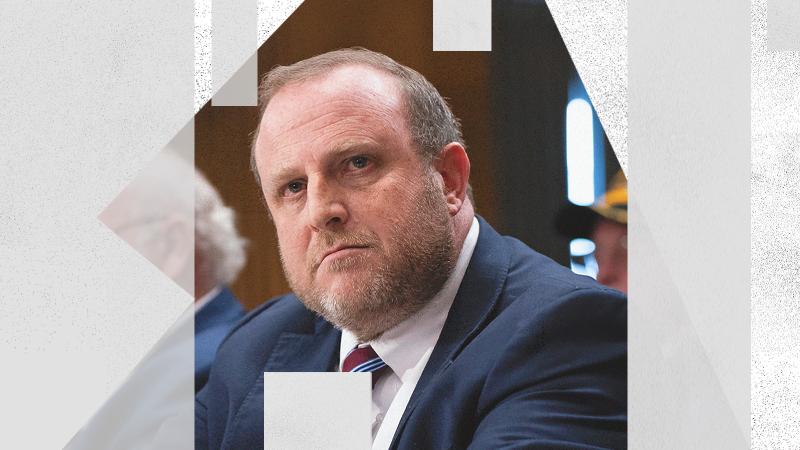
In February, the Democratic Senator Chris Murphy posed that question to Jeremy Carl, the Trump administration’s nominee for a top State Department job. It should have been a softball.
Carl has built his career on the claim that white identity is under threat. In his 2024 book, The Unprotected Class: How Anti-White Racism Is Tearing America Apart , Carl warns that “white Americans increasingly are second-class citizens in a country their ancestors founded.” A 53-year-old senior fellow at the Claremont Institute, he argues that anti-whiteness pervades the American mainstream and particularly elite institutions, which routinely pass over qualified white candidates in pursuit of diversity.
Yet during his confirmation hearing, Carl couldn’t give Murphy a coherent definition of the identity he seeks to protect. “You have made several statements about your worry regarding the erasure of white culture in America,” Murphy said. “Tell me the white values that you believe are being erased.” After some back-and-forth, Carl tried offering an example: “Scotch-Irish military culture.”
“You don’t speak about ethnic identity; you speak about white identity,” the senator countered. Carl eventually proposed some generalities. “The white church is very different than the Black church in terms of its tone and style, on average. Foodways could often be different.” Music too, he said.
Murphy started to laugh. “So our ability to access white churches or white food or white music is being erased?” he asked. “The majority common American culture that we had for some time,” Carl said, “has become much more balkanized. And I think that weakens us.”
[ Read: What Chris Murphy learned from the new right ]
Carl’s nomination failed, but his views are ascendant. For a group of rising figures on the right, white people have become the victims in the American story. Although this idea is hardly novel, its proponents wield more political and cultural influence today than they did at any point in the past half century. In April, I called Carl to better understand their vision. Now that DEI and anti-racism are in retreat, the white identitarians are moving on to a more ambitious goal. “Whites need to be able to organize,” Carl told me, “to assert their rights not to be discriminated against as a racial group.”
Whether or not Carl can define white identity, he belongs to a movement that seeks to turn white Americans into the largest identity group in the country—an aggrieved coalition demanding recognition, protection, and restitution.
For most of the post-civil-rights era, a tacit consensus discouraged white Americans from thinking of themselves as avatars of a racial demographic. Race mostly belonged to other people. Many white Americans commemorated certain aspects of their ethnic background—in the case of my Baby Boomer mother, the language of her German grandparents. But honoring whiteness itself was deemed impolite, to say the least. Given the advantages that whiteness often conferred, calling attention to it was like being a sore winner.
At the same time, American culture and politics encouraged so-called people of color to emphasize their differences from the country’s white mainstream. This began in the late 20th century and ramped up in the 21st. Certain elite industries, such as publishing and academia, treated non-whiteness as its own status symbol. Revelations of white women posing as minorities—including Elizabeth Warren, Rachel Dolezal, and Jessica “La Bombalera” Krug—showed the extent to which Native American, Black, and Latina identities had, in some contexts, become sources of comparative prestige.
By the 2010s, the most influential progressives no longer aspired to the color-blind ideal of Martin Luther King Jr., which deemphasized all racial categories. Instead, they embraced racial self-assertion.
Black, “Latinx,” and Indigenous Americans were united under the term BIPOC , symbolically reducing white people to a minority. A new definition of racism took hold, which incorporated not just prejudice but also structural power, practically guaranteeing that only white people could ever be considered racist. Certain groups, such as Asian Americans, straddled these boundaries; sometimes they were considered BIPOC when they were progressive, and “white-adjacent” when they weren’t. For some people on the left, whiteness had no real meaning other than serving as a vessel of inequality.
All racial identities were named and valorized, except one. This wasn’t the sole cause of the white backlash that ensued; racist politicians and media figures bear ample responsibility for that. Still, the rhetorical and ideological excesses of the left generated a sense of unfairness that has become central to the white-identitarian project.
Jonathan Keeperman, who founded the far-right Passage Press and posts online under the alias Lomez , told me that this age of heightened race-consciousness had a profound effect on many white Americans. “Suddenly Adam and Eve are aware they’re naked,” as he put it. “What do you do now?”
The modern-day white-persecution complex spilled into public view in August 2017, when far-right activists marched through Charlottesville, Virginia, bearing tiki torches and chanting “You will not replace us.” Since then, the “Great Replacement” theory has found ever larger audiences as it gets amplified by the likes of Tucker Carlson, Laura Ingraham, and Nick Fuentes.
Both at home and abroad, the second Trump administration has embraced the theory’s central premise: White people in multiethnic societies are endangered. This idea has found perhaps its most alarming expression in the government’s dehumanizing messaging around immigration . Meanwhile, the United States government has retooled its refugee program to prioritize Afrikaners, or white South Africans of predominately Dutch descent. And last year, Vice President Vance scolded his German hosts at the Munich Security Conference for isolating hard-right parties that organize around white nationalism. “There is no room for firewalls,” he said, drawing gasps. These are boom times for white identitarians.
[ Nick Miroff: America is the land of opportunity—for white South Africans ]
Carl, who was born to a Jewish family and later converted to Presbyterianism, says that he disavows white nationalists because he rejects the notion of racial hierarchy. (He calls himself a civic nationalist.) But he shares their position that too much racial diversity—or too much diversity of any kind—is harmful. The conventional liberal view that diversity is a strength, he told me, is “farcical.” As a counterexample, he cited his home state of Montana, which he says owes its high social trust to its homogeneity.
As with many on the right, Carl supports the mass deportation of undocumented immigrants and severe restrictions on legal immigration, which he believes will allow for better assimilation. “Many immigrants, explicitly or implicitly, have declared war on America’s historically European-centered identity,” he writes in The Unprotected Class . “Certainly, immigration has been pushed by the Left with the explicit goal of reducing the status of white Americans.”
“It’s not a coincidence,” he told me, that the “white-picket-fence American identity in the 1950s” came “after three decades of the tightest immigration controls we’ve ever had in the U.S.”
Carl and I were speaking two months after his exchange with Murphy, and I wondered whether he had used the intervening time to come up with a more coherent definition of white identity. First I asked him a simpler question: Which people are white? He answered with something of a tautology—“people who would legally check that box” on, say, a government form or college application. Then I gave him another shot at Murphy’s question: What is white identity? “It gets very tangled very quickly,” Carl replied.
Instead of insisting on his own answer, Carl deferred to Eric Kaufmann, a professor of politics at the University of Buckingham who has written extensively on the topic. So I called Kaufmann last month to talk it through with him. Shortly after Carl’s nomination hearing, Kaufmann had listed a set of “cultural practices”—rodeo, heavy metal, NASCAR, hiking—that are “predominantly but not exclusively enjoyed by whites” and have “come under pressure to diversify.” This “shaming of white preponderance,” he wrote, “reduces the white group’s distinctiveness and opportunities for in-group cohesion.” The core issue, Kaufmann told me, is what he calls “asymmetrical multiculturalism” —the idea that “ethnicity is valued for minority groups, and it’s denigrated for majorities.”
One doesn’t need to be a white man to see that this is true. Over two decades in and around universities, nonprofits, and the publishing industry, I have repeatedly served on selection committees in which jurists—in many cases white jurists—stated that a candidate’s racial, ethnic, or sexual claim to marginalization ought to be the deciding factor for a coveted position or prize.
“Today, the advantages white Americans have are mostly informal and evanescent cultural legacies,” as Carl writes in The Unprotected Class . “The discrimination they experience is also sometimes informal but is increasingly legal and formal.”
Consider a recent lawsuit filed against The New York Times . The Equal Employment Opportunity Commission brought the suit on behalf of a white, male applicant who, according to the federal agency, met the stated qualifications for the role of deputy real-estate editor but didn’t reach the final interview round. Among the four candidates who did, none was a white man, the EEOC says. According to the lawsuit, newsroom leaders ultimately selected a “multiracial female” candidate who “did not have experience with real estate journalism,” even though that was listed as a requirement for the position.
The lawsuit alleges that the paper’s diversity goals improperly influenced the hiring process: According to the EEOC, internal newsroom guidance stated that senior leaders would be judged by their ability to “create pathways” for “diverse” deputies to succeed them. (The Times has denied the allegations and maintained that its employment decisions are based on merit.) If the allegations prove to be true, the case would add to a large body of evidence that several elite industries really do discriminate against white people.
Carl has identified a genuine problem, but he hyperbolizes it, claiming that white Americans suffer more discrimination than any other racial group. Worse, his proposal for fixing it is dangerously counterproductive.
In Carl’s telling, America should be organized around equal citizenship, shared loyalty, and strict borders; an ethic of assimilation; and an adherence to color-blind laws and customs—not around the idea of race or ethnicity. That’s a compelling proposition. But to get there, Carl wants white Americans to embrace a race-consciousness of their own. “I think they can do this not just as whites, but with other sympathetic groups,” he told me, pointing to Asian Americans, whom he sees as similarly afflicted allies.
This project, in Carl’s mind, is roughly analogous to the civil-rights activism of the 20th century. “Martin Luther King wasn’t saying, We’re going to win the civil-rights revolution by pretending there’s no Black people ,” Carl said. “No, he organized Black people, and he did that with sympathetic whites, and built a coalition that was ultimately able to achieve his political goals.” But King, of course, was responding to the injustice of an era in which even the most basic civil rights were conditioned on race, when white was synonymous with free . The situation of white Americans today is incomparable, even if Carl has seemed to suggest otherwise .
Rather than simply push for a race-neutral application of the law, Carl thinks that white people can achieve a color-blind future only by pursuing zero-sum politics in the interim. “We’re not going to get the left to back off what I view as their very toxic racial politics by just saying, Hey, pretty please, be nice ,” he said. “We have to extract a measure of pain from the people who are engaged in this sort of anti-white politics.” Only then can “cooler heads prevail,” Carl said, and “maybe people can step back and say, What we really want to do is move beyond having this type of politics .”
[ Thomas Chatterton Williams: To see how America unraveled, go back five years ]
To consolidate white resentment, loose it on the country, and then expect it not only to disappear but also to enlighten the rest of us is absurd. Even some people who are sympathetic to Carl’s concerns see problems with his prescription. Justin Lee, a writer published by Passage Press and an associate editor at the conservative journal of religion First Things , told me that the white identitarians are mimicking the “woke” identity politics they ostensibly seek to counter, resurrecting the hyper-racialized politics of 2020, when the left was at the peak of its dominance.
The white identitarians’ ultimate goal seems to be the moral and institutional power that comes with victimhood status, which is now anyone’s prize in post-woke America. So-called heritage Americans would like their own “standpoint” to howl from. Whipping up racial consciousness to beget incessant complaint: This is the rule that Trump has campaigned and governed on, that Elon Musk has tapped into with his preposterous grumbling about “white genocide,” and that Vance has constructed most of his public persona around.
Even Carl seems to intuit just how unalluring this posture can be. As he writes in The Unprotected Class : “To bemoan discrimination against one’s group is simply, as that arch-symbol of wealthy conservative white privilege William F. Buckley Jr. would have said, infra dignitatem ”—“beneath one’s dignity.” Black intellectuals such as Ralph Ellison knew this, too, despite living at a time when the lynchings of Black people were still a regular feature of American life. If those with the strongest case to make against injustice could refuse the psychic consolations of victimhood, then there is something especially unbecoming in white Americans learning to speak the language of racial grievance.
White racial resentment is a predictable outgrowth of a cultural regime that has for decades insisted on racial categorization and affinity for everyone but white Americans. But the politics of white identity are a dead end. America’s WASP-derived mainstream culture was always exclusive. Nonetheless, as Lee notes, it managed to assimilate large swaths of new Americans when it did not announce or assert itself. Once white culture begins insisting on its presence, something has malfunctioned.
In a country that is becoming less white, any short-term victories notched by white identitarianism will be pyrrhic, just like the “wokeness” that preceded it—and that it continues to sustain by foregrounding race.
A movement is morally defensible not when victim and oppressor switch places but when it insists on a universal limit against abuse. That is when solidarity is feasible among all people of goodwill. The end of a color-blind détente doesn’t justify the means of deliberate racial strife.
“But what will justify the end?” Albert Camus asked, to which he replied: “the means.” This was King’s fundamental insight and the basis for his success. And it is the condition for any authentic postracialism rooted in common dignity.
Tags
Who is online
147 visitors
The modern white persecution complex dates back to the day Barack Obama won the Democratic party nomination for president in 2008.
See, Trump was correct as always, it was Obamas fault!
A question for all the white identifiers...
....assimilation? Do you want all the "other" cultures and ethnicity embracing your white bread and mayonaise "culture"? So Spanish people have to stop eating posole and menudo? Stop celebrating the Day of the Dead?
Please. Tell me what it is that you expect from people that are different from you?
They expect them to either go back from where they came from, or to stay in their own part of town like Little Korea or Chinatown. They want control and power to dictate what everyone can do, or say... which is they get to do and say and everyone else has to comply.
But I want them in the Main Stream! I don;t want to have to drive all the way to Chinatown to get some spicy noodles.*
*Disclaimer: I live in rural Arkansas. Immigrants are doing a pretty good job of assimilating here because there is no Chinatown, Spanish Harlem, etc. I have a really good Chinese restaurant down the road from where I live. We make our own Mexican food because my MIL taught me.
I can see this question attempting to be answered by those I chose not to interact with. And I mean they will give the most bigoted, racist, wrong headed opinions.
are those the people that aren't wearing pillow cases as head apparel or have burnt crosses in their back yards?
Those would be the ones
And what's really funny to me is that many expect people who come here to automatically adapt and assimilate yet when those same Americans go abroad they expect other countries to adapt to them. That's why, sadly, America is rated the WORST tourists in the entire world.
I've always wanted to go to France. I'm gonna charm them with my atrocious accent! But I will attempt to speak French because I don't expect them to cater to me.
I want to Mexico a few years back and tried out my 2 semesters of college Spanish. I was told they could speak English very well, thankuverymuch
Every one is a little black inside.
All of the humans who survived this latest round of evolution came out of Africa and populated the rest of the world. It's in our DNA.
Scientist Neil deGrasse Tyson on why white people refuse to admit they’re actually black