
No, Trump CAN'T Cancel or Terminate Pardons Issued by Joe Biden or Any Other President!

By: Glenn Kirschner


The PotUS is an idiot.
 S E E D E D C O N T E N T
Transcript (formatted by ChatGPT)
So friends, in Donald Trump's latest attempt to distract us from the Epstein files, from his murderous boat strikes, or maybe to just try to distract us from the fact that he can't stay awake in his own cabinet meetings, Trump just posted:
“Any and all documents, proclamations, executive orders, memorandums, or contracts signed by order of the now infamous and unauthorized autopen within the administration of Joseph R. Biden Jr. are hereby null, void, and of no further force or effect. Anyone receiving pardons, commutations, or any other legal document so signed, please be advised that said document has been fully and completely terminated and is of no legal effect. Thank you for your attention to this matter.”
Okay, friends. So, can a president revoke a pardon granted by a prior president? The answer is no. As I just discussed with my friend Kim Well, law professor, constitutional scholar, and author of an authoritative book on all things pardon related, Pardon Power: How the Pardon System Works and Why. So friends, it is painfully obvious this is nothing more than Donald Trump's latest attempt to distract. And no, we're not falling for it.
Because you know, justice matters.
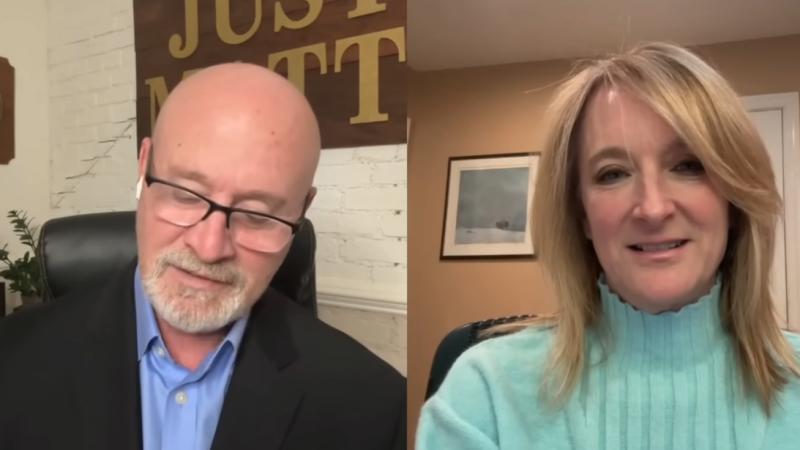
I hope you enjoy this extended conversation with pardon power expert Kim Whest, constitutional law professor at the Baltimore University School of Law, an ABC legal analyst. She's a former federal prosecutor. She's the author of a bunch of great books. I'm only going to highlight one because it involves a topic we're going to be discussing. It is The Pardon Power right here. I pulled it off my shelf. I've read it and I've referred back to it a number of times since reading it. Pardon Power: How the Pardon System Works and Why. There is no more timely a topic. Because, Kim—oh, first of all, welcome Kim.
Great. Thank you for jumping on with us.
Always a pleasure, Edwin. Thank you for having me.
Let me go right to the Reuters headline: Trump says he's terminating any Biden pardons signed with autopen. Okay, can I just throw it to you? Is there any argument in favor of being able to ever invalidate, terminate, cancel a pardon that was issued by a previous president? And then I guess we can add on the autopen twist to it.
No. No, no. And this is just silly talk. The silliness. I don't even know what else to say. Is this a big distraction maybe from, you know, the Venezuelan migrants and the question of war crimes and his low poll ratings? I mean, I just— to be clear, the Constitution doesn't require a signature for anything the president does. And Article Two, which sets forth the powers of the president in the Constitution including the pardon power, says he shall have the power to grant reprieves and pardons for offenses under the United States except in the case of impeachment. It says nothing in there about even a writing. So in theory a president could orally give a pardon. And then there's certainly been no case law or suggestion historically that pardons can be undone by future presidents, which would— and we can talk about it— would create a whole mess of problems.
Presidents do lots of stuff without signing things. You know, they're at the head of the massive executive branch apparatus. In theory, all of the power of an executive branch employee or a department head derives from Article Two presidential power. There's nothing in there about the Department of Justice. It's all trickle-down power. And so, it's just absurd.
And on top of that, Glenn, the Supreme Court in the Trump versus United States case in June of 2024, where the Court manufactured criminal immunity for presidents, it made it really clear two things. Number one, the pardon power is core, meaning it's almost untouchable, which is why we're seeing so many egregious abuses by Donald Trump of the pardon power since January. The second thing, as you know, the Supreme Court held is— at least when it comes to criminal prosecutions, for say a corrupt pardon, you can't look into a president's state of mind. At the end of the day, I think what he's saying about this autopen is that maybe Joe Biden didn't really mean it when he pardoned these people, that that makes it invalid. There's no technicality, there's no blue ink, there's no “you didn't fill out the form correctly” when it comes to pardons. It's an absurd argument. And I would say if a lawyer were to make that argument, they'd be pushing the lines, I think, of what is their oath. And it's possibly even sanctionable because I think it's so absurd.
But here we are. We're having this conversation because Donald Trump puts us in these Alice in Wonderland scenarios all the time.
And we're not talking about the imminent release of the Epstein files, are we? Maybe this is another distraction.
Could be.
So, let me touch some of the bases that you just covered. First of all, a pardon doesn't have to be— it could be doodled on the back of a Mar-a-Lago cocktail napkin and it could still be a valid presidential pardon.
Correct. Under the plain language of the Constitution, and there's literally no law that suggests otherwise. And it would create a cascade of problems. You know, presidents don't necessarily sign executive orders. They don't put their signature on executive orders. They're usually memos. I mean some— maybe they do— but the point is even that there's no legal, constitutional requirement that a hand-drawn signature by the president's hand has to be attached to it for it to have legal significance. It would be a tsunami of problems when it comes to historical presidential power.
And you said a pardon could be delivered by a president orally. Is that right?
I believe— I think that would be the argument. Yeah, for sure. Yeah.
So let me ask you this because during the first term I think we may have talked about the possibility of pocket pardons, meaning pardons that had never been publicly disclosed. Is there anything in the law or the Constitution that says a pardon must be published, must be disclosed publicly in order to have legal effect?
It does say— there's case law. There's nothing in the Constitution. There's case law that suggests that the pardon is invalid if it's not actually accepted.
Mhm.
So if it's not— if nobody knows about it, they can't really accept it. I guess if it's a pocket pardon just stuck in a drawer someplace. And I would argue too that, you know, for future courts to be bound by a pardon, there has to be some record of it. But as you know, Glenn, the question for lawyers and as a practical matter is: how would this even come up? Right? Why— how could this possibly be a problem?
Imagine Hunter Biden. He was pardoned. We know Donald Trump likes vindictive prosecutions. He promised to do them. He's doing them. Say he then decides to go after Hunter Biden and he indicts him anyway. He gets somebody to indict him— Hunter B— for the conduct that's covered by Joe Biden's pardon. Hunter Biden would come forward and say, “Listen, I have a pardon,” moving to dismiss the indictment. Then Donald Trump would say, “No, I revoked that pardon.”
That is the only time this would ever be anything other than something for people to talk about as an outrage of Donald Trump.
And let me say one other thing, Glenn. I didn't see any signature in his Truth Social revoking pardons.
So I mean, if he says he's Mr. Signature, then he should take his own medicine at a minimum and do his pardon revocation by virtue of some kind of document signed. I mean, I'm just saying that as a matter of argument— which all leads to the same point that we made at the top. This is a distraction. This is to get people worked up. In addition, I think it's also just one more piece of his argument or his psychological normalizing of him as a king. That, you know, he's not only able to violate all these parts of the Constitution with impunity, he not only has the United States Congress in his back pocket, he dodged indictments, but he can actually in a Truth Social post invalidate the actions of prior presidents. I think it's— it's kind of, you know, it's a subtle message also probably playing to his narcissism. I'm no psychologist, but other medical professionals have suggested he has some disorder in that regard.
I think it's more that than a real problem as a matter of law. I don't know that a judge would buy that argument and revoke Joe Biden's pardons.
And I want to ask you about the sort of kingly nature of this, how he wants to reign over us rather than govern, in a second. But am I correct that the Office of Legal Counsel— that is the office in the Department of Justice for our viewers that issues legal opinions— I believe they issued an opinion at one point saying a president can sign any number of things, perhaps even legislation, with an autopen as long as the president is authorizing his signature to be placed on something. Is that right?
You know, I don't have that at my fingertips, but certainly Barack Obama signed things by autopen, other presidents, and I would bet Donald Trump has probably done it as well in his first term. Of course, you know, consistency isn't one of his virtues.
So let me talk about the kingly nature of pardons generally. And you lay all of the history of it out beautifully in your book Pardon Power. And I've told people before, you know, this is not some dense historical survey of the pardon power. It reads like damn crime fiction. It's a really compelling read for anybody who wants to both be informed and entertained.
But do you think we may have come to a place where the pardon power— we should consider doing away with it entirely? And then we can get to the piece with respect to whether there's any safeguards that would pass constitutional muster that we could put in place to avoid what we're experiencing right now with these horrific pardons.
Listen, you know, this book came out last— I guess September, a year ago, and we're so beyond what the concerns were at the time of the book. I mean, the book was after— I mean it was published after the immunity case. And the argument that was a concern back then that you and I talked about was that a president can now commit crimes and then just pardon everybody. And so then you've got a crime ring inside the White House.
Now he's just— it looks like there's evidence that there might even be quid pro quo for pardons. I mean, one person gave a million dollars and two weeks later her son was pardoned. She was at a Mar-a-Lago benefit. We saw Friday, the same day that these two individuals were killed in a double strike— clinging to the wreckage of a ruined boat that the Trump administration attacked— we see him pardoning the former president of Honduras who was convicted under federal law and sentenced to multiple decades in prison for narcotics trafficking into the United States. He was extradited from Honduras.
So this is— you know, the pardon— to answer your original question, Glenn, I argued in the book, there’s no place for the pardon anymore. I mean, the pardon is supposed to be about mercy. It's supposed to address the cracks in the system. It's for people that somehow otherwise don't get justice for whatever reason, and the legal system doesn't have a mechanism for redress. I mean the Supreme Court has even suggested that errors in death penalty cases can be addressed by a pardon.
We are not seeing the pardon used for that purpose. The pardon is being used right now as a little plaything for Donald Trump. And so yes, it absolutely needs reform. You know, I think we've— I would say, you know, when Bill Clinton pardoned Marc Rich, there was a lot of consideration about that and concern. He later published an op-ed regretting it. And if you recall, Glenn, the United States Congress investigated that pardon, and the Southern District of New York investigated that pardon.
So just a few presidents ago, we were in a world where it was understood there was oversight of pardons. Now that we're seeing it so blatantly abused for corrupt purposes and just certainly not in ways that make the American public safe— let's talk about the January 6 pardons— they absolutely need reform.
Now, what would be constitutional short of an amendment? You know, I argue in the book that there could be bans on lobbying for pardons, which— there isn't anything clear in the law, and there would have to be an enforcement mechanism for that. There could be Congress mandating there be a record of pardons. Right now you— you know, we don't know why a president issues a pardon or doesn't if it doesn't go through the Department of Justice and that gets bypassed. The Justice Department has traditionally withheld records on pardons under the Freedom of Information Act saying this is deliberative privilege on the part of the president.
So, you know, Congress could do that. But that again was almost in a pre-Trump-2 world where outrages, legal transgressions, ethical transgressions, scandals out of the White House actually stirred the public and stirred the media to produce some kind of pushback. So I don't even know if those reforms that I suggested in the book hold anymore for someone like Donald Trump who just does the stuff out loud and people are kind of caught off guard. What do we do?
Now, as I've said many times in these conversations with you, Glenn, it's less— when it comes to Donald Trump, the question is less about what does the law allow and more about when the law is violated, is there anything anyone's going to do about it? If there are no consequences for it, then we're really in a pickle. And I think that's where we've been for quite a while.
You know, more federal laws— I always— I am never far from my big ugly blue book of federal laws, the United States Code. We have so many. We have tens of thousands of laws and more laws on the books I don't think is necessarily the answer because it requires people of good will, and honor, and ethics, and judgment to enforce these laws. When you have no enforcement mechanism, I don't know. I don't think we should necessarily be reacting to everything Donald Trump does by trying to change the law, change the Constitution, because it all boils down to making sure we elect the right people, people of honor and integrity, to govern.
But I fear that short of a constitutional amendment— just revoking the pardon power, writing it out of the Constitution altogether— it's beginning to feel like it would be impossible to constrain it if we ever have a recurrence of somebody like Donald Trump in power.
Yeah, I agree with you. I mean, Congress could also create an agency, a pardon agency, that had maybe a commission that had people from various parts of walks of life that would weigh in on these. But again, to your point, the pardon power has been so expansively interpreted. I argue in the book that that's a misinterpretation— that the pardon power’s no more special than other powers of any of the three branches. And we have constraints on Congress's authority, constraints on president's authority to execute the laws, constraints on the military even though he's commander-in-chief.
Why somehow the pardon power is elevated above the other checks and balances in the Constitution makes no sense to me. But you put your finger on it. All of this comes down to electing people with integrity. And not just the president. I mean, what's the problem right now? The framers thought the Congress was the most dangerous branch because it lists multiple powers. It goes on— I think 16 articles or something— maybe it's 18— in Article One, subsections of the amount of power that Congress has.
What do we need now? We need the United States Congress to actually check this president. And one party is completely checked out. So people ask me all the time where they're complicit. What do we need? We need to literally replace the current Congress— every single person in the United States Congress that's complicit with the suspension of the Constitution and the corruption in the highest office that we're witnessing— every single one of those people needs to be fired.
And that's the way the democracy is supposed to work. I mean, the ballot box is the pink slip. We are the bosses of these people. In theory, we get to come in and say, “You know what? Sorry. You're fired today. I'm going to replace someone else because you're stealing from the cash register, or you're rude to the customers, you're not trustworthy, you show up late all the time, you spend money in ways that we can't account for.” And the intermediary between us and the president under the Constitution is the United States Congress. And they get to kind of sit back and everyone's saying, “Oh gosh, what do we do now? Oh, this is weird. Donald Trump's at it again.”
Yeah. What are you going to do about it? That's the question.
Yeah. Amen. It's up to us. Which kind of takes us to the midterms, doesn't it? So let me— let's finish up with this, Kim. Let me throw a curveball at you. I think today he pardoned Henry Cuellar, right? A Democrat representative who was indicted for, what, some $600,000 in fraud if I'm not mistaken. What's your gut reaction to him pardoning a Democrat?
You know, I think at this point Donald Trump isn't really Democrat versus Republican. And we don't necessarily know what the backstory is. I mean, Jared Kushner was the person in the first Trump administration that vetted the pardons. We know there's a big lobbying industry in Washington where, you know, if you want to get out of jail and bypass the entire system of justice that's set up by the U.S. Code that you just picked up as well as the judiciary and the prosecutorial arm, you better have money and influence and access.
And I think Donald Trump seems to be doing things based on either what feels good in the interim or what's good for him. And then he says later, “Oh, I knew nothing about that,” like, you know, the big crypto billionaire that he pardoned who has ties to his own companies. When there was pushback on that, he goes, “I didn't know about that.” Well, to me, that would be a revocable pardon, wouldn't it, to you Glenn? If he didn't even know about it.
I mean, he's picking on Joe Biden, but he's now disavowing pardons as if someone else did it. And he said he had no idea. So, it's a great question. But if we're going to get through this, I think we have to— all of us— get out of the red versus blue mindset, which I know you as a prosecutor, career prosecutor, you didn't care about red versus blue. And get back into the concept of we the people, and what does this country stand for? What are the ideals? What are we teaching our children? And how do we want them to live in the world? Those are the kinds of people that we need to put in government. Period.
And here's the last, last question. And I fear I know the answer. Given the breadth of the pardon power and the implications of Trump versus United States, the presidential immunity ruling, do you think that if there was rock-solid evidence— audio tape, you know, recording of a president— I'm going hypothetical here— saying, “I will pardon you for $1 billion,” and you see the exchange of cash, or a president saying, “Listen, you know, you have committed crimes at my direction as part of my conspiracy. I am now pardoning you.” And there was a challenge by way of a prosecution that was brought by a law-abiding constitutional allegiant Department of Justice presenting that evidence. Courts would actually be left to rule—
Sorry—
And the defendant’s the president, the former president.
Yeah. Sorry.
I think under Trump versus the United States, yes. You know, I mean, there was a kind of a debate in the case between Chief Justice Roberts and Amy Coney Barrett, where Amy Coney Barrett took issue with this idea that you can't even produce evidence of intent, right? So, you know— I mean, there's usually in criminal cases, this mens rea— you have to show evidence of intent. And so there at least seems to be some space in which the justices maybe left a crack of a crack to imagine that— you know, Justice Roberts said in response in this footnote duel, “Well, some stuff will be public, so we won't actually have to put him in a deposition or do discovery or ask his closest aides what he thought if it's already out in public.” So in theory, maybe.
On the other hand, the Court made it really clear the exercise of “core powers” is above the criminal laws. And the pardon power is a core power. So I think it's a very strong argument— and the Justice Department did not push back at this during oral argument— I think there's a strong argument pardons are beyond the pale under this Supreme Court.
And we talked about needing a new Congress. I think we need a new majority on the United States Supreme Court. That's another conversation. They've been reversing stuff willy-nilly. A different Court maybe in our lifetime should— and I think if justices do the right thing— would reverse or at least tinker with Trump versus U.S. Let's hope.
And the pardon power, frankly.
Yeah, let's hope, because I just can't accept— I can't accept that courts would say those two hypotheticals that I just described, those are core constitutional functions or official presidential acts that enjoy a presumption of— I just, I can't accept that. I— you know, I've read Trump versus United States forwards and backwards. I just— I can't accept that. And I hope that we have a DOJ that is willing to push barriers and try to challenge corruptly delivered pardons. You know, win, lose, or draw.
Yeah. I think we need a DOJ kind of like the Nuremberg trials after the Second World War and what happened with the Nazis and the Holocaust. We have to have a Department of Justice that has the support of the American people, right? Where we the people say we want accountability. We want a rule of law again. We are a lawless presidency right now. It is lawless. We've got to put it back. And so people need to be put in the position to— we need to make those decisions and to hire people frankly like you Glenn, who I know in that position down the line wouldn't spare a moment in making— not even making new law— putting the law back where it was after there was a Revolutionary War fought to kick out King George III and say, “Listen, you're not the boss of us anymore. We don't want a king. No more kings.” You don't need to be a constitutional law professor. You don't need to be a prosecutor. You don't need to be a lawyer.
We are operating with a lawless presidency. The king had sovereign immunity in common-law England, meaning his power came from the divine. He was immune as sovereign from any accountability. That was the theory of the divine right of kings. That's what a revolution was fought against. And in 1787 in Philadelphia over a hot summer, the Constitution was born, and it was revolutionary on the planet. It wasn't about kings and subjects. It was We the People. We the People, in order to form a more perfect union, establish justice, ensure domestic tranquility, provide for the common defense, promote the general welfare, and secure the blessings of liberty to ourselves and our posterity. That is who we are.
What element of that, Glenn, are we seeing out of this government right now?
No, it feels like courtesy of what I believe to be an illegitimate majority of Supreme Court justices, it feels like we have been returned to the time of kings. And Kim, it's— as always— it's left up to us. It's always been up to us. It will always be up to us, we the people, to tackle this and to overcome it. And I still believe we will.
So thank you for jumping on. Thank you for inspiring and energizing. I always feel energized after I hear you talk about these issues. And I'm sure we'll be jumping on again in the very near future.
For sure. More pardons to come, I'm sure. Thanks for having us. Thank you everybody. I'll see you all later. Bye.

Tags
Who is online

130 visitors
This embarrassment of a PotUS is now trying (stupidly) to nullify Biden pardons.
Who could support this nutcase?
But your banana republic SCotUS has declared him to be ABOVE THE LAW, so why not?
Steven Seagull is now pissed
Guess he prefers vodka.
AI from Google - "Can a president void executive orders"
The topic is pardons, not EOs.
Most people are quite aware that presidents have nullified EOs issued by prior presidents; it is a common occurrence.
Ask this question instead: "Can a PotUS nullify a pardon made by a prior PotUS?"
Also, again, when quoting AI the site rules are to treat it as any other source and quote it to distinguish from your personal content.
For example: asking ChatGPT "Can a PotUS nullify a former PotUS' pardon?" yields this:
AKA Bribery. Bribery is specifically mentioned as an impeachable offense in the Constitution. So, at minimum, we may have valid grounds for that remedy.
But additionally, because it is explicitly defined this way in the Constitution, this strikes me as being outside Article II authority, and thus the President could be criminally prosecuted for it, even though the pardon power is also explicitly in the Constitution. I would argue that any exercise of presidential authority pursuant to a bribe would prosecutable.
But you can if you're King.