
Massachusetts COVID-19 Vaccine: Why Seniors Are Sidelined By Young Researchers : NPR

By: NPR. org

 S E E D E D C O N T E N T
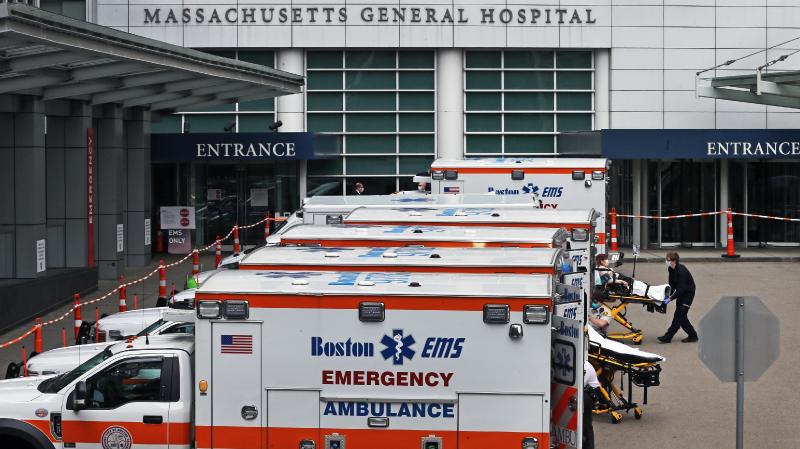
A Boston EMS ambulance crew wheels in a patient to MGH from their ambulance in Boston on April 8, 2020. Hospitals brace for a surge in patients.
Boston Globe/Boston Globe via Getty Images
In Massachusetts, many young, healthy medical researchers are rolling up their sleeves to get the COVID-19 vaccine. Meanwhile, at-risk elderly are waiting on the sidelines. According to the state's phased vaccine rollout, seniors are not yet eligible for the shots but everyone employed by a hospital, including those working remotely, can get it.
This situation has infuriated many elderlyadults. Carol Halberstadt, 82, is one of them.
She has been alone in her apartment just outside Boston since the beginning of the pandemic. Nobody comes in. Nobody goes out.
"I have become more and more despairing and lonely," she says on a phone interview.
Halberstadt has a long list of complex medical conditions. The most urgent one is her failing eyesight. She's in desperate need of eye surgery, but in order to be in a hospital safely, she says she needs to be vaccinated.
"A vaccine would change my life. It would give me a future," she says.
For weeks, she has been trying frantically to get the vaccine, contacting doctors, politicians and anyone else she thinks might help, but to no avail.
Halberstadt says she has watched with jealously as seniors in other states have become eligible for the vaccine. She has studied the Centers for Disease Control and Prevention's data, finding Massachusetts is in the bottom half of states in per capita vaccinations.
But perhaps most baffling is seeing healthy, young people get inoculated before the elderly, the sick, and the at-risk.
"We're seeing just a huge number of people get vaccinated, who I think should, frankly, be way down the line," says Michael Mina, a professor at Harvard's School of Public Health. "These are people who have nothing to do at all with COVID or with patient care or really with the hospitals."
Mina explains these people are able to get vaccinated simply because they happen to be employed by a hospital.
This situation in which young adults are getting vaccinated before older adults is partly because Massachusetts is a medical hub with giant hospitals and an enormous healthcare workforce. It also stems from decisions made at the federal, state and individual levels.
First, federal distribution
The federal government is allocating vaccines to states roughly based on their total population. Yet, at the same time, the federal government is suggesting states prioritize specific groups, such as frontline healthcare workers and older adults.
The result is that, if states follow the federal guidance, they will progress through the vaccination prioritization groups at different rates. Places with older populations, such as Maine, will take longer to get vaccines to the general public compared to states with a younger overall population, such as Utah.
Because Massachusetts has so many large hospitals and medical centers, the state has a lot of health care professionals. These workers are in line to get the shots before almost everyone else.
"It effectively means that the elderly and vulnerable people who might need the vaccine first will, generally, be pushed back," Mina says.
Second, state and hospital decisions
Hospitals and medicals centers have played a major role in helping Massachusetts distribute vaccines. In the state's first priority group - known as Phase One - the shots have been given to healthcare workers and others including first responders, residents of long-term care facilities and those in shelters and correctional institutions.
The state - and the hospitals to which they've distributed the doses - have decided that the "healthcare workers" category should include all hospital employees and not just those working directly with patients.
This means hospital administrators working remotely, recent college graduates working in research labs affiliated with a hospital, those working in human resources and many others are getting the vaccine in the first group. This puts them ahead of seniors and those with medical conditions that put them at higher risk of having a severe case of COVID-19.
This is particularly relevant in Massachusetts because medical researchers and hospital managers make up a larger chunk of the workforce in Massachusetts than in any other state.
Dr. Paul Biddinger is chair of the state's Vaccine Advisory Group and he is overseeing the rollout at Mass General Brigham, a hospital system employing at least 74,000 people.(Biddinger says it's actually about 81,000.) He says they offered vaccines to all their employees because during the first surge they needed to redeploy their staff, including bring in some of those working from home.
"[We] had researchers and administrators and others in the Intensive Care Unit listening for the alarms of ventilators because the federal surge ventilators that we had wouldn't plug into our alarm systems," Biddinger says.
Dr. Andrew Karson, the chief medical officer at UMass Memorial Health Care, says Massachusetts Gov. Charlie Baker told hospitals to vaccinate all employees because they are critical to ensuring smooth hospital operations.
"Without our Human Resource administrators, our finance administrators, our facilities, maintenance, construction personnel, we would not be able to serve the very ill patients that we're caring for at our medical center,"Karson says.
And, Karson says, with vaccines on hand, they didn't want to delay getting them into people's arms as they waited for guidance from the state on who would be inoculated next.
Third, individual responsibility
Some medical centers in Massachusetts have struggled with hospital employees making vaccine appointments but then missing them. The result is a last-minute scramble to try to find someone - anyone who is eligible - to take the prepared doses before they expire and need to be thrown away.
The Dana-Farber Cancer Institute sent out a mass email on Jan. 20. It started: "We have had far too many researchers not show up for COVID-19 vaccinations over the past week."
The email urged the researchers to, at a minimum, take the time to cancel the appointment if they are not going to show up, so that the doses are not readied and, ultimately, wasted.
These issues alone do not explain why Massachusetts has lagged behind many other states in per capita vaccinations. The rollout has struggled with technical glitches and communication missteps, among other things.
State officials have also acknowledged that hundreds of thousands of doses have been sitting unused in hospital and pharmacy freezers, prompting them to temporarily stop sending more vaccines to these locations.
At a press conference on Monday, Gov. Baker announced that persons 75 years of age and older will be eligible for vaccinations starting on Feb. 1. He says he's hoping they'll have enough vaccines to meet all the pent-up demand.

Tags
Who is online

109 visitors
Right from the beginning, no distinction was made between frontline doctors & nurses and literally everyone associated in any way with the health care industry. This is the result of the elites picking who gets priority. As for our disgusting, cowardly professional class, they are still a national disgrace.
There are many roles in the healthcare industry, especially in patient care areas. It's not just limited to doctors and nurses.
Front line doctors, nurses, therapists, and some lab staff come in close contact with Coviid patients.
That staff then potentially comes in contact with various other employees, all over the hospital, including clerks and the food service workers.
They all should have shots.
Reports are emerging that vaccination doesn't prevent infection. What the vaccines do is lessen the severity of the COVID disease.
Vaccination is not going to eliminate the need to social distance, avoid gatherings, wear masks, wash hands, and sanitize surfaces. The emerging information indicates the vaccines will reduce hospitalization but won't end spread of the virus. People are still going to get sick but will be less likely to need hospitalization.
If you are first in line for the vaccine you will still need to continue doing what the guidelines require. From emerging information, the only thing the vaccine provides is a lower risk of needing hospitalization. It is beginning to appear that the vaccines are not going to prevent infection or prevent getting sick; the vaccines only reduce the severity of the illness.
Anyone who thinks vaccines prevents infection does not understand how vaccines work.
Either that or elicit a sufficient immune response before illness can occur, or otherwise limit illness.
Those are methods of infection prevention. The proverbial first line defense.
Vaccines will help eliminate a Covid infection quicker, reduce the length of illness or severity of symptoms.
Even if one is last in line too.
Who said vaccines will prevent infection?
Who has informed the public that vaccines won't prevent infection and continued spread of the virus?
How does that affect the risk for those who cannot be vaccinated? Will people who have been vaccinated still need to quarantine if they test positive? How does that affect returning to normal? What does that suggest about the value of testing for infection?
All the hype spread around about vaccination has created public expectations. Are those expectations realistic?
How will Joe Biden respond to continued spread of the virus as vaccination proceeds?
You tell me.
Those who are unvaccinated are at higher risk, naturally. Of course, the risk is also mitigated if herd immunity is reached.
More likely they should quarantine if the develop symptoms.
Testing for infection is a good thing. That's how we detect the virus and take measures to contain the spread. This is all common sense.
What hype?
Ask him. I suspect the response will be largely the same as it is now. Although, as vaccinations proceed, the spread of the virus should diminish.
last on the list should be pandemic deniers, anti-maskers, anti-vaccine idiots, election result deniers, 1/6/21 insurrectionists, fringe evangelical cults, and right wing militia members ...
Exactly. They should go to the back of the line.
I don't think I have a problem with basically vaccinating everyone at the hospital first. Anyone who works there could come in contact with a patient and spread the virus, from the guy who parks cars to the guy who mops the floors. They aren't medical people, but they can spread the virus as easily as any nurse or doctor. Janitorial staff and people who stock supplies move through every part of a hospital. It makes sense to vaccinate them as soon as possible.
I agree. I would add, let people that work in places like grocery stores and working with essential items get them next.
The forgotten front line workers.
Yes.
And emergency and law enforcement personnel.
I think hospital administration, who in many cases could likely work from home, should be lower on the vaccination list. I don't have a problem with housekeeping staff being considered front line. But for those who don't see or even pass by a patient room, whose offices are in a non-clinical part of the hospital, and who could do their work in their home offices or at their kitchen tables - they aren't at nearly the same risk as doctors, nurses, respiratory therapists, orderlies, and clerical workers who actually face the public.
They appear to have a decent dashboard and website.
I guess I just don't understand the complaints about the Republican Administration in MA.
The MA website was dysfunctional until very recently when it was drastically improved. Evidently it was easy to take care of professionals. Those over 75 were pushed back into the second phase which began TODAY.
Charlie Baker, like all recent MA Republican Governors is a RINO.
Whoever runs against him will have my vote.
If anyone thinks I only pick on certain states - this is my home state that took such a cavalier attitude towards the most vulnerable.