
The Lesson from Easter for the World Today

By: Jentezen Franklin
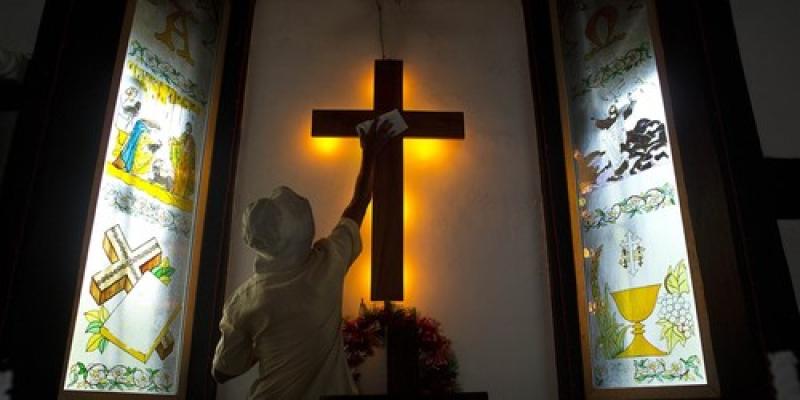


Today is simply the greatest day of the year. It is also the day we celebrate the most important of the Christian holidays, Easter. The world is a dark place. It is beset by so many problems. They seem to overwhelm many of us, particularly the pandemic ad it’s causing the loss of life, family members, income, jobs, lockdowns and government overreach. Definitely a Friday moment. Sunday’s coming though.
 S E E D E D C O N T E N T
Source: AP Photo/ Anupam Nath, File
Flowers are springing up, birds are singing, and all around us, we sense that we’re finally crawling out of the gloom of the deadly global pandemic. We have lost loved ones, income, businesses, and education. What seems certain is that we will never truly recover.
But is it actually certain? Or is that just today’s headline, and there’s more to the story?
The power of Easter is the power of resurrection. Resurrection means the triumph of life over death. Because of the miracle of Easter, we have a promise, and the power, of resurrection life.
No headline was gloomier 2000 years ago than news of Jesus’s death. Crying in agony, Jesus's followers were inconsolable. With their own eyes they saw their leader splayed naked on a cross, beaten and bloody, gasping for air as his body died.
On a Friday, Jesus’s body was laid in a tomb and a stone rolled across the mouth of it. News spread. “Certain, undeniable death.” Hell celebrated. Jesus’s followers mourned.
On Friday, bad news blanketed the city. No one could see that Sunday was coming.
As a nation, we’ve lived through the horror of Friday. We’ve lived through the long, gloom of Saturday. But Sunday is coming. On Easter, we celebrate the power of that miraculous resurrection, and what it means for the world today.
The story of Easter from the Book of Luke, Chapter 24, tells us that three days after Jesus’s death, a mighty angel rolled the stone away from the tomb and Christ stepped out, roaring with resurrection power.
Today, the message is clear. Jesus is alive. He humiliated Hell, he overpowered the grave, and he caused evil to bow its knee. He took your transgressions and pronounced you forgiven.
When all of Hell was laughing, and all of Heaven was weeping, the news changed. Jesus was not dead. He was alive. The tomb is the wrong message and an incomplete headline.
No matter how you read the news, or what future you imagine, understand one thing: Sunday is coming. And that same resurrection power is available for you and me today.
You and your family have lived through Friday’s news. But Sunday is coming.
At Easter, we don't just celebrate one resurrection from 2000 years ago. We celebrate a resurrection that happens today for all who put their trust in God. We celebrate a resurrection of your relationships, your children’s future, your business, and your hope for a better tomorrow. The resurrection of Jesus is a message that hope is never out of reach for you and your family. God can take any tragedy and turn it into victory, as he did for his Son.
In 1851, France invaded England. The Duke of Wellington led English troops to stop Napoleon at Waterloo. Signalers relayed messages across mountain tops from the battlefield to London. Thousands gathered awaiting the results. The signal receiver in London began to paint the message on a wall: “Wellington defeated.” Just then, the fog rolled in, concealing the message. People’s hearts sank. Their nation was overrun. But as the fog lifted, two more words became clear: “Wellington defeated the enemy.”
The crowd had read Friday headlines. But Sunday was coming.
At Christmas we don’t simply say, “that’s nice about the baby.” There’s more to the story.
Seeing a cross, we don’t simply say, “that’s nice that Jesus died for our sins.” There’s more to the story.
God’s story isn’t over; and that means your story isn’t over either.
Easter is a reminder that there’s more to your story than today’s headlines. It might feel like a stormy Friday, but that isn’t the end of the story. Sunday is coming.
 Article is LOCKED by moderator [Perrie Halpern R.A.]
If it wasn’t for the pagan influences that have carried through the centuries, the Christian part would have been forgotten long ago. Easter is 99% about spring growth and baskets full of candy.
Have you ever wondered how this seemingly bizarre tradition came to be?
Well, it turns out Easter actually began as a pagan festival celebrating spring in the Northern Hemisphere, long before the advent of Christianity.
"Since pre-historic times, people have celebrated the equinoxes and the solstices as sacred times," University of Sydney Professor Carole Cusack said.
"The spring equinox is a day where the amount of dark and the amount of daylight is exactly identical, so you can tell that you're emerging from winter because the daylight and the dark have come back into balance.
"People mapped their whole life according to the patterns of nature."
Easter takes its name from a pagan goddess from Anglo-Saxon England who was described in a book by the eighth-century English monk Bede.
"Eostre was a goddess of spring or renewal and that's why her feast is attached to the vernal equinox," Professor Cusack said.
You stick to your myths, I'll stick to history.
And I'll stick to actual facts.
Which facts?
I don't know how I missed this, but this article is proselytizing and so is closed as per the CoC.