
CHRISTMAS Garage Sale





Vote fraud in swing-state Pennsylvania
There’s a Way Biden Can Raise More From the Rich Without Higher Taxes
How Community Land Trusts can advance racial equality in our cities
Plant of the Month: Venus Flytrap
Black man, 71, held naked and at gunpoint by police in South Carolina
Trump White House staffers receive conflicting messages about their departure
The Trump Administration Keeps Awarding Border Wall Contracts but Doesn’t Own the Land to Build On
Archaeologists Find Evidence That a Massive Tsunami Hit Ancient Levantine Coast
‘Loathsome, Disgusting Crimes’: A Look Back At What Jared Kushner’s Dad Actually Did
Trump Golfing Again Despite Trump-Induced Legislative Mess

December 24th, 2020
Vote fraud in swing-state Pennsylvania
Ed Simon writes about our swinging swing-state, the Commonwealth of Pennsylvania . (That’s via John Fea who, like me, lives and works in the space “between Paoli and Penn Hills.”)
Since Election Day, the Republican Party has been trying to disenfranchise Ed and John and I, as well as every other voter here in Pennsylvania, insisting that our state’s citizens should not be allowed to vote since we have the audacity of including the votes of non-white citizens in our totals. This is what they refer to as “voter fraud.” Counting the votes of black and brown citizens as legitimate is, in the estimation of the one-term president and a majority of Republicans in the House, “fraudulent.”
That’s not what the law says. And it’s not what the Constitution says. And so far the courts — including partisan Republican judges appointed by Donald Trump — have overwhelmingly upheld the law and the Constitution, rejecting this explicitly racist attempt to redefine “voter fraud.”
Apart from the naked criminality and exuberant racism, another reason Trump’s conspiracy-minded legal team has lost more than 50 court cases is their failure to introduce evidence of electoral fraud — any evidence, at all — in any of their cases. This has been due to the fact that they haven’t got any and haven’t been able to find any despite looking very hard for many weeks now.
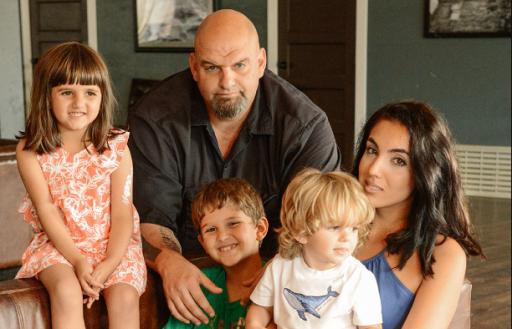
Fetterman — a refreshingly impolitic politician — says Patrick owes him $3 million because he has produced proof of three separate instances of voter fraud, all from right here in Pennsylvania. He’s made each of these instances famous on Twitter as “Returns in Sunglasses,” “Bartman!” and “My Dude in Forty Fort.”
These all really happened, mind you, and all three cases have several things in common: 1) None of them succeeded in changing the outcomes of any election; 2) They were all hilariously inept and the perpetrators are all now facing criminal charges; and 3) They were all attempts to cast illegal votes in support of Donald Trump.
“Bartman!” is Bruce Bartman, 70, of Delco , who registered both his deceased mother and his deceased mother-in-law to vote before requesting absentee ballots in their names and attempting to cast those ballots for Trump. Bartman now faces two counts of perjury.
“My Dude in Forty Fort” is Robert Lynn, 67, of Luzerne County (yes, Forty Fort is the name of a town there), who tried to pull the same trick using his dead mother’s name. As Fetterman notes, Trump collected 100% of the Dead Mom Vote here in Pa. Lynn’s attempt was even clumsier than Bartman’s and he now faces charges of forgery and interfering with an election, which could mean up to 10 years in prison.
As for “Returns in Sunglasses,” that devious criminal mastermind and registered Republican was from right here in Chester County :
Police on Monday filed criminal charges against Ralph Holloway Thurman for allegedly attempting to vote as another person — his own son — before being discovered by an alert poll worker who recognized him as having voted a short time earlier.
Thurman … was charged with four criminal counts, including forgery, identity theft, forging or destroying ballots, all misdemeanors, and repeat voting at elections, a third-degree felony.
… [Officer William] Viebahn was called at about 10:45 a.m. on Election Day and told that there had been a subject identified as Thurman making false statements and attempting to vote twice.
Viebahn said that Thurman came to the South-1 precinct polling place at the Sugartown Elementary School earlier that day and asked whether he had to produce an identification card to vote. He was told that he did not, and only had to sign the voter registration log so long as he was not a first-time voter. Thurman then allegedly asked whether he could vote for his son, Kyle Thurman, but was told by poll worker Eric Frank that doing so would be illegal.
Thurman signed the register, was given a ballot, voted, and left the polling place, according to the complaint.
However, about 45 minutes later, Thurman reportedly returned to the precinct, this time wearing sunglasses, and identified himself as his son. He again signed the voter log, was given a ballot, and proceeded to vote, Viebahn wrote.
But Frank recognized Thurman as having been the man who had voted earlier and alerted the Judge of Election, his father, David Frank. When David Frank attempted to speak with him, Thurman “hurriedly fled the building,” the complaint states.
So far, Texas Lt. Gov. Patrick has failed to acknowledge Fetterman’s repeated attempts to claim his reward for bringing this evidence of voter fraud to Patrick’s attention. Fetterman has graciously offered to accept the reward in Sheetz and Wawa gifts cards (a major concession for the Sheetz-loving Western Pa. lieutenant governor). He has also hinted he might be willing to forgo any financial reward in exchange for Patrick acknowledging publicly and on the record that “the Cowboys really really really blow.” But to no avail.
It seems Patrick’s offer of a reward was as dishonest as his claims of electoral fraud.
Meanwhile, something strange has been happening on Fox News and its even more rabidly right-wing competitors NewsMax and OAN. They’ve been airing repeated “fact checks” and disclaimers “clarifying” their earlier reporting on the voting machines used in states won by President-elect Joe Biden. It seems they got some strongly worded, detailed letters from lawyers representing the companies that make those machines .
They don’t want to call these “retractions,” because they’re all desperately claiming that they never reported the conspiratorial nonsense they’ve broadcast, but merely welcomed numerous guests who made those false claims. But still, these are retractions — clammy-with-flopsweat efforts to releash the Kraken.
Here’s the gourmet serving of crow that’s now being recited hourly at Newsmax :
Since election day, various guests, attorneys and elected officials have appeared on Newsmax TV and offered opinions and claims about Smartmatic and Dominion Systems, both companies that offer voting software in the US.
Newsmax would like to clarify its news coverage and note it has not reported as true certain claims made about these companies.
There are several facts our viewers and readers should be aware. Newsmax has found no evidence either Dominion or Smartmatic owns the other, or has any business association with each other.
We have no evidence Dominion uses Smartmatic’s software or vice versa.
No evidence has been offered that Dominion or Smartmatic used software or reprogrammed software that manipulated votes in the 2020 election.
Smartmatic has stated its software was only used in the 2020 election in Los Angeles, and was not used in any battleground state contested by the Trump campaign and Newsmax has no evidence to the contrary.
Dominion has states its company has no ownership relationship with the House Speaker Nancy Pelosi’s family, Sen. Dianne Feinstein’s family, the Clinton family, Hugo Chavez, or the government of Venezuela.
Neither Dominion nor Smartmatic has any relationship with George Soros.
A nearly two-minute pre-taped segment was aired over the weekend on a Fox Business Network program hosted by Lou Dobbs and Fox News Channel shows with Maria Bartiromo and Jeanine Pirro. …
The two-minute Fox segments aired in the form of a question-and-answer session between an offscreen voice and Eddie Perez, a voting technology expert at the nonpartisan Open Source Election Technology Institute.
“I have not seen any evidence that Smartmatic software was used to delete, change or alter anything related to vote tabulations,” Perez said.
The look of fear and disgust on Lou Dobbs’ face going into this ass-covering installment was delicious, but he still realized it had to be done. Without these retractions, Fox and Newsmax and the rest of the right-wing propaganda industry were going to wind up owing Smartmatic and Dominion way more money than Dan Patrick now owes John Fetterman.
There’s a Way Biden Can Raise More From the Rich Without Higher Taxes
Increased spending to enforce the existing tax code would pay for itself and then some
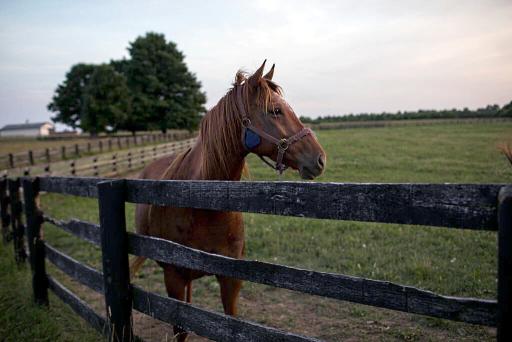
Using a horse farm as a tax shelter?
The Biden administration may try to rein in those moves.
Maddie McGarvey for The New York Times
But depending on the outcome of Georgia runoff elections next month, as president he will face either a Republican Senate majority that is dead set against tax increases, or a very narrow Democratic majority that will need to choose its battles carefully.
That will present him with a political conundrum: How do you raise more money from the wealthy if you can’t raise tax rates?
One potential answer: do better on enforcing the existing tax laws.
Tax experts have long identified a large “tax gap” between the amount Americans owe and what is actually collected. This is disproportionately a result of underpayment of taxes by high earners, especially in certain types of closely held partnerships and midsize businesses that face little scrutiny from either the Internal Revenue Service or outside investors.
That is exactly the type of structure — including dubious deductions — that allowed President Trump to minimize his tax bill for years, according to reporting on the president’s taxes by The New York Times.
The I.R.S.’s budget has declined in inflation-adjusted terms, and the agency has directed more of its enforcement work toward verifying eligibility of those claiming a tax credit for low-income workers. The rich, as a result, got less attention. In 2018, less than 7 percent of tax returns showing more than $10 million in income were audited, down from about 30 percent in 2011, according to I.R.S. data .
That has made it easier for people to get away with questionable or illegal tax strategies. The Congressional Budget Office, in a report this month on options that Congress might consider for reducing the budget deficit, estimated that by increasing the I.R.S. enforcement budget by $20 billion over the next decade, the government would increase tax collections by $60.6 billion, meaning it would reduce the deficit over that span by about $41 billion.
Some who have closely studied the question believe that more I.R.S. enforcement would generate an even greater payoff to the Treasury. Charles O. Rossotti, a former I.R.S. commissioner; Natasha Sarin, a University of Pennsylvania professor; and Lawrence H. Summers, a former Treasury secretary, have projected that an additional $100 billion in enforcement spending, combined with adjustments to the agency’s tactics and strategy, would generate $1.2 trillion to $1.4 trillion more in taxes collected, primarily from high-income individuals.
“The I.R.S. doesn’t have the resources it needs to go after the big fish,” Professor Sarin said. “That puts undue burden on everyone else.”
Mr. Biden could take administrative steps to shift enforcement priorities without the involvement of Congress, connected to the I.R.S.’s technology usage and its hiring and allocation of current workers. But for substantial new investment or enforcement action, it would need Congress to agree to new funding.
It may be easier to find at least some Republican support for stronger efforts at enforcing existing tax law than for raising tax rates. Notably, the I.R.S. commissioner, Charles Rettig, a Trump appointee, has repeatedly pushed for more funds and described the need to reduce the tax gap, including for high earners.
Mr. Rossotti, the former I.R.S. commissioner, said: “The idea is to shore up the system and make it more fair to everyone. It’s unlikely you could get outright tax increases of any real size, but this is about the soundness of the tax system and raising money by enforcing the taxes that are already on the books.”
The scale of the tax gap, and its tilt toward higher-income Americans, reflects not just a falling I.R.S. enforcement budget, but also a shift in how businesses are organized. President Trump’s own tax strategies , as reported by The Times this year, offer an extreme example of the tactics that are responsible for billions in lost revenue to the Treasury.
Over the last generation, many American business have shifted from being traditional “C corporations,” which owe corporate income tax and which the I.R.S. has long experience auditing, to being “S corporations” or partnerships, entities that pass through their earnings to individuals, who in turn pay individual income tax. But I.R.S. enforcement hasn’t kept up with that shift, and partnerships and S corporations are rarely audited. Only 0.3 percent of them were in 2017 .
A distinctive feature of these entities is they have a single owner or small group of partners, so there tends to be little outside oversight of their financial behavior. Key financial information isn’t reported independently to the government, making it possible for them to hide information from their tax preparer or seek one out who will look the other way.
Individuals who earn wages have those earnings reported to the I.R.S. by their employer. And at the other extreme, though the largest companies may use aggressive strategies to reduce their corporate income tax burden, they have independent boards of directors and white-shoe accounting firms with their reputations on the line standing in the way of crossing into illegality.
The I.R.S.’s own data for 2011 through 2013 estimates that $104 billion per year of that tax gap can be attributed to nonfarm proprietor income, partnerships, S corporations, and rents and royalties. By contrast, the comparable shortfall for all earnings of wages, salaries and tips amounted to only $9 billion a year.
“The I.R.S. does not like to do partnership returns,” said Jerry Curnutt, a retired I.R.S. agent who focused on partnerships and who has since consulted with states on enforcement. “The law can be quite complex, and most folks who grow up within the service grow up auditing individuals and corporations, doing very little if any partnership work.”
For years, he has raised alarms about a strategy that he says many real estate investment partnerships use to underreport their tax obligations. They enjoy the benefits of paper tax losses because of depreciation over many years, but fail to report offsetting gains when they eventually sell the property and pay off debts.
The numbers involved can be in the tens or even hundreds of millions of dollars, he said. They go undiscovered in part because decades can pass in which the obligations slip through the cracks either deliberately or accidentally — and in part because the I.R.S. lacks enough expertise and enforcement muscle for closely held partnerships, he said.
Some of the actions that cause the tax gap can be much simpler. The owner of a business that has significant sales in cash merely pockets some of the money rather than depositing it in the bank and accounting for it properly; or the owner of a closely held business puts a family personal vacation on the corporate credit card.
“There are trillions of dollars running through businesses with essentially no compliance or oversight,” Mr. Rossotti said. “It’s a compliance-free zone.”
President Trump’s tax records contain hints of that type of behavior. The president deducted more than $70,000 from 2004 to 2007 for hairstyling expenses while he was star of the reality show “The Apprentice.” Tax experts have said such a deduction is not allowed, because it represents a personal expense rather than a true business expense.
More complex are entities that are reported as for-profit businesses, but are actually part of a strategy to create the illusion of tax losses to offset other income.
For example, there have been numerous cases over the years in which taxpayers have said a horse farm they own is a business entity. They have tried to deduct losses the venture incurred — only to end up fighting the I.R.S., which has argued that what is really going on is an effort to turn an expensive hobby into a tax write-off.
“Horse-farm cases come in herds and not in single stallions, and are among the most frequently litigated” under the relevant law, wrote a tax court judge in a pun-filled 2015 ruling on one such case, which found in favor of the taxpayer in part because obtaining a stallion’s bodily fluids was judged “something no reasonable person could enjoy.”
That type of case has similarities to the Trump family’s treatment of the Seven Springs estate in Westchester County, N.Y. Since 2014, it has been classified as an investment property, enabling the deduction of millions in property taxes, but family members have described it as a family retreat.
“If you look at what Trump has done, he stretched the law beyond recognition,” said Steven M. Rosenthal, a senior fellow at the Urban-Brookings Tax Policy Center who once created tax shelters for the rich. At the same time, he said, “fundamentally the I.R.S. is outgunned by taxpayers who want to manipulate the rules, so if a taxpayer is willing to play the audit lottery, even if their position is feeble or frivolous, it can be worth it.”
How Community Land Trusts can advance racial equality in our cities
Providing low-cost access to land held in a commons while enabling private ownership of the homes on that land, CLTs keep housing affordable and benefit minority communities who have suffered for decades from unfair lending practices and discrimination. Words by Mark Roseland, Professor of Community Resources and Development, Arizona State University; and Christopher Boone, Dean and Professor of Sustainability, Arizona State University.
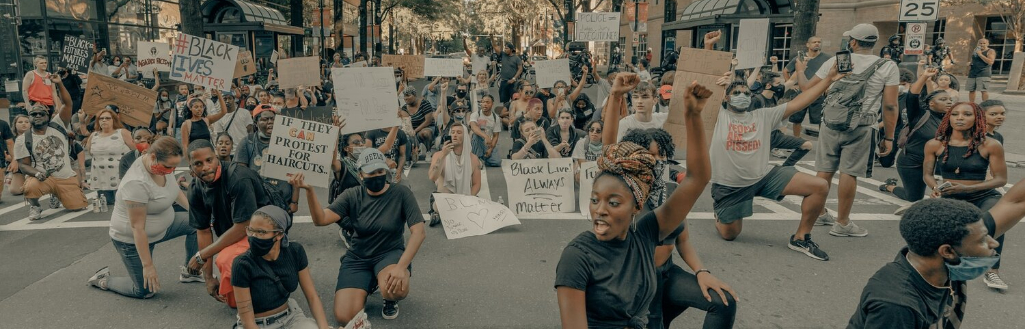
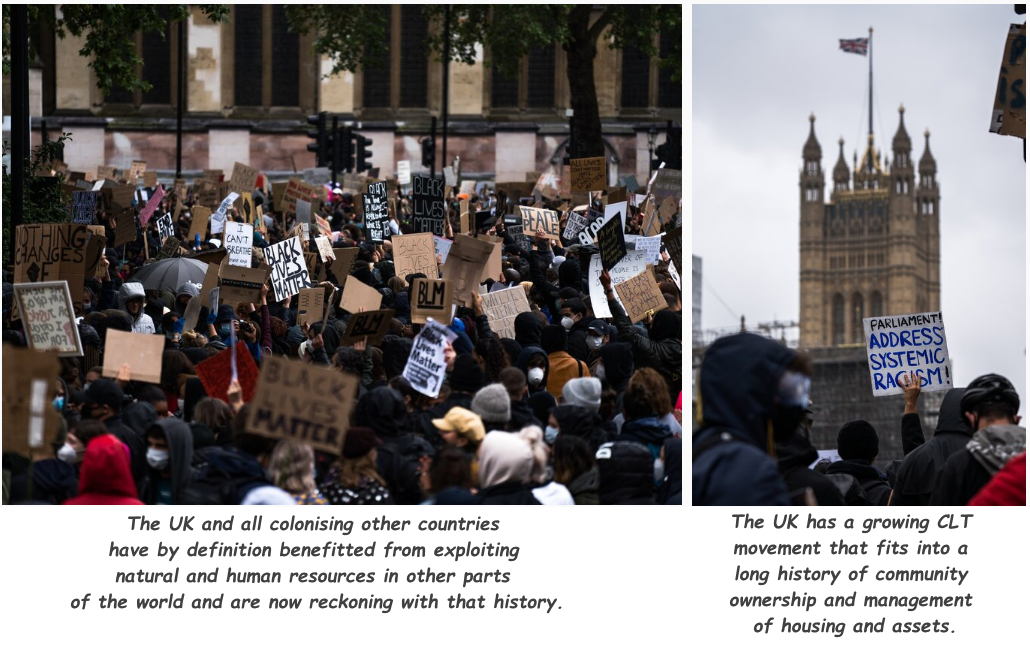
In 2020, the conversation around racial equity has become more pronounced. Motivated by police violence in the US and the murders of George Floyd, Breonna Taylor, Trayvon Martin, and so many others, thousands of people around the world have taken to the streets—despite a pandemic—to express their dismay not only at these deaths but more broadly at systemic racial inequity.
In the US, it is no longer uncommon to hear people say that the country was built on stolen land (from Native Americans) with stolen labour (from African slaves). While US history may be extreme in that regard, the UK and all colonising other countries have by definition benefitted from exploiting natural and human resources in other parts of the world and are now reckoning with that history.
Cities represent part of the long and grim history of discrimination and oppression against black people. They can also be part of the recovery from all that harm. Some cities’ work can be symbolically important, such as removing public monuments that honour oppression. But as professors of urban sustainability and community development at Arizona State University, we see that cities can do much more to address inequality, starting with an area that was key to past discrimination: how land is used.
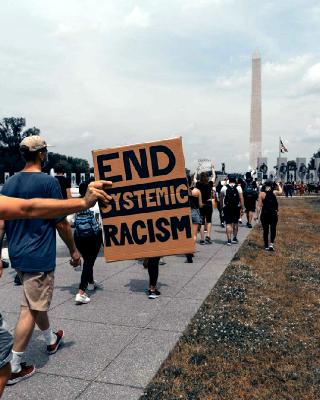
The current focus on racial equity raises important questions about the racial wealth gap. For example, the average black family with children in the US has just one cent of wealth for every dollar held by the average white family with children.
This is not the first time the origins of this wealth gap have been examined. During the economic depression of the 1870s, American political economist and journalist Henry George wondered why the increasing wealth of the country seemed always to be accompanied by increasing poverty. In Progress and Poverty (1879)—which sold millions of copies worldwide—George argued that people should own the value they produce themselves, but that the economic value derived from land (including natural resources) should belong equally to all members of society. He argued that a single tax on land would create a more productive, more just society.
Inspired by Georgist thought, civil rights organisers in the 1960s recognised that denial of property rights was one of the key methods of reinforcing white supremacy in the US, blocking people from putting down roots in a community, limiting their political power as well as wealth. Searching for an alternative approach, they borrowed from older ideas of common ownership and the stewardship of land for wider community benefit, taking inspiration from examples as far-flung as the Gramdan movement in India and the leased-land agricultural cooperatives in Israel. Their efforts resulted in creation of a new model for land ownership.
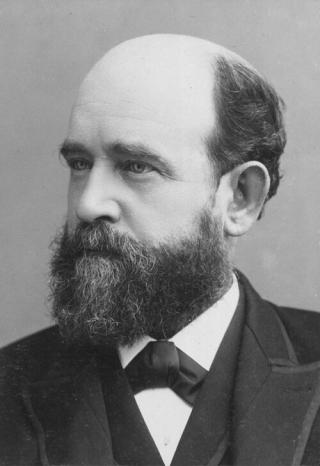
American political economist and journalist Henry George.
Wikipedia
The first community land trust in rural Georgia in 1970 was established on land purchased by a small group of individuals with some federal grant assistance and became the largest single piece of land in the country owned by African Americans , who got to keep all the proceeds from their labour. Although the trust, New Communities Inc , was beset by drought and discrimination from the start and was forced to close by the late 1980s, it helped inspire people to create similar organisations across the country.
CLTs today
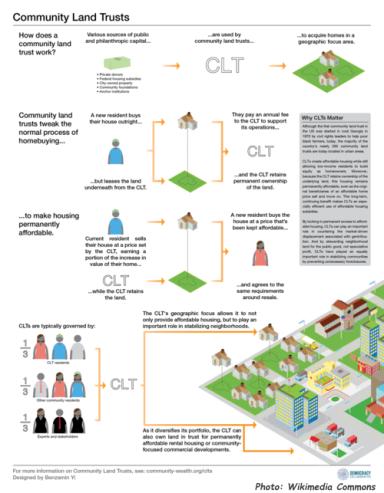
Community land trusts today are more often focused on housing. They are community-run, nonprofit landholding organisations that aim to help low-income buyers obtain homes. The CLT is a flexible civic tool for holding land on a democratic basis for the common good while facilitating private ownership of structures and improvements; it provides low-cost access to land held in a commons while enabling private ownership of the homes on that land. The tripartite structure of CLT Boards aims to include equal representation from CLT residents, members of the broader community, and public interest representatives (such as fair housing and/or environmental organisations).
CLTs are a self-sustaining model that takes a one-time public investment to turn a home into permanently affordable housing based on shared equity . Trust land can be purchased or donated. The model allows community ownership of the land along with individual ownership of homes. The trust retains ownership of the land and maintains it for the benefit of homeowners present and future, and for the community as a whole.
With this model, a buyer can get into a home for less money than elsewhere in the local market, because they aren’t paying for the land—just the building. This makes homes more affordable, especially for low-income families who often can get down-payment assistance and low-interest mortgages from the trust as well. And because the re-sale price is restricted, the home remains affordable for subsequent lower-income families who purchase it, sale after sale. The model balances wealth-building for families who would otherwise be unable to afford owning a home with preserving the community’s investment. In doing so, it maximises the impact of public dollars—which is especially critical when those dollars are so limited.
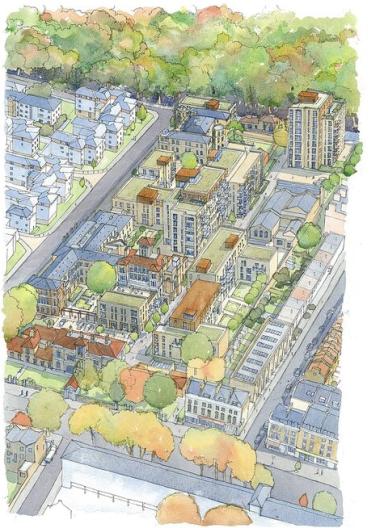
These trusts also serve renters by providing long-term leases with limits on rent prices, as well as by investing in housing in communities where others won’t. They also can give a more formal voice to tenants, who otherwise are often ignored by local officials.
The Vision for St Clement's, Mile End, the first CLT homes
completed by the London Community Land Trust project.
Wikipedia
The land lease sets out terms for any future sale of the property, letting the homeowner build equity through appreciation in value, while ensuring the home remains affordable for future limited-income buyers . This sort of shared-equity model may not appeal to people who can afford open-market housing. But for those otherwise priced out of the housing market, it is an opportunity to build equity and wealth, and establish credit and financial stability.
These trusts also serve renters by providing long-term leases with limits on rent prices, as well as by investing in housing in communities where others won’t. They also can give a more formal voice to tenants, who otherwise are often ignored by local officials.
There are now between 225 and 280 community land trusts in the US, which together have around 15,000 home ownership units and 20,000 rental units . To encourage more of this type of development, New York City passed a bill in 2017 exempting community land trusts from certain taxes. Houston in 2019 announced a plan to use a community land trust to develop 1,000 affordable units.
In the UK, there is a growing CLT movement that fits into a long history of community ownership and management of housing and assets—indeed, the original Garden Cities had a community trust that owned and managed land assets on behalf of the community. In the early 2000s, the CLT movement in the US served as an inspiration for a number of English academics and housing and community development professionals. A National CLT Demonstration programme supported a number of pilot projects, and in 2010 the UK National CLT Network was established to support the growing CLT movement and advocate on behalf of CLTs. There are currently 263 legally incorporated rural and urban Community Land Trusts in England and Wales, and dozens of new groups forming. Half of these groups formed in the last two years. Of these, some 935 CLT homes have been built to date and more than 16,000 community-led homes are in the pipeline. There are over 17,000 people registered as members of CLTs in the UK.
CLTs in the UK are not a legal form like a company, but they are defined in law so they must be established to benefit a defined community, and they must be run as a not-for-private-profit. Local people living and working in the community must have the opportunity to join the CLT as members, and those members control the CLT since the board is usually elected from the membership.
UK CLTs are active in both the least affordable and the most left-behind communities in the country. The trusts have been able to get planning permission and community support in sensitive locations where mainstream developers have failed, and they are pioneering new approaches to affordability, net-zero building, and modern methods of construction.
The path ahead
So why have CLTs not grown faster? The primary obstacle is the lack of subsidy funds to write-down the initial costs of housing. That subsidy is needed to bridge the difference between the fair market value or construction/acquisition-rehab costs of a home and the sale price that is affordable to a lower-income family. In addition to stagnant or decreasing federal funding for US housing programmes, since the foreclosure crisis (the period of drastically elevated property seizures in the US housing market between 2007 and 2010) and the ensuing rise in rents across the country, many local governments have prioritised affordable rentals over owner-occupied homes with their federal dollars. As housing markets have heated up, the amount of subsidy needed to make homes affordable for purchase has grown, since income has not kept pace with escalating housing values.
p>Cities have also used municipal zoning powers to require larger developers to donate a portion of new development to community land trusts or related entities such as housing trust funds for permanently affordable housing.
In the UK, the National CLT Network and associated partners recently helped secure a £60 million per year Community Housing Fund from Homes England for community-led housing projects in the form of capital and revenue grants. Principal lenders to the sector have included the Ecology Building Society, Triodos Bank, Charity Bank, Unity Trust Bank, CAF Venturesome and Resonance. Confident that this market can deliver at scale with the right backing, the National CLT Network is calling for funding partners and lenders to help them mainstream community ownership of affordable housing and land .
Partnerships between cities and community land trusts are a promising way to provide affordable housing and help low-income and minority families. As cities reflect on their roles in perpetuating institutional racism and what they can do to relieve it, they can use their zoning laws and negotiating power to support community land trusts as one way to keep housing affordable and benefit minority communities who have suffered for decades from unfair lending practices and discrimination.
Plant of the Month: Venus Flytrap
The carnivorous plant, native to the Carolinas, has beguiled botanists and members of the public alike since the eighteenth century.
Venus Flytrap, Dionaea muscipula , engraving by James Roberts, 1770
Smithsonian Libraries

The Venus flytrap, Dionaea muscipula , is one of the most enthralling plants in the world. The insectivorous species is well known for its hair-trigger leaves, which evolved to capture and digest prey. These adaptations allow the plant to ingest nutrients that are scarce in the poor soil of its native habitat, the swamps and bogs of the Carolinas. Although designed to capture insects, spiders, and other small creatures, the plant’s snap-trap leaves have captivated imaginations since the Venus flytrap’s first recorded collection by European colonizers, in 1759.

Venus Flytrap, Dionaea muscipula, engraving by James Roberts, 1770.
Smithsonian Libraries.
A drawing related to the illustration is housed at the Oak Spring Garden Library.
Visual representations of this botanical curiosity also feed our appetite for beauty, horror, and fantasy. James Roberts’s hand-colored engraving of the Venus flytrap, after a design by an unidentified artist , provides a viscerally evocative vision of the plant, manifesting its attractive and repulsive qualities. Because the illustration was made to accompany the first published botanical description of the species , it also provides information about the plant’s unique morphology. The upper half of the picture depicts a cluster of white five-petal flowers—some mere buds, others full blooms—elegantly perched atop a slender stem, where pollinators can feed without being eaten . The allure of the dainty blossoms is incongruous with the lower portion of the plant, which sits low in the soil. Its rosette of fleshy acid-green leaves with lobes, possessing blood-red interiors, serves to attract, entrap, kill, and digest prey. In the lower left corner of the image, an earwig dangles from a clamped leaf and, diagonally across from it, a fly protrudes from another. Prior to publications like this one, the Venus flytrap and its carnivory were unknown in Europe, though they quickly kindled the desire of naturalists, botanists, and plant collectors to obtain their own specimens.
Roberts’s engraving of the Venus flytrap and the first scientific description of the plant were published in John Ellis’s Directions for Bringing over Seeds and Plants , from 1770. Ellis, who was a British naturalist and merchant, wrote that description shortly after William Young introduced the species to England from its native region . Its official botanical name— Dionaea muscipula —is also credited to Ellis. The binomial, which derives from the ancient Greek name of the goddess Dione, mother of Aphrodite, and the Latin compound for mousetrap, references the plant’s alluring flowers and deadly snap-trap leaves , respectively.
Yet the dual nature of these morphological features also resonated with cultural attitudes about women and female sexuality then circulating in society. As the scholar of American literature Thomas Hallock explains , “Its touch-sensitive, flesh-colored leaves drew predictable analogies to predatory female sexuality, and the difficulty of transplanting a Dionaea further intensified the longing to possess one.” Indeed, the botanists John Bartram and Peter Collinson and other male flytrap enthusiasts made such analogies when they used the word “ tipitiwitchet ,” a euphemism for female genitalia, to describe the plant in letters to one another .
Phillip Reinagle, American Bog Plants , July 1, 1806,
engraving by Thomas Sutherland, aquatint.
Rare Book Collection, Dumbarton Oaks Research Library and Collection

While Ellis was consumed with the idea of importing the Venus flytrap to England and cultivating it there, this print, entitled American Bog Plants , invited viewers to use their imaginations to travel vicariously to the Carolinas to encounter the exotic plant in its native habitat. The picture, from Robert Thornton’s book The Temple of Flora , portrays a bog in which an assortment of plants flourish. Yellow skunk cabbages ( Symplocarpus foetidus ) with mottled purple markings, shown in the lower left corner of the image, invite one to imagine them emitting a putrid odor known to attract carrion-feeding pollinators. Towering over the skunk cabbages are blooming insectivores—a yellow-green pitcher plant ( Sarracenia flava ) with a five-petal flower and tubular lidded leaves, and a Venus flytrap. Their mechanisms for luring and consuming prey are nowhere emphasized in the illustration, from which such creepy-crawlies and critters are omitted. What is captivating about these carnivores are their biomorphic forms and imposing stature within a landscape that is vaguely described in color gradients of soft blues and browns. The plants’ dominion over this eerie terrain unsettles longstanding European notions of human mastery over nature, inviting fantasies about alternative realms in which flora rule.
E. Schmidt, Pflanzen als Insectenfänger (Insectivorous Plants), from Die Gartenlaube , 1875.

Although the plant portraits contained in Thornton’s Temple of Flora are outliers in the history of botanical illustration due to their theatrical plants and otherworldly settings, the above image of insectivores and their prey is more typical of pictures circulated in Euro-American newspapers and journals during the 1870s . Such prints provide visual inventories of the many carnivorous species that were then at the peak of their popularity.
A similar picture accompanied the 1875 Scientific American article “The Animalism of Plants.” Its discussion of carnivory in the vegetal kingdom points to continuing excitement about the Venus flytrap. The report also features excerpts from a speech given by the prominent British botanist Joseph Dalton Hooker in which he describes key experiments conducted on the plant: “By feeding the leaves with small pieces of beef, [William Canby] found, however, that these were completely dissolved and absorbed; the leaf opening again with a dry surface, and ready for another meal, though with an appetite somewhat jaded.” According to Hooker, that research on the Venus flytrap’s adaptations to trap prey and derive nutrients from it demonstrated its close relationship to animals. Like Hooker, the English naturalist Charles Darwin and the American botanist and entomologist Mary Treat were equally enamored with Dionaea muscipula and its relative, the sundew, publishing important studies on them.
Today, the Venus flytrap still enthralls people with its brightly hued touch-sensitive leaves. Although it evolved that mechanism to supplement its diet and compete in the wild, this evolutionary trait also places the plant at risk by increasing commercial demand for specimens. Poaching has led to a decline in Venus flytrap populations, though habitat loss poses an even greater threat to their survival. The Plant Humanities Initiative takes an interdisciplinary perspective on exploring these and other phytocentric topics.
Black man, 71, held naked and at gunpoint by police in South Carolina
- Jethro DeVane peeked out of door as police searched near home
- Lawsuit claims gross negligence and false imprisonment

Lumigraphics/Getty Images
A 71-year-old black man in South Carolina was embarrassed and feared for his life when a police officer looking for teens who might have been breaking into cars held him outside naked and at gunpoint after he peeked out his door to check on the disturbance, the man said in a lawsuit.
Body-camera video of the June 2019 encounter in Rock Hill shows Officer Vincent Mentesana cursing at Jethro DeVane and telling him not to close the door.
Mentesana orders DeVane to stand outside his home naked at 4am, facing the wall, according to the video, which DeVane and his lawyer obtained through a public records request and released on Tuesday. When DeVane asks what’s going on, Mentesana responds, “I don’t want to talk to you.”
The officer held the gun to DeVane’s head for 90 seconds as other officers looked through his home, according to the lawsuit.
“I did what the man said. He had the weapon. He could have took my life in a minute,” DeVane said at a news conference on Tuesday with his lawyer.
Once Mentesana got the all-clear, he asked DeVane his name and told him why police were in the neighborhood.
Police did not have a search warrant for DeVane’s house, according to the lawsuit filed on Monday, which claims gross negligence, emotional distress and false imprisonment.
The suit does not ask for a specific dollar amount.
DeVane said he was embarrassed because there was at least one woman among the officers and feared for his life; that if he tried to close the door, grab some clothes or argued, the officer with the gun to his head would fire.
“I won’t get over it the rest of my life,” DeVane said.
DeVane’s attorney, Justin Bamberg, said what took place at DeVane’s house would never happen in a rich white neighborhood.
“Why do we have to be here advocating for human decency and human dignity? It is utterly ridiculous and it is unacceptable,“ he said. “And it needs to stop before there is a death. God forbid, if Mr DeVane had panicked like a lot of people would and tried to close that door.”
In a news release shortly after the encounter, police said officers who saw the teens running noticed DeVane’s house with tall grass, no lights, an open door and a dirty swimming pool. They thought it might be abandoned and the teens could be inside.
DeVane was detained by officers and police searched his home in the interest of public safety, the news release said.
DeVane said the police chief went to his home later that month to discuss what happened and said he probably should not sleep naked.
“I didn’t have my clothes on that night. Why? I’m in my house,” DeVane said on Tuesday, adding, “Like I told him, if you had let me know you were coming, I would have put my clothes on.”
Trump White House staffers receive conflicting messages about their departure
Staffers were first told that they “will start departing” on the week of Jan. 4. They were later told to disregard the memo.
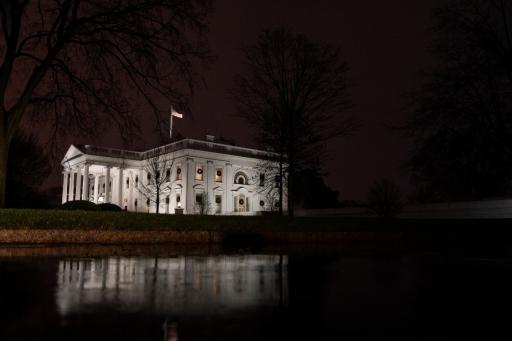
A view of the White House at night.
Evan Vucci/AP Photo
In an email Wednesday morning from the White House Management Office, EOP staffers were instructed to “please disregard” an earlier memo that had been sent Tuesday informing them that they “will start departing” on the week of Jan. 4. Both messages were obtained by POLITICO.
The Tuesday memo also included information pertaining to outgoing employees’ payroll, benefits, sick leave, records, ethics debriefing and security clearance. Staffers were notified that they would receive a “comprehensive checklist” in the coming days and be directed to “take inventory of your office space.”
Other bullet points in the memo mentioned “cleaning out your refrigerator and microwave,” and returning “all White House stationery” and “Presidential gifts.” Work supplies “will be disinfected upon return,” the memo said.
Trump's official POTUS Twitter account will be archived on Jan. 20. But what about @realdonaldtrump — Trump's (personal) account that has 88 million followers?
The initial White House communication sent Tuesday had contradicted the ongoing public effort by President Donald Trump and his top aides to reverse the outcome of the 2020 election. By Wednesday morning, the White House Management Office had advised in its new email that “updated information will be shared in the coming days.”
The memos come as White House chief of staff Mark Meadows reportedly visited Georgia on Tuesday to observe local officials’ audit of absentee ballot envelope signatures — a process demanded by the president as part of his bid to overturn the battleground state’s election results.
And as recently as Tuesday night, Trump had mused in a video message posted to Twitter that perhaps the next administration “will be me.”
The Trump Administration Keeps Awarding Border Wall Contracts but Doesn’t Own the Land to Build On
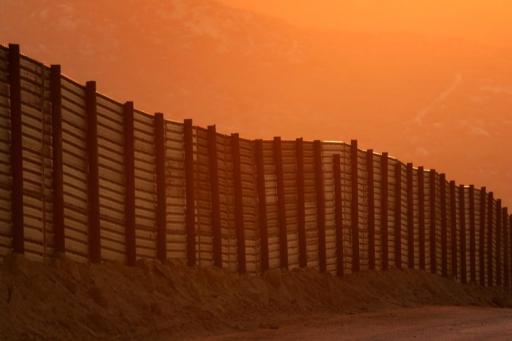
Dusk falls over a section of the U.S.-Mexico border fence.
David McNew/Getty Images
Each additional day of delay was costing the government $15,000 as contractors waited to begin construction on the border fence slated to go through Mendoza’s ranch, the Department of Justice argued in court filings. By Nov. 24, the tab for the delay had reached nearly $1.6 million, the land acquisition manager for U.S. Customs and Border Protection said in an affidavit.
More than a year earlier, CBP had awarded a contract then worth $33 million to a New Mexico-based company to build 4 miles of fencing in Starr County. The county is one of the top targets of President Donald Trump’s administration for a border wall and a place agents have called the most volatile stretch in the nation. Construction was slated to begin in November 2019, the agency announced .
There was one problem: The government had awarded the contract before obtaining the land it needed, including Mendoza’s. This September, after more than a year without getting that land, CBP had to suspend the contract to Southwest Valley Constructors, accruing “substantial” charges along the way, according to court documents.
An investigation by ProPublica and The Texas Tribune has found that the government’s strategy of awarding contracts before acquiring titles to the land in Texas has led to millions of dollars in costs for delays, according to calculations based on statements made by CBP officials in court filings. On at least two dozen occasions, the agency has used the argument, often successfully, to convince even dubious federal judges to immediately seize land from property owners fighting their eminent domain cases.
The situation could become even more complicated if President-elect Joe Biden makes good on his promise to stop border wall construction.
Mendoza, an entrepreneur, said the government’s latest offer, which he said was about $136,000, fell short of the $200,000 he was seeking. The ranch is especially personal. It’s a piece of land he vowed to own after he crossed the border illegally over the property as a teen more than 40 years ago.
“It represents a dream to me,” said Mendoza, who became a permanent resident in the 1980s. “The American dream.”
Since 2017, the federal government has awarded at least a dozen contracts in South Texas worth more than $2 billion prior to obtaining all the land it needed for the projects. The agreements are to build 146 miles of border wall and install nearly three dozen gates.
But very little construction has been completed. Out of the 110 miles the administration planned to build in the Rio Grande Valley, where most of the land is privately owned, 15 miles had been finished as of mid-December.
The Army Corps of Engineers generally requires land to be acquired prior to awarding contracts, but the policy allows exceptions if approved by high-level officials, said Grace Geiger, an agency spokeswoman.
While posing greater risks for the government, she said the practice doesn’t have to lead to greater costs as, depending on the situation, the government may still be able to acquire the land before the contractor needs to enter the site.
Contract experts say the practice violates principles of sound procurement.
“It sounds like a formula for waste, or worse, to make the construction contract first and only acquire the land months or years later,” said Charles Tiefer, a University of Baltimore contracting expert.
Austin Evers, the executive director of American Oversight and a senior counsel for the State Department during President Barack Obama’s second term, said the practice should be investigated by federal watchdogs.
“The government is arguing that it has to seize these lands right now because it is being penalized under the contract it already signed,” Evers said. “In plain English, what that means is that American taxpayers are seeing their money thrown away for no purpose because the government signed the contract before it could execute the project.”
Federal judges hearing CBP’s eminent domain cases in South Texas also have expressed frustration with the government’s legal argument for immediate possession in Starr County. In recent weeks, a segment of border fencing has quietly gone up in a remote area near Mendoza’s ranch.
While the government gets the title to the property as soon as it files what’s called a “declaration of taking” and deposits the amount it deems reasonable with the court, it can’t begin construction until a judge approves an order to possess the land. U.S. District Judge Micaela Alvarez, a George W. Bush appointee, blasted government attorneys’ request to take immediate possession of Mendoza’s ranch, arguing that the agency has had the funds to acquire private land in Starr County for nearly two years.
“The United States’ delay until November 2020 to file its motion for possession is not within the Court’s control … and (does) not create an emergency for this court,” she wrote Dec. 17. “The Court has repeatedly expressed its dissatisfaction with the United States’ requests for expedited relief. The United States is not entitled to expedited relief, and should cease requesting such relief without good cause.”
However, Alvarez said that under the Declaration of Taking Act, she had little option but to grant the government’s request to take possession of Mendoza’s land, noting that Mendoza had not responded in time and that the government had filed the correct documentation and deposited what it estimated it would pay for the land seizure.
Even as government attorneys continue to cite the growing costs of delays to judges, the agency has downplayed the issue outside the courtroom.
“CBP will not know if there are any associated delay costs due to real estate until the end of the contract, as the Contractor may be able to make up any potential delays incurred,” CBP spokesman Matthew Dyman told ProPublica and the Tribune on Friday. Dyman declined to clarify the statement, citing the ongoing litigation.
CBP also insists that awarding contracts without first obtaining land is efficient.
“Once the border wall system design is approved by the Government, and sufficient real estate is acquired by the Government, construction activities can begin,” wrote Roger Maier, a spokesman for CBP.
The government has been here before. A decade ago, CBP learned that building in this part of the border would be especially challenging, between acquiring the land — which in some cases took more than two years — and flooding concerns. Under the Bush and Obama administrations, several border wall fence projects, also awarded before the government obtained the land, died because the agency couldn’t get them built before funding dried up.
The Trump administration’s legal efforts have only intensified, with nearly 40 new eminent domain lawsuits filed in the Southern District of Texas since Election Day.
All of which leaves the incoming Biden administration and hundreds of Texas landowners in a web of title and compensation disputes, multimillion-dollar contracts and a string of unfinished — and disconnected — projects all along the Rio Grande.
Biden has said he will cease wall construction and drop all the lawsuits on day one. His transition team didn’t respond to a request for comment as to how exactly the administration would go about canceling existing contracts nor what it would do with land it now owns as part of the eminent domain push. Biden could save up to $2.6 billion if he halts construction, according to Army Corps of Engineers documents reviewed by The Washington Post .
This will not be the first time Biden confronts this issue. Last time he was in the White House, the Obama-Biden administration allowed the lawsuits and contracts to proceed. By the end of their first term, 54 new miles of border fence had been built in South Texas.
Starr County
One of CBP’s toughest fights over eminent domain centers on Starr County, a poor, mostly rural county where family properties date back to original Spanish land grants issued 250 years ago, well before the Rio Grande served as an international boundary.
For more than a decade, residents and county officials have resisted the agency’s push to build a border wall in Starr County, which the government has said in court filings is the No. 1 county for narcotics seizures across the entire southern border of the United States.
Starr and neighboring Hidalgo and Cameron counties are part of the agency’s Rio Grande Valley sector, which accounts for 40% of immigrant arrests and 43% of the marijuana seizures along the southwest border.
Under the Trump administration, Starr has become one of the agency’s top priorities for the border wall. Hidalgo and Cameron counties already have about 60 miles of border fencing, built upon concrete levee systems.
But Starr County, which lacks a levee system, had no wall before the Trump administration first proposed building there in 2017. Three years later, CBP has awarded contracts for 55 miles, but only about 5 miles have been built, mostly on U.S. Fish and Wildlife refuge land in remote corners of the county.
As it was a decade ago, the government’s effort is once again mired in complicated eminent domain legal battles that have so far prevented construction on the remaining miles.
Of 70 condemnation cases filed by the government since September in South Texas, 53 are in Starr County, where the government has only accelerated legal action since Election Day (25 lawsuits have been filed in this county since Nov. 3).
In one case filed at the end of November, the government is seeking to seize a triangle of land smaller than 2 acres in the county. Despite the tract’s small size, there are more than 30 individuals with possible ownership rights, scattered across Texas and as far away as Washington state, according to court records.
Lawyers say that as land has passed through the generations, many partitions have not been documented properly in official records, resulting in a thicket of potential land ownership that the government has struggled to unravel.
“The title issues in Starr County seem to be far more complicated and difficult than what we’ve seen in the other border counties,” said Roy Brandys, an Austin-based eminent domain attorney who represents border residents in these cases. “On several of the cases we’ve been working on in Starr County, one of the reasons they have not progressed even faster is because the government and frankly, we as the landowners’ representatives, are trying to work out the title issues before they move forward.”
According to a recent Government Accountability Office report , title issues in Starr have slowed construction timelines considerably. “Some counties in South Texas, such as Starr County, do not have the infrastructure or funding to maintain recordkeeping systems,” the report says.
But where the federal government sees as a maze of legal hurdles, local officials see a reflection of the region’s heritage.
“For many, the land has been in their families for generations,” said Joel Villarreal, mayor of the Starr County seat of Rio Grande City. “We have a large number of residents that own land and they are proud of that heritage to own land. They speak of it as something to be cherished, the idea of having land.”
Fight Over Land
On a recent morning, Mendoza, 60, stood in front of his ranch as orange survey markers fluttered in the wind around him.
At regular intervals, he has built steps into his own mesh and metal tube fencing, allowing would-be border crossers to climb over. He said Border Patrol agents have asked him why he built them. “I tell them for one, I was undocumented when I came here,” he explained. “And two, so they don’t break down my fence!”
The ranch holds a special place in the heart of Mendoza, who owns several businesses and properties in Starr County. In 1979, he crossed the border as an undocumented immigrant, passing through the same piece of property on his way to a new life in Houston. Thirty years later he bought the ranch when it came up for sale, and he is loath to lose it.
If the wall comes through the front of his ranch as proposed, Mendoza said he would have to move the fence and an expensive front gate, as well as the corral for the 40 or so cattle he raises on the land. Worse, he said, the wall would render the ranch virtually worthless by placing it almost entirely behind the barrier.
“It won’t have any value afterwards” he said. “Anything could happen on the other side of the wall. I won’t be protected inside there.”
The government first made Mendoza an offer to buy his land in April, according to court documents. Five months later, federal prosecutors sued to take part of his ranch, depositing about $93,000 with the court as a “just compensation.”
The government claimed in Mendoza’s case that the cost of suspending work was about $15,000 per day. In other cases, the government contended that delays have added as much as $100,000 per day, depending on the size of the contract, according to a review by ProPublica and the Tribune. The expenses came from what officials called de- and re-mobilization and from having equipment and crew on standby beyond the date construction was scheduled to begin.
In four Rio Grande Valley projects alone, where the government has detailed the costs of delays in court filings, the total is nearly $9 million, as of the date the court granted the order for immediate possession, which is when work can begin.
Despite not having been able to break ground in 18 months, the original $33 million contract to Southwest Valley Constructors is now worth $42 million thanks to contract options the government has exercised. An earlier review of federal spending data by ProPublica and the Tribune found modifications to contracts have increased the price of the border wall by billions, costing about five times more per mile than it did under previous administrations.
Francis Rooney , a Republican U.S. representative from Florida and longtime real estate developer, called the practice “ridiculous.” From a contractor point of view, he said, there’s the risk of inflation and rises in labor or material costs, for instance, as work on those sites is delayed.
“That sounds a little reckless to me, but I’m not surprised given some of what this administration has done,” he said, in reference to Trump declaring a national emergency and using military funding to accelerate border wall building.
ProPublica and the Tribune reached out to the companies with contracts in the Rio Grande Valley awarded under the practice. Most didn’t respond and Kiewit Infrastructure West, an affiliate of Southwest Valley Constructors, referred questions to the Army Corps of Engineers.
Raini Bruni, another spokeswoman with the Corps, said border wall contracts are written in a way that puts much of the risk on the contractor, who can request compensation in cases where there’s a delay or suspension, approved on a case-by-case basis.
But beyond the risk to the government and contractors, the practice can lead to a loss of protections to landowners, experts said.
Due process is at the heart of the government’s power to take private property, said Evers of the nonpartisan watchdog American Oversight. But it is being ignored by rushing things through based on emergencies of the administration’s own creation, he added, “which runs counter to basic American values.”
Beyond the fight over the value of his land, Mendoza doesn’t believe the wall will achieve its goal. “The people won’t stop,” he said. “It wouldn’t have stopped me, I would have jumped over.”
“They Use the Legal System as a Threat”
About 20 miles upriver from Mendoza, the Muñiz family is also fighting the government’s attempt to seize its land in a case that shows the pressure government agents have put on local landowners, especially in the final months of 2020.
On Sept. 1, the government sued Noelia Muñiz and offered to pay $5,500 for about an acre of land. According to court documents, she felt harassed by constant phone calls that she said were taking a toll on her health.
“They call every day, they threaten that if you don’t show your face they will take you to court,” said her brother Noe Muñiz Jr., 63, outside their home. “They use the legal system as a threat. … It’s very stressful for her.”
Usually the government first tries to settle with landowners but sues when they can’t reach an agreement or it’s unclear who owns the land.
Since the beginning of the Trump administration, the government has filed 193 lawsuits — three-fourths just in the past year — asking Texas landowners to relinquish, temporarily or permanently, more than 5,800 acres, according to information provided by the Texas Civil Rights Project and court documents.
Noe Muñiz Jr. said the family has been going through the process without an attorney because it can’t afford to pay one. “We have no support at all,” he said. “If you want support it takes money and no one has money. … I’m pretty sure they wouldn’t do this in a place where the majority of people are white. Here you have Mexican people and they are poor, so come on.”
In a normal condemnation case there would be safeguards in place such as environmental reviews, hydrology reports prior to starting the project, said Brandys, who has represented border residents under the current and previous administrations.
But due to what he calls the politicization of border wall construction, the U.S. attorney and those building the wall are under significant pressure from Washington to get as much done as possible. All of which can significantly impact the landowners, he said, adding, “Unfortunately in some of those situations you won’t know until the wall is built and the projects are up and we see what the effects are.”
The Department of Homeland Security has a record of abusing the eminent domain process to build border barriers.
In 2017, a ProPublica-Tribune investigation found DHS had cut unfair real estate deals, secretly waived legal safeguards for property owners and ultimately abused the government’s power to take land from private citizens. In some cases, the DOJ bungled hundreds of condemnation cases, taking property without knowing the identity of the owners and condemning land without researching facts as basic as property lines.
Under the George W. Bush administration, the federal government filed more than 360 eminent domain lawsuits along the U.S.-Mexico border as part of an effort to build up to 700 miles of fencing by December 2008. Along the Rio Grande, the agency built 50 miles in disconnected strips and seized a total of 564 acres for which it paid $18.2 million, ProPublica and the Tribune reported.
There are still 20 cases pending in South Texas from that era, involving about 440 owners, according to the DOJ.
While lawyers and residents say some things have improved, such as the government providing more details about the property it is trying to take, the pressure on landowners has not eased.
Daniel Villarreal, a 56-year-old bail bondsman in Rio Grande City, said government negotiators told him earlier this year he either had to accept their offer or they would take it anyway.
But following Biden’s victory, he is starting to feel pangs of regret about selling about an acre of his riverfront property to the government.
He didn’t want to say how much he agreed to but said it’s not life-changing money. “They say they gave me market value, but how long is that going to last? A year or two?” he said. “And then what you’re left with is a monument to a man I don’t even like.”
The wall would also cut Villarreal off from the beauty of the river’s edge, a fear echoed by other property owners.
Growing up, Noe Muñiz said he and his siblings swam daily in the river. As he grew older, the river offered respite after a long day of working in cantaloupe and onion fields. He still fishes there but worries that after a wall is built, the river would become too dangerous to visit inside the no man’s land that would be created south of the barrier.
Even though the Muñiz family will likely lose the battle to keep its land, it is trying to get what it considers just compensation, he said, and holding onto hope that Biden will cancel the wall contract in the area. “You can’t give up on the land. It’s not the government’s land,” he said. “It’s hard to let go.”
Archaeologists Find Evidence That a Massive Tsunami Hit Ancient Levantine Coast
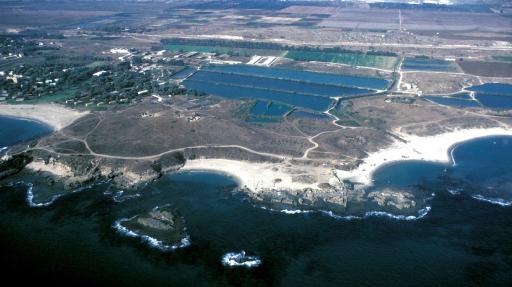
Tel Dor, on the Mediterranean coast.
Wikimedia Commons ( Fair Use )
“A borehole is like a peephole to the past,” Shtienberg told Gizmodo, “because we can use the sediments that are acquired inside of these plastic tubes to get an understanding of how the environment changed over time.” Shtienberg is lead author of a new paper on the excavations, published today in the open-access journal PLOS One.
More than 60 holes were bored in the area of Tel Dor, a large mound of human settlement dating back to the Middle Bronze Age, which lies about halfway between the Roman ruins at Caesarea and the Crusader fortress at Atlit. Cored sediment samples kept turning up that beige strip of marine critters, suggesting whatever force brought the shells inland was widespread. “By the fifth core, I was sure that we had something,” Shtienberg said.
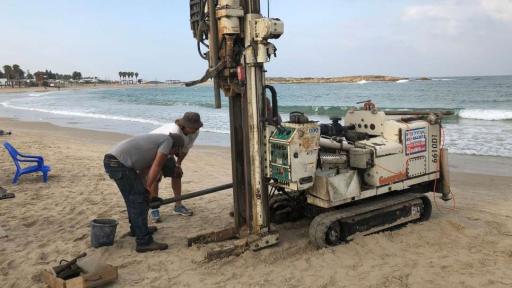
The research team’s boring machine
on the beach near Tel Dor.
T.E. Levy
“The study is very exciting because it adds another example of physical evidence of a paleotsunami event along the Israeli coastline,” Beverly Goodman, a marine geoarchaeologist at the University of Haifa who wasn’t involved with the recent study, said in an email. “The more events that are added to the catalogue, the more complete our understanding of tsunami risk in this region becomes.”
Goodman said the team provided convincing evidence that a tsunami did indeed hit the area—though its scale is uncertain, as the Levantine coast is relatively linear and prone to erosion, so the cored tsunami evidence only cropped up around the Bay of Dor. It’s uncertain how far and up and down the coast the wave may have reached; whether it would have rushed ashore to the north in what are now Syria and Lebanon, or to the south, in what is now the Gaza Strip.
Goodman was more skeptical about the team’s claims as to the wave’s size and impact on humans, since it’s not totally clear what Neolithic settlement of the coast looked like. “The suggestion that it was a ‘megatsunami’ will require further work,” she said.
The eastern Mediterranean may not seem like a typical venue for a tsunami; it’s far from the famous fault lines and tectonic plates that have caused diluvian situations from Northwest Washington to Southeast Asia. But the telltale seashells of Tel Dor breathe life into the notion that ancient Levantine communities were similarly vulnerable, and the tsunami may have obliterated coastal settlements, prompting an inland migration that defined habitation of the area for centuries to come.
“Societies were transitioning from over a million and a half years of being foragers and hunters in the Middle East; they were experimenting with this village-based sedentary lifestyle,” Thomas Levy, an archaeologist at UC San Diego and a co-author of the recent paper, told Gizmodo. “These communities along the Carmel coast were wiped out, essentially, and their ecosystem right along the coastal plain was destroyed and disrupted by the tsunami.”
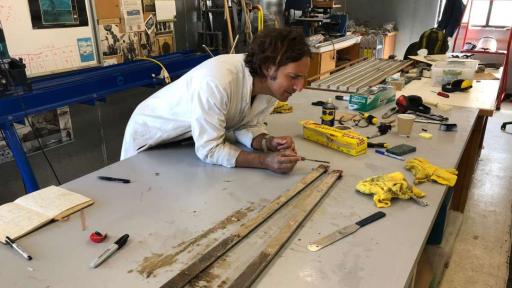
Shtienberg with the cylindrical sediment cores from the beach.
T.E. Levy
It’s hard to say what sort of living situation existed around what is now the Bay of Dor, Levy said, because objects from the Neolithic older than 10,000 years don’t turn up in the area—perhaps reinforcing the team’s theory, as a massive wave would’ve wiped out Neolithic settlements. Later populations on what is now Israel’s Carmel coast built seawalls to keep the water at bay, though those failed in time with the relentless march of sea level rise. Other groups moved inland, into the Jordan Valley and the Carmel mountains.
“The communities living around Dor on the coastal plain that were affected by this—they’re emblematic of some kind of settlement process,” Levy said. “By the Middle Neolithic, pre-pottery Neolithic, there’s an explosion of settlements in the inland areas of the southern Levant.”
Life took time to return to Tel Dor after the tsunami washed away fertile soil, effectively salting its fields and preventing its settlement immediately following the disaster. But return it did, as evidenced by late Neolithic structures and ceramic finds in shallow water just off the coast. It’ll take some doing to excavate, though, as it lies among the breakers, meaning archaeologists have to deal with the constant crash of waves as they work.
“We’re trying to develop a methodology for excavating in this shallow surf zone,” Levy said. “Some days it’s like being in a washing machine.”
‘Loathsome, Disgusting Crimes’: A Look Back At What Jared Kushner’s Dad Actually Did
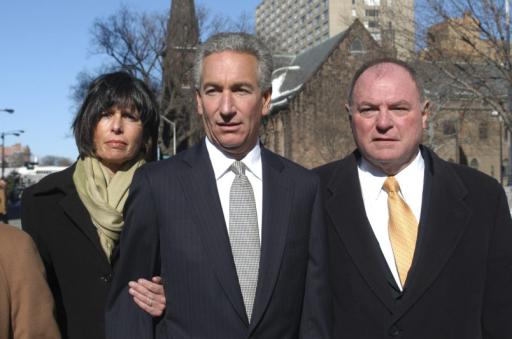
Charles B. Kushner, flanked by his wife, Seryl Beth, left, and his attorney Alfred DeCotiis arrives at the Newark Federal Court for sentencing in Newark, N.J., March 4, 2005.
AP Photo/Marko Georgiev
After Charles Kushner discovered his brother-in-law was cooperating with federal authorities, the wealthy real estate executive and father of President Donald Trump’s son-in-law, Jared, hatched a scheme for revenge and intimidation.
Kushner hired a prostitute to lure his brother-in-law, then arranged to have the encounter in a New Jersey motel room recorded with a hidden camera and the recording sent to his own sister, the man’s wife.
The scheme didn’t work. Kushner later pleaded guilty to tax evasion and making illegal campaign donations in a case tailor-made for tabloid headlines.
On Wednesday Trump pardoned Kushner as part of a late-hour clemency spree during the final days of his presidency that has included a slew of campaign aides and allies, among them four of the six Trump associates convicted in the Mueller investigation. He has granted clemency to nearly 50 people in the last week.
The White House in its announcement cited Kushner’s charitable work since he completed his sentence in 2006 as the reason he deserved clemency.
“This record of reform and charity overshadows Mr. Kushner’s conviction and 2 year sentence for preparing false tax returns, witness retaliation, and making false statements” to the Federal Election Commission, the White House said, adding that Kushner’s case had been championed by Matt Schlapp, chairman of the American Conservative Union, and others.
Not mentioned: Kushner’s relationship to Jared Kushner, the senior Trump adviser who is married to Trump’s eldest daughter, Ivanka, and who, inspired by his father’s time in prison , pushed Trump to back criminal justice reform legislation and has been an integral part of the administration’s clemency efforts.
Christie did not respond to a request for comment on Trump’s decision to pardon a man he’d sent to prison. But Christie, who headed Trump’s transition and has informally advised the president for years, has made clear that he believes the senior Kushner deserved it.
“Mr. Kushner pled guilty. He admitted the crimes,” Christie told PBS last year as he promoted a book that blamed the younger Kushner for his firing from Trump’s transition team. “And so what am I supposed to do as a prosecutor? I mean, if a guy hires a prostitute to seduce his brother-in-law, and videotapes it, and then sends the videotape to his sister to attempt to intimidate her from testifying before a grand jury, do I really need any more justification than that?”
He added: “I mean its one of the most loathsome, disgusting crimes that I prosecuted when I was U.S. attorney. And I was U.S. attorney in New Jersey.”
Kushner eventually pleaded guilty to 18 counts including tax evasion and witness tampering. He was sentenced in 2005 to two years in prison — the most he could receive under a plea deal, but less than Christie had sought.
Kushner also agreed to pay $508,900 to the FEC for violating contribution regulations by failing to obtain an OK from partners to whom more than $500,000 in contributions were credited.
He has since resumed his career in real estate, including purchasing the famed Watchtower complex along the Brooklyn Bridge, the former headquarters for the Jehovah’s Witnesses.
The younger Kushner has talked openly about how deeply his father’s imprisonment impacted his life. He was in his early 20s and a law and business school student in the mid-2000s when his father was sentenced and suddenly found himself having to run the family’s businesses while shuttling back and forth on weekends to see his father in Alabama.
“When you’re on the other side of the system, you feel so helpless,” Jared Kushner said in 2018. “I felt like, I was on this side of the system, so how can I try to do whatever I can do to try to be helpful to the people who are going through it” and deserve a second chance.
But Charles Kushner told The New York Times in 2018 that he wasn’t interested in clemency, saying he “would prefer not to have a pardon” because it would garner publicity.
Trump Golfing Again Despite Trump-Induced Legislative Mess
The motorcade of US President Donald Trump arrives at Trump International Golf Club in West Palm Beach, Florida, December 24, 2020.
SAUL LOEB / AFP via Getty Images
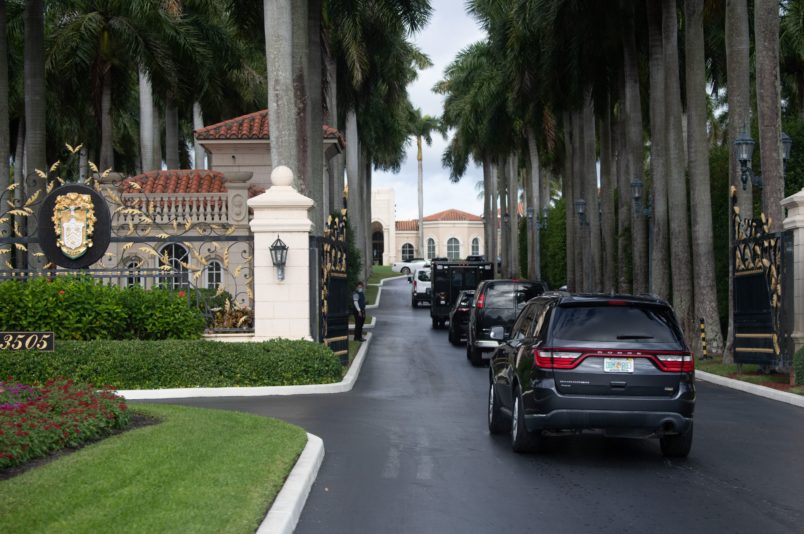
The President was golfing again in South Florida Thursday, a couple days after throwing Congress into chaos by panning a mammoth government funding and stimulus bill after both sides had negotiated it.


Trump’s golf outing in Florida came despite an unusual note on the otherwise-blank public White House schedule for Thursday.
“As the Holiday season approaches, President Trump will continue to work tirelessly for the American People,” the White House said. “His schedule includes many meetings and calls.”
It’s not clear what sorts of calls Trump is making — perhaps those regarding yet another day of doling out pardons for politically-connected friends and allies.
But the talks don’t seem to be about the funding bill Trump trashed. Sen. Roy Blunt (R-MO), chair of the Senate Republican Policy Committee, told reporters Thursday morning that he had “no idea what [Trump] plans to do” with the legislation.
Tags
Who is online
84 visitors
What a mess our "news" is!
Thank goodness there's relief to be found in the other rubrics: science, history, ...
It is s-o-o-o cool! Not only do the ultra-rich have tax loopholes written specifically for them... but if they still think their taxes are too high, they can simply not pay them.
Co-ownership to break race barriers
The venus flytrap is... cool...
As every day, we have a story about police being assholes. At least they didn't shoot the man...
There's something karmic about White House staffers not know what they will become...
The government doesn't own the land for The Wall. ... *** sigh *** ...
We knew about the explosion of Thera / Santorini, and the ensuing tsunami. Apparently it wasn't the first.
Jared's Dad. Yechhhhh!
The President? On the golf course of course...
Would it be a surprise if Trump pardoned all except the violent offence prisoners in all the jails and prisons in America? He would earn their gratitude and probably their votes when he runs in 2024. Now that I think of it, the violent offence prisoners are probably more his kind of people, like the Proud Bois, KKK, neo-Nazis, etc.
Anybody wanna sell or buy this at a garage sale? I found it on my brother's front lawn last night.
"SANTA TRUMP"
Brilliant!
Maybe not such a merry Christmas for that family.