
The 15 Best Movies of the 1950s, Ranked

By: By Georgia May (whatNerd)

 S E E D E D C O N T E N T

The 15 Best Movies of the 1950s, Ranked
These incredible movies of the 1950s all helped to define the decade—and they still hold up as worth watching today!
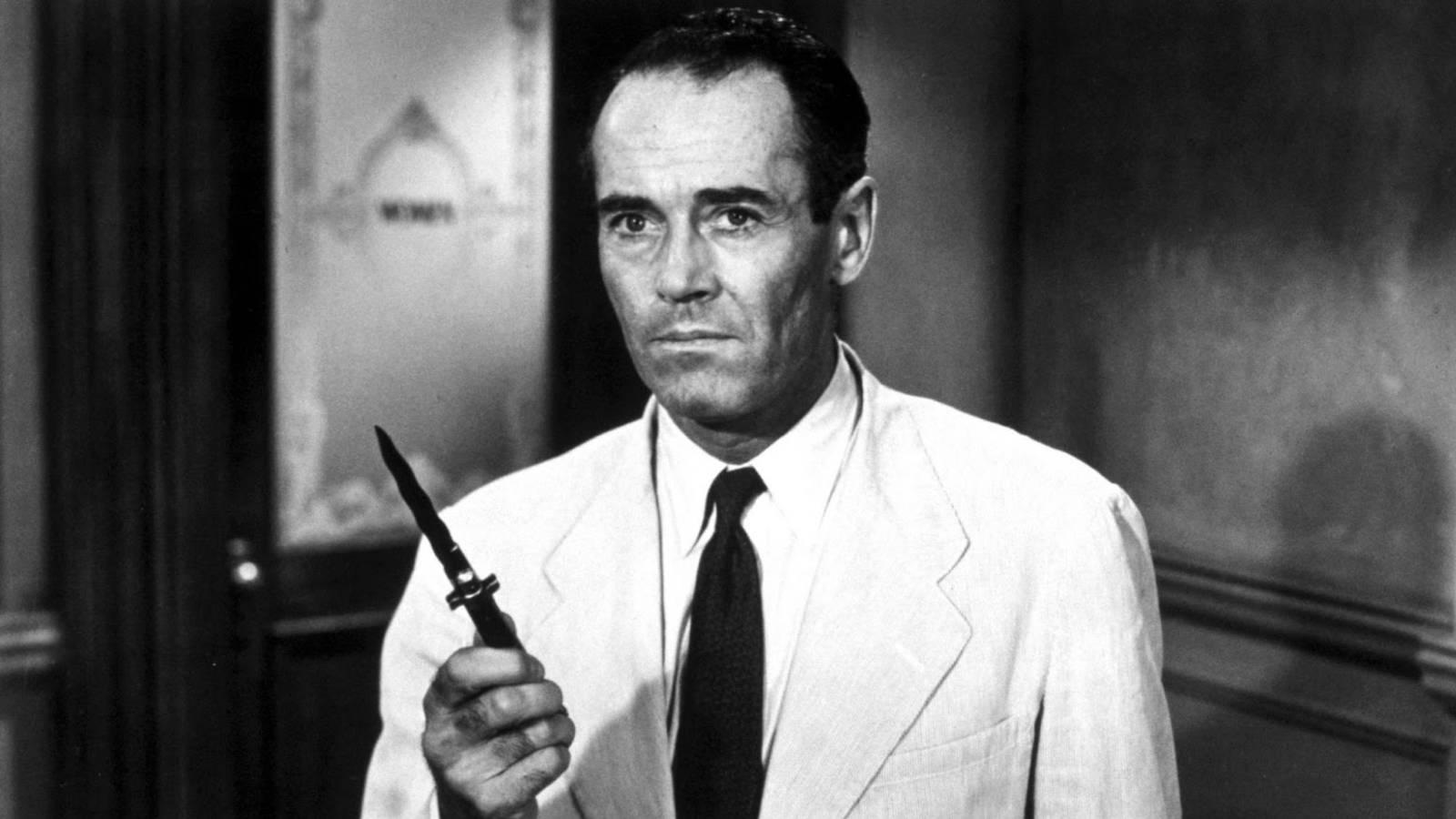
The 1950s not only gave us several enduring cinematic classics, but also spurred the movie industry forward unlike ever before. The movie industry was still in its early stages, and it wasn't until this decade that it really began establishing itself as an art form.
Alfred Hitchcock was making his mark. Technicolor film was starting to take hold. James Dean had the younger viewers swooning. What were the very best films to come out of this golden era?
It's a hard one, but here are my picks for the best movies of the 1950s that defined the decade and remain popular to this day!
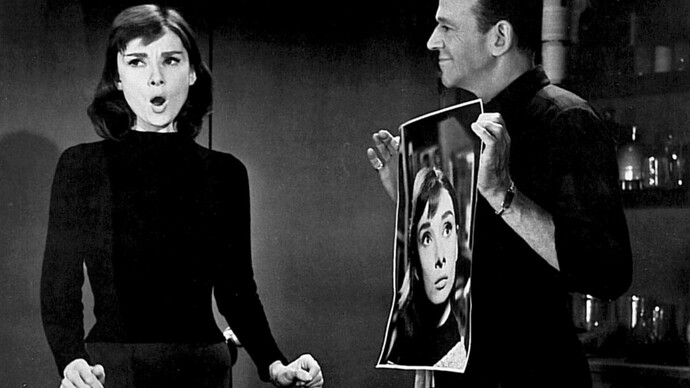
15. Funny Face (1957)
Directed by Stanley Donen
Starring Audrey Hepburn, Fred Astaire, Kay Thompson
Comedy, Musical, Romance (1h 43m)
7.0 on IMDb — 88% on RT
Audrey Hepburn was the brightest star of the 1950s and 1960s (alongside Marilyn Monroe), which began with her movies Roman Holiday , Sabrina , and Funny Face .
1950s Hollywood loved their singalongs, and even though Funny Face is technically an adaptation of a Broadway musical, the plot and soundtrack are completely changed.
Hepburn's character, Jo Stockton, is a philosopher who works in a bookshop—the last person you'd expect to see in a fashion magazine. But that's exactly why Quality magazine picks her: they want a model who can "think as well as they look."
Some critics found Funny Face to be a delightful slice of musical fun while others found it an offensive parody. The general public, however, adored it! And Funny Face helped solidify Audrey Hepburn's status as an eventual cinematic icon.
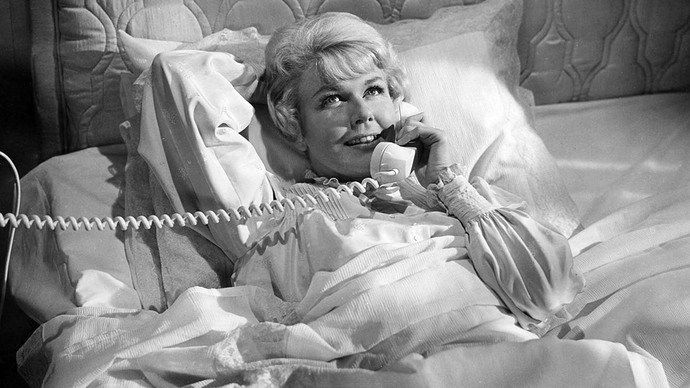
14. Pillow Talk (1959)
Directed by Michael Gordon
Starring Rock Hudson, Doris Day, Tony Randall
Comedy, Romance (1h 42m)
7.4 on IMDb — 94% on RT
Pillow Talk was a staggering box office smash hit and the highest-grossing film of the year, rounding off the 1950s with a bang. Doris Day was one of the big Hollywood actresses of the time, making waves with Calamity Jane and The Man Who Knew Too Much .
In Pillow Talk , she plays an interior decorator who's sick of sharing a party line with Brad Allen (played by Rock Hudson), who's forever on the phone with hordes of women. In response, he decides to woo her over with a fake Texan accent. Somehow, it works.
Viewers went mad for the ensuing love triangle, so Day, Hudson, and co-star Tony Randall decided to make two more rom-coms together (though Michael Gordon didn't return to direct).
13. Strangers on a Train (1951)
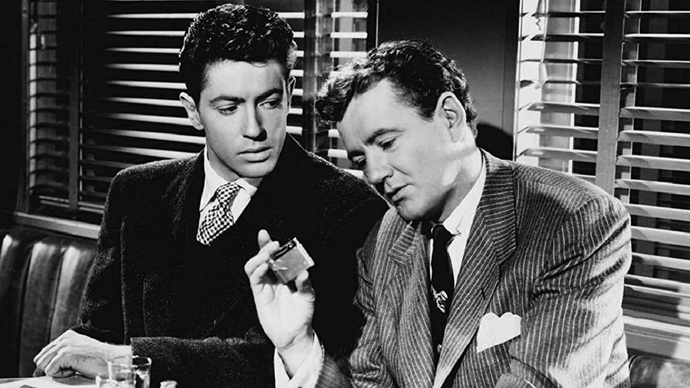
Directed by Alfred Hitchcock
Starring Farley Granger, Robert Walker, Ruth Roman
Crime, Drama, Noir (1h 41m)
7.9 on IMDb — 98% on RT
The plot of Strangers on a Train has been reused and referenced many times in film, TV, and literature (e.g. Do Revenge , The Favor , Horrible Bosses , Throw Momma From the Train , Once You Meet a Stranger ).
The concept involves two strangers who carry out the other's revenge (in this case, murder) so that the crimes can never be traced back to them. It's a theory that, in practice, doesn't pan out well.
Farley Granger and Robert Walker star as said strangers, directed by Alfred Hitchcock, who was still establishing his trademark use of suspense, crime, MacGuffins, and plot twists.
12. Some Like It Hot (1959)
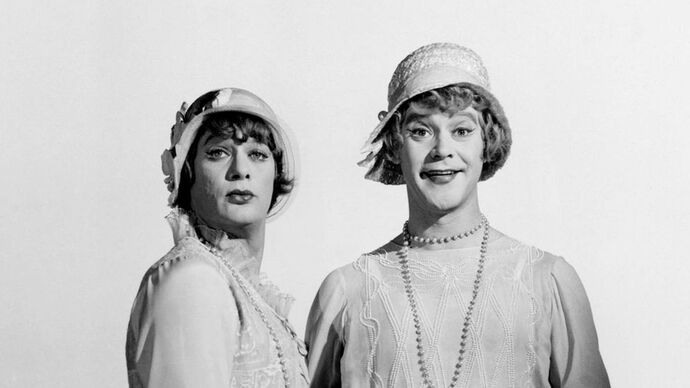
Directed by Billy Wilder
Starring Marilyn Monroe, Tony Curtis, Jack Lemmon
Comedy, Music, Romance (2h 1m)
8.2 on IMDb — 94% on RT
Marilyn Monroe was a more sensuous public figure than even Audrey Hepburn, a sex symbol of the 1950s and the time period before miniskirts were invented.
Her most popular movies remain Gentleman Prefer Blondes , The Seven Year Itch , and Some Like It Hot , which were all made during the 50s. (She tragically died in 1962, cutting her acting career short.)
Billy Wilder was a highly respected filmmaker during the Golden Age of Hollywood, and he directed Monroe in two movies. Some Like It Hot was the bigger critical and commercial success, loosely based on the 1935 French film Fanfare of Love .
The crime-comedy also helped to end the Hays Code, which prevented anything LGBTQ+ related from being shown on screen (along with anything that involved nudity or violence).
In Some Like It Hot , Monroe headlines as Sugar "Kane" Kowalczyk in 1920s Chicago, whom two men compete over.
11. Singin' in the Rain (1952)
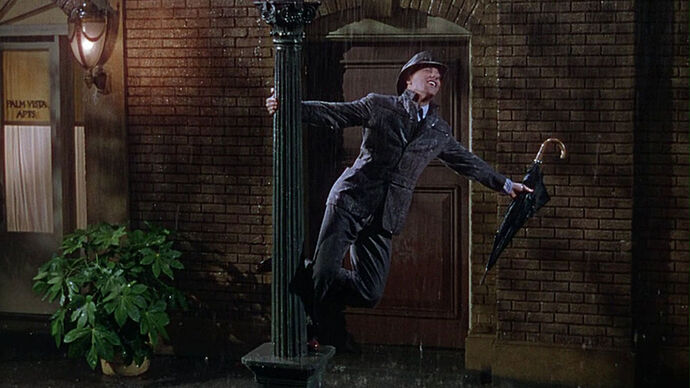
Directed by Stanley Donen and Gene Kelly
Starring Gene Kelly, Donald O'Connor, Debbie Reynolds
Comedy, Musical, Romance (1h 43m)
8.3 on IMDb — 100% on RT
Out of all the musicals to come out of the 1950s, Singin' in the Rain is the greatest. Everyone's heard of it, and the title immediately calls to mind Gene Kelly swinging around a lamppost in the pouring rain.
Kelly also directed the infamous rom-com with the help of Stanley Donen. It's set in 1920s Hollywood, back when synchronized sound was just being introduced to film.
In fact, cinema's first real "talkie" The Jazz Singer is what propels the plot forward, as the characters race to make their own talking picture.
Singin' in the Rain is funny and feel-good, with a musical spirit that's self-aware of its own history. It's one of the best films of the 1950s and still one of the most memorable films of all time.
10. The Bridge on the River Kwai (1957)
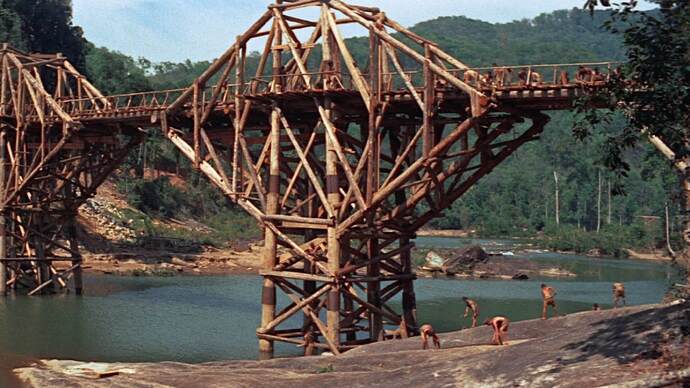
Directed by David Lean
Starring William Holden, Alec Guinness, Jack Hawkins
Adventure, Drama, War (2h 41m)
8.1 on IMDb — 96% on RT
As the highest grossing film of the year, The Bridge on the River Kwai has to come in at number ten.
David Lean's epic war movie is based on the 1952 novel by Pierre Boulle. It follows a group of British prisoners in a Japanese war camp in 1943, who are ordered to build a bridge for their captors—and they work as slowly and poorly as they can to hinder the bridge's completion.
Winner of seven Academy Awards, The Bridge on the River Kwai was an instant classic, starring Alec Guinness, William Holden, Jack Hawkins, and Sessue Hayakawa.
9. Seven Samurai (1954)
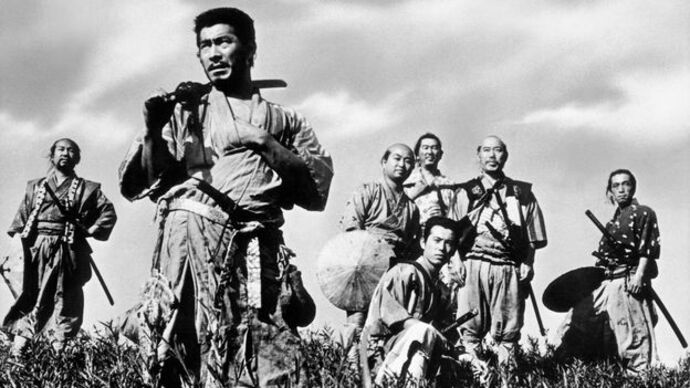
Directed by Akira Kurosawa
Starring Toshir Mifune, Takashi Shimura, Keiko Tsushima
Action, Drama (3h 27m)
8.6 on IMDb — 100% on RT
Another epic here, this time featuring samurai. Filmmaker and painter Akira Kurosawa directs this sword-fighting drama, elegantly translating the majesty of battle onto the big screen.
Taking place in 16th century Japan, a mountain village decides to hire hungry samurai soldiers to protect them from plotting bandits. The seven protectors teach the villagers how to defend themselves in exchange for food—and, of course, there's a dazzling battle sequence.
Seven Samurai is split into two parts with a good old-fashioned intermission. The grandeur of the story is married with Kurosawa's sweeping cinematography, yet a certain intimacy remains in tact with the characters. If you're a fan of the old Western, you'll love this!
8. Vertigo (1958)
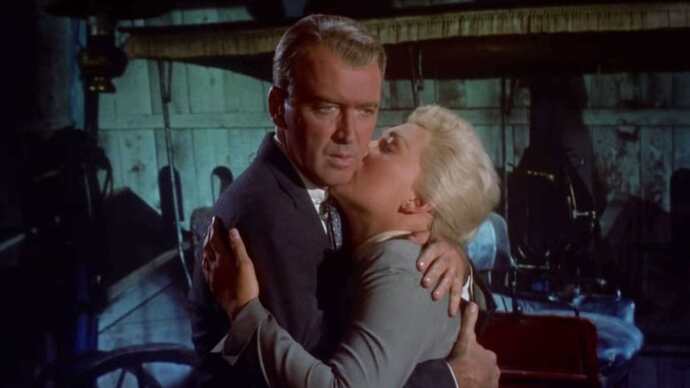
Directed by Alfred Hitchcock
Starring James Stewart, Kim Novak, Barbara Bel Geddes
Mystery, Romance, Thriller (2h 8m)
8.3 on IMDb — 92% on RT
If you told a viewer in the 50s that Vertigo would become one of the greatest films of the decade—or even cinema as a whole—they would have probably laughed in your face.
When Scottie (played by Jimmy Stewart) is hired by an old friend to investigate his wife, his stalking soon turns into lust. But there's more to this case than meets the eye, forcing Scottie to face his greatest fears.
Despite Alfred Hitchcock's modern reputation as an auteur legend, the public pretty much hated Vertigo at release. They simply weren't used to seeing their all-American darling Jimmy Stewart as an anti-hero, and what's with that plot twist halfway through?
As it happens though, Vertigo has since been cited as a masterpiece, way ahead of its time. Like Hitchcock's other thrillers, Vertigo features unexpected deaths, creepy protagonists, and unlucky blonde women. It also claimed the "vertigo shot" (aka the contra zoom).
7. Tokyo Story (1953)
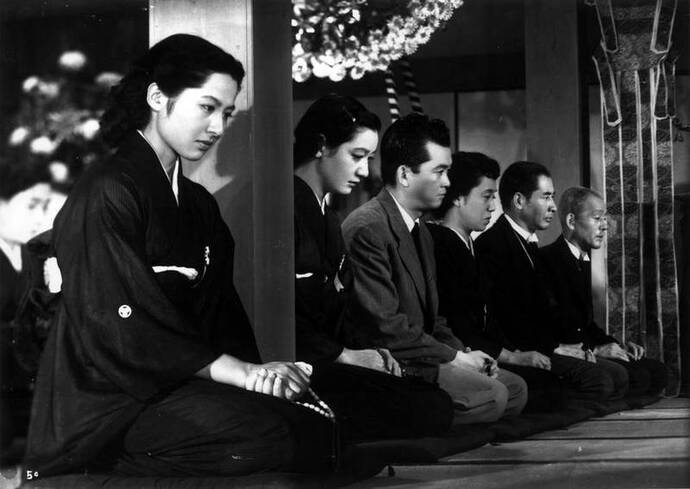
Directed by Yasujir Ozu
Starring Chish Ry, Chieko Higashiyama, Setsuko Hara
Drama (2h 16m)
8.2 on IMDb — 100% on RT
Our second Japanese movie on the list is Tokyo Story , directed by Yasujir Ozu. The drama follows a couple who swap out their cute seaside village for the bustle of Tokyo when visiting their grown-up children. But their demanding lives leave little room for aging parents.
What's so popular about this seemingly mundane story is it's humanity. Ozu paints a personal-yet-universal portrait of post-war Japan: yearning, moody, and gorgeous; sentimental, critical, and intelligent. There simply aren't enough adjectives to describe it!
6. Shane (1953)
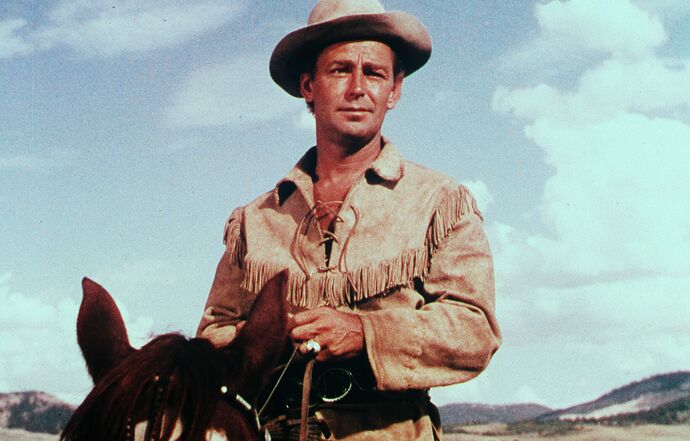
Directed by George Stevens
Starring Alan Ladd, Jean Arthur, Van Heflin
Drama, Western (1h 58m)
7.6 on IMDb — 97% on RT
The opening of Shane is so picturesque it could be a postcard or a painting of the Wyoming wilderness. An early example of Technicolor, Shane is as beautiful as it is touching. You may have even noted James Mangold's reference to it in his 2017 X-Men film Logan .
When a gun-slinging drifter turns up at an isolated ranch, he agrees to help out as a farmhand.
Little Joey (played by Brandon deWilde) idolizes Shane (played by Alan Ladd) and his mysterious macho ways, who squares up to the cruel local baron when he kicks the family off their land.
Shane is a simple but sweet story that plays on the conventions of Western drama to deliver an instant classic.
5. The Seventh Seal (1957)
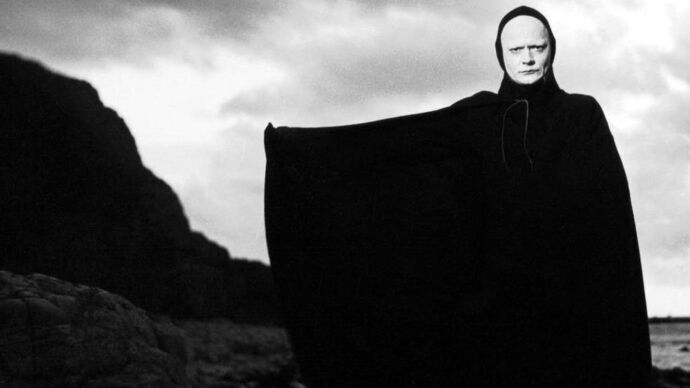
Directed by Ingmar Bergman
Starring Max von Sydow, Gunnar Bjornstrand, Bengt Ekerot
Drama, Fantasy (1h 36m)
8.1 on IMDb — 93% on RT
With this movie that takes us to Sweden during the Black Death, no one can ever say that the 50s didn't have range. Ingmar Bergman was one of the most influential filmmakers to ever emerge on the scene, bringing us this gem of world cinema in 1957.
The Seventh Seal is a medieval fantasy during which a knight plays a game of chess with Death itself. Personified by Bengt Ekerot, Death is constantly evaded by the knight (played by Max von Sydow), who tries to redeem himself into heaven.
The Seventh Seal is truly a one-of-a-kind watch, balancing elements of the B-movie with refined and modern-for-the-time filmmaking.
4. Sunset Boulevard (1950)
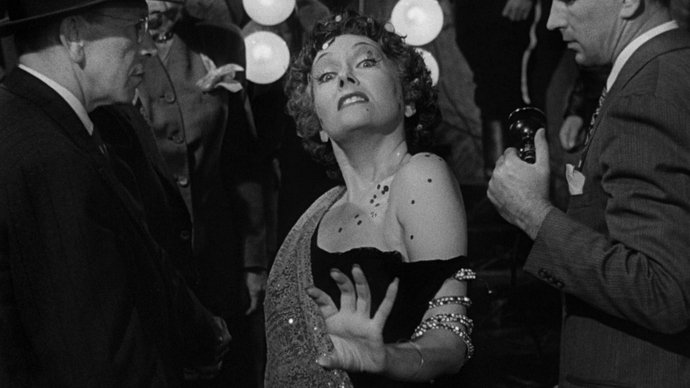
Directed by Billy Wilder
Starring William Holden, Gloria Swanson, Erich von Stroheim
Drama, Noir (1h 50m)
8.4 on IMDb — 98% on RT
Billy Wilder's iconic black-comedy stars Gloria Swanson as Norma, a former silent movie star who's still yearning for the spotlight. When screenwriter Joe Gillis (played by William Holden) comes along, she believes he can be her ticket to reclaiming stardom.
The multiple-Oscar-winning black-and-white classic swept through all the major cities while remaining less popular in suburban areas (mostly because of its glamorous subject matter).
Still, Sunset Boulevard went down as one of the greatest films ever made, exposing the grim side of clinging to Hollywood fame.
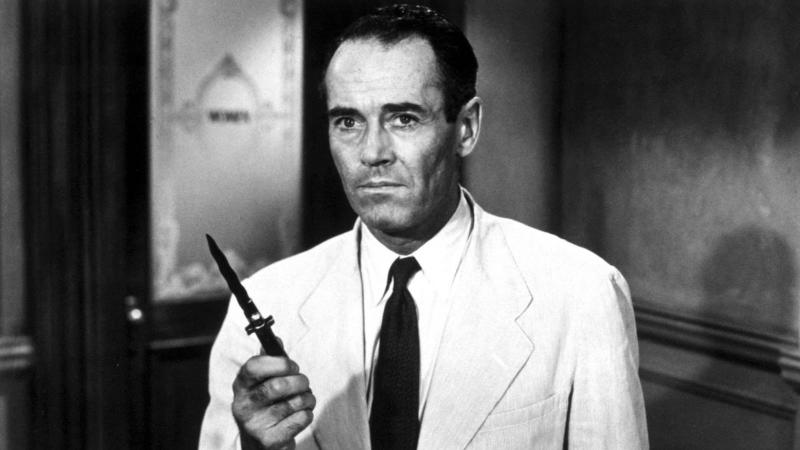
3. 12 Angry Men (1957)
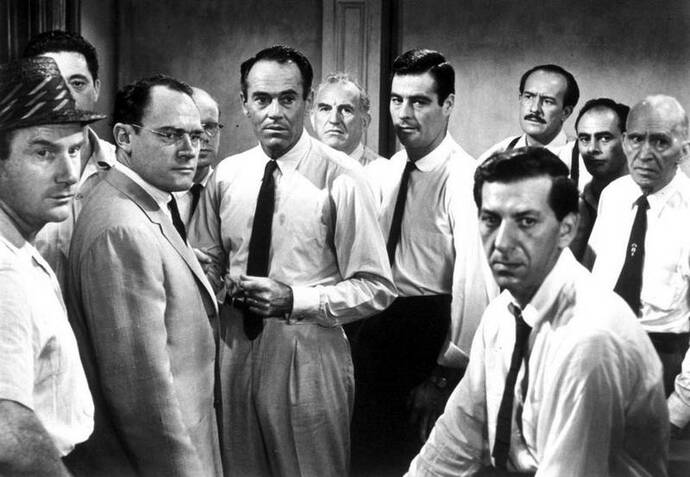
Directed by Sidney Lumet
Starring Henry Fonda, Lee J. Cobb, Martin Balsam
Crime, Drama (1h 36m)
9.0 on IMDb — 100% on RT
One-room dramas are either unbelievably dull... or a spectacle of talent and melodrama. For Sidney Lumet, 12 Angry Men was the latter.
When an impoverished teen stands accused of murder, it's up to 12 (white, middle-aged...) men to decide his fate. Tension rises in the courtroom as the jurors bicker over their verdict, causing viewers to question their own initial judgments.
Lumet uses the small space of a single deliberation room to press a claustrophobic sense of urgency onto the story, navigating the room with creative camera movements.
The film's realism only serves to heighten the strain and drama, engrossing viewers from the onset.
2. A Streetcar Named Desire (1951)
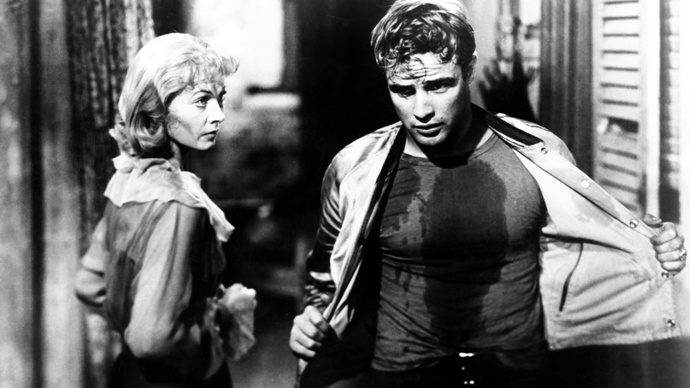
Directed by Elia Kazan
Starring Vivien Leigh, Marlon Brando, Kim Hunter
Drama (2h 2m)
7.9 on IMDb — 97% on RT
Tennessee Williams' Pulitzer Prize-winning 1947 play was brilliantly adapted by Elia Kazan in the early 50s. Starring a handsome young Marlon Brando alongside the delightful Vivien Leigh, A Streetcar Named Desire takes place in the French Quarter of New Orleans.
Blanche DuBois (played by Vivien Leigh) is a middle-aged high school teacher who comes to stay with her sister. Stella (played by Kim Hunter) lives with her husband Stanley (played by Marlon Brando), who's a total brute compared to Blanche's refined ways.
When secrets of mental illness and promiscuity bubble to the surface, things start to get a little... shaky. Kazan's atmospheric drama is carried mainly by its strong performances, solidifying A Streetcar Named Desire as the best Broadway adaptation. Like, ever. Without a Cause (1955)
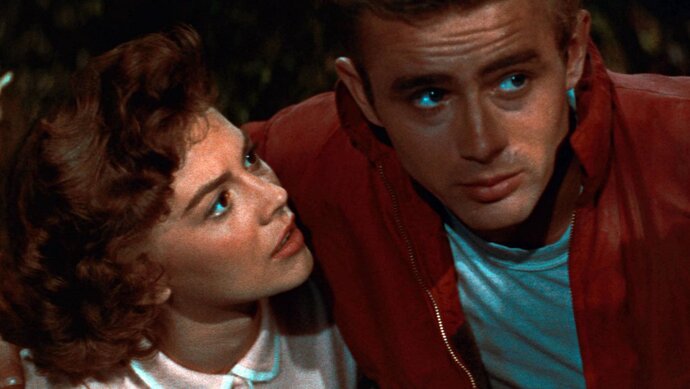
1. Rebel Without a Cause (1955)
Directed by Nicholas Ray
Starring James Dean, Natalie Wood, Sal Mineo
Drama (1h 51m)
7.6 on IMDb — 93% on RT
Rebel Without a Cause was one of the first films—if not the first film—to be made specifically for teenagers. Before then, society was always split into two distinct groups: kids and adults.
When the 1950s came around with its rock n' roll and after-school motives at the diner, sipping on milkshakes and flirting beside the jukebox, things started to change.
A new kind of viewer was introduced: the teenager, which is exactly who director Nicholas Ray targeted. Rebel Without a Cause follows the reckless youth Jim Stark (played by James Dean), who flirts with criminality and clashes with his disapproving parents.
Rebel Without a Cause gave a voice to confused suburban teenagers struggling with alienation, love, masculinity, and rebellion.
Iconic actor and teen heartthrob James Dean tragically passed away one month before this film's release, meaning he never got to see the impact he made on so many people.
Discussion of politics and/or religion will be limited to the plots and themes of the movies or TV movies and series themselves and any religious comments or proselytizing or commentary concerning current politics not in reference to the movies or TV movies and series themselves will be deleted along with all CoC and ToS violations. As well, anything posted that the administer of this group deems to be offensive, off topic or of no value will be deleted. Videos and images that the administrator cannot open must be described in text or they will be deleted. Instagrams are not permitted.

Tags
Who is online
102 visitors
Having seen most of the movies on this list, I think the author made a lot of good choices.
Have to agree, those are all great movies.
I've still watched some of them again within the past year.
My favorite on the list is 12 Angry Men
Are you a lawyer?
No, but I wanted to be a Supreme Court Justice when I was a kid. I like courtroom dramas
Me too. I like watching courtroom movies, and I also enjoyed reading John Grisham novels.
I like John Grisham, too. I think my favorite is (oh, lord faulty memory at work). The one where a lawyer defended a black man who shot 2 white boys who raped and maimed his little girl. They made a movie with Mathew McConahey and Samuel L Jackson.
Did you see the remake of The Caine Mutiny with Keifer Sutherland? The original with Bogart was great but the remake was pretty good, too
Your favourite Grisham movie is A Time to Kill. I've watched all the movies more than once that have been adapted from his novsls - just a few days ago Runaway Jury. .My favourite is The Pelican Brief.
I never saw The Caine Mutiny remake, but I had a drink with Kiefer Sutherland at the bar in our Variety Club Toronto clubroom.
Not only my favorite John Grisham movie but my favorite Grisham novel.
You had a drink with Keifer??? Lucky dog!
Because of my involvement with Variety Club I've come into contact with other movie actors as well. I once guided Sir Michael Caine in preparing a video ad for the charity (He is a raally nice man), and another time I had lunch sitting beside Jodie Foster (who hardly said a word to me).
I like the movies but don't like the order at all
What order would you put them in?
Bridge on the River Kwai then Singing in the Rain then 12 Angry Men
I do think tacos is right about the ten commandments and on the waterfront
The fact that the author chose Rebel Without a Cause as his first choice could mean that he was a teenager back then and became obsessed with the movie back then, or he is a teenager now.
I never actually saw The Jazz Singer, but the name seemed familiar, so I googled it.
Here's a brief excerpt from the results:
Darryl F. Zanuck won an Academy Honorary Award for producing the film; Alfred A. Cohn was nominated for Best Writing (Adaptation) at the 1st Academy Awards .
In 1996, The Jazz Singer was selected for preservation in the United States National Film Registry by the Library of Congress as being "culturally, historically or aesthetically significant".
In 1998, the film was chosen in voting conducted by the American Film Institute as one of the best American films of all time, ranking at number ninety. The film's copyright expired on January 1, 2023, when all works published in the U.S. in 1927 entered the public domain.
The Jazz Singer was also the first 'talkie' movie. It had limited sound allowing the audience to hear the actors. It was not however the first film to have recorded sound through the entire movie, that was the next year with the release of The Lights of New York. Still, I would imagine that hearing the actors talk in a film was quite a shock to some.
What a development from the first talkie to what I imagine AI will be able to do.
I'm not sure of but the first sound may have been Charlie Chaplin's speech in The Great Dictator.
Not according to MOMA (The Museum of Modern Art) as the Jazz Singer released in 1927 is listed as the first talkie which included dialogue. The first full movie with it's entire dialogue recorded and synced to the movie images was The Lights of New York released in 1928. By around 1930, most movies included sound and the era of silent movies was basically dead as studios did not have any silent movies in production.
The Great Dictator was released in 1940
Oh-- the dialogue.
So that makes sense and The Great Dictator definitely doesn't count. Why?
Because, IIRC, there's no dialogue (Chaplin gives a monolgue-- I was surprised to see him speak.) But there's no dialogue!
Since no one else in the film speaks-- the film doesn't have the first (nor in fact any) dialogue!
You're referring to the original 1927 movie. It has been remade in 1952 and 1980. But, notwithstanding the remakes, Al Jolson will always be known as The Jazz Singer. How could anyone ever duplicate his voice singing "Mammy". Will AI be able to do it?
While I did enjoy both the 27 and the 52 versions of the movie, my favorite is still the 80's version. But then I was always an enthusiastic devotee of Neal Diamond.
I like Neil Diamond as well, and I liked his version of The Jazz Singer as well.
Open the Pod Bay doors, Hal!!!
Never trust a computer.
No love for Forbidden Planet?
Neither Forbidden Planet nor When Worlds Collide - obviously the author wasn't a Sci-Fi fan.
Forbidden Planet is one of my all time favs.. Great movie.
It was pretty good for before the time when fantastic special effects started being used.
On The Waterfront (1954]
The Ten Commandments (1952)
My God, how are these not on the list? This is my Number One/Two
Also Ben Hur (1959)
Maybe the author decided to use only one of the possibilities of On the Waterfront and A Streetcar Named Desire. Well, there are lots of lists of the same topic and all are different.
Yeah. I think maybe getting “outraged” about these lists is the most popular reaction.
OUTRAGED? About a list of movies?
Grrrr...
/s
Okay, tiger.
Lists in general get people riled up. It’s a harmless and fun thing to get heated - but not really - over.
When it comes to lists, as the French say, chacun a son gout.
I think if you asked several "experts" to list the top ten, the films included would mostly be the same one. But a stronger difference in the lists would be the order of their favourites.
Many of my movie, car and art articles are with such lists, and there are many lists for each topic. I ASSURE you that no lists are the same whether they are experts or not. Depending on the topic they could be similar but the odds of even two being the same are pretty steep.
Or:
One man's meat is another man's poison!
So of course I did a search for its origin and came up with this:
One moth's lunch is another man's new sweater!
Some of this may be getting pretty MAGA!
Other parts not so much!
And despite everything, Hal still stubbornly refuses to open the Pod Bay doors!
(Why???)
Welcome to the Internet!
I was going to post something about "Who Moved My Cheese" but decided it would require some explanations. ....
You can't fool someone who understands French. "One man's meat is another man's poission."
One man's trash is another man's pleasure.
Because he didn't have a bicycle built for two.
Sacré bleu!
But OTOH, what's sauce for the Goose is sauce for the Gander!
A penny saved gathers no Moss!
And a rolling stone is a penny earned.