
American boat makers feel the crunch from Trump tariffs

 S E E D E D C O N T E N T

NEWPORT, R.I.
MJM Yachts has already felt the sting of tariffs.
CEO Bob Johnstone was negotiating the sale of a 53-foot (16-meter), $2.2 million yacht to a buyer in Monaco when the European Union announced a 25 percent tariff on American-made boats as retaliation for the Trump administration's tariffs on imported aluminum and steel.
The deal is now dead. So is the Rhode Island-based company's plan to expand sales into Europe.
American boat makers are getting pummeled on multiple fronts by tariffs and stand to be among the industries hardest-hit in an escalating trade war.
President Donald Trump's decision to impose tariffs on imported steel and aluminum has driven up the price of those essential materials for many boat makers. Europe, Canada and Mexico retaliated with tariffs on American-made boats. Meanwhile, new tariffs imposed on parts such as engines and navigation equipment imported from China are also pushing up costs.
As a result, they are selling fewer boats, considering raising prices and bracing for layoffs across an industry that employs 650,000 people in the United States at manufacturers, marinas and dealers.
"We have the unfortunate situation of being caught up in every part of this trade war," said Nicole Vasilaros, of the National Marine Manufacturers Association.
Industry leaders have met with Commerce Secretary Wilbur Ross and trade representatives and tried to make the case that this is a truly American industry being used as a pawn in a trade war. Ninety-five percent of the boats sold in the U.S. are made in America. They've also appealed to congressional delegations, especially in states heavy in boat manufacturing, while watching the trade fight escalate this week as China and the U.S. proposed new tariffs that include some hitting their industry.
Among those who have considered reducing their workforce is Regal Marine Industries, which builds everything from sport boats to 53-foot (16-meter) yachts with price tags ranging from $35,000 to $1.2 million. It employs 750 people at its headquarters in Orlando, Florida, and in Valdosta, Georgia, from factory technicians to engineers to office staff.
Before the tariffs were imposed, around 15 to 20 percent of Regal's sales went to Europe or Canada. CEO Duane Kuck said orders from the EU are down 90 percent. They've seen millions of dollars in of cancelations and delays.
"We were expanding prior to the tariffs. The expansion has been put on hold," he said.
Asked whether that means layoffs, he said he would have to see whether the company can grow enough business in the U.S. to offset the loss of exports, a strategy several other boat builders are trying.
The timetable for many manufacturers thinking about layoffs is in the next two to three months, Vasilaros said. She also noted that any benefits the industry saw from a Republican-led tax overhaul have been "almost completely negated" as the industry deals with higher prices for materials and components while losing customers to global competitors.
"The president's trying to help U.S. manufacturing, but we are the key case to show that he's doing the exact opposite," she said.
The industry, Vasilaros said, is being specifically targeted for retaliatory tariffs by countries wishing to make a point to Trump.
For example, Mercury Marine employs most of its 4,800 workers at its headquarters in Fond du Lac, Wisconsin — a county that Trump won by a nearly 2-1 margin in his 2016 presidential victory. Other states with a large boat-making presence are GOP strongholds like Florida, Indiana and Arkansas.
Mercury Marine is the last American-based producer of four-stroke outboard engines. It assembles the smaller, 40- to 60-horsepower engines it makes at a facility it owns in Suzhou, China. Mercury estimates that a 25 percent tariff the Trump administration imposed on the Chinese-made engines would raise the average cost of a small, recreational boat by nearly $2,000.
Mercury CEO John Pfeifer wrote in a letter in May to the U.S. trade representative that similar price shocks in the past caused a more than 50 percent drop in demand for its products. He also said engine manufacturers from Japan and Canada could end up with an advantage in the U.S. market, causing the company to shift highly skilled jobs from the U.S. to Japan.
Tennessee-based Brunswick Boat Group — which is owned by the same parent company as Mercury — warned in its own letter to the trade representative that tariffs could cause a drop in sales, and in turn, layoffs in the industry.
Adding to the frustration for the industry is the fact that American boat manufacturers primarily buy domestic steel and aluminum and were already seeing shortages. Now, they also face rising prices as a result of the tariffs.
Bill Yeargin, CEO of Orlando-based boat builder Correct Craft, said he expects the company's aluminum costs could rise 20 to 30 percent when its contracts are renegotiated this fall. Overseas sales, which make up about 30 percent of the company's revenue, are already at a near standstill.
"We're getting hit on both ends," he said.
The tariffs don't make sense to Johnstone, whose luxury-boat maker is based in the yachting hub of Newport.
He points to the incredible amount of labor that goes into just one boat. He said the yacht that the Monaco buyer canceled after the tariffs "has 8,000 man hours in it. That one boat is four families supported for a year. This really dampens our future."
MJM Yachts makes high-end, fuel efficient boats at a shipyard in Boston, where it employs about 180 people, Johnstone said. The yachts are priced between $800,000 and $2.2 million.
It now faces retaliatory tariffs of 10 percent in Canada, 15 percent in Mexico and 25 percent in the European Union. That means a yacht which once cost $2 million for a European buyer now goes for $2.5 million.
Those three markets represent 69 percent of the U.S. export market, according to the National Marine Manufacturers Association.
The industry is hoping that negotiations between the White House and European Union will at least result in the end of the 25 percent retaliatory tariff. Talks have yielded no news of a change so far.
"The message that we're getting is, 'We're in this war. We have to be to protect U.S. steel and aluminum,'" Vasilar
Tags
Who is online



234 visitors
This article is centered mostly on the boat export market, the domestic market is going to suffer as well.
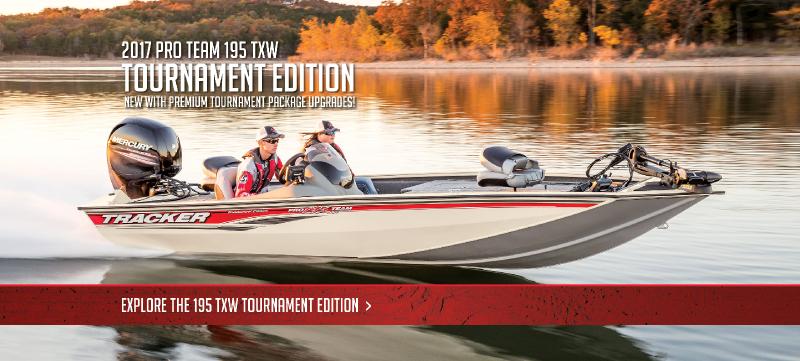
The biggest builder of aluminum boats in the world is Tracker Marine headquartered in Springfield MO. and with plants in Lebanon and Bolivar MO. Two more plants in Arkansas and one is Oklahoma.
Lowe Boats and G3 also build boats in Missouri.
We are a very water oriented state with boating being a huge industry here.
In addition to boats the docks, boat lifts and parts for engines and electronics will be affected by the price increase in aluminum and steel.
Mercury outboards are used almost exclusivity on Tracker and other boat companies owned by Tracker. (Ranger Bass Boats, Nitro, Tahoe, Mako, Sun Tracker, Regency)
Increase in their prices will be passed on to Tracker and in turn the buyer.
There are many industries that are paying the price for trump stroking his own ego.
Yes there are MrFrost. I'm posted a few other articles about those industries and how they are paying the price.
I've got two more than I'll post in the next day or so about other industries that are being hurt by the tariffs.
I heard that the tariffs are killing the GOP in Iowa, with GOP enthusiasm for the midterm elections down 35% and the Dems up 150%.
If I remember correctly you live in WI...The message that Mercury Marine put out should make people in WI, especially Fond du Lac take notice.
The mid terms are going to be interesting to say the least.
I will look for the articles when I can. Busy this time of year... But here is a good one to look at.
I'm sure that these corporations are going to feel some pain. The ones that don't have the resources or ability to move off shore like the boat industry, fishing industry, dairy farmers etc are the ones that are going to really feel the pain and many will not survive if the trade war goes on for any length of time.
One of my old caver buddies used to work there but lost his engineering job some years ago when Mercury started outsourcing to China. Too bad because he's a very talented engineer but he's politically crazy as a loon and I can guarantee that he voted for Trump and believes every RWNJ conspiracy theory. I have no doubt he's a Qanon follower.
LOL, that's quite the description.
Mercury built there up to 60HP in China and everything else is built in here (WI)...A 25% tariff on a Merc 60HP 4 stroke would price it way out of the market.
Has anyone figured out which sectors are improving, thanks to the trade war?
I'm seeing quite a few that have been hurt, but none that are flourishing.
I'm not sure but I believe that the US steel and alum companies are since they are raising their prices and and cannot meet the demand..The alum boat industry was experiencing a shortage before the tariffs and per the article some boat builders are expecting a 20 to 30% increase when they renew their contract.
What I was thinking about, and I could be wrong, (wouldn't be the first time) companies had basically a choice. US steel/aluminum was more expensive so companies looked elsewhere. It was cheaper to buy say steel/aluminum from China (or elsewhere), so they did so. US companies could not match the prices.
IMO that seems like open commerce. Something conservatives say should be allowed. But now they are saying that a company should buy a product from the US and they will raise the prices of the competition.
As the price for the US goods cost more and now the price of imports cost more, either way the ones that will ultimately pay more will be the US consumer.
There you go Ender...The boat industry uses domestic alum almost exclusively and were experiencing shortages from US alum companies before the tariffs. Now the US companies are raising their prices and with the tariffs the manufacturer is caught in the middle.
Prices will go up and that boat/engine/electronics are going to cost more, period.
It will take a while for the ripples to move through the economy. "Protected" industries - steel and aluminum - will do well, initially of course.
But I'm not sure how things will go if the tariffs remain. At what point, for example, will boat-builders move to carbon-fiber or whatever?
Will the rise in finished product prices be acceptable to final customers, or will they go to alternative products?
Wait and see.....
That is what is happening right now.
Kavika, what options do you see for the boat industry?
One Aus APBA boat racer I worked with was open to alternate materials for some components that had been steel, alloy and brass, but for other reasons.
I am not familiar with boats in general, so not sure of cost implications by switching to composites.
I'm not sure dave, but in the case of Tracker Marine they make thousands of alum boats and I have no idea what they could use beside alum. Their fiberglass boats (nitro, ranger, tahoe) are a hell of a lot more expense...
I think that they may be caught in a bind without much of an alternative.
I imagine any kind of a move like that would fall under long term planning. I wouldn't know how to project the costs and prices differences if composites became core to higher volume production.
I think I have said it before, this tariff situation seems a result of using radio talk show and late night tv talk show hosts as subject matter experts.
The tariffs should help restore American production of steel and aluminum, when we can get that back costs of materials we should be making here will be lower
I don't see that happening charger. Both the steel industry and alum industry (US) have raised their prices. I don't see them every lowering their prices unless there is competition and right now there isn't any competition for them with the tariffs on imported steel and alum.
Gosh, K! Are you saying that corporations might take the money and run?
I'm shocked! Shocked, I tell you!
But more jobs will be lost, and the impact on the economy devastating. And its not just me. The small number of jobs added are dwarfed by the jobs lost in other parts of the economy. And consumers are hurt by all of it with higher prices.
Who is we, your company or the US?
The administration had to come up with a $12 billion bailout for farmers. The fishing industry is having a huge problem as are other industries...
I'm sure that there will be.
Lobster fisherman in Maine and Florida are being hurt because of the tariffs and well as the fishing industry in Alaska.