
19th Amendment anniversary: Evaluating Woodrow Wilson's complicated contributions to women's equality


 S E E D E D C O N T E N T
With today’s heightened awareness of identity politics, President Woodrow Wilson’s racism has become posthumously clear. This complicates Wilson’s legacy, especially when it comes to his contributions to the women’s suffrage movement.
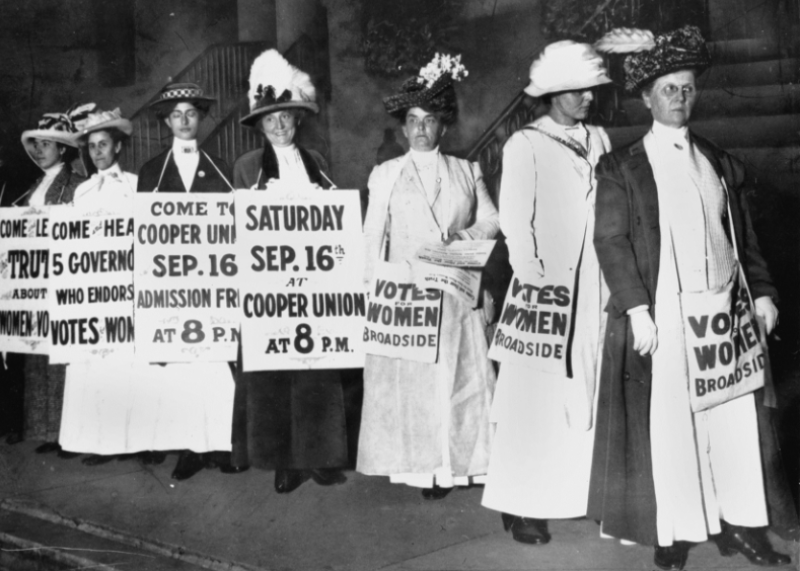
On today’s anniversary of the signing of the 19th Amendment, which gave women the right to vote, it’s worth examining the events that led Wilson to support this amendment, for black women as well as white.
Because Wilson did not begin as a crusader for equality. He supported the status quo — until history backed him into a corner.
As the first Southerner elected president since the Civil War, Wilson presided over the segregation of the federal government. He nodded at measures mimicking the Jim Crow laws that had sped across the South in the wake of the U.S. Supreme Court’s 1896 decision, Plessy v. Ferguson, which enshrined the policy of separate but equal.
Wilson wasn’t enlightened about gender either. He labeled women who campaigned for suffrage “ totally abhorrent .”
But World War I changed him. Wilson became the most highly placed advocate for universal suffrage until the ratification in 1920.
So what prompted this evolution? The Great War had brought many women into public service as nurses, ambulance drivers and telephone operators near the front lines. The trend was in favor of what newspapers called the “ New Woman ,” although male sentiment remained mixed.
Yet the day after Wilson announced the 14 Points , his platform for peace, he reversed his long-standing opposition to a federal suffrage amendment. He reminded surprised congressmen that Britain had enfranchised women, as had more than a dozen other wartime Allies.
“Are we alone to refuse to learn the lesson?” Wilson asked , “Are we alone to ask and take the utmost that our women can give — service and sacrifice of every kind — and still say we do not see what title that gives them?”
Wilson pleaded with Southern congressmen, who he knew risked their seats if they supported a federal amendment that trumped state election laws. He converted not a single one. Many denounced him.
Tags
Who is online
81 visitors
I find it fascinating how history becomes foggy over time. But one thing is for sure, necessity is the mother of invention and no better time to reinvent a nation than wartime.
I find it even more amazing how history has this need to repeat itself, today we have many people who are bent on fighting change to the "status quo" in regards to the rights of some Americans, when these groups who wish for equality in everyday things like the right to marry the person you love and, not the person that "society" says you should love I see us as no further along than we were in Wilson's day as a society. There are other things that I see and, I'm sure that you see them as well, some of us just don't want to admit to it.
It would seem that wasn't true in 2015 and, I believe if you check the states involved in discrimination of LGBTQ rights, you will see that most of them from 2015 still discriminate.
The SCOTUS had to come out and, say that it was discrimination to deny same sex marriage but, some states are finding ways around that ruling.
Now they are. but that wasn't always the case, even as recently as 2015.
But there was resistance to it. Not surprisingly, that was mostly from the southern states.
That's their problem.