
Photo Essay: The Ancient Chinese Town of Ciqikou

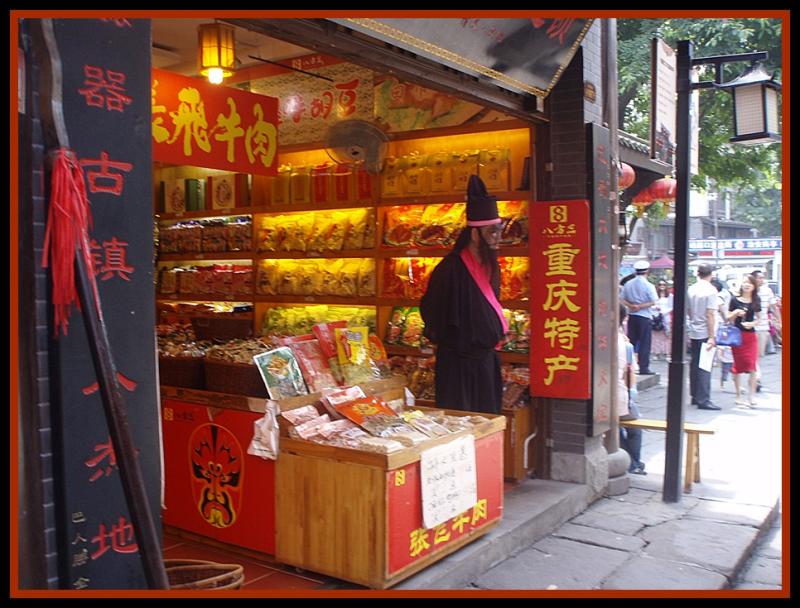
Photo Essay: The Ancient Chinese Town of Ciqikou
In Chongqing (during WW2 known as Chunking - where the American Flying Tigers were based) there is within the city an ancient town called Ciqikou (pronounced Chi chee 'koh) that I have visited a few times. It is pretty touristy and usually fairly crowded.
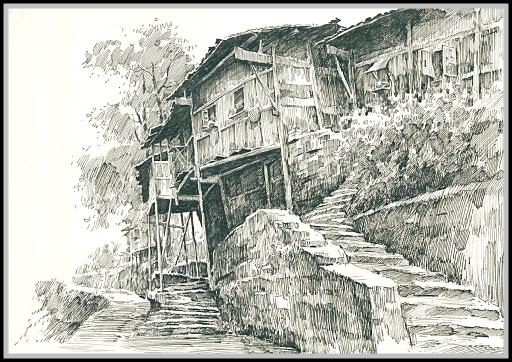
An artists's sketch of a hillside in old Ciqikou
From China Highlights:
Ciqikou is on a hill above the Jialing River in the western part of Chongqing city. It is a small section of city with about two city streets and back alleys that are set aside as a pedestrian shopping and dining area.....It is now a part of the city of Chongqing, but it was once was a prominent market and trade town next to Chongqing. In the Ming Dynasty, it was a river port and market town. Goods were transported over land and water. Some buildings have been renovated and preserved.
This area is now a part of the Shapingba District of Chongqing in the western part of the urban area. There was a town there a thousand years ago. It was a busy commercial dock in the Ming (1368-1644) and Qing (1644-1912) Dynasties. It is sometimes called Small Chongqing or Porcelain Town because the place hasn’t been as modernized as the rest of Chongqing. It is also called Porcelain Town because town people manufactured and traded porcelain. Porcelain is still sold in the shops.
We live in a different part of the Shapingba District of Chongqing - not so close to downtown, called University Town, as there are three large well wooded and landscaped university campuses a short walk from our home, and we often take advantage of their beauty.
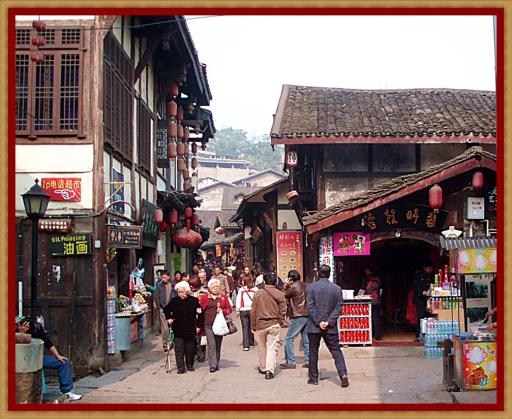
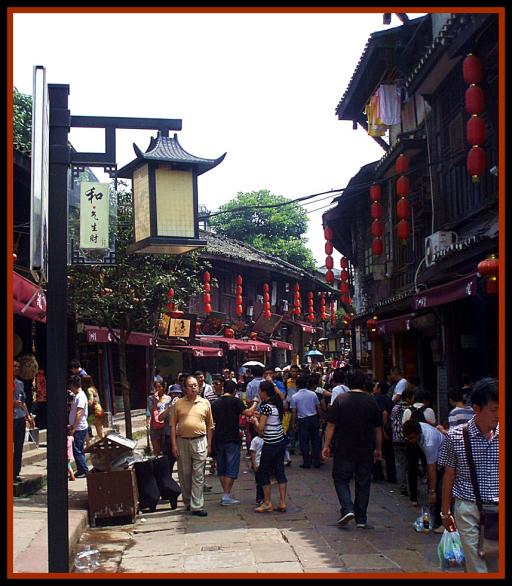
1. Narrow alleys divide the area:
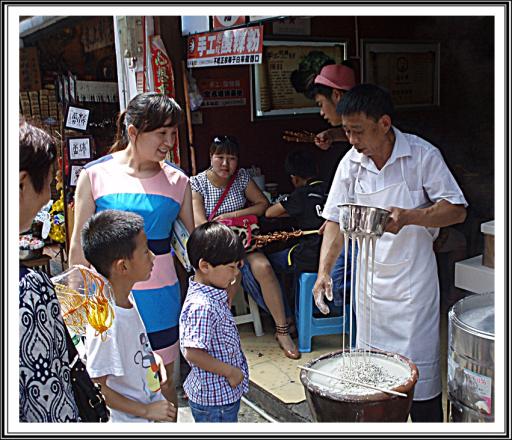
2. Many demonstrations are given there, especially of the ancient way of doing things: This is one way of making noodles.
3. Ancient clothing is often worn by the store staff:
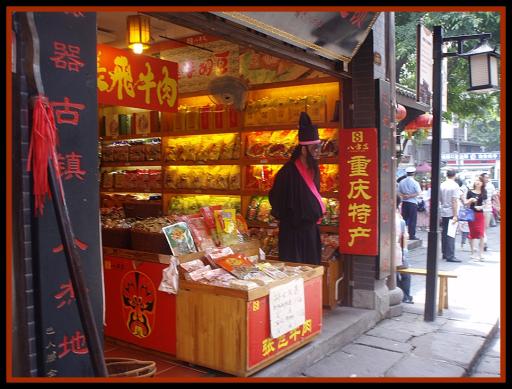
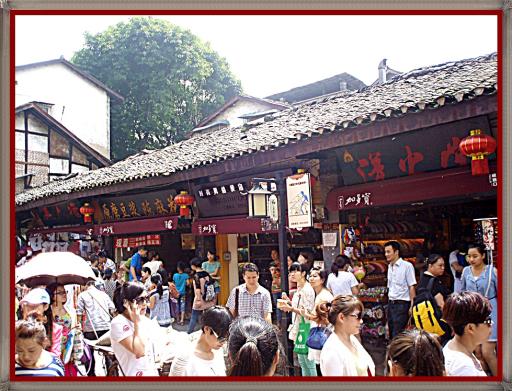
4. It's a primary tourist destination for the Chinese:
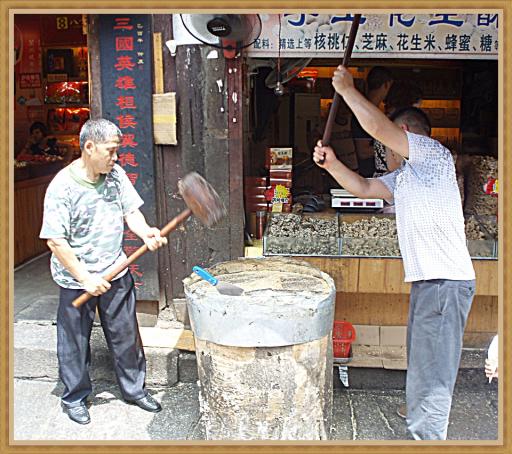
5. I'm not sure, but could they be beating wheat grains into flour?
6. The lamposts emulate what may have been there centuries ago:
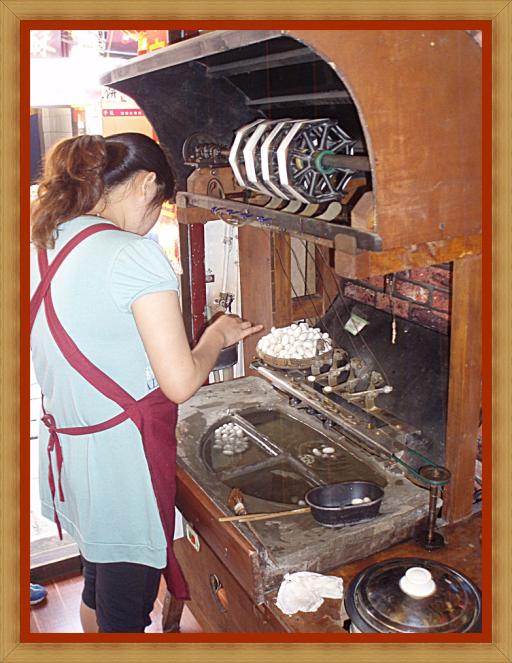
7. Demonstrating the way silk threads were created historically, by boiling the cocoons and then unraveling the thread onto wheels:
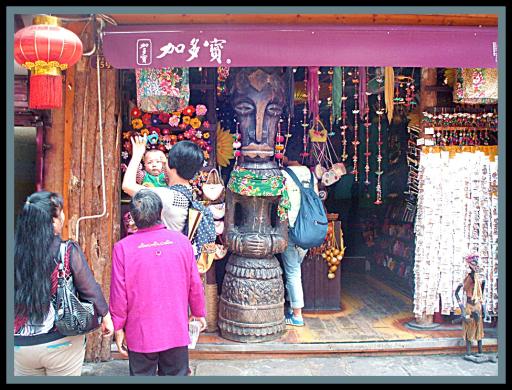
8. That statue could either be guarding the store, or beckoning people to come in:
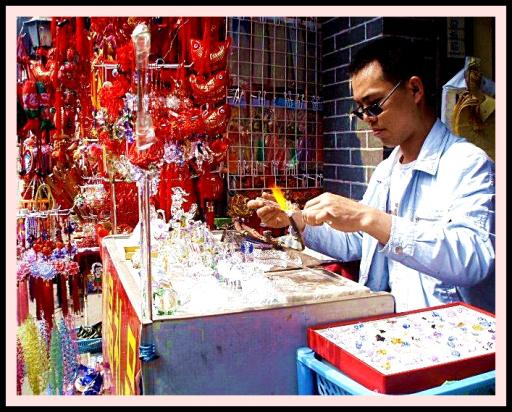
9. For those who collect miniature glass animals:
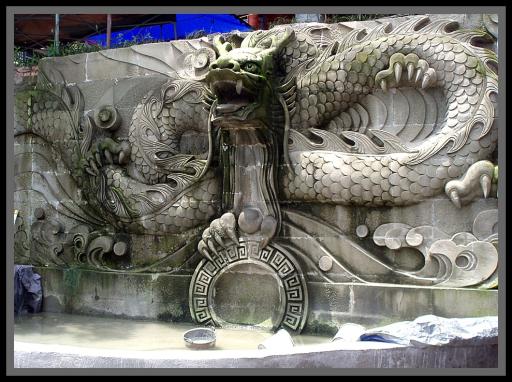
10. That dragon wall is about 10 feet high.
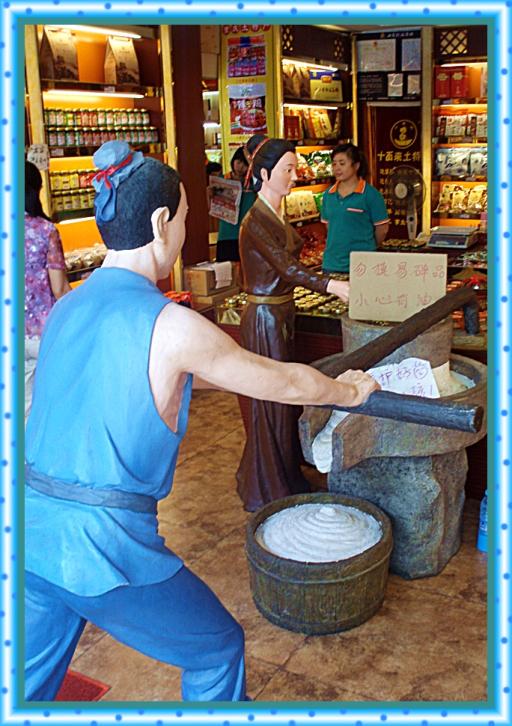
11. I'm not sure what these statues are grinding into pulp:
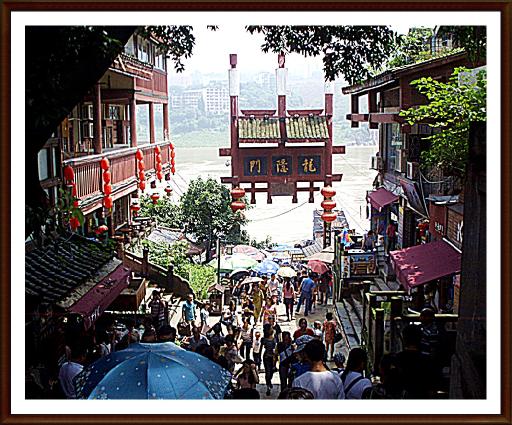
12. The view towards the Jialing River, and the modern city on the other side:
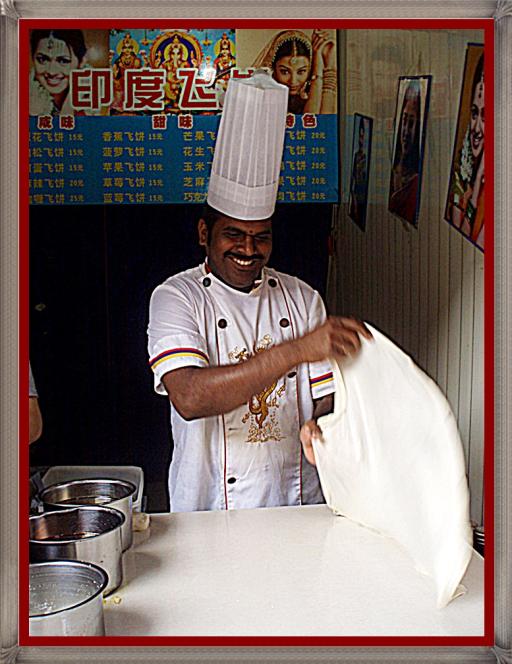
13. Adding to the variety of exotic foods available there, his 'roti' was pretty good, as was his friendly smile:
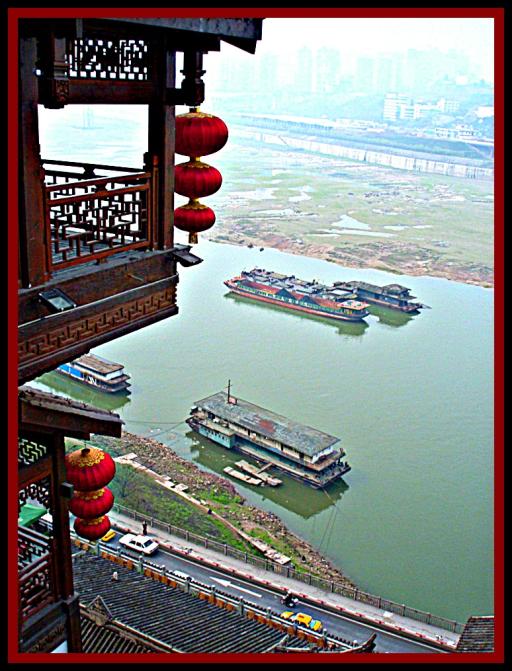
14. Looking down at the Jialing River, that joins the Yangtze River downstream
Tags
Who is online
83 visitors
For those of you who have not had the privilege of touring China, I am doing my best to introduce you to the wonders of both ancient and modern China with my photo essays. I hope you find them interesting and educational.
You are and we do!
And your doing a great job Mr. China Essay.
Another good essay Buzz.
he is a good teacher
Thanks, Charger. I appreciate that you've always been supportive.
Thanks, Kavika. I'm happy that at least a few members take a little time out from politics and religion to view them.
Dear Friend Buzz: #9. Glass animals.
At the Corning Museum of Glass they will make anything you want out of glass to take home as a keepsake.
There are also workshops where you can make your own.
I commissioned one of the artists at the museum years back.
She made 18 different Yads (Torah pointers for following the Torah without actually touching the Holy Text).
On his thirteenth birthday we will include his choice of the one he likes best along with his Bar Mitzvah set of Siddur Yom Yom, Siddur Shabbat, Talit, and T''fillin (Daily and Sabbath prayer book, prayer shawl and garments for daily pre-dawn and morning prayer garments).
The use of glass for artistic purposes seems a universal theme, does it not?
Great photo essay.
Thanks.
Enoch.
And an excellent comment from you, Enoch.
The quality of the photos is excellent … each one demonstrates strong composition and exposure … and, even though it goes without saying that the subject matter is unique and a feather in the NT cap …
… still, I'm glad I said it.
So am I, thank you. I would be happier if the sharpness and clarity were a little better in reproducing the photos on NT. I don't blame you for preferring soft focus for your photos.
Great pics. The dragon wall brought up a question for me: when I was first going to China I wanted to find some kind of dragon-related trinket to bring home but couldn't find much at all that was of good quality. Lots of really nice horse-themed items though. I think it's a cultural misperception here in the US that China has a love for dragons, despite some in parades and things like that. So I'm interested in what you've noticed, Buzz.
I did eventually find a pretty neat cast iron dragon doorstop.
Before coming to China, I thought of dragons as evil flame-throwing monsters same as any westerner, but here it is revered for various reasons, and as positive symbols, including one of the Chinese Zodiac symbols. Better than I can, China Highlights explains them:
As you can see, I wasn't afraid of this dragon: