
Meet the Voters on Opposite Sides of the Keystone Pipeline


While President Barack Obama's veto on Tuesday of a bill to approve the Keystone XL pipeline marks yet another chapter in the politics of the controversial energy project, a legal fight continues to stop TransCanada from filing for eminent domain to gain access to the land they need to lay the pipe down in Nebraska.
"There isn't enough money on earth to make us believe in this project," Jenni Harrington said, standing amid the equipment used to work the land on her family farm in Bradshaw, Nebraska. "I am not creative enough to think of anything that they could do to make me change my mind about this project."
"It feels wrong that a foreign company can come in and place an easement on our land against our will."
Harrington and her three sisters own the farm, which has been in their family since her great-great grandparents homesteaded the land in the 1860s. The Keystone XL pipeline's proposed route goes right through one of her sister's plots, and the family has built a small barn powered by solar panels and wind energy right on the route as a not-so-silent protest against the project.
"It feels wrong that a foreign company can come in and place an easement on our land against our will," Harrington said. "It feels wrong that a toxic poisonous substance can be placed in a Pipeline across our land where there is fertile soils and fresh water underneath."
 FRANK THORP / NBC NEWS
TransCanada has filed to condemn the land of over 75 landowners along the proposed route in Nebraska, including Harrington's sister's, where they have not gotten permission to lay the 36-inch pipeline. Those proceedings, which could take as long as year, are now on hold while landowners who have been served with eminent domain paperwork fight the constitutionality of the law that gives TransCanada permission to do build on their land.
"[The Keystone XL project] is a monumental success in light of how political this project has become."
"It's not uncommon, obviously, to get somebody who is not in favor of the project, and we do try to accommodate those people," TransCanada's land manager for Keystone projects and development, Andrew Craig, told NBC News. "Very early in routing, when we're doing the studies, we're meeting with people, if there is someone who is not receptive of having the project on their property, we certainly will look at rerouting to extent we can to get onto another property where somebody is more agreeable. Unfortunately you can't always do that."
Those holding out are the outliers, with 90 percent of landowners having given TransCanada permission to lay the pipe down in their land. Craig calls that "a monumental success in light of how political this project has become."
TransCanada asks landowners for an 'easement' to bury the Keystone XL pipeline in the ground along the proposed path, and the company pays landowners not only for that permission but for any damage the construction process may create. Once the pipeline is buried, the land is returned back to way it was before construction, and landowners can farm and drive over it normally.
TransCanada has obtained 100 percent of the rights to lay the pipeline through South Dakota and Montana, the other two states on the proposed route. But if President Obama were to approve the 1,179 mile pipeline today, Nebraska would be the hold up.
In Diller, NE, Charlie Barber already has another TransCanada pipeline in the ground on his land, and he has given them permission to lay the Keystone XL pipeline there as well.
"For me it was a very easy decision, like I said, once you're educated about it, and of course money don't hurt either, but you know, it's something you need," Barber said.
"This is my livelihood... I absolutely don't want to see it destroyed in any way, and I don't see that the pipeline is going to affect that."
Walking on the snow-covered farmland where the previous pipeline is buried, Barber was quick to point out how he can't even tell the difference between the land with the pipeline and the land without it. Small metal signs warning to call before digging in that area are the only physical markers showing the pipeline is buried there.
"This is my livelihood, I've got kids involved in the farming that are going to take over when I retire, and I absolutely don't want to see it destroyed in any way, and I don't see that the pipeline is going to affect that," Barber said.
But for opponents to the pipeline, concerns over what would happen to their land, and to the crucial aquifers that supply the regions water if the pipeline were to leak, continue to drive their fight against its construction.
"They claim 'if it leaks.' For us, it's 'when it leaks,'" Russell Eagle Bear, a tribal historic preservation officer for the Rosebud Sioux Tribe in South Dakota, said. "And it may be alright for a period of time, but when it leaks, and when it starts contaminating water, between us and the Gulf of Mexico, we're going to be hurting."
The entire proposed route avoids tribal lands, according to TransCanada, but the Rosebud Sioux Tribe is worried that their land, which is adjacent to the proposed route, could be affected by a potential spill.
"Right through here is where the corridor of the pipeline is going to be coming through, right here, and I'm standing on the corner of tribal land," Tribe member Paula Antoine said, pointing to land just feet away from a camp they have set up. "If (the pipeline) breaks through here it's going to affect our tribal land."
TransCanada points to a number of special conditions applied to the pipeline in an effort to increase its safety, and they believe research shows that concerns of a leak are "not an issue."
"Anything could happen, we don't know," TransCanada's Andrew Craig said. "But we remain confident that when Keystone is ultimately built, it will be the safest pipeline that has ever been constructed in this country."
Tags
Who is online
76 visitors
What??!??!???!!! You, CornHusker??? YOU are a supporter of Keystone??? I'm shocked!
[Mal struggles to conceal his smirk...]
Well... count me in as one who thinks it makes no difference whatsoever whether we have that pipeline or not!!! One way or another every last drop of oil, every last crumb of coal, and every last whiff of natural gas will be extracted, sold, and burned... for thebenefitof profiteers, theconvenienceofindustrialmankind, and much to the detriment of every living thing on this planet... including the humans who insist on living in denial.
And it will be transported no matter if there is a pipeline or not.
Washington State has just entered a proposal to build a pipeline from Spokane, the port of entry for the rail oil shipments to the coast where the refinery is located.
The State may be hard core liberal, but we know how to move oil most safely. And it is by pipe in the ground.
It's going to happen one way or the other, I support it cause it IS the safest way to do something that is going to be done anyway.
Stop the need for oil and you can leave it where it is safest, in the deep underground.
Do you have a reason for supporting the pipeline or is it just the Right Wing thing to do?
The tar sands cannot be cleaned up. Whatever they touch is permanently dead. Permanently. Land. Water. Permanently toxic.
Some day you will realize that underground seepage is the hardest to find, the easiest to cover up, and the fastest to pollute beyond its boundaries.
Deep underground seeps into water supplies. Drink up.
Oil sands
Yeah,
the Lac-Mgantic rail disaster
This doesn't happen with pipelines.
Don't get me wrong I'm against bringing this human killing substance up from the depths of hell when it should stay buried forever.
All I'm saying is this, the SAFEST way to move this shit today is by pipeline. AND, since it is going to be moved whether we want it moved or not, we should be moving it in the safest manner possible.
That is all I'm saying.
True... But this does...
Pipeline spill into Yellowstone River

And this in Mayflower Arkansas...
Not to mention this, around the globe...
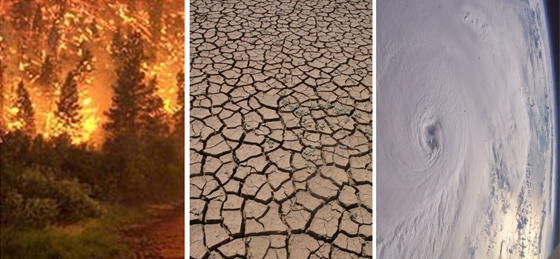
I do agree on the eminent domain issue, but realize one thing.
The Name of a company is not indicative of what nationality the company or corporation is.
TransCanada is a US corporation, not a Canadian one. so, the issue of standing is moot.
Mal, does it cause hurricanes too? LoL
Personally, I'd try anything I could to avoid transferring this sand oil across this country. I don't see why they don't build a refinery in Canada to handle this. It looks like we're ready to blow up anyway with all those pipelines in that picture I put up earlier in this article. Lord, if we ever have a big earthquake, we're going to be in a really big mess.
AS I said above...
I'm not unsympathetic to the needs of humanity and the environment, and i agree that eventually human interaction effects the environment we live in.
That being said, we also must be practical, and mankind has pushed itself to doing things that in the future can destroy us all. (Nuclear power generation is a good example of that not to mention the weapons angle)
We have to be practical in the way we deal with things today that we have to make and do as safe as possible. That's all I'm saying.
Both sides have there disasters to point to, I don't want disasters that will kill many people all at once today rather than a possible disaster that could maybe kill many years from now. I understand speaking for the future generations but, who speaks for those alive today?
We have to consider both in our deliberations, wouldn't that be the smart thing to do?
NWM..... I completely agree and under what you are saying.
And the biggest spill of all...Kalamazoo River, tar sands oil spill. 3 years and millions and millions of dollars later, and it still isn't cleaned up.
The simplest question, is why do we need it at all?
[Mal shakes head... sighs...]
Well... Yes... Indirectly.
Here is what I said earlier...
When we selfishly and foolishly meet our needs today, we mortgage our kids future. And while I am all for energy independence, this particular kind of sludge that will be pumped through this pipeline is particularly toxic. So yes, while there are other pipelines going through the country, they are not carrying this stuff. The chemical most in question is diluted bitumen. Here is what happens with that stuff:
At room temperature, bitumen has the consistency of peanut butter, thick enough to hold in your hands. To get it through pipelines, liquid chemicals must be added to thin it into whats known as dilbit, short for diluted bitumen.
Last month, the National Transportation Safety Board issued a report that was harshly critical of the federal governments regulation and oversight of pipeline safety following a spill of more than one million gallons of dilbit into the Kalamazoo River in Michigan in 2010. The accident underscored not only how different dilbit is from conventional oil, but how unprepared we are for the impending flood of imports.
After the dilbit gushed into the river, it began separating into its constituent parts. The heavy bitumen sank to the river bottom, leaving a mess that is still being cleaned up. Meanwhile, the chemical additives evaporated, creating a foul smell that lingered for days. People reported headaches, dizziness and nausea. No one could say with certainty what they should do. Federal officials at the scene didnt know until weeks later that the pipeline was carrying dilbit, because federal law doesnt require pipeline operators to reveal that information.
The 2010 spill could have been worse if it had reached Lake Michigan, as authorities originally feared it might. Lake Michigan supplies drinking water to more than 12 million people. Fortunately, the damage was restricted to a tributary creek and about 36 miles of the Kalamazoo, used primarily for recreation, not drinking water.
That probably wouldn't take much...
That is a reasonable question to ask in my opinion.
It might be interesting to know who really owns TransCanada Pipelines, since so many major corporations in Canada are owned by American corporations.