
Trump Didn’t Ruin the Church—He Revealed It


I don't belong to any organized congregation. If I did, I would want it to distance itself - vehemently - from the Golden Calf worshippers.
Is there any kind of crime or immorality that Donald Trump has not cozied up to? Sex... including with underage girls... Fraud - fake university and failed (??!!) casino.. Hucksterism - overpriced Bibles and gold-colored basketball shoes.
 S E E D E D C O N T E N T
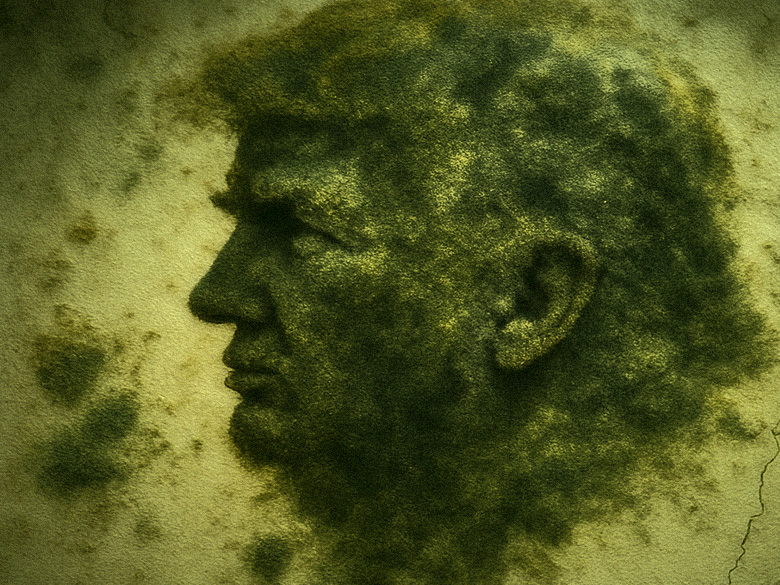
Image created with DALL·E
I’ll admit it. It took me a while.
But I’ve finally come around. Donald J. Trump is God’s chosen one—for such a time as this.
Not because he’s righteous. Not because he’s repentant. Not because he knows the first damn thing about Jesus. But because sometimes the only way to expose rot is to rip up the floorboards. And Trump—bless his bloated, gold-leafed ego—is the blacklight America needed to see just how foul things have gotten. Especially in the church.
He didn’t bring corruption to Christianity. He just stopped pretending it wasn’t already there.
The Evangelical Wet Dream
Trump’s America is what white Evangelicals have always wanted: strongmen over shepherds, culture war over compassion, domination over decency. He didn’t hijack their faith. He manifested it.
They called him Cyrus. They anointed him King. They prayed over him, cried for him, wrapped him in flags, and sang worship songs with his name wedged in between Jesus and “USA.”
Because he offered them exactly what they wanted: power without accountability, politics without conviction, and a golden idol that looks suspiciously like them. Fearful. Angry. Entitled. And ready to crucify anyone who says otherwise.
The Gospel of Grift
Trump didn’t just reflect the church’s public face—he mirrored its machinery.
The NDAs. The hush money. The abuse swept under the pews. The predators replatformed because they “repented” just long enough to sell books or boost polls. Every time the church covered up scandal in the name of “protecting the witness,” they paved the road for Trump’s gospel of grift.
The sheep didn’t scatter—they clapped . Because in this twisted system, justice is weakness. Mercy is for liberals. And truth is whatever the pulpit or platform says it is that week.
He’s not the Antichrist. He’s the mascot. And the church cheered while he pissed on the altar, because at least he kept the libs out.
A Cleansing by Revelation
Jesus flipped tables in the temple to expose greed masquerading as worship. Trump flipped the whole damn church and exposed something worse: a hollowed-out shell that speaks Christ’s name but doesn’t know his ways.
And in doing so, he gave us a gift. An apocalyptic vision—not in fire and brimstone, but under the sick glow of a blacklight, where every hidden stain finally shows. Trump was the divine mold test. He pulled back the drywall, and what we saw crawling beneath was generations of rot. It didn’t start with him—but it sure as hell couldn’t hide after him.
Like all proper revelations, it wasn’t gentle. But it was true.
Loaves and Fishes, Blood and Meat
Where Jesus multiplied loaves and fishes, Trump offers up something else entirely.
Blood. Anger. Victims.
He doesn’t feed the hungry—he throws them in the grinder. Chews them up. Spits them out as political red meat. And the crowd eats it up. Every time.
It starts with immigrants. Then journalists. Then the homeless. Then queer people. Then women. Then apostates. Then moderates. Then the ones who don’t clap hard enough.
Eventually, it doesn’t matter who it is. The grinder doesn’t stop. And when it runs low, it turns on its own.
Because in this faith, the body of Christ isn’t broken for you—it’s just ground up and served to keep the outrage machine alive.
Made in Each Other’s Image
Trump is their god, and they are his people. Made in each other’s image. Driven by grievance. Addicted to cruelty. Paranoid. Petty. Obsessed with winning and terrified of being forgotten.
They preach Christ, but crucify him daily in their politics, pulpits, and platforms. They hunger not for righteousness, but for revenge. And Trump gave them permission to stop pretending otherwise.
He didn’t ruin the church.
He revealed it.
And in the revealing, he handed us a choice: keep playing dress-up with wolves in sheep’s clothing—or finally start flipping some tables ourselves on the way out the door .
Whatever
Tags
Who is online
86 visitors
that photo absolutely disgusts me
They worship him. WORSHIP!
Good article, Bob
I like this:
The white evangelicals and some RCC churches haven't been Christ-like in a very long while. Harken back to the days of Reagan's Moral Majority. Barry Goldwater cautioned against the religious right getting their claws into politics and he was right
Ah yes. If only white evangelicals were as pure and christ like as their black brethren. [deleted][✘]
There is an estimated 45,000 different denomination of Christianity with some 2.4 Billion attendentants. The article calls out less than 14% (and declining) of the US population. A tiny fraction of people.
The issue isn't about religion, Christian or other. It's about power. It's about a tiny minority of people that can't even get along amongst themselves trying to organize against a world that has passed them by. Whatever tiny gains they've made these last few years will crumble under the massive weight of reality.
and it's always over a few words in the Bible that one person interpreted one way and somebody else another.
And they started wars and persecuted people because of those small differences
What's crazy is that the words they fight over are copies of translations of copies of translations...... over two thousand years!
There is zero probability that any three successive words are conform to Christ's words, much less entire gospels.
I think we can hear His general message very clearly: "Love one another", "Do with others as you would have them do with you".
But arguing about specific words is nonsense.
Seriously? You actually believe this? The Bible is the most attested ancient writing ever. They don't need to retranslate translations. They have over 10,000 manuscripts dating from as early as late second or early third century, meaning somewhere between 150 to 250 AD. Why would they retranslate a translation if they have these to work with? The idea that today's translations are the result of the child's game "telephone" is just an urban legend that keeps getting perpetuated because people think it makes their argument stronger. It doesn't because it isn't true.
Those copyists and translators were human beings. They made mistakes, compounded over two thousand years. They intentionally made embellishments, corrections and improvements... over two thousand years.
We do not have thousands of manuscripts from the 2nd and 3rd Centuries. We have a few thousand fragments, most of them only a few words or sentences. Modern scholars depend on medieval sources, because that's what they have.
I'm bilingual. I know what "translation" entails. Languages do not handle ideas identically. They each have different ways of expressing even very similar ideas. A translator is constantly forced to choose between staying close to the source's words, and staying close to it's meaning. Two translators will never produce identical translations of the same source.
Here's a good start on the subject:
Dan McClellan posts lots of Bible-related videos, often about translation issues.
First off, Dan McClellan is a laughably unreliable source. I've watched enough of his videos to know.
Second...
I didn't say we had thousands of manuscripts from the 2nd and 3rd centuries. I said " dating from as early as late second or early third century ". Both the Codex Vaticanus and Codex Sinaiticus are nearly complete manuscripts of the entire Bible and both are pre-medieval. And it is true that the earlier they are the more fragmentary they are, but that doesn't mean they are not important. Even one sentence is enough to see if that sentence has changed throughout time. And the more we have of the manuscripts earlier than either codex the more we can check the accuracy of those codices.
Yes, they did. However, almost all of them involve spelling errors of person's names or some other minor issue. Almost none that have any significant meaning. Even so, the question raised by your statement is, how do we know that? Answer is, again, because we have over 10,000 different manuscripts to examine with which to note such things. We know they got it wrong. We wouldn't be able to do that if we didn't have the manuscripts, even the fragmentary ones.
True. Language isn't just sound or written word. It is inextricably bound to culture, times, manners and customs.
Depends on the goal of the translation. A translation striving for formal equivalence is primarily trying for a word for word equivalence to what is being translated. They aren't as concerned with meaning. Translators going for dynamic equivalence, thought for thought, has the harder job, as they are trying to convey the idea being translated while trying to stay as formal as possible.
Not sure I agree with that but it doesn't matter.
The NIV is a dynamic translation that tries, as a secondary consideration, to stay as formal as possible while the NASB is a formal translation. The New Living Translation is a dynamic translation that doesn't concern itself with formal translation nearly as much as the NIV. It's intended for younger people at lower reading levels.
There's no significant difference between the three, even though they aren't identical.
Bye
America is "only" 350 million in a world of 8 billion...
The article is about America, where nutzoid evangelism is not tiny.
[deleted][✘]
The concept of organized religion doesnt bother me at all, religions are a human created attempt to explain the unexplainable - why are we here and why does anything exist? I think those questions never will be and cannot be answered, but they are legitimate questions.
Religions are human constructions, not God's constructions, and are cultural in nature. Being human creations they are totally susceptible to human corruption.
It doesnt bother me at all that people believe Jesus Christ is the son of god. Its as good a religious belief as anything else, and I am Catholic myself. I accept the premise. Other people in other religions accept different premises which come from their long ago cultures. None of this bothers God, who has his own agenda.
The world needs more clarity.
She does indeed!