
╌>

Researchers Grapple With Loss of Funding for Cancer Studies

  

Category:  News & Politics

Via:  krishna  •  last year  •  17 comments

By:   Tori Rodriguez, MA, LPC, AHC

Researchers Grapple With Loss of Funding for Cancer Studies

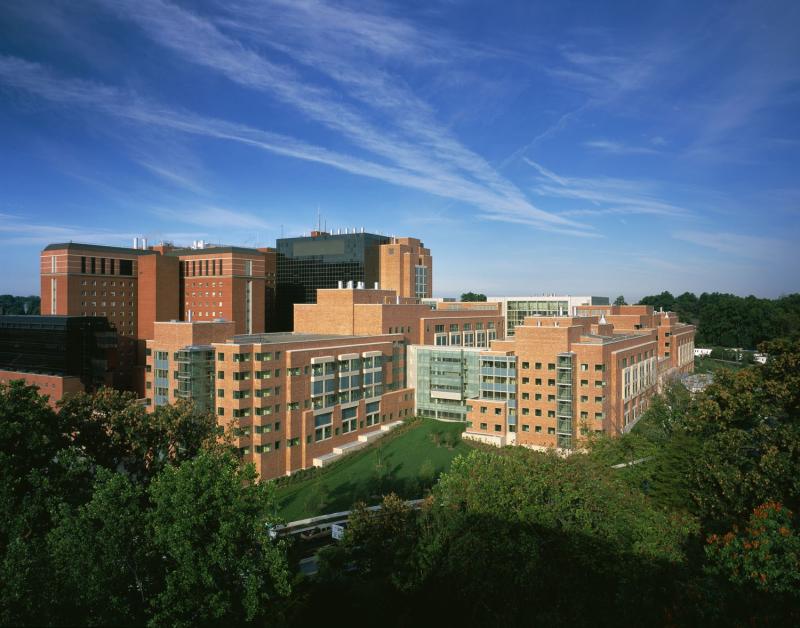
Photo: National Institute of Health


S E E D E D   C O N T E N T


Following directives from President Donald Trump, the National Institutes of Health (NIH) has withheld billions of dollars in funding for research and terminated grants that were funding studies across the country — moves that have  negatively impacted  researchers studying cancer and other diseases. 1-4

Between February and June of this year, the NIH terminated more than 1800 grants and obligated $8 billion less toward new and existing grants than in the same time period in fiscal year 2024, according to the US Government Accountability Office. 1

The terminated research spans a broad array of health concerns, including dementia, HIV, mental health, infectious diseases, and cancer,” and many of these studies were focused on LGBTQ+ health, according to Mandi Pratt-Chapman, PhD, an associate professor at George Washington University and associate center director of Patient-Centered Initiatives and Health Equity at the GW Cancer Center in Washington, DC.

“Some of these studies were longitudinal studies that have been conducted over years. For studies following up with people over time to test a specific hypothesis, you can never get that data again once a study is interrupted,” she added.

Though some  terminated grants  are the subject of ongoing legal cases, and some of the withheld funding has been restored, at least some funding may be withheld permanently, and more grant terminations may be on the horizon. 1,13-18  President Trump signed an  executive order  on August 7 that requires federal grants to support only those studies or projects that align with his policy priorities, federal agency priorities, and the “national interest.” 17,18  This order may prevent the approval of grants that do not meet these criteria and allow for the termination of additional existing grants. 

In April, Dr Pratt-Chapman conducted a survey to explore how the Trump administration’s actions are  affecting scientists . The final sample of survey respondents included 158 US scientists and research staff.

“I’m currently trying to find a home for these findings, but, at a high level, I will say that about two-thirds of the respondents had changed language in an academic product and had research programs delayed or halted,” she shared. “Nearly one-half of respondents had reframed their research questions, which has huge implications on who science will benefit.”

In addition, more than 90% of respondents reported increased anxiety due to the current anti-science climate in the US, she said.


Red Box Rules

Rules Apply


Tags

jrDiscussion - desc
[]
 
Krishna
Professor Guide
1  seeder  Krishna    last year

Following directives from President Donald Trump, the National Institutes of Health (NIH) has withheld billions of dollars in funding for research and terminated grants that were funding studies across the country — moves that have  negatively impacted  researchers studying cancer and other diseases.


Buzz of the Orient
Professor Expert
1.1  Buzz of the Orient  replied to  Krishna @1    last year

Apparently Trump does not consider a cure for cancer or at least an alleviation of its symptoms to be in the National Interest.


Krishna
Professor Guide
2  seeder  Krishna    last year

The terminated research spans a broad array of health concerns, including dementia, HIV, mental health, infectious diseases, and cancer,” and many of these studies were focused on LGBTQ+ health, according to Mandi Pratt-Chapman, PhD, an associate professor at George Washington University and associate center director of Patient-Centered Initiatives and Health Equity at the GW Cancer Center in Washington, DC.


Buzz of the Orient
Professor Expert
2.1  Buzz of the Orient  replied to  Krishna @2    last year

If a cure for cancer will work for an LBGTQ+ person, why would it not work for someone who wasn't?


Krishna
Professor Guide
3  seeder  Krishna    last year

“Some of these studies were longitudinal studies that have been conducted over years. For studies following up with people over time to test a specific hypothesis, you can never get that data again once a study is interrupted,” she added.


Buzz of the Orient
Professor Expert
3.1  Buzz of the Orient  replied to  Krishna @3    last year

So what?  Trump doesn't have cancer, so why would he even give a shit. 


Jeremy Retired in NC
Professor Guide
4  Jeremy Retired in NC    last year
Between February and June of this year, the NIH terminated more than 1800 grants and obligated $8 billion less toward new and existing grants than in the same time period in fiscal year 2024, according to the US Government Accountability Office.

So the NIH terminated these.  Not the Federal Government or Trump.


Buzz of the Orient
Professor Expert
4.1  Buzz of the Orient  replied to  Jeremy Retired in NC @4    last year

The terminations had to have been caused by the federal funding being cut off, why else?


Jeremy Retired in NC
Professor Guide
4.1.1  Jeremy Retired in NC  replied to  Buzz of the Orient @4.1    last year

The quoted sentence stating NIH TERMINATED THE GRANTS is from the article.  You saying the article is wrong?


Buzz of the Orient
Professor Expert
4.1.2  Buzz of the Orient  replied to  Jeremy Retired in NC @4.1.1    last year

Okay, but then who is really to blame....?

"Following directives from President Donald Trump, the National Institutes of Health (NIH) has withheld billions of dollars in funding for research and terminated grants that were funding studies across the country..."

Who funds the National Institute of Health?


Jeremy Retired in NC
Professor Guide
4.1.3  Jeremy Retired in NC  replied to  Buzz of the Orient @4.1.2    last year
Okay, but then who is really to blame....?

Based on the article that you and I both quoted...NIH.  It's the first paragraph.  The NIH made the determination on exactly what gets cut.


Buzz of the Orient
Professor Expert
4.1.4  Buzz of the Orient  replied to  Jeremy Retired in NC @4.1.3    last year

Would they have made any determination or cuts at all if Trump did not prsssure them?


Jeremy Retired in NC
Professor Guide
4.1.5  Jeremy Retired in NC  replied to  Buzz of the Orient @4.1.4    last year

That's a question to ask NIH.  


Snuffy
Professor Participates
4.1.6  Snuffy  replied to  Buzz of the Orient @4.1.4    last year

Trump ordered most departments to cut their budgets and his 2026 submitted budget calls for another $160 Billion in cuts. This fiscal year's deficit spending grew to a $Trillion again, we cannot continue to borrow money and overspend at the federal level. 


Perrie Halpern R.A.
Professor Guide
4.1.7  Perrie Halpern R.A.  replied to  Jeremy Retired in NC @4.1.5    last year
As of September 2025, the Trump administration has directed the National Institutes of Health (NIH) to terminate grants and cut funding in specific areas of research. These directives, issued through executive orders, targeted research related to diversity, equity, and inclusion (DEI), gender identity, and certain COVID-19 and HIV/AIDS studies.  
Key developments include:
  • Executive orders:   President Trump signed executive orders ending DEI initiatives and defining sex as binary. Following these orders, the Department of Health and Human Services (HHS) and NIH issued guidance to stop funding research in these areas.
  • Targeted cancellations:   The NIH terminated grants for research on specific topics, including LGBTQ+ health, health disparities, and vaccine hesitancy, based on the administration's policy priorities.
  • Supreme Court ruling:   In August 2025, the Supreme Court allowed the administration to proceed with terminating over $780 million in grants that the NIH had identified as promoting DEI and gender identity. This decision was a stay against a lower court ruling that had blocked the cuts.
  • Political oversight:   The administration implemented changes at the NIH that give political appointees greater power over grant decisions, making the scientific peer-review process advisory rather than definitive.
  • Indirect costs:   The administration's attempts to cap indirect cost rates paid to research institutions were blocked by court injunctions in early 2025. These costs cover institutional overhead for federally funded research.
  • Budget proposal:   In the proposed 2026 budget, the administration has requested further drastic cuts to the NIH, the Centers for Disease Control and Prevention, and global health programs.  
These directives have been met with legal challenges from researchers, universities, and states, and have created significant uncertainty within the scientific community. Critics argue that the changes put political agendas ahead of scientific merit and will harm public health research.  
Recent actions taken by the Trump administration have led to significant cuts in funding for cancer research and other biomedical studies conducted by the National Institutes of Health (NIH). These actions include canceling active grants, freezing payments, and imposing a new cap on indirect cost reimbursements for universities.  
Key details on the cuts:
  • Proposed budget cuts : The Trump administration has proposed cutting the budget for the National Cancer Institute (NCI) by over 37%.
  • Canceled grants : Hundreds of millions of dollars in cancer research grants and contracts have been canceled.
  • Suspended payments : Hundreds of millions more in payments have been suspended or delayed.
  • Indirect cost cap : The administration imposed a new policy capping indirect cost reimbursement for NIH research grants at 15%. This was done despite a legal prohibition enacted by Congress in 2018 to prevent such changes. A federal judge issued a temporary restraining order against the cap, but the Supreme Court has since allowed the cuts to proceed while appeals continue.
  • Political motivations : Some of the cuts have been justified by the administration as targeting "politically driven" diversity, equity, and inclusion (DEI) initiatives. The White House has also stated it wants to refocus research to address chronic diseases more directly.
  • Impact on researchers : The funding disruptions have forced researchers to shrink their labs, suspend promising studies, and lay off staff. Scientists and institutions have warned that these cuts could set back cancer research by decades.
  • Congressional opposition : During the 2017 administration, Congress rejected similar efforts by the Trump administration to cut NIH funding. However, the current administration has been more aggressive in pursuing these cuts through directives and changes to funding policies.


Jeremy Retired in NC
Professor Guide
4.1.8  Jeremy Retired in NC  replied to  Perrie Halpern R.A. @4.1.7    last year

Even you state the NIH made the decision on what grants to cut.  Even you state that:

These directives, issued through executive orders, targeted research related to diversity, equity, and inclusion (DEI), gender identity, and certain COVID-19 and HIV/AIDS studies.

Nothing stating specifically for cancer research.  The NIH made those decisions.  


Hal A. Lujah
Professor Participates
5  Hal A. Lujah    last year

Yeah, but have you seen that ballroom at the WH?!  It’s about priorities.


Who is online

CB


130 visitors
