
Understanding Central American migrations



 S E E D E D C O N T E N T
MIGRATION FROM CENTRAL AMERICA HAS DEEP ROOTS
Media accounts often describe the large-scale migration of Central Americans as a relatively recent phenomenon; however, these displacements originated almost 40 years ago, propelled at first by brutal civil wars in the isthmus region—the result of centuries of stark historical inequalities and dominance by business and military elites, as well as marked U.S. intervention in the region.
Such long-term intervention, predicated on assumptions of white supremacy, has indeed been central to shaping the unequal economies and autocratic governments that have so weakened NTCs to this day. Starting with the emergence of newly independent nation states in 19th century Latin America, the Monroe Doctrine of 1893 was touted as an expression of positive U.S. opposition to European colonialism; in reality, however, the doctrine was based on the assumption that (largely Indigenous and mixed race) Latin Americans couldn’t be trusted to manage their own affairs and required supervision by the United States, then governed exclusively by white men. Throughout the 20th century, U.S. political and commercial interests came to be elevated over the rights of the people south of the border to self-determination, thus allowing American business interests to exploit the region’s natural resources through alliances with local elites and military dictatorships, backed by U.S. aid and, if necessary, overt or covert intervention (i).
By the mid-1970s and early 1980s, the massive inequality and oppression resulting from such arrangements had led to popular uprisings throughout the region; in response, governments unleashed reigns of brutal violence against entire populations, leading to the first waves of migration from NTCs the North. The devastating armed conflicts of the early 1980s, themselves significantly abetted by U.S. aid and cold war strategic interest in the region, wreaked havoc on rural and urban communities alike. Through state-sponsored violence—undertaken by military and paramilitary death squads—anyone deemed subversive could be “disappeared” or murdered, and entire communities were destroyed, deeply impacting both local economies and the social fabric, and leading to the first mass displacements to the United States. Through this historical lens, scholars have argued that both current and previous waves of migration from Central America thus reflect the inevitable “harvest” from seeds sewn by U.S. policy that long treated the region as part of its own informal empire (ii).
Although smaller numbers of educated, urban Central American immigrants had been arriving in the United States since the 1970s, the first significant waves of wartime refugees came in the mid-1980s, settling in communities across the United States where they could find jobs and faith-based or social support. By the mid-1990s, the huge demand created by American industries for cheap, exploitable labor, combined with the lingering aftermaths of war, lured increasing numbers of migrants to work in agricultural, meat processing, service, domestic, and industrial jobs across the country.
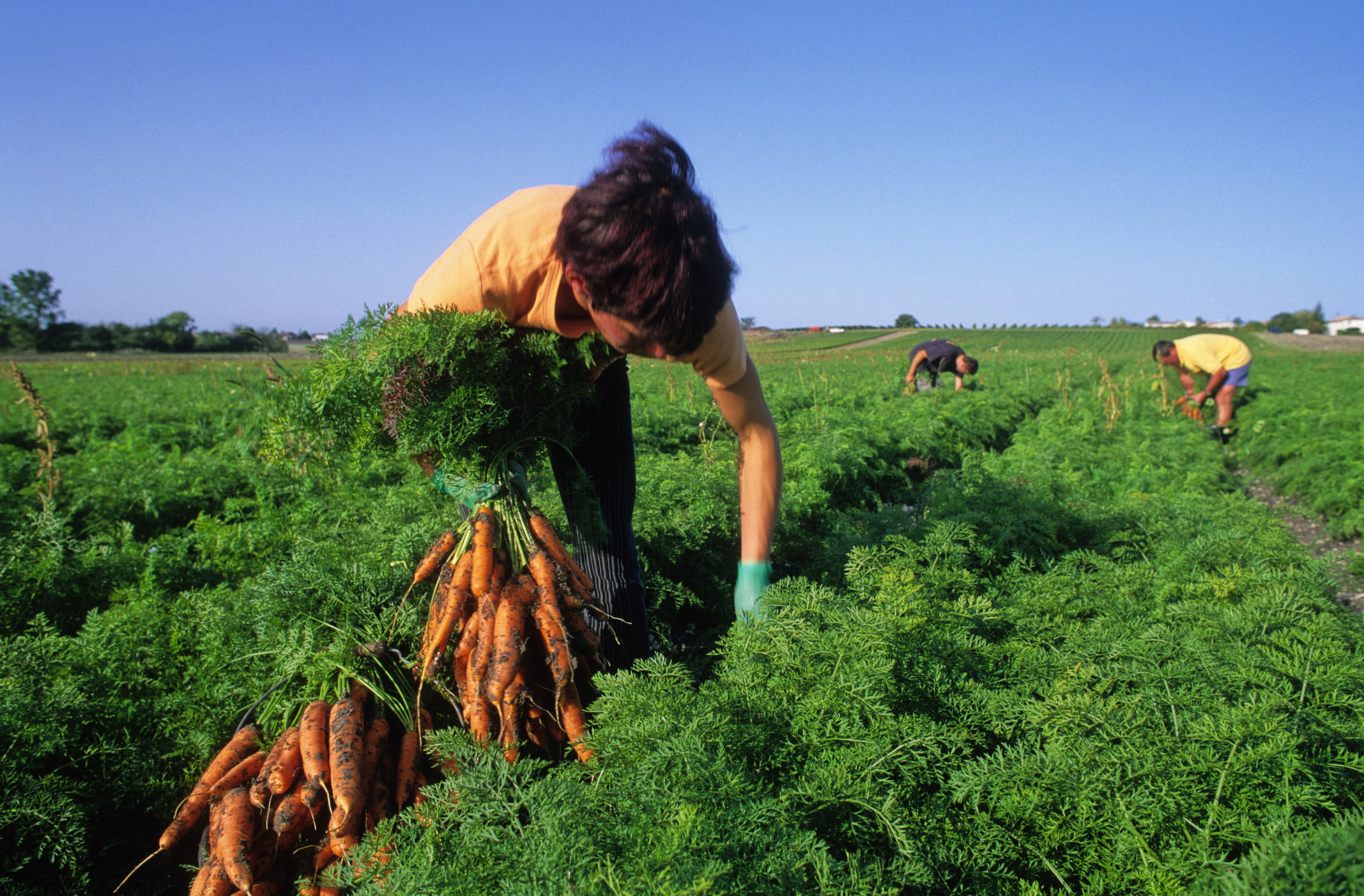
iStock photo.
Sadly, in part because the United States had supported the brutal military regimes from which most fled, the asylum acceptance rate for refugees arriving in the United States from NTCs was close to zero, hovering around 2% during the first decade or so of migration. Nonetheless, thousands of border crossers were granted temporary work visas as they awaited their asylum hearings, giving rise to the famous asylum backlog that today exceeds a million cases . Most others, who were too poor and unskilled to qualify for legal immigration routes, lived in the in the shadows without legal documentation, many working two or three jobs to survive and send remittances back to their devastated communities. According to the Migration Policy Institute , the Central American immigrant population tripled between 1980 and 1990, and nearly half of today’s 3.5 million Central American immigrants arrived before 2000.
The immediate causes of migration have shifted over time, and differ somewhat between the three countries, but these highly disruptive events set the stage for continuing patterns of displacement to this day. The residues of war—deep inequality, political instability, corruption, a lack of jobs, and new forms of violence—have in many ways intensified in recent years.
Poverty in NTC countries remains extremely high. In Honduras, half of the population lives below the poverty line, and in Guatemala close to 80% of the indigenous population is poor. In many places, especially rural areas, there is a concerted lack of jobs, poor access to education, health and nutrition, and very little sustained investment by the state in infrastructure or services by governments—all factors which have been exacerbated by pandemic lockdowns. In some areas of Honduras and Guatemala, the expansion of global megaprojects such as mining, hydroelectric plants, and other extractive industries, rather than creating jobs, has often resulted in environmental depletion or contamination, the destruction of subsistence farming, growing local impoverishment. In recent years, climate change and erratic weather —including hurricanes, draughts, and volcano eruptions—have been another major force behind migrations from this region. In some areas such as the “dry corridor” that runs through these countries, shifting weather patterns have led to starvation and extreme desperation among parents unable to feed their children or foresee local solutions. In the past year alone, damage caused by Hurricanes Eta and Iota, in tandem with the COVID-19 pandemic, have led to massive increases in hunger— in Guatemala, the number of households living in hunger has doubled, and in Honduras it has increased by more than 50% since the onset of the pandemic.
Another major driver of Central American migration in recent years has been the significant social violence that characterizes daily life. Violent gangs such as the Mara Salvatrucha and Calle 18 target poor, vulnerable community members, and seeking to recruit, extort or otherwise intimidate youth and their families. The mass deportations from the United States of the past several decades stimulated or exacerbated gang violence, as early young male deportees imported U.S.-developed gang organizational structures in the region, and subsequent waves of deportees become easy targets or recruits, thus often seeking to flee again to the United States. More recent government crack-downs on gangs in El Salvador have gone hand in hand with increasingly autocratic behavior by the country’s president Nayib Bukele, creating growing concerns among human rights advocates.
One of the concerns that human rights advocates have about the region is that women and young girls in Central America are especially vulnerable to sexual violence and exploitation; the NTCs have some of the highest femicide rates in the world. In addition, organized and violent criminal networks and clandestine security apparatuses—often connected to wartime intelligence and military structures—are involved in the trafficking of drugs, people, and contraband throughout the region. Parallel to this violence is the entrenched corruption that characterizes political, judicial, military, and business sectors in all three countries; internationally backed anti-corruption missions in Guatemala and Honduras have met with resistance from powerful political elites in recent years.
The combination of these societal failures and environmental factors has led to a situation of despair among many Central Americans who simply cannot find safety or livelihoods for their families; children and youth in particular are extremely vulnerable in such environments. It is no coincidence that the quest for family reunification among children of migrants is, along with the availability of jobs and some degree of safety, one of the main “pull factors” drawing so many to the United States in recent years.
CENTRAL AMERICAN MIGRANTS ARE IMPORTANT TO U.S. SOCIETY
Lost in all the news stories about these current day border crossers, however, is the fact that vibrant Central American communities have for decades been settling successfully all over the United States, from the traditionally Latino states of Florida, Texas, and California to communities in New York, New England , and the Washington, DC area to southeastern states such as the Carolinas and Georgia and the meatpacking and agricultural communities of the Midwest. Of the roughly 3.5 million Central Americans in the United States, 40% are Salvadoran, 27% are Guatemalan, and 19% are Honduran. Over the past decades, some have been able to obtain lawful status through different means—through the TPS or DACA programs, through successful asylum claims, and many through family reunification—though many also remain undocumented or have been deported, often leaving their children and families in a precarious economic and social position.
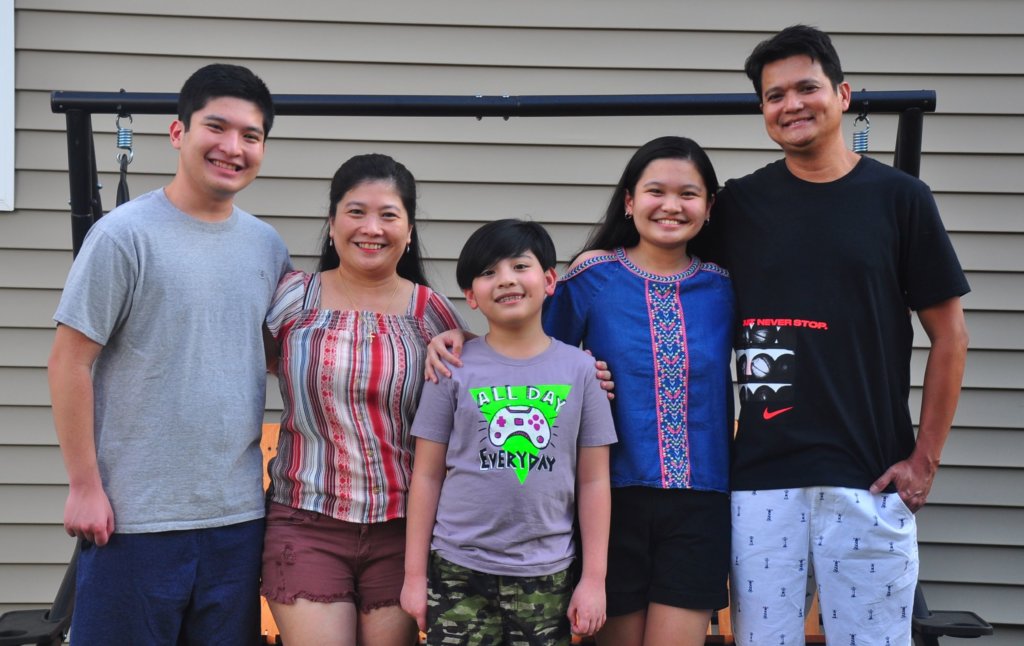
Beatrice, second from the right, is a client of UnidosUS Affiliate Northwest Side Housing Center. She stands with her family in front of their home.
As a group, Central American migrants have nonetheless sought to integrate to U.S. society as other immigrant groups have, and for many the economic and educational strides made in just one generation have been striking. For many, however, pre-migration stories that include poverty, violence, trauma, and low educational attainment, coupled with undocumented status, discrimination, and language barriers in the United States, have contributed to a challenging integration experience. Given their often marginalized situations back home, Central American migrants in the United States tend to have lower educational attainment, English language proficiency, and incomes than other immigrants . They also, however, participate in the U.S. labor force at a higher rate than other adults in the United States.
Tags
Who is online
161 visitors
UnidosUS is a nonprofit, nonpartisan organization that serves as the nation’s largest Hispanic civil rights and advocacy organization.
You probably wont hear this on Fox News, or on any US corporate media for that matter.
Nope, you won't hear that from any intelligent human being
and btw:
allthatsinteresting.com /banana-wars
The Banana Wars: How The U.S. Plundered Central America For Corporations
Mark Oliver 3-4 minutes 9/14/2017
Published September 14, 2017
Updated February 12, 2018
During the Banana Wars of the early 20th century, the U.S. military toppled regimes and massacred thousands to keep U.S. business booming.
The Banana Wars: How The U.S. Plundered Central America On Behalf Of Corporations
“I spent 33 years and four months in active military service,” an American veteran named Smedley Butler once wrote, “and during that period, I spent most of my time as a high-class muscle man for Big Business, for Wall Street and the bankers.”
Butler had fought in the so-called Banana Wars of the early 20th century, when the American military sent their troops south into Central America to keep their business interests there intact.
It was a time when mistreated workers across Central America were getting fed up with working long hours in harsh conditions for less than a living wage. Workers started grumbling. Some went on strike. Some threw together militias and waged full-on rebellions to fight for better conditions.
But for the American government, all this fighting for freedom was bad for business. Companies like the United Fruit Company had a vested interest in keeping their Central American plantations stable and so they called in the American Army to crack down on those who were disrupting the system.
Butler and other soldiers like him were thus sent to Central America to fight the Banana Wars. When a rebellion in the Dominican Republic, for example, damaged an American-owned sugar cane plantation, American troops were sent in, starting in 1916. They took over a small castle called Fort Ozama, killed the men inside and set up a military presence to protect their business interests.
Troops also moved into Haiti to quell the Cacao Rebellion in 1915, partly to protect the interests of the Haitian-American Sugar Company. The U.S. Army stayed behind even after the war was over, patrolling the streets of Haiti and making sure that no one got out of line.
And in Honduras, where the United Fruit Company and the Standard Fruit Company were worried about their banana sales, the American Army marched in on seven separate occasions throughout the early 20th century. Sometimes the army was called in to crush strikes, other times to stop revolutions — but every time, it was to keep business booming.
Hundreds of American soldiers and thousands of locals died in the Banana Wars. Strikes and revolutions were crushed and put to an end – all while the profits of a handful of companies were maintained.
“I might have given Al Capone a few hints,” Butler said. “The best he could do was to operate his racket in three districts. I operated on three continents.”
Old gimlet eye identified as a Socialist later in life.
I wonder if he would feel the same about that after what socialism has done the last 80+ years.
www.unicefusa.org /stories/why-migrants-flee-central-america
Why Migrants Flee Central America
October 16, 2018 Maryanne Buechner and Sarah Ferguson 9-12 minutes
Pervasive violence and poverty drive desperate Central Americans to migrate in search of safety and a better life. UNICEF works with governments and local partners to improve conditions in their home countries.
The steady flow of immigrants leaving Northern Central America reflects the grim realities of life for millions of children and their families from Honduras, El Salvador and Guatemala.
Crushing poverty. Environmental crises. Endemic crime. Gang-related violence, extortion and forced recruitment . High rates of domestic violence and sexual abuse of girls. Scarce social services. Limited opportunities to learn, or to earn a living. The desire of children to be with their parents, who are already working in the U.S.
These are the conditions that prompt men, women and children to abandon their homes and embark on dangerous journeys to destinations to the north and south.
Many blame the rise of organized crime, which flourished in the wake of civil wars in the region, leaving many people unemployed and with easy access to weapons. Violence increased further in the late 1990s after the U.S. deported numerous members of Mara Salvatrucha (MS-13) and Barrio 18, two notorious gangs that originated in Los Angeles .
Asylum seekers make the wrenching decision to leave home because they feel they have no choice
Every year, asylum seekers and refugees flee to Belize, Mexico and the U.S., where many have relatives, or to Costa Rica and Panama, in search of safety and a better life. Many families leave together. Others travel solo.
Deprived, detained, unprotected and often alone, the children who make these journeys are easy prey to traffickers and others who are out to abuse and exploit them. Children returned to their countries of origin often face community stigmatization, social exclusion and a renewed risk of violence.
UNICEF works with national and local governments and civil society partners to support and protect these children — and to address the root causes that drive them to flee, with or without their parents, in the first place.
©UNICEF/UN028170/Zehbrauskas
This 10-year-old watched helplessly as his father was gunned down in Honduras in 2016.
Breaking the cycle of violence at home
UNICEF offices in El Salvador, Guatemala, Honduras and Mexico have expanded their work to meet the increasingly urgent needs. The work reflects a comprehensive approach that seeks to protect and support children where they are, where they are going and at critical points along the way.
That means preventing and responding to violence; addressing poverty and improving life opportunities at home; strengthening access to services and providing care to children while they are in transit; supporting children during reintegration if they are returned to their home countries; and if they are not, supporting their social integration and protecting them from discrimination and xenophobia at their destination.
UNICEF is also advocating for further investment by countries in their national child protection systems to reduce exploitation and violence, while calling for increasing accessibility and availability of alternatives to detention, to move toward ending the practice of detaining children because of their immigration status.
©UNICEF/UN028158/Zehbrauskas
Gangs target schools in Central America, harassing and robbing students and creating a culture of fear. Many young people who attempt the journey to the U.S. say their desire for an education was a prime factor in their decision to leave home.
Making schools safe for students
Here's a look at some of the work being done on the ground:
For many children living in El Salvador, Guatemala and Honduras, school is a very dangerous place. Violent gangs are known to target schools , bullying students, stealing their money, issuing threats and creating a climate of fear. As a result, many students stop attending class or begin to behave aggressively or even choose to join a gang.
UNICEF has been working for years with municipal governments and schools in Central America to break that cycle of violence, by creating and supporting safe spaces where kids can engage in educational and vocational activities, free from fear of gangs and gang-related threats. UNICEF Honduras offers skills training, cultural and arts programs to help empower adolescents. With partner Mujeres en las Artes , the country office runs community programs in 12 of the country's most violent municipalities, engaging thousands of children, adolescents and adults.
UNICEF programs also provide targeted support to strengthen national and local child protection systems to protect children from different forms of violence. In response to a report that showed widespread use of corporal punishment and its negative impact on children's emotional development, UNICEF launched a program in Honduras that teaches nonviolent methods of discipline to parents, teachers and community leaders, which is helping to end the practice.
© UNICEF/UN028163/Zehbrauskas
In Honduras, a grandmother holds photos of her 18-year-old grandson, who was murdered with four friends as they sat outside the family home one night in September 2015.
Reintegrating return migrants and displaced families
For many refugees and asylum seekers, the journey ends with apprehension and detention in Mexico or the U.S. Nearly 64,000 migrants from Central America, including 11,000 women and children, were returned from the two countries between January and April 2018 alone — a 39 percent increase over the same period the previous year.
When young people are deported, they are often stigmatized by the community, or are socially excluded. They may be targets of violence, or remain internally displaced and impoverished. UNICEF provides migrant children with specialized psychosocial support to address the trauma and stigma.
In El Salvador, UNICEF is working to provide safe spaces, recreational activities, flexible education programs and vocational training options to the most vulnerable children and young people, including those who recently returned from other countries. Legal assistance, emotional counseling and other support programs for displaced families are being expanded. A digital tracking system is being developed to facilitate case management between reception centers and municipal services to more effectively manage the reintegration of migrant children in El Salvador .
©UNICEF/UN028156/Zehbrauskas
The local COMVIDA youth center in Choloma, Honduras is one of the few safe places for young people to meet. Just around the corner, five children and youths, aged 14 to 19, all regulars at the center, were gunned down in September 2015. Locals say migration from the neighborhood went up after the shooting.
Why don't they stay and be part of the solution? Same old story. Save us, from us, in spite of us.....................
You could say the same about the vast majority of Americans, why didn't they stay in their countries of origin and be part of the solution?
Didn't invade a sovereign country and expect handouts now did they.................for all they knew, they were the only ones that were going to be here. Columbus never touched the shores of North America and he would have been the first to see the natives............................
Actually, they did invade a country. They knew immediately that the continent was populated. and instead of asking for handouts, they killed the inhabitants.
And over the centuries they kept coming and leaving their country of origin for many reasons, religion/oppression instead of staying and solving the problems.
What country was that? Continent I will give you
That country would have been the geographical location of each of the tribes in the Americas.
330,000,000 native Americans with their own government? Shit my high school let me down history wise.
Obviously, it did or you were not paying attention or swoosh my comment went right over your head.
If in your simplistic comment, you're trying to speak of today's America you are still wrong. Perhaps you should pay more attention instead of trying to impress anyone.
The sad thing is that these are aspects of history that are known, but they are framed in a way to give comfort to the descendants of the Europeans who spread across North America. We dont have clean hands in Central and South America either, but it easier to just ignore all that and talk about the "moochers" who are crossing the border.
There is more than a little karma associated with the migration occurring on the southern border.
Not being a wise ass. You cannot compare what is happening now to then.............honestly. Even your own statement..............
was after the fact. I get where you are coming from. But this back and forth is kind of silly. Semantics.
When the Europeans arrived in America each tribe had a government, it's been going for centuries. In fact, the US Constitution borrowed from the Iroquois Great Law of Peace which the US Congress recognized.
It is the oldest democracy on earth six hundred years before the US Constitution.
I'm not comparing now and then the US Constitution was written and adopted in 1787 and at that time they recognized the tribes as sovereign governments, which they had been for centuries before that and remain so today. The reference to California and Canada was an analogy for comparison. In 1787 it was Alta California part of Spain and Canada was part of the British Empire.
What's really sad John is that you have no idea of how incorrect your "blasting" of the U.S. is.
I've given you these references before - and you've ignored them - but, being the nice person I am, here they are again and again and again:
"Native Roots - How the Indians Enriched America"; - Jack Weatherford
"Indian Givers - How the Indians of the Americas Transformed the World" - Jack Weatherford
"The American Indian Experience - A Profile" - Philip Weeks
"1492 - The Year the World Began" - Felipe Fernández-Armesto
Prior to that fella Columbus, who got lost and sailed the wrong direction, in 1492, the Western Hemisphere had a population of between 120M to 320M indigenous persons - higher than the populations of Europe and most of Asia - with about 6,000 -7,000 individual tribes/nations ranging in size from 10 persons to over a million or more persons. Example - that little city in Mexico - Mexico City - when Cortes and his troops invaded in 1519, had a population of 'bout 1.3M.
Note the dates - Columbus in 1492 and Cortes in 1519 - and the other visitors from Europe up until 1898, before the U.S. began trying the nose in of the profits. There were 406 YEARS difference in European policies/U.S. policies - with Europe having totally decimated all of what the indigenous populations had PRIOR TO the Euro invasion of the Western hemisphere - their governments, religions, customs, heritage, cultures, families, etc..
And you're trying to say that, from 1898 to the 1930's - roughly FORTY YEARS of U.S. policy in South/Central America - is the problem/cause of the "migrations"?????
How stupid do you think we are if you think we'd believe this BS nonsense?
[deleted]
Your post is a perfect example of. "Those who don't learn from history, are doomed to repeat it" [deleted]
How did it work out for the Aztecs welcoming the Spanish? or the Incas? how did work out for the Tupi or Karib welcoming the Portuguese? or the North American people welcoming the English or the French?
But hey. it will be different this time I'm sure.......Right?
Read the articles I posted and stop pestering the s*** out of me . you don't even make any sense
Wrong. 1st makes perfect sense for those that are willing to listen and keep a open mind.
Here's your chance. Explain in some detail why his rant makes perfect sense. Remember , we are discussing the CAUSES of Central American migration to the US.
1st warrior appears to be suggesting that Columbus, and the like, are responsible because they exploited and decimated the indigenous populations that preceded them in those locations.
The interesting thing to me is that we see conservatives, in this case, claiming that events from hundreds of years ago effect events today. He wants to blame Europeans rather than American corporations and government.
Sounds similar to the 1619 Project to me.
But go ahead, tell us how right 1st is, and why.
Actually, the US intervened in Central and South America starting in the 1800s. The Monroe Doctrine was 1823. The Spanish-American war was 1898. US invaded Mexico or the Mexican-American war from 1846 to 1848.
The US has intervened in other Latin American countries from the 1890s to recently, the link is when we actually sent troops.
Our political power and support of dictators dominated the landscape and created a lot of problems. In the 1970s we supported coups in Argentina, Bolivia and Chile. In the 1950s we supported the coup in Guatemala.
In 1947 the Monroe Doctrine was replaced with the Truman Doctrine of ''containment''
Various administrations have chosen to support right-wing authoritarian governments in Latin America. During the Ronald Reagan administration, we were involved in numerous interventions in Latin America.
Reagan supported Efrain Rios Montt of Guatemala who was tried for genocide against the indigenous people of Guatemala (Mayan).
So yes we have had our hand in Latin America for a couple of centuries and a lot of it to our detriment.
Is US policy the main driver of Latin American immigrants coming to America? That is dependent on one's ability to look at history and our part of it. IMO, it is a contributor to the fact that many of our policies and interventions have created what we see today there. High crime and poverty add to that what our changing climate is bringing drought to the region.
The US has lost its leadership role in Latin America over the last couple of decades. We are no longer the largest trading partner of many of the Latin countries, China has replaced us.
So, we can point fingers and whine or we can actually try to be part of a solution but that would take the efforts of Congress and from what I've seen in my decades of living our immigration policy is a fricking disaster and we've had decades to fix it but nothing happens because both sides use it as a weapon against the other side.
No, I'm not stupid enough to believe that we are 100% responsible for today's situation and I'm not stupid enough to believe that we are not part of the problem.
I dont think the United States is entirely responsible for the migrants wanting to come here from Central America, Venezuela, etc. There are numerous contributing factors, including the inability of them to earn a living from farming due to crop failure. But the US definitely has its fingers in the pie. Rather than acknowledging that and committing to do something to correct it, many Americans simply call these desperate people "moochers" who want "free stuff".
The "Europeans" were not the first people on these lands, yet took them, with no apology. Might made right. What is the migration now, other than a form of "might" ? Does might still make right?
What specifically do you want done?
I want you to stop asking questions and give your own opinions on the topics.
You want us to “correct it”, but don’t have a clue as to how.
That is a statement, not a question.
[deleted]
US exploitation of Central America is a definite contributing factor to the migrations north.
Bullshit.
Failed socialist government is a much, much larger reason.
Look no further than Venezuela for proof of that.
ailed socialist government is a much, much larger reason.
You'd think they'd be on board with blaming socialist since Marx was white.
Lol .... quite the conundrum for them there ....
Balderdash:
Specifically:
All real time current problems caused by current governments. Not things that happened 40-50 years ago.
[deleted]
What are the responsibilities of our drug users? Central America has become the principal drug corridor for South American drugs in high demand here. Have our drug purchasers contributed to the gang violence destabilizing Central America?
Yep, they want to help all immigrants including illegals.
That is as long as some one else pays for it and someone else takes them in.
They are the poster children for NIMBY ........
That is JR's point. He is in favor of an open border. Others here once tried to deny the gates were open. Now that Joe got away with it, we hear how they really feel.
I am not in favor of an open border. I am in favor though of this country for once opening their eyes and understanding the history of these countries and our partial responsibility for it.
We need comprehensive immigration reform that addresses all aspects of this problem, not just right wing fears.
Did democrats attempt to overthrow the government on 1/6?
Trump said Jan 6 "was a beautiful day" the other night, so his followers must think so too.
Not that I saw. Did the Republicans?
[deleted]
Yes.
Nope
In the English language, questions or queries, are designated with a question mark (?).
Comments or statements are designated with a period (.).
I am always happy to educate people who are unfamiliar with the English language, so hopefully you understand how it works better.
Jan. 6 Panel Says Capitol Marcher Toured With G.O.P. Congressman
Video shows GOP congressman leading tour of Capitol complex the day before Jan. 6 attack
OMG .... “a” congressman gave a tour of the capital building?
Release the hounds!
Try reading the article. A tour was given during a time when tours were not being allowed, AND he showed them areas of the Capitol building where tourists are not allowed to go. Kind of like he was helping them to case the joint.
What areas where those?
The double top secret parts .......
That is a very narrow minded comment Vic. In fact, I find it offensive.
First, do you have a link to support that ignorant statement?
Probably not since it's your opinion which isn't worth a lot in a reality-based discssion.
The root cause of Central American migration? The United States.
For the past century and a half, Central America has been subject to the whims of U.S. corporations backed by the U.S. government. In the 19th century, U.S. adventurers and filibusters invaded Central America, settled there and advertised the region as an easy route to the California Gold Rush. Starting at the end of the century, the United Fruit Company developed massive banana plantations along the Caribbean coast and established regular shipping routes in the region, taking advantage of cheap land and labor and creating a market for bananas in the United States.
As the United States became more of a world power around the turn of the 20th century, it relied upon the Monroe Doctrine (1820s), which warned Europeans against interfering in the hemisphere, and the Roosevelt Corollary (1900s), which claimed the right to exercise “international police power” when U.S. investments were threatened to drive out European imperial competitors and take control of Central America’s finances. The U.S. empire in the region included territorial occupation and political meddling: The U.S. Marines occupied Nicaragua from 1912 to 1933 to protect private U.S. interests and canal-building options, setting the stage for its U.S.-trained leader, Anastasio Somoza, to install a decades-long family dictatorship.
At the root of this interference: convictions shared by policymakers, U.S. corporations and Central American political and economic elites, including the belief that the rural poor and Indigenous populations were “backward” and in need of prodding and reform. Economic progress in the form of foreign investment and export-oriented production, they argued, would turn “Indians” into productive workers by taking their lands and forcing them into wage labor. For Indigenous peasants, this meant dispossession of their land and exploitation of their labor.
With the rise of the Cold War, preventing the spread of communism became the new rationale for U.S. intervention in Central America in the middle of the 20th century.
President John F. Kennedy’s Alliance for Progress, the Agency for International Development and international financial institutions under U.S. auspices poured money into developing the agro-export economy. The idea was that this would bring jobs and economic growth, which they believed would bring prosperity, thus deterring communism. But new investment in plantation agro-exports just meant new rounds of dispossession and forced labor.
By displacing peasants and turning them into cheap, exploited workers, this form of development brought exactly what the United States feared: if not “communism,” exactly, popular movements for social change demanding land and labor rights.
In Nicaragua, the Sandinista revolution succeeded in overthrowing the U.S.-supported Somoza dictatorship in 1979. Somoza’s corruption and violence had alienated even Nicaragua’s business classes, and a broad popular front implemented a mixed economy promoting popular organization, land reform and the socialization of basic services. But the Reagan administration saw this and similar revolutionary projects in El Salvador and Guatemala as stalking horses for communism. It helped Central American elites and militaries to overthrow governments and crush popular movements.
Yet, unlike in previous eras, this time, the reassertion of elite control produced large-scaled migration from Central America to the United States. As the United States propped up right-wing governments in El Salvador and Guatemala, hundreds of thousands were killed and millions displaced from their homes. Most of the displaced fled to urban areas or refugee camps within the region, but about 1 million escaped to the United States. They faced legal exclusion because of strict numerical limits on Latin American migration.
A major legislative change to U.S. immigration policy, the 1986 Immigration Reform and Control Act, didn’t help these migrants. It created paths to legal status only for long-term residents and farmworkers (most of whom were Mexican) while reinforcing the long-term trend toward harsh treatment and criminalization of the undocumented. Few could receive asylum in a system heavily tilted toward those fleeing communist countries.
This new, bipartisan law exemplified the U.S. propensity to forget its role in producing the flood of migrants from Central America.
As Central America’s revolutionary movements were crushed, dismantled or voted out of office (in Nicaragua) in the 1990s, foreign investors raced back in as debt, structural adjustment and the Central America Free Trade Agreement helped reinstate their favored economic model: access to land, low wages, little regulation, tax breaks and a strong dose of military force to crush attempts at unionization or protest.
President Barack Obama’s Alliance for Prosperity looked eerily like Kennedy’s Alliance for Progress, though its stated rationale was deterring migration rather than deterring communism. The prescription was similar: promote new foreign investment and exports. But although the policy helped diversify the economies of these countries, it was again coupled with a repressive side: support for militarized policing to ensure the “security” and profits of these new enterprises and to prevent would-be migrants from leaving.
Yet, unsurprisingly, with hopes for social change at home foreclosed and few economic alternatives, migration only increased after the wars ended. Wartime migrants had established roots in the United States, where deindustrialization was creating a plethora of new opportunities in the low-wage and informal sectors of the economy. Many migrants joined family members and communities already here.
Biden’s plan simply rehashes decades of failed policy. The administration hopes to rely heavily on private investment and public-private partnerships to reform Central America. Harris boasted that she had obtained new commitments from major corporations such as Nestlé, Microsoft and Mastercard to invest in countries there. But the low-wage model of economic development that privileges foreign investors is not going to bring either security or prosperity to Central America. In fact, this system is precisely what has kept Central America largely poor, violent and corrupt for more than a century. It’s what brought the revolutions of the 1970s and ’80s, and the wave of out-migration that has only grown since the ’90s.
Central Americans still protest the model at home — and often get killed for their efforts. As long as Biden continues to follow the same recipe of foreign investment and militarization, we can expect more poverty, violence, corruption and migration to follow.
Do we owe Central Americans reparations?
The only reason they are coming is Brandon and the Democrats have hung out the welcome mat; and put the priorities of illegal immigrants over US citizens.
We have borders. We have immigration laws. Neither are being enforced by the Brandon administration. Illegal immigrants know it; and are coming in record numbers.
The US has provided almost 100 billion in aid to the region (not counting private charities, NGOs etc).
Strange that wasn't mentioned.
Or course not.
We need to dwell on shit that happened 100+ years ago.
That’s how a looner mind operates.
thats not 100 years ago
The Banana wars were. You brought that shit up.
Hard to blame Bidens fuck-ups on republicans from 50 years ago is you have that there.
We have a better place here and if we keep letting more in our place will be as shabby as where they came from.
Comments have been posted on other articles about the fact that the migration numbers are an indication of how great America is. Now America reaps what it has sown. The massive migration is caused not only because of America's behaviour referred to in the seed, but by bragging that in America the streets are paved with gold as the number one country in the world, about its "exceptionalism" and being the land of such great opportunity, America has earned the problem it is experiencing.