
The 'War on Christmas': A History of the Holiday Season's Biggest Cultural Debate

By: Jon Jackson (Newsweek)


 S E E D E D C O N T E N T
Anyone upset by perceived threats against the holiday might want to keep in mind that the "War on Christmas" began before America was even a country.
2020
The holiday season is here, and though many won't be spending time with loved ones, you can still expect to see lit trees in the windows, a slew of seasonal TV specials and people grumbling about the so-called "War on Christmas." Yes, even during a pandemic, Yuletide joy could still be overshadowed by the argument from some Christians that the push to be more inclusive—by saying "Happy Holidays" and singing secular festive songs—tramples on their religious freedom and threatens the values of what they feel is a Christian nation.
The debate has already been in full effect this year. Breitbart weighed in early after health officials recommended that people limit the size of Thanksgiving gatherings, warning that Democrats would want to "cancel Christmas." Meanwhile, Wisconsin's Democratic governor Tony Evers announced in November that "hope" would be the theme of his state's holiday celebrations, pointedly avoiding the word "Christmas," even after Republicans won a vote last year to call the state's originally planned "holiday tree" the "Capitol Christmas Tree."
Signs using more-inclusive phrases like "Happy Holidays," like the one seen here on New York City's Beacon Theatre on December 11, are cited as examples of the "War on Christmas." Getty
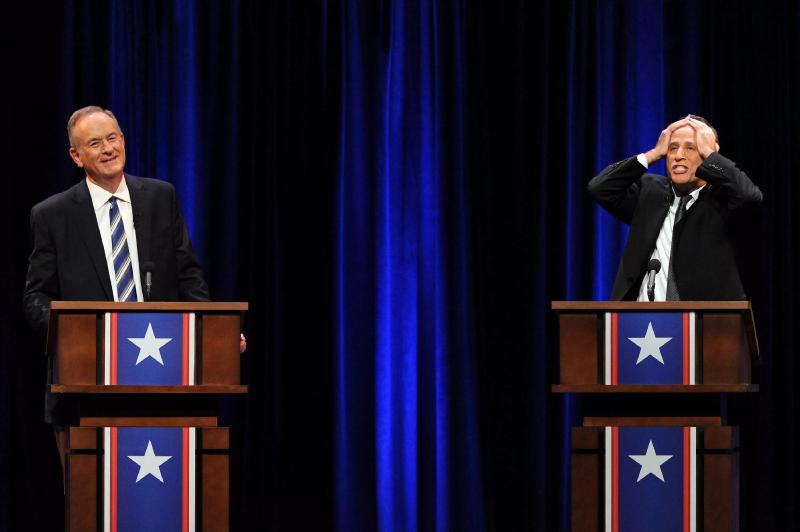
One would not be entirely wrong in assuming that the concept of the "War on Christmas" began around the time that conservative figures started decrying political correctness. Bill O'Reilly is closely associated with the modern hubbub over "PC police" playing Grinch, and he was running broadcast segments on the subject more than 15 years ago. Now, Tucker Carlson and other Fox News hosts have taken over the role of "defending Christmas," and are saying that COVID-19 is being used as an excuse to not properly celebrate the holiday.
But while talking heads on television argue vociferously about the "War on Christmas," with many countering that it's an exaggerated if not outright invented controversy, there have been times in history when there were legitimate threats against—and consequences for—commemorating the birth of Jesus. In fact, there have been periods when celebrating it was actually forbidden.
The first formal celebration of December 25 as Jesus' birthday was by the Roman Christians in 336 A.D., while Pope Julius I officially declared the day a nativity celebration around the year 350. In largely Christian nations, the holiday continued without much dispute—that is, until the rise of the Puritans in 17th-century England. Puritans considered feasts wasteful and unbiblical, and when devout Puritans took control of the English Parliament in 1647, they outlawed the celebration of Christmas. That ban lasted until King Charles II took the throne in 1660 and re-established the comparatively more festive Church of England.
Anti-Christmas sentiments were present on North American soil, too, though. The Pilgrims at Plymouth Colony didn't bother recognizing the first Christmas in their new home—they opted to work in the fields rather than celebrate. As History.com notes, the Puritans took matters a step further in the Massachusetts Bay Colony, by outlawing Christmas celebrations from 1659 to 1681, and anyone caught observing it with too much merriment faced a fine.
Even as its celebration became acceptable, Christmas was still not an official holiday in the U.S. for nearly a hundred years after the Declaration of Independence was signed. People were not given the day off from work and stores stayed open during this period. It wasn't until 1870 that President Ulysses S. Grant made Christmas a federal holiday.
Soon after Christmas gained the official holiday distinction, though, people began fearing that it was already in jeopardy. In the early 1920s, Henry Ford began publishing a newsweekly which contained writings now widely condemned as antisemitic. The idea of Christmas being attacked by Jewish Americans was a common theme. One polemic contained this unsubstantiated claim: "Last Christmas most people had a hard time finding Christmas cards that indicated in any way that Christmas commemorated Someone's Birth."
In 1959, the right-wing advocacy group John Birch Society took up the charge with the publication of its own pamphlet decrying the "assault on Christmas" carried out by the "Godless UN" and Communists within the U.S. The pamphlet claimed "fanatics" were attempting to "poison" the Christmas season, and pressuring department stores "to utilize UN symbols and emblems as Christmas decorations."
Christmas crusaders were similarly outraged by the growing prevalence of lawsuits filed by private citizens and organizations like the ACLU, which sought the removal of Christian symbols from public places during the holiday season. Over the years, Christmas songs and nativity imagery were also banned at various schools throughout the country. (The move to make public schools more secular began in the 1970s, following civil rights movements that resulted in more diversity among students and the Supreme Court's 1980 ruling that posting the Ten Commandments in public schools was unconstitutional.)
All of this brings us to what we currently know as the "War on Christmas." According to the fact-checking website Snopes.com, the phrase entered popular usage thanks to conservative author Peter Brimelow, who launched the website VDARE.com (named after Virginia Dare, the first English child born in the Americas) in 1999. There, he frequently posted about the need to "save" Christmas from people pushing secularist "Happy Holidays" themes. A December 2000 post on his site contained what's believed to be the first instance of the words "War on Christmas."
However, the concept of the "War on Christmas" really took off with conservative broadcaster Bill O'Reilly. Brimelow published annual lists of what he called attacks on the holiday, and O'Reilly followed his lead by citing similar examples during his Fox News broadcasts.
On his influential O'Reilly Factor program, O'Reilly devoted segments to stories about Christmas trees being banned from public places and Catholic schools teaching students to say "Happy Holidays." Annually, he updated a "naughty" list of merchants who removed mentions of Christmas from their holiday displays, which even included heavyweight retailers like Sears, Kmart, Target and Walmart.
"Remember," O'Reilly said in 2004, "more than 90 percent of American homes celebrate Christmas. But the small minority that is trying to impose its will on the majority is so vicious, so dishonest—and has to be dealt with."
"The Christians are coming to retake their place in the public square, and the most natural battleground in this war is Christmas," John Gibson, a former Fox News host, wrote in his 2005 book The War on Christmas: How the Liberal Plot to Ban the Sacred Christian Holiday Is Worse Than You Thought. The popularity of Gibson's book, according to a 2016 article in The New York Times, also contributed greatly to the backlash against the widespread usage of "Happy Holidays" over "Merry Christmas."
Meanwhile, Jon Stewart decided to take a stand against his right-wing counterparts. In 2005, The Daily Show began airing segments stoking the debate, with the Jewish Stewart once mockingly declaring, "I, Jon Stewart, hate Christmas, Christians, Jews, morality."
The debate took place publicly mainly as a media talking point before formally entering the political stage. On a yearly basis, conservative pundits noted that President Barack Obama's holiday cards didn't contain the word "Christmas." But it was Obama's successor who made the so-called "War" a full-blown, political issue. Donald Trump pledged that he would make department stores say "Merry Christmas" when he first ran for president in 2016, and in the build-up to this year's election, he claimed that Joe Biden would take the word Christmas "out of the vocabulary." (Biden, a devout Catholic, never made any such comment.)
So, what's next for the "War on Christmas"? With more media than ever, including agenda-based websites and information that's passed along on Twitter, Facebook and even in short bursts via TikTok videos, the back-and-forth will likely persist, even as jingle bell-driven songs blare in every supermarket and Santa appears in commercials for everything from M&M's to Ford trucks. As deep political divisions continue, one could reasonably predict that the controversy will continue to surface for the foreseeable future.
But anyone upset by perceived threats against the holiday might want to keep in mind that the "War on Christmas" began before America was even a country.

Tags
Who is online
70 visitors
Aren’t priorities something?
Rumor has it that many Puritans were extremely puritanical.
Merry solstice and a happy new year!
Morning..Merry Christmas..🎄🎄🎄
If you don't like it, I won't lose any sleep over it.
️️🎄🎄🎄🏄🏝️🏖️🌊🐨🦘🎄🎄🎄
️️
He started it:
Next they will be wanting to call it a holiday tree...instead of a Christmas tree..🎄🎄🎄🎄🎄🎄
But if I call a regular tree a tree say....in July, are Christians going to be upset? What makes a tree a "Christmas Tree" more than just a tree?
So it has nothing to do with Christ at all? Wow.
I asked you what makes it a Christmas tree, you replied, I replied to you, that's how these things work.
Ancient people had celebrations. The Christians took over many of those celebrations and turned them into important dates for their god - this includes claiming the Winter Solstice celebration as the time of the birth of their god figure.
In today's world, people should be allowed to peacefully have a day off work and do what they please with it as long as they are not pestering other people with their belief system that seems inane (and probably insane) to anyone outside of their belief system.
For the truly peaceful folk, Christians can use their religious terms, pagans can use their religious terms, etc. and NO ONE would be looking to be offended because their belief system was not someone else's cup of tea.
Happy Saturnalia!
I sure hope I spelled that right
You did.....................
Thanks!
The original pagan reason-for-the-season was to celebrate the winter solstice.
Yes.
I was looking at modern Winter Solstice rituals.
It is out with the old and in with the new.
Possibly, deep cleaning one's abode.
Giving to others.
And as always, enjoying life with a thankful attitude.
Happy Christmas and Merry New Year
I was going to go with a simple "Happy Yuletide and Blessings to You and Yours for this Happiest of Seasons".
However, I want to add the following Nordic Yule Prayer. (I'm going to add to my journal of quotes, remembrances and musings.)
Neat website to learn about other belief systems.
Happy Human Holiday (Rick & Morty reference), lol
Does anybody realize that the term holiday is an amalgamation of Holy Day? I once said that to a co-worker who was bitching about happy holidays instead of merry xmas and she looked at me like I had just grown a second head
My sister recently told a Christian co-worker that the woman practiced pagan traditions & the woman went bonkers on her - my sister told her the Christmas tree the woman was so proud of was of course pagan.
That always gives me a chuckle. What do people really think decorated trees have to do with the birth of Jesus? And what do bunnies and eggs have to do with his death? If they'd think for a few seconds, they'd realize all of those are pagan traditions slapped onto Christian holidays.
That is funny. When I lived in Germany, my hosts claimed that Lutheran's started the tradition of decorating an evergreen in the 16 century. They said that Martin Luther first added candles. Guess Christians in other countries lie like they do here.
Christmas is a holiday, saying Happy Holidays is wishing someone a Happy, (or merry), Christmas. Sometimes I say Happy Holidays, sometimes I say Merry Christmas, if people are offended? I simply don't care. I could have just as easily told them to fuck off.
Seriously, if you get upset because someone wishes you have a Happy Holiday, you have serious problems.
Yes, that is an attitude I have never understood. If somebody hopes I have a happy day, whatever that day is, I'd have to be a determinedly miserable person to take offense at that. Why be determined to be miserable?
They just want to play the victim. If it's any one thing Christians are good at, it's playing the victim.
Oh boy, a 1619 Project for Christmas! How very, very liberal.
This should settle it.
It's sick and idiotic when someone denigrates someone else for saying "Happy Holidays" and insists that everyone use "Merry Christmas". Next thing you know, the republicans are going to start passing laws outlawing the term "Happy Holidays" and mandating "Merry Christmas".