
"They Said It Was Impossible—Now Robots Grow 1.2 Million Strawberries a Year"

By: Noah Bennett (Sustainability Times)
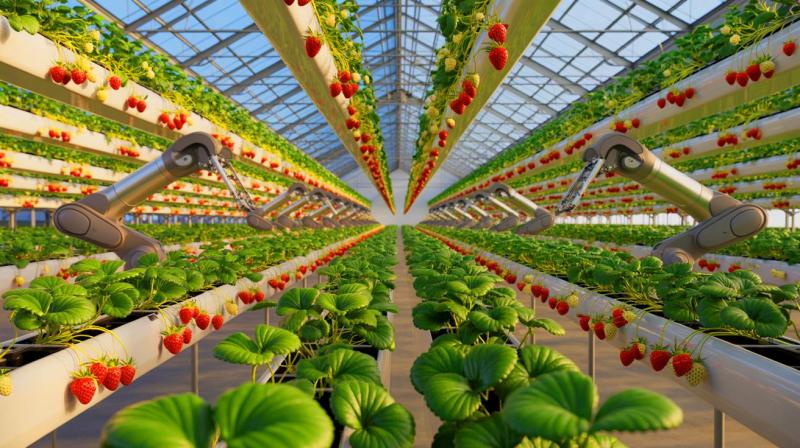


Innovation in agriculture really is the future.
 S E E D E D C O N T E N T
| IN A NUTSHELL |
|
In a world where technological advancements are rapidly transforming every industry, Dyson's venture into vertical farming represents a significant leap forward in agricultural innovation. Known for its groundbreaking home appliances, Dyson is now applying its expertise in engineering to revolutionize how strawberries are grown in the UK. This ambitious project is not only about boosting strawberry production but also about creating a sustainable and efficient farming model that could reshape agriculture as we know it.
Inside Dyson's Vertical Farming Revolution
Located in the picturesque county of Lincolnshire, England, Dyson's vertical farming operation is a marvel of engineering and agriculture. Spanning a vast 26-acre glasshouse, the facility hosts an impressive 1,225,000 strawberry plants. At the heart of this operation are giant wheels, each measuring approximately 78 feet long and 16 feet tall, which rotate the plants to maximize sunlight exposure. This innovative approach ensures that each strawberry plant receives optimal light, enhancing growth and fruit quality.
Dyson's vertical farm employs cutting-edge technology to maintain the health of its plants. UV-emitting robots patrol the rows, using light to eliminate mold and other pathogens. Simultaneously, distributor bots release beneficial insects to control pests naturally, reducing the need for chemical pesticides. This high-tech approach not only boosts productivity but also aligns with sustainable farming practices.
Harnessing Technology for Efficient Agriculture
The integration of advanced technology into farming operations is a hallmark of Dyson's approach. The facility is powered by an onsite anaerobic digester, which converts gases from grain into energy, driving turbines to supply power. The process also generates excess heat, which is used to keep the greenhouse warm. The residual byproduct, known as "digestate," is repurposed as organic fertilizer, enriching the soil without synthetic chemicals.
Rainwater collection is another critical component of Dyson's eco-friendly operation. The vast rooftop of the glasshouse, stretching about 2,500 feet, captures rainfall, which is then used to irrigate the plants. This method conserves water and reduces the farm's environmental footprint. Additionally, the reliance on natural sunlight, supplemented minimally by artificial lighting, further underscores Dyson's commitment to sustainable agricultural practices.
The Impact on Local and Global Agriculture
Dyson's vertical farming initiative is not just about producing strawberries; it's about setting a new standard for agricultural efficiency and sustainability. By growing strawberries locally and reducing the need for imports, Dyson is minimizing the carbon footprint associated with transportation. This approach not only supports local economies but also enhances food security by ensuring a consistent supply of fresh produce.
James Dyson envisions a future where high-technology agriculture plays a pivotal role in addressing global challenges. "Efficient, high-technology agriculture holds many of the keys to our future," Dyson asserts. By leveraging technology to optimize farming processes, Dyson Farming aims to lead a revolution in agriculture, inspiring other industries to adopt similar practices for a more sustainable future.
Looking Ahead: The Future of Farming
As Dyson continues to refine its vertical farming techniques, the potential for expansion and adaptation is vast. The success of this project could pave the way for similar initiatives worldwide, particularly in regions where traditional farming is challenged by climate conditions. By sharing its technological expertise, Dyson could play a crucial role in addressing global food security and environmental sustainability.
Moreover, the presence of Dyson strawberries in select stores across the UK is a testament to the project's success and its potential to influence consumer choices. As more consumers become aware of the benefits of locally grown, sustainably produced food, the demand for such products is likely to increase, driving further innovation in the agricultural sector.
Dyson's entry into the world of vertical farming is a bold step towards reshaping agriculture through technology and innovation. As the project continues to evolve, it raises important questions about the future of farming: How will advances in technology further transform agriculture, and what role will companies like Dyson play in leading this change?
This article is based on verified sources and supported by editorial technologies.

Tags
Who is online

423 visitors
Solar panels are being combined with greenhouse practices to create a new category of farming -- agrivoltaics. The farm has two revenue streams; electricity generation and food production. Greenhouse practices also reduce water consumption. And the greenhouse provides a controlled environment that allows growing a wider variety of crops in areas where open air farming wouldn't be feasible.
Vertical farming still requires a fairly sizable footprint. But combined with greenhouse practices a family could sustain itself with a lot less work. Many of these innovations would be ideal for suburban and urban environments. There is a need to bring urban planners, government zoning, and city counsel regulators into the 21st century.
You could say it's the farming of the future, and can surely be adapted to the growing of many different vegetables. I took particular note of this because I love strawberries, so I wonder if the method makes a difference in the taste.
Yes, indeed, growing method can alter the flavor of strawberries. There's actually been rather extensive research on the subject. Google's Gemini AI provided quite a detailed description but it is rather long to include as a comment. But I could do that if you are interested. Do you have access to an AI tool?
No, I don't even know what an AI tool is. If you don't want to copy and post that article here, you could post it to me as a Private Note (PN).
Well, it's not an article. It's a summary of information from a variety of sources. I don't know if you can access Google Gemini but here is a link ==>
Here's the summary Google Gemini presented. I'll try to include the links to sources but you may not be able to open all the links.
Yes, the flavor of strawberries can absolutely be altered by the growing method. Strawberry flavor is a complex interplay of sugars, acids, and volatile aromatic compounds, and many factors related to cultivation can influence this balance:
Here's a breakdown of how different growing methods and environmental factors can affect strawberry flavor:
1. Cultivar (Variety):
This is a fundamental factor. Different strawberry varieties inherently possess different flavor profiles, some being sweeter, more aromatic, or having a stronger "strawberry" taste. Growers often choose varieties based on desired flavor, yield, and disease resistance.
2. Environmental Conditions (Terroir):
Sunlight: Adequate sunlight is crucial for sugar development. Strawberries grown with sufficient sunlight tend to be sweeter. Both real and artificial light (grow lights in controlled environments) can impact sugar concentration.
Temperature:
Warm days and cool nights generally lead to sweeter berries by promoting sugar accumulation.
Extreme temperatures (too hot or too cold) can result in sour or bitter berries.
Rainfall/Watering:
Excessive watering can dilute the sugars and other flavor compounds, leading to bland or watery fruit.
Proper irrigation is essential for nutrient uptake and healthy plant development, which in turn influences flavor.
Wind: Strong winds can injure immature fruit, leading to lower sugar content and less flavor.
3. Soil and Nutrient Management:
Soil Type and Health: Strawberries prefer well-drained, fertile, slightly acidic soil rich in organic matter. Healthy soil supports robust plant growth and nutrient uptake, which contributes to better flavor.
Fertilization:
Balanced fertility management is key. For example, potassium influences sugar and acidity levels.
Nitrogen can affect sweetness, but too much can reduce overall fruit quality.
A continuous supply of essential nutrients throughout the growing season is important.
Organic vs. Conventional Farming:
Studies suggest that organically grown strawberries can be sweeter and more aromatic, with a more balanced sugar-to-acid ratio.
Conventional practices, particularly the use of certain fungicides, have been shown to disrupt sugar metabolism and distribution within the fruit, leading to less desirable flavor. Organic methods may also promote beneficial microbial activity in the soil, which can indirectly enhance flavor.
4. Cultivation Systems:
High Tunnels/Greenhouses: Growing strawberries in high tunnels or greenhouses allows for more controlled environments. This can lead to better fruit quality, including higher sugar content, due to optimized fertility management and temperature control, and protection from adverse weather.
Hydroponics: Hydroponic systems offer precise control over nutrient delivery, light exposure, and temperature. This allows growers to optimize conditions specifically for flavor development, potentially leading to sweeter and more consistently flavored berries. Some studies indicate that consumers can perceive differences and sometimes prefer hydroponically grown strawberries.
5. Harvest Practices:
Picking Ripeness: Strawberries picked when fully ripe generally taste sweeter. Berries harvested prematurely for long-distance shipping often lack full flavor development.
Harvest Time: Harvesting on a cool morning can help preserve sweetness.
In summary, while the strawberry variety sets the baseline for flavor, the way the strawberries are grown—from the soil they're in and the nutrients they receive, to the environmental conditions they experience and the specific cultivation methods employed—all play a significant role in shaping their final taste.
All aspects of Google are blocked here. I lost my gmail when I came here. However what you posted is sufficient and certainly indicates that Dyson's vertical farming is the method to provide all of the best requirements to provide the sweetest strawberries. The problem here is that strawberries are sold that have not matured, show at least some white, and even the farmers on the street pick the strawberries too soon for them to develop their flavour. Tomatoes are sold the same way, very red skin but lots of white inside. I could break a window if I threw a tomato at it.
We have the same problem here with the grocer produce. Fortunately we have seasonal farmer's markets with fresh, ripe produce for a few months during summer. I have found that frozen fruits, such as strawberries, are actually better than what is available as 'fresh' produce.
Not political -- no interest.
Welcome to the club.
Well every comment helps, even your own.
Farming and food production is changing
9,569,865 tonnes
We're SAVED!!!